Published: 26 January 2026. The English Chronicle Desk. The English Chronicle Online.
England’s health service is preparing a major shift in cancer screening that experts believe will transform early detection outcomes. At the centre of this change is bowel screening accuracy, a priority that NHS leaders say could save hundreds of lives each year. The update focuses on improving the faecal immunochemical test, commonly known as the FIT test, which is already used widely across England. By lowering the blood detection threshold that triggers further investigation, clinicians expect to identify cancers earlier and treat patients sooner, often before symptoms emerge.
Bowel screening accuracy has long been a critical concern for oncologists and public health officials. Bowel cancer remains the second deadliest cancer in the United Kingdom, despite advances in treatment and awareness. Each year, more than forty thousand people across Britain receive a bowel cancer diagnosis, while over seventeen thousand die from the disease. These figures have remained stubbornly high, prompting renewed focus on prevention and screening improvements. The NHS believes that refining the FIT test is a practical step with immediate benefits.

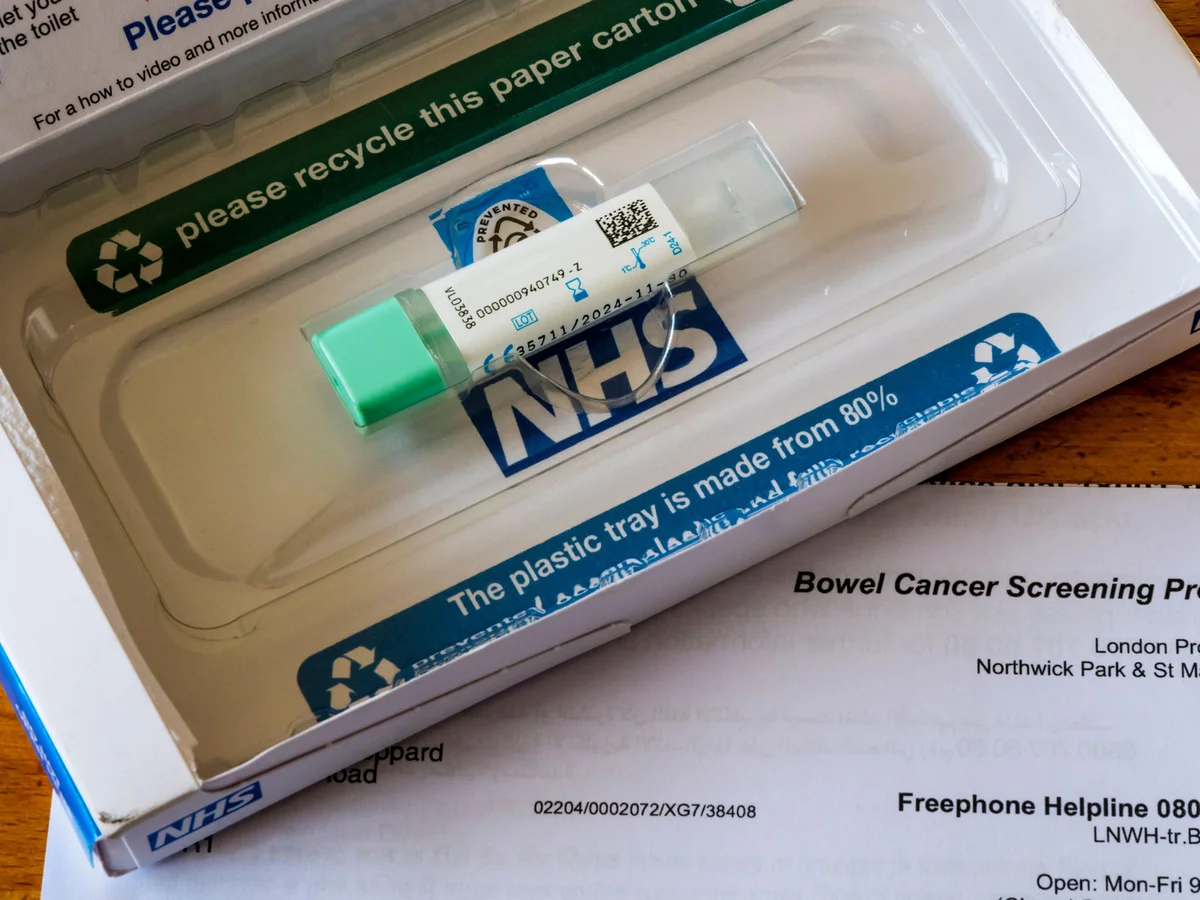
The FIT test works by detecting tiny traces of blood in a stool sample, which can indicate the presence of bowel cancer. Patients complete the test at home and return it by post for laboratory analysis. Until now, the threshold in England required 120 micrograms of blood per gram of stool to trigger referral for further tests. Under the new plan, this threshold will gradually be reduced to 80 micrograms by 2028. This aligns England with Scotland and Wales, where the lower threshold is already in use.
According to NHS England, this adjustment significantly enhances bowel screening accuracy without fundamentally changing the screening experience for patients. Professor Peter Johnson, the national clinical director for cancer, described the move as a decisive step forward. He explained that detecting smaller amounts of blood allows clinicians to identify potential cancers earlier, when treatment is more effective and survival rates are higher. Earlier diagnosis also reduces the need for aggressive treatment later, improving quality of life for patients.
Health economists within the NHS estimate that the improved bowel screening accuracy will prevent thousands of late-stage diagnoses over the coming decade. Once fully implemented, the change is expected to reduce deaths from bowel cancer by around six percent. While this percentage may appear modest, it represents hundreds of lives saved every year. Financial modelling also suggests annual savings of approximately thirty-two million pounds for the health service, due to reduced treatment costs associated with advanced disease.
The practical impact of the policy will be felt across diagnostic services. Lowering the threshold means more people will be referred for colonoscopies, the gold standard diagnostic test for bowel cancer. NHS England anticipates a thirty-five percent increase in colonoscopy demand. While this presents operational challenges, officials say capacity planning is already underway. Investments in endoscopy units and workforce training are being aligned with the upcoming national cancer plan.
That national cancer plan, due to be launched in early February, frames bowel screening accuracy as a cornerstone of broader cancer reform. World Cancer Day has been chosen for the announcement, highlighting the government’s intention to signal commitment to long-term improvement. Cancer charities have broadly welcomed the move, describing it as overdue and evidence-based. Many point to international data showing that lower FIT thresholds consistently detect more cancers at an earlier stage.
Bowel Cancer UK has been among the strongest advocates for the change. Its chief executive, Genevieve Edwards, said the revised threshold represents meaningful progress for patients in England. She noted that too many people still receive diagnoses only after emergency hospital admissions. Recent charity research showed that one quarter of bowel cancer cases were diagnosed following an A&E visit, often indicating advanced disease. Improved bowel screening accuracy could significantly reduce these late presentations.
Lifestyle factors remain an important part of the conversation. Cancer Research UK estimates that more than half of bowel cancer cases are preventable. Diets high in processed meat, excess alcohol consumption, obesity, and physical inactivity all increase risk. However, even with prevention efforts, screening remains essential. Many patients with early-stage bowel cancer experience no noticeable symptoms. The FIT test provides a vital safety net, especially when it is sensitive enough to detect early warning signs.
Participation in the bowel screening programme has steadily increased since the FIT test was introduced in 2019. In the 2023 to 2024 screening year, almost seven million people in England were sent a kit. Around sixty-eight percent returned their sample, a relatively high uptake compared with other screening programmes. From these tests, more than five thousand cancers were identified. The NHS expects that improved bowel screening accuracy will increase this figure by around six hundred additional detections each year.
Eligibility for bowel screening has also expanded in recent years. In 2024, England lowered the starting age from fifty-four to fifty, bringing more people into the programme earlier. An additional 1.2 million people are now receiving FIT kits as a result. Clinicians believe this earlier engagement, combined with a more sensitive test, creates a powerful combination for reducing mortality. Detecting cancer in people in their early fifties could prevent decades of life lost.
There are, however, concerns that increased referrals may strain services in the short term. Some patient groups worry about longer waiting times for colonoscopies. NHS England has acknowledged these pressures but insists that planning is underway to manage demand safely. Officials argue that the long-term benefits outweigh transitional challenges, particularly when weighed against the human and financial costs of late-stage cancer treatment.

Public awareness campaigns are expected to accompany the rollout of the lower threshold. NHS communications teams want to reassure patients that being called for further tests does not automatically mean cancer. Most colonoscopies still rule out serious disease. However, higher bowel screening accuracy ensures that those who do need treatment are identified without unnecessary delay. Clear messaging is seen as essential to maintaining public trust and participation.
From a policy perspective, the decision reflects growing alignment across the UK on cancer screening standards. With Scotland and Wales already using the lower threshold, England’s move reduces variation and simplifies public health messaging. It also strengthens the UK’s overall cancer detection framework at a time when survival outcomes lag behind some comparable countries. Experts suggest that consistent screening practices are vital for long-term improvement.
As implementation begins, clinicians, charities, and patients will be watching closely. Success will depend on sustained funding, workforce capacity, and continued public engagement. Yet optimism is widespread. Many see the focus on bowel screening accuracy as a sign that lessons from research and devolved administrations are being applied nationally. If the promised reductions in late diagnoses materialise, this change could mark one of the most impactful screening reforms in recent years.
Related News:
 Mother dies after black market weight loss injection
 Young Woman Missed 13 Times by GPs Before Bowel Cancer Diagnosis
 Hospice Cuts Raise Alarm Across England Amid Funding Crisis
 How Bringing Forests Into Preschools Boosts Children’s Health
 The diet that can significantly ease symptoms of IBS
 Celebrities and Charities Demand UK Government Act on Child Poverty
 Long A&E waits causing heartbreaking suffering, charity says
 Experts Warn on Home Birth Risks, Call for Skilled Midwives
 Lancashire council plans to close care homes and day centres
 Britain could face worst flu season on record, NHS warns
 Experts Urge Legal Right to Timely Cancer Care
 Patients to Test Health at Home to Ease NHS Winter Pressure
 London’s Childlessness Crisis: Schools Closing as Families Shrink
 NHS Takes Over Nuffield Hospital in ‘Windfall’ for London Care
 North Sea oil workers must lose weight or face job loss
 Crisis charity to become landlord amid UK housing emergency
 No link found between paracetamol in pregnancy and autism
 UK Disability Pay Gap Means Millions Work for Free From Today
 Shouting Works Best to Deter Gulls, UK Study Finds
 Reeves rejects £1bn plea for NHS redundancy payouts
 NHS trust fined after woman takes life in mental health unit
 Leading doctors issue warning amid ‘bad’ flu season
 UK Centres Used Risky Heart Pump Despite Safety Fears
 Reeves Rejects £1bn NHS Payout Plea from Streeting
 New Campaign Trains Vets to Spot Farmers’ Health Risks
 Stroke Patient Mistaken for Drunk, Care Delayed
 ‘Traumatic Wait’: Northern Ireland Women Face Breast Cancer Delays
 Boris Johnson Oversaw Toxic No 10 Culture, Covid Inquiry Finds
 Welsh Government Christmas 2020 Lockdown Criticised
 Coffins Now Too Large to Cremate Amid Rising Obesity Crisis
 Thinktank Urges Smaller Hospitals to End NHS ‘Permacrisis’
 David Cameron Reveals Prostate Cancer Diagnosis, Advocates Screening
 NHS paediatric leave parents waiting months for answers
 Catherine urges end to stigma around addiction
 11 Best Supermarket Wines Chosen by Experts and Sommeliers
 Inquiry Opens Into Disgraced Surgeon Eljamel Scandal
 Five-Year-Old Dies After Rare Tonsil Surgery Complication
 Fibromyalgia Patients Struggle as NHS Fails to Provide Care
 More Patients Now Contacting GPs Online, Data Shows
 Streeting launches review into mental health and ADHD diagnoses
 Flu cases in Scotland more than double in a week
 People in England’s Poorest Areas Face Higher Lung Health Emergencies
 MND Patients Die Waiting for Home Adaptations in England
 Minor A&E Visits Surge Across England as Hospitals Face Pressure
 Children to Receive Home Vaccines as England Acts
 UK children to get chickenpox jab with MMRV vaccine
 UK Enforces Junk Food Ad Ban Before 9pm
 Salt Intake England: Crisps Comparison Sparks Health Alarm
 Weight Loss Jabs Linked to Rapid Weight Regain, New Study Shows
 Patients Collapsing in NHS Corridors, Watchdog Warns
 Offenders to Receive Health Support During Probation Appointments
 NHS Violence Crisis: Staff Face Daily Assaults
 Celebrity Campaign Highlights SMA Screening Failures
 NHS corridor care crisis sparks fears over patient safety
 Jess’s Rule Urges GPs to Rethink Persistent Symptoms
 UK Glaucoma Rise Signals Looming Eye Health Crisis by 2060
 UK ADHD medication use triples over 13 years, landmark study finds
 Reform UK Health Plan ‘Would Cost £1.7bn’, Streeting Says
 The Ketamine Crisis in the UK is a Silent Epidemic Leaving Users with Lifelong Pain
 Systemic Racism in Maternity Care Continues to Endanger Black Women in England, MPs Warn
 One in Three GPs in England Do Not Work in NHS, Raising Concerns Over Access to Care
 M&S and Morrisons Lead Christmas Supermarket Taste Test
 New Prostate Cancer Drug Set to Halve Death Risk in England
 Reeves Faces Setback as Labour May Miss Homes Target
 Kate Winslet to Narrate Film Highlighting King’s Environmental Mission
 Trump’s UK Ambassador Urges North Sea Drilling to Strengthen US Ties
 UK Bans Fake Numbers: Scammers Lose Their Trick
 M&S Profits More Than Halve After Cyber-Attack
 Millionaires group urge Reeves to introduce wealth tax to ‘lift kids out of poverty’
 Northern Lights may illuminate UK skies this week
 PM Condemns Leaks, Vows Loyalty to Ministers and Stability
 Major Rent Reform Ends No-Fault Evictions in England
 Inside the Helpline Protecting Missing Children in the UK
 PlayStation PS5 Deals Hit Lowest Prices Ahead of Black Friday
 Starmer Says Labour’s Economic Plan Needs Years to Deliver
 Cambridge College Faces Backlash Over Private School Recruitment
 Bereaved Fathers Gain New Paternity Leave Rights in UK
 Woman Jailed for Life After Killing E-Bike Rider in Tragic Mistaken Identity Case
 No Gas Boiler Ban as UK Warm Homes Plan Backs Heat Pumps
 Police response times face strict new national limits