Published: 06 February 2026. The English Chronicle Desk. The English Chronicle Online.
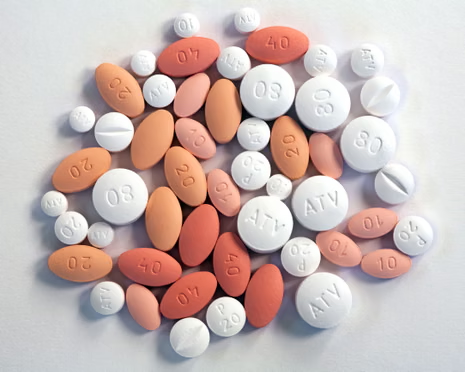
A landmark study confirms that most statin side-effects are not caused by the drugs, providing reassurance for patients. Researchers examined 19 randomised trials including 124,000 participants and found that, apart from muscle pain and diabetes, very few of the 66 listed side-effects have strong evidence of occurring due to statins. Changes in liver tests, minor liver abnormalities, urine changes, and tissue swelling were the only side-effects reliably linked to statins, and even these risks remained minimal.
Statins have been used globally for decades to reduce the risk of heart attacks, strokes, and other cardiovascular deaths, benefiting hundreds of millions of people. Despite these well-established benefits, long-standing safety concerns have deterred many from taking the medication, especially with official labels citing dozens of possible side-effects.

The researchers, publishing in The Lancet, emphasised that the majority of reported issues—including memory loss, depression, sleep disturbances, and tingling in hands or feet—showed no significant difference between those taking statins and those not taking them. Lead author Christina Reith, an associate professor at Oxford University, said the study provided “reliable evidence that commonly experienced events are not caused by statins.” She explained that memory or sleep problems occurred at similar rates in both statin users and non-users, underlining that these side-effects are not drug-related.
Reith added that while longer-term effects beyond the average follow-up of four and a half years cannot be entirely ruled out, the data provide “reassurance that, for most people, the benefits of statins far outweigh the risks.” Senior author Prof Sir Rory Collins noted that statin information leaflets require urgent revision to better reflect evidence and assist both patients and doctors in making informed choices about treatment.
The study further highlighted the need to counter misinformation about statins, which has contributed to underuse of life-saving medication. Prof Bryan Williams, chief scientific and medical officer at the British Heart Foundation, emphasised that statins remain crucial in preventing heart attacks and strokes, and that these findings should help reduce unnecessary deaths caused by cardiovascular disease.
Prof Victoria Tzortziou Brown, chair of the Royal College of GPs, reinforced that patients should feel reassured, though statins are not suitable for everyone. She stressed the importance of personalised medical advice, with GPs and patients discussing individual risks and benefits before initiating therapy.
This research is the most comprehensive evaluation to date, systematically reviewing decades of evidence and offering clarity on the safety profile of statins. The findings suggest regulatory authorities should update statin labels to remove misleading information about side-effects, helping to rebuild public confidence in the medication.
For decades, patients have been discouraged from using statins due to exaggerated safety warnings. This study confirms that the overwhelming majority of listed side-effects are coincidental rather than causal. By clarifying the real risks, the research aims to improve adherence to statin therapy, which remains essential for reducing cardiovascular complications worldwide.
Healthcare professionals have welcomed the study as a critical step in evidence-based prescribing. It encourages doctors to guide patients through informed decisions rather than rely solely on precautionary warnings. The findings also emphasise the importance of ongoing monitoring and communication between clinicians and patients to ensure optimal outcomes.
As cardiovascular disease remains a leading cause of death in the UK and globally, the confirmation that statin side-effects are mostly unfounded could have major implications for public health. Greater confidence in these medications may lead to broader uptake, preventing thousands of avoidable cardiac events each year.

While minor side-effects like liver enzyme changes, tissue swelling, and urinary alterations remain possible, these events are rare and generally manageable. Patients should continue to follow medical guidance and report any unusual symptoms, but the overarching message is one of reassurance and evidence-based clarity.
Experts agree that this research represents a turning point in the perception of statins. By separating myth from fact, the study promotes rational use of the drugs and could save lives by ensuring more people receive appropriate preventive therapy.
Ultimately, this landmark study reinforces that the real benefits of statins—reducing heart attacks, strokes, and premature deaths—far exceed the small and rare risks of side-effects. Accurate information and informed medical advice are vital to ensure these life-saving drugs reach those who need them most.
Related News:
 How Bringing Forests Into Preschools Boosts Children’s Health
 UK Water Firms Ordered to Act Over ‘Forever Chemicals’ Threat
 Experts Urge Legal Right to Timely Cancer Care
 Patients to Test Health at Home to Ease NHS Winter Pressure
 North Sea oil workers must lose weight or face job loss
 No link found between paracetamol in pregnancy and autism
 NHS frontline staff forced to cover gaps as managers remain scarce
 New Research Explains Severe Diabetes in Children
 Working-Class Men with Prostate Cancer Left Behind by NHS
 New AI tool could cut wasted efforts in organ transplants
 From Baby Teeth to Bioengineering: The Future of Self-Healing Teeth
 Healthy Habits in Your 30s That Boost Life in Your 70s
 Coffins Now Too Large to Cremate Amid Rising Obesity Crisis
 Thinktank Urges Smaller Hospitals to End NHS ‘Permacrisis’
 NHS paediatric leave parents waiting months for answers
 Google Removes Some AI Health Summaries Over Safety Concerns
 AI Transforms Lung Cancer Detection in NHS Trial
 Genes May Hold the Secret to Long Life, Scientists Find
 AI breast screening cuts later cancer diagnoses by 12%, study finds
 Autistic Girls Often Missed in Childhood Diagnoses, Study Finds
 Baby rhythm sense found in newborn brains
 AI Tools Used by English Councils Found to Downplay Women’s Health Issues, Raising Concerns Over Gender Bias in Care
 Shocking Rise in Children’s Exposure to Violent Online Pornography Raises Alarm
 British Pilot Joins Crew Training for Year-Long Mars Simulation Mission
 Genetic Tests May Predict Return of Blood Cancer
 Hospice Cuts Raise Alarm Across England Amid Funding Crisis
 Virgin Trains Moves Closer to Challenging Eurostar Monopoly
 Celebrities and Charities Demand UK Government Act on Child Poverty
 UK Bans Fake Numbers: Scammers Lose Their Trick
 Vibe coding’ named Collins dictionary’s word of the year
 London’s Childlessness Crisis: Schools Closing as Families Shrink
 Britain deploys RAF specialists to assist Belgium with drone threats
 Shouting Works Best to Deter Gulls, UK Study Finds
 Reeves rejects £1bn plea for NHS redundancy payouts
 Stop using ChatGPT to write speeches, AI minister tells MPs
 Northern Lights may illuminate UK skies this week
 New laws to bolster UK’s defences against cyber attacks on NHS, transport and energy
 Hitler’s DNA Confirms He Truly Had Only One Testicle
 Senator John Fetterman Hospitalized After Fall from Heart Flare-Up, Keeps Sense of Humor
 How Cultures Interpreted the Aurora Through History
 Stroke Patient Mistaken for Drunk, Care Delayed
 Sundar Pichai Cautions on AI Hype and Market Risks
 Google Chief Urges Caution: Don’t Trust AI Blindly
 ‘Traumatic Wait’: Northern Ireland Women Face Breast Cancer Delays
 US Judge Says Meta Did Not Hold Illegal Social Media Monopoly
 Scottish Families Take Legal Action Over School CO Leak
 Vicki Fears Losing Motability Car
 Delhi’s Toxic Air Crisis Leaves Children Sick and Vulnerable
 Five-Year-Old Dies After Rare Tonsil Surgery Complication
 Fibromyalgia Patients Struggle as NHS Fails to Provide Care
 AI Actress Creator Says Tilly Norwood Won’t Replace Actors
 More Patients Now Contacting GPs Online, Data Shows
 Kenya Signs $2.5bn Health Deal with US Amid Data Concerns
 Damien Martyn in Induced Coma After Meningitis Diagnosis
 Minor A&E Visits Surge Across England as Hospitals Face Pressure
 Children to Receive Home Vaccines as England Acts
 Childhood Hypertension Sparks Urgent UK Testing Calls
 AI Grok Sparks Child Safety Alarm in the UK
 Offenders to Receive Health Support During Probation Appointments
 NHS Violence Crisis: Staff Face Daily Assaults
 Celebrity Campaign Highlights SMA Screening Failures
 US Clears Nvidia AI Chip Sales to China in Policy Shift
 Amazon Milton Keynes closure sparks concern for UK warehouse workforce
 Astronomers Prepare for First-Ever Movie of a Black Hole
 Robo-Vaccination Could Transform Fight Against Bovine TB
 MPs warn AI financial risks threaten UK stability
 MPs warn AI financial risks threaten UK stability
 UK Glaucoma Rise Signals Looming Eye Health Crisis by 2060
 UK ADHD medication use triples over 13 years, landmark study finds
 Reform UK Health Plan ‘Would Cost £1.7bn’, Streeting Says
 NHS boosts bowel screening accuracy with FIT reform
 Nottingham survivor warns of repeat attacks without mental health reform
 Pornhub blocks new UK users over age checks dispute
 Amazon mistakenly signals new global layoffs to employees
 UK Launches First Rapid-Charging Battery Train This Weekend
 UK New Car Discounts Near £6,000 as Prices Are Slashed
 Study Finds One in Seven England Takeaways Are Dark Kitchens
 Deadly Cancer Postcode Lottery Limits NHS Care
 James Valentine Retires from ABC After Cancer Battle
 Pneumonia Surge Pushes England Emergency Cases Higher