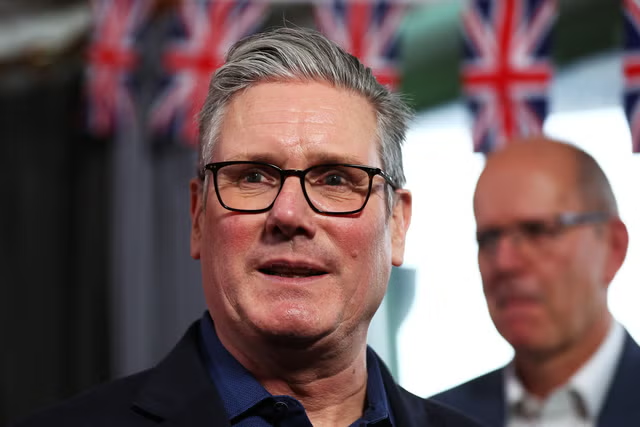
Labour leader Sir Keir Starmer faces mounting political turbulence after reports emerged that another senior aide has resigned, marking the latest setback in a series of high-profile departures from his office. The resignation comes amid what insiders describe as a tense atmosphere within the Labour Party, as Starmer navigates a challenging political landscape while striving to maintain his leadership and credibility.

The aide’s departure is the latest in a string of exits that have sparked concern among party insiders and political commentators. Sources suggest that disagreements over strategy, communications, and the direction of the party may have contributed to the decision, highlighting internal divisions at a critical juncture in Starmer’s leadership.
One political analyst described the situation as “a wake-up call” for the Labour leadership.
“Repeated resignations signal deeper issues than just personal disagreements. Starmer is under pressure to demonstrate authority and stability, especially as he faces challenges from both opposition parties and within his own ranks.”
The aide, whose identity remains unconfirmed in official statements, held a key position responsible for strategy and political communications. According to sources familiar with the office, they were involved in managing policy messaging, media relations, and the coordination of internal party campaigns.
Their resignation raises questions about the continuity of Labour’s messaging and the ability of Starmer’s office to maintain cohesion during a period of political scrutiny.
This latest departure comes at a time when Starmer is attempting to consolidate support ahead of upcoming elections. Observers note that losing a senior aide could impact the pace and coherence of policy rollouts, particularly in areas where Starmer has sought to assert his vision for Labour.
Conservative MPs have seized upon the news to highlight what they describe as “chaos” within the Labour leadership. Some commentators argue that repeated resignations, whether due to personal choice or policy disputes, can erode public confidence in Starmer’s capacity to lead the party effectively.
Since taking the helm of Labour, Starmer has faced several high-profile challenges, ranging from internal factional disputes to scrutiny over past decisions during his tenure as Director of Public Prosecutions. The party has experienced fluctuating polling numbers, media criticism, and the constant pressure of opposition narratives.
The departure of another aide adds fuel to these challenges, especially as Labour prepares for upcoming local and national elections. Political strategists warn that Starmer must now address both perception and substance, reassuring the party base while presenting a coherent vision to the electorate.
Sources within Labour suggest that the resignation reflects broader disagreements over party strategy. Some insiders have expressed frustration over messaging priorities, leadership style, and the handling of policy debates. These tensions are reportedly most acute in areas such as economic policy, Brexit-related stances, and responses to national security issues.
A former senior Labour figure commented:
“In any large political organisation, differences in approach are inevitable. But when departures become frequent, it can signal uncertainty and weaken confidence both inside and outside the party.”
The resignation has dominated news coverage in the UK, with newspapers and broadcast media highlighting the potential consequences for Starmer’s leadership. Opinion polls indicate that public perception of Labour’s stability could be affected, particularly among undecided voters who weigh leadership competence heavily in their political choices.
Social media platforms have also been awash with speculation, commentary, and satire. Hashtags such as #StarmerCrisis, #LabourShakeup, and #UKPolitics have trended intermittently, reflecting both concern and curiosity among the online audience.
Maintaining continuity in a political office following the loss of a senior aide is a complex task. Strategists emphasise the importance of rapidly filling critical roles, ensuring smooth communication channels, and managing both internal and external perceptions.
For Starmer, the challenge is twofold: to reassure party members and staff that leadership is steady, and to convey competence and unity to the public at a time when every move is closely scrutinised.
The Conservatives and other opposition parties have capitalised on the news to critique Labour’s internal cohesion. Conservative MPs argue that leadership instability could compromise the party’s effectiveness in Parliament, limit its ability to challenge government policy, and ultimately affect voter confidence.
Meanwhile, some former Labour figures have urged caution in interpreting the resignation as a crisis, suggesting that staff turnover is not uncommon in political offices, particularly during periods of strategic recalibration.
As Labour navigates the fallout from this resignation, analysts suggest that Starmer will need to take decisive steps to stabilise his leadership team, clarify policy priorities, and engage with both party activists and the electorate. Upcoming political events — including local elections and policy announcements — will serve as tests of both leadership competence and public perception.
The coming weeks may prove pivotal, as Starmer seeks to consolidate authority and reassure voters that Labour remains a credible alternative government. The success of these efforts will likely shape both the party’s internal cohesion and its electoral prospects.

The resignation of another key aide is a significant event in the ongoing story of Sir Keir Starmer’s leadership. It underscores the pressures faced by political leaders, the challenges of managing internal party dynamics, and the constant scrutiny of the media and public.
Whether Labour can weather this latest setback and project stability will be closely watched in the coming weeks. For Starmer, the departure represents not just a staffing challenge, but a test of resilience, leadership, and the ability to maintain confidence amid turbulence.
Related News:
 UK Must Act with Courage and Clarity on Israel-Palestine Conflict, Says Foreign Affairs Committee Report
 Wethersfield Controversy Deepens as Asylum Seeker Numbers Set to Surge by 50%
 Chancellor Faces Mounting Pressure Amid “Impossible Trilemma” Over Tax Rises
 Radioactive Leak at UK’s Nuclear Warhead Base Sparks Outcry Over Safety and Secrecy
 Mass Arrests in London as Protest Defies Ban on Palestine Action
 Mutual Inconvenience: Why Alaska Was Chosen for the Trump-Putin Summit on Ukraine
 Russell T Davies Warns of Declining UK Gay Rights Amid Rise of Reform UK and Trump Influence
 UK Government Expands ‘Deport Now, Appeal Later’ Policy to 23 Countries
 Farage Accuses PM of ‘Democratic Disparity’ in House of Lords Representation
 Chancellor Rachel Reeves Pushes for Sweeping Changes to Environmental Protections to Accelerate Development
 Larger Families Could Gain Thousands if Labour Ends Two-Child Benefit Cap
 Is the UK Ready to Put Boots on the Ground in Ukraine? Assessing Military Capacity and Challenges
 Palestine Action Ban Protesters Plan Tactic to Overwhelm Police at Next London Demonstration
 Police Scotland Spends £500,000 Compensating Officers Over Trump Visit
 Britain’s Migration Challenge: Rising Asylum Numbers and Hotel Pressures
 Elon Musk Sparks New Controversy by Backing Tommy Robinson Amid Farage Feud
 Urgent Action Needed on Windrush Compensation as Survivors Speak of “Waiting to Die”
 Tanni Grey-Thompson Faces Abuse Over Opposition to Assisted Dying Bill
 TfL Invites RMT to Resume Talks as London Tube Strikes End
 UK Rejoining EU ‘Unlikely in My Lifetime,’ Says Starmer’s Europe Reset Negotiator
 ‘Unite the Kingdom’ Rally Sparks Fears of Far-Right Normalisation Among Minority Britons
 Thousands Gather in London to Protest Donald Trump’s Second UK State Visit
 Zarah Sultana Seeks Legal Action After Bitter Clash with Jeremy Corbyn Over Party Membership Funds
 Nigel Farage Unveils Controversial Immigration and Welfare Plans at Reform UK Press Conference
 Top Andy Burnham Ally Launches Fierce Critique of Starmer Ahead of Labour Conference
 Mahmood Pledges Reform of Modern Slavery Laws After Court Blocks Deportation Appeal
 Ed Miliband Warns UK Government on X, Citing Elon Musk as a “Dangerous Influence”
 Ed Miliband Urges Labour to Confront Billionaire-Backed Opposition to Net Zero Goals
 A Third of EU Citizens in UK Report Discrimination by Public Bodies Post-Brexit
 Senior Tories Condemn Badenoch’s Vow to Repeal Climate Change Act as Catastrophic
 Digital ID Plans Ignite Debate Over £600m Treasury Tax Boost and Privacy Concerns
 Kemi Badenoch Unveils ‘Golden Rule’ to Halve Spending Cuts for Deficit Reduction at Tory Conference
 Public Trust in SNP Hits Historic Low Amid NHS Concerns
 Yvette Cooper Backs Digital ID Plan for UK Teens
 Johnson Suggests Mandelson Linked to China Spy Controversy
 UK border officers deployed to Balkans to tackle migrant smuggling
 Ministry of Justice fails to file £11bn in spending receipts
 UK MPs warn of repeat riots over online misinformation
 Rachel Reeves signals welfare reform ahead of key budget
 Reform UK candidate fined £19,000 after using AI-generated cases to challenge election
 William Steps Up Over Prince Andrew Palace Response
 Army Barracks to House Migrants as Hotels Phase Out
 Green Party Surges Past Labour in Latest UK Poll
 Celebrities and Charities Demand UK Government Act on Child Poverty
 Zarah Sultana Launches Party to Change Politics
 Trump’s UK Ambassador Urges North Sea Drilling to Strengthen US Ties
 FBI Director Kash Patel Defends Girlfriend Amid Government Jet Claims
 French Taxi Driver Cleared in David Lammy Theft Case After Fare Dispute
 Millionaires group urge Reeves to introduce wealth tax to ‘lift kids out of poverty’
 Starmer Faces Growing Dissent as Labour MPs Weigh Leadership Challenge
 Reeves rejects £1bn plea for NHS redundancy payouts
 PM Condemns Leaks, Vows Loyalty to Ministers and Stability
 Pressure Mounts on Starmer to Sack Chief of Staff Over Briefing Row
 Major Rent Reform Ends No-Fault Evictions in England
 Peers Flood Assisted Dying Bill with 942 Amendments
 Most Tories Expect to Support a Farage-Led Government
 Labour MP claims devolution bill is ‘blatant discrimination’ against Cornwall
 Millions Face Higher Taxes Under Reeves New Budget
 Starmer Says Labour’s Economic Plan Needs Years to Deliver
 England delays four mayoral elections amid criticism
 Reform campaign in Clacton faced ‘juggernaut’ scrutiny, say rivals
 Met officers ordered to declare Freemason links
 Culture secretary to review Telegraph takeover by Daily Mail owner
 Reform Candidate Sparks Fury Over Loyalty Comments
 Plans to Limit Jury Trials Face Retreat After Mounting Opposition
 Right Must Unite After Jenrick Defection, Urges Rees-Mogg
 UK Ministers Drop Foreign Student Targets for Global Education Push
 MPs warn AI financial risks threaten UK stability
 No Gas Boiler Ban as UK Warm Homes Plan Backs Heat Pumps
 Hugh Grant Joins Call for Under-16 Social Media Ban in UK
 Shinzo Abe’s killer receives life sentence in Japan
 Lords Vote Piles Pressure on Starmer Over Social Media Ban
 Reform UK Health Plan ‘Would Cost £1.7bn’, Streeting Says
 Police response times face strict new national limits
 Labour policing overhaul sparks fears over growing central control
 Tories criticised after Braverman defection sparks mental health row
 Starmer warns of toxic division politics in Reform challenge
 Starmer China visit raises human rights pressure on Beijing
 Palantir contracts face UK halt calls over transparency
 Senior Government Figures Forced to Hand Over Private Messages With Mandelson