Published: 19 February 2026. The English Chronicle Desk. The English Chronicle Online.
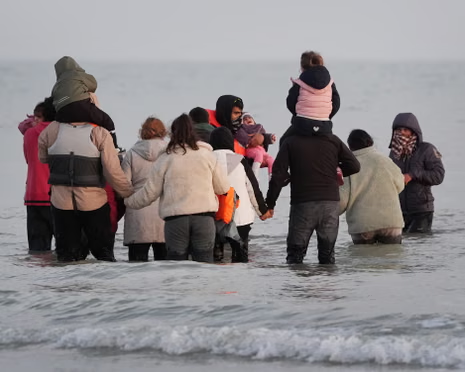
The Home Office’s national age assessment board is facing renewed criticism over its treatment of vulnerable children. A report by the Refugee and Migrant Children’s Consortium warns that hundreds of young asylum seekers may face unnecessary trauma and danger because of flawed assessment practices. These children, many arriving on small boats, are subjected to evaluations designed to determine their age, yet the process often harms rather than protects. Focused on the Home Office’s procedures, the report raises urgent questions about how the UK safeguards its youngest and most vulnerable refugees.
The consortium, a coalition of over 100 organisations including the Refugee Council, Barnardo’s, and the NSPCC, has detailed significant concerns regarding the national age assessment board, established in March 2023. It employs more than 50 social workers to evaluate children’s ages, but reports indicate that some young people feel the process is hostile, with social workers perceived as “out to get them.” Cases documented in the report suggest that children experience deteriorating mental health during assessments, sometimes developing self-harm tendencies or suicidal thoughts. The trauma associated with Home Office assessments is described as far more severe than experiences with local authority social workers.
When children are incorrectly assessed as adults, they are placed in adult accommodation, often alongside unrelated individuals, which can expose them to abuse or exploitation. In some instances, young people have been charged with offences connected to their journey, including steering a dinghy to reach the UK. One highlighted case involved a child aged 15, initially assessed by the Home Office as 22, and subsequently charged with criminal offences. After local authority reassessment confirmed his true age, the charges were dropped, underscoring the serious consequences of misjudged age determinations.

The age assessment board was originally established due to concerns that adults were misrepresenting themselves as children to gain immigration advantages. However, freedom of information data indicates that many individuals initially declared adults are later recognised as child refugees following detailed local authority assessments. Judicial scrutiny has also criticised the NAAB process, noting inconsistencies, lack of objectivity, and an adversarial approach. Judges have expressed concern that political discourse may influence decisions, compromising the impartiality required for professional social work when assessing child refugees.
Previous inspections, including a report by the independent chief inspector for borders and immigration, identified significant issues with the board, while a Home Office-commissioned evaluation by the National Centre for Social Research was largely positive but limited by a small, government-biased sample. The consortium’s findings call for the NAAB to be scrapped, with funding redirected to local authorities to enhance their social work capacity in supporting child refugees. It also recommends independent oversight should the board continue and emphasises that local authorities’ judgements should be respected when assessing young people as child refugees without requiring a full Home Office assessment.
Kama Petruczenko, senior policy analyst at the Refugee Council, highlighted the risk posed by the Home Office framework, stating that it “blurs the line between safeguarding and immigration control.” She emphasised the need for assessments to be child-centred and trauma-informed, led by local authority social workers rather than by an adversarial Home Office process that compounds existing difficulties for child refugees. Petruczenko noted repeated court findings that assessments often override professional social work judgements, contributing to delays and inconsistent outcomes that affect child refugees directly.
Maddie Harris, founder of the Humans For Rights Network, recounted that children her organisation supported described NAAB assessments as “interrogatory, hostile and terrifying.” She explained that the board often begins from the assumption that a young person is an adult, seeking evidence to support this position, which undermines both accuracy and trust in the evaluation of child refugees. These practices, Harris argued, risk inflicting lasting psychological damage while undermining these children’s access to appropriate protection and support.

The consortium’s report details how flawed age assessments can directly affect child refugees’ living conditions, mental health, and legal standing in the UK. Children placed incorrectly in adult accommodation or detention face heightened risks of exploitation, abuse, and criminalisation. Experts warn that the adversarial approach may exacerbate existing trauma and make integration or recovery more difficult. Social workers familiar with local contexts are better equipped to provide nuanced, child-focused evaluations that account for complex individual circumstances, according to the coalition.
Home Office officials defended the national age assessment board, asserting that robust age checks are essential for safeguarding and border integrity. A spokesperson stated that the board provides “specialist, trauma-informed expertise” and that all assessments are conducted by qualified social workers following recognised guidance. The Home Office also confirmed it would review the consortium’s report and continue improving practices in line with independent recommendations affecting child refugees.
Despite these assurances, the report underscores the systemic issues that arise when immigration control and child protection responsibilities are combined within a single government body. Critics argue that separating these roles is essential to ensure impartiality and safeguard young child refugees. Misaligned priorities can undermine trust in social services and result in vulnerable children experiencing unnecessary stress, delays in receiving appropriate care, and exposure to unsafe environments.
As the UK continues to navigate complex migration challenges, ensuring the safety of child refugees remains a critical priority. NGOs and social workers urge policymakers to implement reforms quickly, recognising that proper assessments save lives, prevent harm, and uphold international obligations. A child-centred, trauma-informed approach, separated from immigration enforcement pressures, is vital for ethical and effective safeguarding. The consortium’s report provides a roadmap for these reforms, highlighting both the risks of current practices and the benefits of empowering local authorities.
Related News:
 Peterborough Mosques Tighten Security After Attack
 Reeves Faces Setback as Labour May Miss Homes Target
 Hospice Cuts Raise Alarm Across England Amid Funding Crisis
 Kate Winslet to Narrate Film Highlighting King’s Environmental Mission
 Green Party Surges Past Labour in Latest UK Poll
 Trump’s UK Ambassador Urges North Sea Drilling to Strengthen US Ties
 Children to Learn Local History in Major Curriculum Overhaul
 Granit Xhaka Rescue Earns Everton Draw at Sunderland
 French Taxi Driver Cleared in David Lammy Theft Case After Fare Dispute
 UK Bans Fake Numbers: Scammers Lose Their Trick
 Prince William Plants Trees with Brazil’s Nature Heroes
 M&S Profits More Than Halve After Cyber-Attack
 Kent village told to remove flags before Christmas lights go up
 Patients to Test Health at Home to Ease NHS Winter Pressure
 King Charles to Lead Nation in Remembrance Sunday Service
 Palace May Restore Hyphen to Andrew Mountbatten-Windsor’s Name
 Millionaires group urge Reeves to introduce wealth tax to ‘lift kids out of poverty’
 Starmer Faces Growing Dissent as Labour MPs Weigh Leadership Challenge
 Shouting Works Best to Deter Gulls, UK Study Finds
 Reeves rejects £1bn plea for NHS redundancy payouts
 Northern Lights may illuminate UK skies this week
 PM Condemns Leaks, Vows Loyalty to Ministers and Stability
 Son Reveals UK Couple in Iran Resort to Hunger Strike for Help
 Major Rent Reform Ends No-Fault Evictions in England
 Former Lion Heskey Warns of Shortage of England Strikers
 Criminal Gangs Pose as Truckers to Hijack UK Supply Chains
 Stroke Patient Mistaken for Drunk, Care Delayed
 Van Dwellers Face Eviction After Park Misuse Sparks Outcry
 ‘Traumatic Wait’: Northern Ireland Women Face Breast Cancer Delays
 Serial Rapist and Former Cop Found Guilty Again
 Royal Navy Shadows Russian Warships Entering the Channel
 Inside the Helpline Protecting Missing Children in the UK
 Most Tories Expect to Support a Farage-Led Government
 Boots Showstopper Beauty Bundle Outshines Many Advent Calendars This Holiday Season
 Labour’s ‘blinkered’ drive to build risks pushing wildlife to point of no return, nature experts warn
 PlayStation PS5 Deals Hit Lowest Prices Ahead of Black Friday
 Karen Carney Stuns on Blackpool Week, Deserves Strictly Final
 Five-Year-Old Dies After Rare Tonsil Surgery Complication
 Fibromyalgia Patients Struggle as NHS Fails to Provide Care
 Starmer Says Labour’s Economic Plan Needs Years to Deliver
 Virgin Media Fined £23.8m Over Telecare Safety Failures
 More Patients Now Contacting GPs Online, Data Shows
 UK unemployment rises to four-year high of 5.1% before budget
 Wiltshire Police Use Lasso to Catch Rampaging Village Goat
 Children to Receive Home Vaccines as England Acts
 Cambridge College Faces Backlash Over Private School Recruitment
 NHS Violence Crisis: Staff Face Daily Assaults
 Celebrity Campaign Highlights SMA Screening Failures
 Bereaved Fathers Gain New Paternity Leave Rights in UK
 Storm Goretti leaves Cornwall homes without power
 New Documentary Examines Teen’s Zombie Knife Murder
 Woman Jailed for Life After Killing E-Bike Rider in Tragic Mistaken Identity Case
 Right Must Unite After Jenrick Defection, Urges Rees-Mogg
 UK Ministers Drop Foreign Student Targets for Global Education Push
MPs warn AI financial risks threaten UK stability
UK Ministers Drop Foreign Student Targets for Global Education Push
MPs warn AI financial risks threaten UK stability
 No Gas Boiler Ban as UK Warm Homes Plan Backs Heat Pumps
 UK Glaucoma Rise Signals Looming Eye Health Crisis by 2060
 Shinzo Abe’s killer receives life sentence in Japan
 Police response times face strict new national limits
 Edinburgh, Glasgow Lead UK Nightlife Hotspots, Uber Data
 Labour policing overhaul sparks fears over growing central control
 Devon hosts first high-density hydro power system
 Pornhub blocks new UK users over age checks dispute
 Reform candidate sparks British identity row in byelection
 Starmer warns of toxic division politics in Reform challenge
 Households in England Face Rising Water Bills in April
 UK New Car Discounts Near £6,000 as Prices Are Slashed
 Pneumonia Surge Pushes England Emergency Cases Higher
 Harvey Willgoose School Stabbing Red Flags Missed
 Email Appears to Confirm Photo of Andrew With Virginia Giuffre Is Real
 Wigan Dump Crisis Sparks Health and Safety Alarm
 Channel Boat Tragedy Could Have Been Prevented, Inquiry Finds
 Palantir contracts face UK halt calls over transparency
 Teen Girl Chased in Broad Daylight in Ipswich
 Archbishop Mullally Pledges Reform to Restore Church Abuse Trust
 Send spending gap leaves deprived areas behind
 Cabinet Secretary Shake-Up Triggers Due Diligence Warning
 Hidden Crisis: Domestic Abuse Suicide Toll in UK
 Farage to Name Jenrick as Reform Chancellor Pick
 UK MPs Demand Ban on Brazilian Butt Lifts