Published: 23 February 2026 . The English Chronicle Desk. The English Chronicle Online
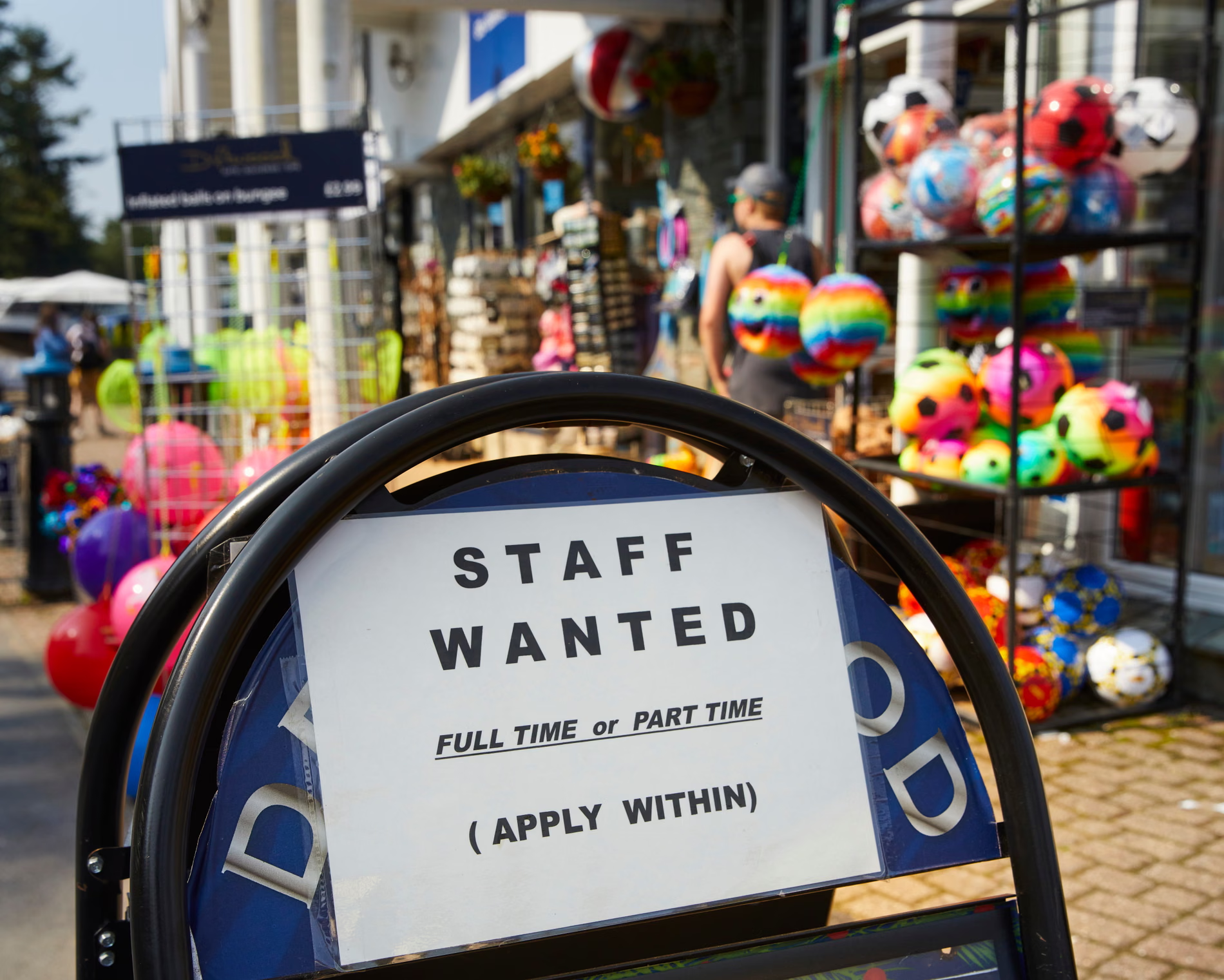
The number of job vacancies in the UK has dropped to its lowest level since the COVID-19 pandemic, according to the latest labour market data. Economists say the decline reflects a combination of slowing demand, economic uncertainty, and shifts in workforce dynamics.
Figures from the Office for National Statistics (ONS) show that the total number of unfilled positions fell sharply over the past quarter, reaching levels last seen in early 2020. Industries such as hospitality, retail, and construction have been among the hardest hit, with fewer businesses advertising roles than in previous years.

Labour market analysts warn that the decline in vacancies may signal a slowdown in economic growth. With fewer positions available, job seekers could face increased competition, while employers may need to reassess recruitment strategies and wage offers to attract talent.
“This is the lowest level of job postings we’ve seen since the pandemic,” said Dr. Helen Morris, an economist at the London School of Economics. “It suggests businesses are being more cautious about hiring, possibly in response to inflationary pressures, rising energy costs, and overall economic uncertainty.”
Despite the drop in vacancies, unemployment rates remain relatively stable, reflecting the resilience of the UK labour market. Many employees are staying in current roles due to job security concerns or the challenges of relocating for work, which has contributed to tighter labour supply in certain sectors.
Businesses are increasingly turning to automation, flexible staffing, and recruitment incentives to address gaps in their workforce. Some firms have also begun to explore upskilling programmes to retain talent internally rather than relying on external hires.
Government officials have acknowledged the changes in the labour market but emphasize that the UK remains a competitive place to work. Policies aimed at supporting business growth, skills development, and regional employment initiatives are expected to help balance the market in the coming months.

For job seekers, the decline in vacancies may mean more targeted applications and increased emphasis on skills development. Career advisors recommend staying informed about labour trends and considering opportunities in sectors showing resilience, such as healthcare, technology, and green energy.
As the UK economy continues to navigate post-pandemic challenges, the labour market data highlights the delicate balance between supply and demand, and the need for both employers and workers to adapt to evolving conditions.
Related News:
 How to Exit Your Broadband Contract Without Paying Exit Fees
 Supreme Court Ruling on Car Finance Scandal Poised to Impact Millions of Motorists and Banks
 Stunning Welsh Island with Historic Fort and Modern Luxuries Hits Market for £3 Million
 UK Jobs Market Faces Strain as Employers Cut Bonuses and Hiring Amid Economic Slowdown
 Wage Rises Slow as Retail and Hospitality Jobs Continue to Fall
 Chancellor Rachel Reeves Pushes for Sweeping Changes to Environmental Protections to Accelerate Development
 Inflation Latest: Cost of Living Expected to Rise Again in Key Figures Released Today
 Ed Davey Urges Government to Block Elon Musk’s Tesla from Supplying UK Home Energy
 Rachel Reeves to Deliver Autumn Budget on 26 November Amid Economic Challenges
 Retail Sales See Uptick Amid Errors and Delays as ONS Faces Scrutiny
 UK House Prices Hit Record £299,331 as Market Shows Steady Growth
Shein UK Faces Allegations of Shifting Majority of Profits to Singapore to Reduce UK Tax
UK House Prices Hit Record £299,331 as Market Shows Steady Growth
Shein UK Faces Allegations of Shifting Majority of Profits to Singapore to Reduce UK Tax
 UK Mobile Retailers Lock Doors Amid Surge in Organised Phone Thefts
 UK Retail Sales Rise in August, but Tax Concerns Loom Over Festive Period
 UK Could Generate Nearly £2bn Annually by Taxing SUVs, New Study Reveals
 Jaguar Land Rover Extends Production Halt Following Cyber-Attack
 UK Labour Market Shows Signs of Cooling as Wage Growth Slows and Redundancies Rise
 UK Wage Growth Remains High, But Cost of Living Pressures Bite
 British AI Startup Outshines Human Forecasters in Global Prediction Contest
 Dagenham Left in Limbo After Smithfield and Billingsgate Market Relocation Cancelled
 Vodafone Franchisees Sound Alarm: Mental Health Toll of Commission Cuts Revealed Years Before £120m Court Battle
 Great Britain’s Energy Operator Commits to Strengthening Grid to Prevent Blackouts
 UK Government Backs Return of International Rail Travel to Kent Stations
 AstraZeneca to List on New York Stock Exchange While Retaining London Ties
 Royal Mail Owner Acquires Stake in Collect+ and Launches High Street Rebrand
 Marks & Spencer Staff to Work on Boxing Day for First Time in Five Years Amid Cost-Cutting Measures
 Senior Tories Condemn Badenoch’s Vow to Repeal Climate Change Act as Catastrophic
 Wetherspoon vows to keep prices low amid soaring energy and tax costs
 He-Man Set for Big Comeback as UK Toy Industry Rides ‘Newstalgia’ Wave
 Delivery Apps Could Double the Cost of Your Groceries, Warns Consumer Watchdog
 UK House Price Growth Slows as Buyers Exercise Caution Ahead of Autumn Budget
 Kemi Badenoch Unveils ‘Golden Rule’ to Halve Spending Cuts for Deficit Reduction at Tory Conference
 Royal Mail Fined £21m for Delivery Failures
 Parents spending £5,000 on special school assessments in England
 China warns UK over delayed London mega embassy decision
 New V-Level qualification to transform post-16 education
 Pizza Hut to shut 68 sites after collapsing into administration
 Real living wage set to rise nearly 7% for UK workers in 2026
Reeves Faces Setback as Labour May Miss Homes Target
Real living wage set to rise nearly 7% for UK workers in 2026
Reeves Faces Setback as Labour May Miss Homes Target
 Trump’s UK Ambassador Urges North Sea Drilling to Strengthen US Ties
 ABF May Split Primark from Food Division Amid Tough Market
 M&S Profits More Than Halve After Cyber-Attack
 Tony Blair think tank warns Rachel Reeves must cut taxes if manifesto broken
 Millionaires group urge Reeves to introduce wealth tax to ‘lift kids out of poverty’
 UK toy market enjoys bumper year as ‘kidults’ fuel demand
 Global markets drop amid tech sell-off and China slowdown
 PM Highlights UK Business at G20 in South Africa
 Mossmorran Plant Closure Hits Cowdenbeath Hard
 UK Taskforce Unveils Plan to Streamline Nuclear Reactor Rules
 Steel billionaire Lakshmi Mittal reportedly leaves UK
 Starmer Says Labour’s Economic Plan Needs Years to Deliver
 Virgin Media Fined £23.8m Over Telecare Safety Failures
 Rising Water Bills Lift Troubled Thames Back to Profit
 Historic £100-Weekly Pension Boost Brings Relief for UK Mineworkers
 Sainsbury’s CEO leads business honours in New Year list
 UK Investment G7: Britain Records Lowest Level Under Starmer
 3,000 Jobs at Risk Without UK Helicopter Order
 HMRC Delays Leave Taxpayers Waiting Over a Year for Refunds
MPs warn AI financial risks threaten UK stability
HMRC Delays Leave Taxpayers Waiting Over a Year for Refunds
MPs warn AI financial risks threaten UK stability
 MPs warn AI financial risks threaten UK stability
 Labour Must Revive High Streets to Avoid Election Collapse
 Households in England Face Rising Water Bills in April
 UK New Car Discounts Near £6,000 as Prices Are Slashed
 Study Finds One in Seven England Takeaways Are Dark Kitchens
 Riverford sales surge as UK organic market booms
 Pound Sinks and Borrowing Costs Rise as Starmer Fights for Job
 London Loses Its Grip on Ambitious Young Workers
 Row at David Lloyd Clubs Over £140-a-Month ‘Queue-Jumping’ Pass
 Major UK Clothing Firm Collapses into Administration — 109 Jobs at Risk
 UK Housing Market Shows Early Recovery Signs
 UK economy struggles as growth stalls at 0.1% in late 2025
 Could Manchester Lead the UK’s Economic Revival?
 Royal Mail Blames Poor Weather and Sickness for Delayed Deliveries
 Woman Defrauded Aunt Out of £300k to Build Gym in Former Church
 British Steel wins Turkey rail boost
 Reform Plans to Keep UK’s Budget Watchdog in Office
 Lloyds Boss Accepts Concern Over Use of Staff Data in Pay Talks
 Jenrick: I’ll Back OBR but There’ll Be No More Cosy Consensus
 Store at Famous Shopping Village to Close After 18 Years Due to Rising Costs
 UK Job Vacancies Hit Five-Year Pandemic Low