Published: 26 February 2026. The English Chronicle Desk. The English Chronicle Online.
In a dramatic shift that has startled governments and travellers alike, Middle East travel warnings are expanding rapidly as tensions between the United States and Iran continue to mount. Governments around the world are urging their citizens to reconsider travel plans to Iran and surrounding countries, citing security concerns and the risk of wider conflict. These priorities have been amplified as militaries and diplomatic channels strain under the weight of increasingly fraught relations.
The focus on Middle East travel warnings has intensified in recent days, with numerous foreign ministries issuing updated advisories urging immediate departures from Iran and nearby conflict-prone regions. As a volatile geopolitical situation unfolds, officials are cautioning citizens against non-essential travel and highlighting the unpredictability of current conditions.

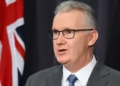
In the midst of these growing concerns, Australia made a decisive announcement that dependants of its diplomatic staff in Israel and Lebanon should leave those countries immediately due to a deteriorating security situation. The Australian Foreign Ministry also extended voluntary departure options for families in the United Arab Emirates, Jordan, and Qatar, underscoring its assessment of widespread instability.
This shift in advisory tone reflects broader unease about the unfolding crisis, which is rooted in ongoing disputes over Iran’s nuclear ambitions and the potential for military escalation. The United States has signalled that it will not tolerate the development of nuclear weapons within Iran, a stance articulated bluntly by senior American officials in recent public remarks.
Further signalling growing concern, the United States itself has taken concrete steps to protect its personnel. In a move that reflects the highest level of caution, the U.S. State Department announced the withdrawal of non-essential staff and eligible family members from its embassy in Lebanon. While core embassy functions remain active, the evacuation highlights the seriousness with which Washington views the regional security risks.
Beyond Australia and the United States, an expanding group of countries has advised citizens to leave Iran as international alarm rises. Serbia has called on its nationals to depart Iran as soon as possible, while Poland’s leadership urged Polish nationals to leave immediately. Sweden’s Foreign Ministry has strongly advised all its citizens to avoid travel to Iran and stressed that the government may not be in a position to assist with evacuations should conditions worsen.
India’s embassy in Tehran has also issued a clear directive for Indian nationals to leave the country using any available transport, including commercial flights. Officials in New Delhi emphasised the unpredictable nature of the situation and the need for citizens to make immediate arrangements to return home.
Similarly, Cyprus has maintained its earlier travel warnings advising citizens to avoid Iran entirely and leave immediately if they are currently there. Singapore’s Ministry of Foreign Affairs, meanwhile, has reiterated its advice that citizens defer travel until conditions are deemed stable.
The expansion of Middle East travel warnings comes amid broader signs of instability that are causing concern beyond just travel advisories. Airlines have begun to adjust their operations, with Dutch carrier KLM announcing a temporary suspension of flights between Amsterdam and Tel Aviv from March 1. The airline cited commercial and operational challenges, though analysts see this move as connected to heightened regional insecurity.

While not all affected carriers have pointed explicitly to tensions between Washington and Tehran, multiple airlines have suspended or re-routed flights in recent weeks due to volatile conditions and unpredictable airspace restrictions. These disruptions have compounded the logistical difficulties facing travellers and governments alike.
The global reaction underscores the sense that a delicate and dangerous moment has been reached. Russia has called for restraint and stressed the importance of diplomatic engagement, even as it conducts military exercises with Iran in the Gulf of Oman, further complicating the strategic landscape.
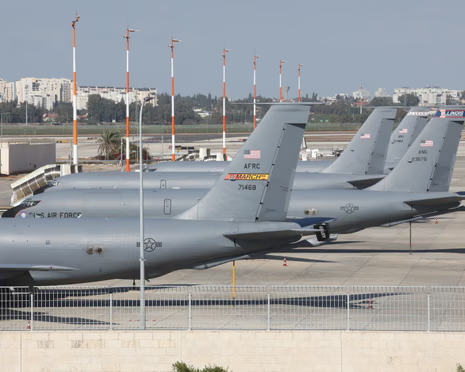
In the background to these travel advisories, the U.S. has conducted its largest military buildup in the Middle East since the Iraq War era. Officially framed as a deterrent intended to stabilise the region and prevent civilian atrocities, this deployment has reinforced fears of a possible escalation into broader conflict.
International diplomats and analysts are warning that further escalation could have profound implications, not just for regional security but for global energy markets and economic stability. Oil prices have already shown sensitivity to the evolving situation, reflecting fears that any conflict might disrupt supply chains in one of the world’s most energy-rich regions.
The tension between Iran and the United States is just one dimension of a complex geopolitical crisis that has drawn in multiple actors, each with its own strategic interests. For travellers and expatriates, the advice from governments is clear: reconsider plans, maintain situational awareness, and prioritise safety amid uncertain times.
As the situation continues to develop, foreign ministries are expected to update their travel advisories further, potentially broadening restrictions or evacuation orders. With heightened tensions showing no immediate sign of easing, the ripple effects from these warnings will likely influence diplomatic relations, commercial aviation, and global travel patterns in the weeks ahead.
Related News:
 Top Christmas Books Reads: Classics to Cozy Romcoms
 Just Stop Oil Protesters Convicted Amid Climate Defence Row
 BBC to Apologise Over Edited Trump Speech Amid Backlash
 Britain deploys RAF specialists to assist Belgium with drone threats
 Palace May Restore Hyphen to Andrew Mountbatten-Windsor’s Name
 US Senate Passes Funding Bill to End Historic Shutdown
 US Justice Department Files Lawsuit Against California Over Partisan Voting Maps
 Greene Pushes Epstein Files Amid Trump Fallout
 Trump Deploys DHS to Charlotte in Major Arrest Operation
 December Run-Off in Chile as Election Produces No Winner
 Zelenskyy Signs Fighter Jet Deal Amid Russian Drone Attacks
 Orban Says Ukraine Has ‘No Chance’ as EU Support Continues
 Canada Passes Carney’s First Budget in Tight Parliamentary Vote
 Israeli Strike Kills 13 Near Palestinian Camp in Lebanon
 Zelensky Meets US Envoy in Turkey to Push Ukraine Peace Talks
 Shadow Fleet at Sea: Europe’s Battle Against Illicit Oil Shipping
 Tiny Curacao Makes History as Smallest Nation to Reach World Cup
 Haiti Qualifies for World Cup Despite Coach Never Visiting Country
 Deadly Russian Strikes Hit Western Ukraine, 20 Killed in Ternopil
 Pentagon Officials in Ukraine to Discuss War End
 Ukraine Peace Plan: Zelensky Ready for Dialogue
 Vietnam Battles Deadly Floods as Rains Continue
 Venezuela Threatens Nobel Winner Machado with Fugitive Status
 At Least Three Dead in Bangladesh Earthquake
 Royal Navy Shadows Russian Warships Entering the Channel
 Israel Confirms Hamas Returned Dror Or’s Body
 US Suspends Afghan Immigration After White House Shooting
 Two National Guard Soldiers Critically Injured Near White House
 Georgians Defy Government Crackdown After Year of Protests
 Southern Lebanon reels as Israeli strikes shatter communities
 Mbappe Scores 4 as Real Madrid Edge Olympiakos
 Sri Lanka Floods Leave 56 Dead, Dozens Missing
 India’s Labour Law Overhaul Sparks Fierce Debate
 Tokyo court rules Japan’s same-sex marriage ban constitutional
 ‘Extinct’ Antelope Returns to Sahara, Bringing Hope
 EU plans $105bn Ukraine aid using frozen Russian assets
 Global campaign launched to free Palestinian leader Barghouti
 American Mother Extradited From UK to U.S. on Murder Charges
 Russia losses Ukraine war peace talks intensify amid rising deaths
 Facebook Slow to Remove Bondi Attack Praise, Anti-Hate Group Claims
 Australian Cruise Ship Freed After Reef Grounding in Papua New Guinea
 Zelenskyy Accuses Russia of Sabotaging Peace Talks
 US Cities Erupt in Protests Against Trump’s Venezuela Military Action
 Albanese Opens Door to Bondi Royal Commission Amid Rising Pressure
 Trump Escalates Minnesota Immigration Surge Amid Rising Tensions
 Iran Protesters Defy Crackdown as Violent Clashes Intensify
 US Clears Nvidia AI Chip Sales to China in Policy Shift
 Trump Threatens Strong Action If Iran Executes Protesters
 Gulf states warn Trump Iran strikes risk wider Middle East war
 Machado Trump medal gesture reshapes Venezuela power struggle
 Greenland defence seen as shared Nato duty amid troop arrivals
 EU weighs response amid Greenland tariff crisis with Trump
 Syria President Declares Victory as Ceasefire Reached with SDF
 Sydney Shark Attack Surge Shocks Australia Beaches
 ICE street raids expose a chilling future for public freedoms
 Thousands Flee Cambodia Scam Centres Amid Global Pressure
 EU Says US Ties Have Suffered ‘Big Blow’ After Greenland Crisis
 Andrew Hastie Emerges as Leadership Rival to Ley
 Starmer China visit raises human rights pressure on Beijing
 US Launches Multi-Day Air Drills Amid Rising Iran Tensions
 Videos reveal earlier clash before Alex Pretti shooting
 China Executes 11 Linked to Myanmar Scam Networks
 UK New Car Discounts Near £6,000 as Prices Are Slashed
 Israel Moves to Bar MSF From Gaza Operations
 Tragic Ski Lift Accident Claims Australian Snowboarder
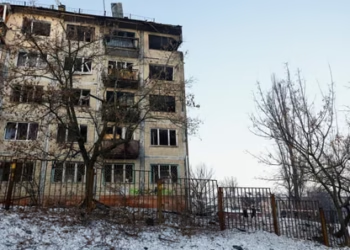 Thousands Left Without Heating in Ukraine Amid Russia Strikes
 Trump Praises ‘Terrific’ Petro After White House Talks
 Portugal Election Delivers Socialist Win as Far Right Surges
 Sydney Protest Escalates and Elderly Woman Suffers Severe Injury
 Tarique Rahman’s Rise Toward Bangladesh’s Top Job
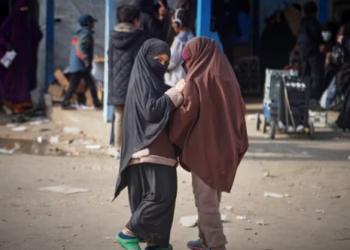 Australian Families Leave Syrian Camp for Home
 SA Police Intensify Search in Gus Lamont Case
 Trump Attacks UK-California Energy Pact
 Kim Jong-un Unveils Housing for War Families
 Trump and Chagos Deal Rift Over Iran Strikes
 Andrew Arrest Sparks Republic Debate in Australia
 Global corruption crisis: Who Washington shields
 El Mencho Killed as Mexico Faces Violence
 Farage Chagos Islands Row Sparks Fury
 Gold Rush in Gugulethu Leaves South Africans Desperate for Work and Hope