Published: 26 February 2026. The English Chronicle Desk. The English Chronicle Online.
New research on ancient Scottish rocks has challenged the long-standing “snowball Earth” theory. For decades, scientists believed that about 700 million years ago, Earth was entirely frozen, and seasonal variations like spring, summer, autumn, and winter had completely ceased. During this period, the planet’s surface was thought to be encased in ice, leaving little room for climate fluctuations or life to endure. However, recent analysis suggests the story may be far more complex, with evidence that the climate occasionally awakened even amid global glaciation.
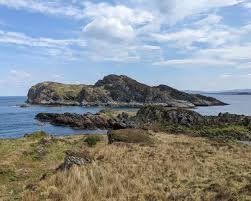
The study, led by Thomas Gernon and Chloe Griffin from the University of Southampton, focused on rocks from the remote islands of the Garvellachs off Scotland’s west coast. These rocks were deposited during the so-called snowball Earth period and offer a rare glimpse into extreme ancient conditions. Their remarkably preserved layers allow scientists to investigate the environment with extraordinary detail, almost as if reading a diary of Earth’s climate.
Using high-powered microscopes, the team examined 2,600 individual layers in the rocks, capturing year-by-year records of climate variation. The thickness of each layer revealed subtle cycles, some of which resembled modern patterns such as solar fluctuations and El Niño oscillations. These variations imply that, contrary to previous assumptions, the planet’s climate was not entirely frozen and static during this period. Even a few thousand years of temporary thaw could leave behind a record of remarkable climatic activity.
The findings, published in Earth and Planetary Science Letters, indicate that the Garvellachs rocks captured a rare slushy interlude. During this interval, a small fraction of the ocean may have thawed, briefly allowing the climate to respond dynamically rather than remaining locked in perpetual ice. Such fleeting warmth challenges the rigid conception of snowball Earth as an era of absolute climatic stasis. These slushy periods may have provided crucial refuges for life, allowing organisms to survive otherwise uninhabitable conditions.
Scientists have long debated the extent and nature of snowball Earth episodes, and these new observations provide a fresh perspective. While the overall picture remains that of extreme global glaciation, the study emphasizes the Earth system’s sensitivity and the potential for unexpected climate responses. Even within a seemingly unyielding ice-covered world, subtle shifts could produce temporary warming events, revealing a climate far more nuanced than previously thought.

This discovery also resonates with contemporary climate science, as it highlights the responsiveness of Earth’s climate to minor perturbations. Understanding how the planet once recovered from global glaciation could shed light on its resilience and vulnerability in the face of modern climate change. The precise patterns recorded in the Garvellachs rocks provide a valuable analogue for how oceans and atmospheres interact under extreme conditions.
Gernon explained that the preserved layers act as a natural archive, preserving information about cycles that mirror those observed in modern climates. Solar activity, oceanic oscillations, and seasonal shifts may have left subtle marks, even in a world largely dominated by ice. This microscopic record allows researchers to reconstruct not only the temperatures of the era but also the underlying processes that governed Earth’s climate system during periods of intense stress.
Furthermore, the study emphasizes the importance of rare geological sites in reconstructing Earth’s deep past. The Garvellachs islands, isolated and difficult to access, contain rocks that escaped erosion and deformation over hundreds of millions of years. Such locations offer exceptional windows into processes that are otherwise impossible to detect, revealing nuances in Earth’s history that textbooks often oversimplify.
The research also raises intriguing questions about the interplay between global and regional climate conditions. While much of the planet remained frozen, localised slushy zones may have existed intermittently, creating microenvironments capable of sustaining early life forms. These temporary thaws could have served as evolutionary refuges, offering a rare opportunity for adaptation and survival in an otherwise inhospitable world.
Climate models of the snowball Earth period will now need to account for these episodic warm events. Previously, models assumed complete surface ice coverage, limiting the complexity of potential feedbacks between ocean, atmosphere, and solar forcing. The Garvellachs evidence suggests that even during extreme glaciation, the system retained a degree of flexibility, potentially allowing for short-term variability that could have profound long-term implications.
Chloe Griffin highlighted that their work underscores the intricate balance within Earth’s climate system. Tiny variations in solar radiation or ocean circulation could have created localised melt zones, revealing that snowball Earth was not as uniform or absolute as textbooks often describe. This insight is crucial for understanding the thresholds that can trigger major shifts in climate, both in the past and in our present day.
The implications extend beyond paleoclimatology. By examining how Earth responded to ancient stresses, scientists gain insights into the mechanisms that may operate under modern climate change scenarios. Extreme ice ages, volcanic eruptions, or shifts in ocean currents today might elicit responses comparable to those recorded in the Garvellachs, offering a glimpse into potential tipping points in our current environment.
Additionally, the research provides a tangible example of how detailed geological study can overturn longstanding assumptions. For decades, snowball Earth was treated as an immutable period of complete glaciation, but the discovery of cyclical climate signals in these rocks demonstrates that Earth’s climate system is far more intricate. By studying the past with careful observation, scientists are better able to anticipate the planet’s behaviour under extreme conditions.

The study also has educational significance, offering a compelling narrative for teaching about Earth’s deep history. It challenges students and the public to reconsider simplistic notions of ancient climates, emphasising the dynamic and responsive nature of the Earth system. Rocks that may appear inert to the casual observer reveal stories of resilience, adaptation, and intermittent change, enriching our understanding of planetary evolution.
As technology advances, future research will likely uncover additional slushy episodes preserved in rocks elsewhere around the globe. Comparative studies may identify patterns that extend beyond the Garvellachs, further refining our understanding of snowball Earth and its consequences. Each discovery contributes to a more detailed picture of Earth’s climate machinery and its capacity for sudden or unexpected change.
Ultimately, these findings remind us that Earth’s history is written in subtle layers, waiting to be interpreted with care and attention. Even during periods of apparent environmental rigidity, life and climate may find ways to adapt and persist. The Garvellachs rocks, frozen in time yet alive with information, illustrate the importance of meticulous research in uncovering the nuanced realities of our planet’s past.
The “snowball Earth” theory, once considered settled, now faces a more complex reality. Episodes of temporary thaw, revealed through ancient Scottish rocks, demonstrate that Earth’s climate possesses a resilience and sensitivity that continue to surprise scientists. By exploring these deep-time events, researchers gain insights into how the planet may respond to future disturbances, offering valuable lessons for both climate science and the study of early life.
Related News:
 How Bringing Forests Into Preschools Boosts Children’s Health
 Virgin Trains Moves Closer to Challenging Eurostar Monopoly
 UK Bans Fake Numbers: Scammers Lose Their Trick
 England Curriculum Review Recommends Major Changes
 Vibe coding’ named Collins dictionary’s word of the year
 Experts Urge Legal Right to Timely Cancer Care
 Patients to Test Health at Home to Ease NHS Winter Pressure
 One of world’s last dinosaurs on sale for £3m
 North Sea oil workers must lose weight or face job loss
 No link found between paracetamol in pregnancy and autism
 Britain deploys RAF specialists to assist Belgium with drone threats
 Government urges schools to ban phones to curb classroom disruption
 NHS frontline staff forced to cover gaps as managers remain scarce
 Northern Lights May Illuminate UK Skies Amid Strong Solar Storm
 Stop using ChatGPT to write speeches, AI minister tells MPs
 Northern Lights may illuminate UK skies this week
 New laws to bolster UK’s defences against cyber attacks on NHS, transport and energy
 Hitler’s DNA Confirms He Truly Had Only One Testicle
 Working-Class Men with Prostate Cancer Left Behind by NHS
 Higgs Donates Nobel Medal to His Beloved University
 New AI tool could cut wasted efforts in organ transplants
 How Cultures Interpreted the Aurora Through History
 From War to Wales: Teen Innovator Eyes Net Zero Future
 From Baby Teeth to Bioengineering: The Future of Self-Healing Teeth
 Sundar Pichai Cautions on AI Hype and Market Risks
 Google Chief Urges Caution: Don’t Trust AI Blindly
 US Judge Says Meta Did Not Hold Illegal Social Media Monopoly
 Poll Reveals China Leads World in Trusting AI Technology
 Healthy Habits in Your 30s That Boost Life in Your 70s
 Raccoons Could Become America’s Next Pet
 Australia to Ban Social Media for Kids Under-16 Starting December
 Coffins Now Too Large to Cremate Amid Rising Obesity Crisis
 UK Taskforce Unveils Plan to Streamline Nuclear Reactor Rules
 NHS paediatric leave parents waiting months for answers
 Ofcom urges platforms to limit abuse and curb online ‘pile-ons’
 Extraordinary’ Object Found at Orkney Neolithic Site
 Asahi says 1.5 million customers’ data potentially leaked in cyber-attack
 AI Actress Creator Says Tilly Norwood Won’t Replace Actors
 YouTube Warns Kids Will Be Less Safe Under Australia Ban
 Starmer’s communications chief to outline media strategy overhaul
 TikTok Shop Emerges as a Gamechanger for UK Small Businesses
 UK Car Sales Pass 2 Million as Chinese Brands Surge
 AI Grok Sparks Child Safety Alarm in the UK
 Election Deepfakes Pilot Launched for Scottish and Welsh Votes
 Indonesia blocks Grok chatbot over sexual content risk
 Elon Musk warns of UK clampdown on X free speech
 Google Removes Some AI Health Summaries Over Safety Concerns
 Nasa ISS Medical Evacuation: Crew-11 To Return Early
 US Clears Nvidia AI Chip Sales to China in Policy Shift
 Amazon Milton Keynes closure sparks concern for UK warehouse workforce
 BP’s Influence Sparks Controversy in UK STEM Education
 AI will transform human jobs, enhancing skills, says minister
 Astronomers Prepare for First-Ever Movie of a Black Hole
 MPs warn AI financial risks threaten UK stability
 MPs warn AI financial risks threaten UK stability
 EU launches Grok AI probe into X over explicit images
 AI job losses UK: Britain faces sharper employment shock
 UK AI avatar firm Synthesia valuation jumps to $4bn
 ABC Facebook Page Briefly Hacked, Adult Photos Posted
 Pornhub blocks new UK users over age checks dispute
 Amazon mistakenly signals new global layoffs to employees
 Genes May Hold the Secret to Long Life, Scientists Find
 AI breast screening cuts later cancer diagnoses by 12%, study finds
 UK Launches First Rapid-Charging Battery Train This Weekend
 AI News “Nutrition” Labels Proposed for Transparency
 UK New Car Discounts Near £6,000 as Prices Are Slashed
 Meta trial over child exploitation claims begins
 Baby rhythm sense found in newborn brains
 Most Statin Side-Effects Are Not Caused by Drugs, Study Confirms
 TikTok Design Faces EU Crackdown Over Addictive Features
 Childnet Censorship Row Over Teen Safety Speeches
 Bithumb Bitcoin Mistake Shocks Crypto World
 BT Names New Openreach Chief Amid Major Fibre Expansion
 AI fears hit UK wealth and comparison sites
 Tech Trends Set to Transform Life in 2026
 Starmer Targets AI Chatbots Over Child Safety Concerns
 Revenge Porn Crackdown: 48-Hour Rule Warning
 Treasury AI plans spark influence concerns
 UK Anti-Slavery Watchdog Urges Adult Sites Overhaul
 Toxic e-waste found in dolphins raises urgent health concerns