Published: 26 February 2026. The English Chronicle Desk. The English Chronicle Online.
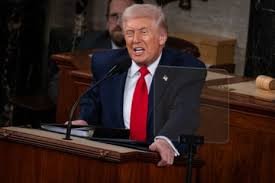
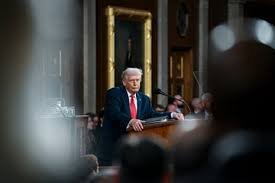
The political landscape in the United Kingdom and the United States has always been deeply interconnected, and as the 2026 midterm elections approach, the actions of Donald Trump are drawing intense global scrutiny. During his recent State of the Union address, the President once again directed his rhetoric toward the integrity of the American electoral system. He claimed that his political opponents rely on deceptive practices because their policies cannot win fairly. These statements are not merely rhetorical flourishes; they signal a coordinated effort by the Trump administration to reshape the upcoming midterm elections through various federal and state-level maneuvers.
The historical precedent for midterm elections usually spells trouble for the party currently holding the White House. Since the end of the Second World War, the incumbent president’s party typically loses an average of twenty-six seats in the House of Representatives and four seats in the Senate. If these historical averages hold true in 2026, the Republican party would lose control of both chambers of Congress. This looming mathematical reality appears to be driving a series of aggressive strategies designed to mitigate potential losses. Observers note that the administration seems poised to go to extraordinary lengths to protect itself from a Democratic majority.

One of the primary methods through which the administration seeks to influence the midterm elections involves the promotion of the Save America Act. This proposed legislation would require states to submit their voter data to the Department of Homeland Security for federal inspection. Furthermore, the act aims to restrict the use of mail-in ballots while imposing strict voter identification requirements and proof of citizenship at the point of registration. While the bill faces a significant uphill battle against a Democratic filibuster in the Senate, its principles are already being adopted by several Republican-led state legislatures.
States such as Arizona, Kansas, and West Virginia are currently considering legislation that mirrors these restrictive voting measures. While these state-level actions are frequently met with constitutional challenges, they create a fractured voting environment that critics argue could suppress turnout. The Institute for Responsive Government has pointed out that mail-in voting already includes robust safeguards, such as signature verification and secure chain-of-custody rules. Despite these existing protections, the push for more restrictive laws remains a cornerstone of the strategy to impact the midterm elections result.
In addition to legislative efforts, there is growing concern regarding the use of executive authority. Trump has previously suggested that he might “nationalize” certain aspects of the voting process to ensure what he terms “electoral integrity.” Although the United States Constitution explicitly places the power to administer elections in the hands of individual states, the President has hinted at using executive orders to enforce voter ID and citizenship requirements. Past attempts to use executive power in this manner have been blocked by the courts, yet the rhetoric continues to persist as the midterm elections draw closer.
The administration has also turned its sights toward local election officials. A recent federal raid in Fulton County, Georgia, saw FBI agents seizing documentation related to the 2020 election. This move was framed as part of a criminal investigation into potential “deficiencies” in vote tabulation. Local officials have strongly contested these actions, arguing that the investigation is based on debunked claims and partisan skepticism. The specter of prosecuting election workers creates a high-pressure environment that could fundamentally alter how the midterm elections are administered at the local level.
Another controversial avenue involves the investigation into voting machines led by Tulsi Gabbard, the Director of National Intelligence. This probe focuses on foreign interference and the technical vulnerabilities of voting infrastructure. While the office has denied searching for specific international links, right-wing commentators have used the investigation to fuel theories about external tampering. There are fears among legal experts that this investigation could serve as a pretext for the federal government to seize or block the use of certain voting machines under the guise of national security.
The potential for federal intervention is not limited to hardware and data. In Minneapolis, the presence of federal agents has already sparked intense debate. Correspondence from the Attorney General’s office suggested that federal operations in the city could be linked to the state’s willingness to turn over voter registration data. Critics have described these demands as a form of political leverage. As the midterm elections approach, the suggestion that federal agents or even troops could be deployed near polling stations has moved from the fringes of political discourse to more prominent platforms.
Prominent supporters of the administration have openly called for ICE agents to surround polling locations to prevent what they claim is the “stealing” of the country. Some have gone even further, suggesting the use of the Insurrection Act to station troops at the polls. While federal statutes expressly forbid the presence of armed troops or federal agents at voting locations, the mere discussion of such measures contributes to an atmosphere of apprehension. This strategy appears designed to project strength and deter certain demographics from participating in the midterm elections.

The 2026 midterm elections are set to be a defining moment for the current administration and the broader American political system. The combination of legislative pressure, executive orders, criminal investigations, and the potential for federal presence at polls represents a multi-front approach to maintaining power. For voters and international observers alike, the question remains whether the traditional checks and balances of the American system will hold firm against these unprecedented maneuvers. As the campaign season intensifies, the focus remains on ensuring that the democratic process is respected by all parties involved.
The implications of these strategies extend beyond the borders of the United States. In the United Kingdom, political analysts are closely monitoring these developments, recognizing that the stability of American democracy has a direct impact on global markets and international relations. The midterm elections will serve as a litmus test for the resilience of democratic norms in an era of increasing polarization. Whether the administration’s tactics succeed in tilting the scales or if the electorate responds with a historic turnout remains the most significant question of the year.
Ultimately, the integrity of the midterm elections depends on the transparency of the process and the protection of every citizen’s right to vote. While the administration continues to rail against perceived fraud, the actual data suggests that American elections remain some of the most secure in the world. The shift toward more aggressive federal oversight and state-level restrictions marks a significant departure from long-standing political traditions. As November approaches, the world will be watching to see how these various strategies manifest and what they mean for the future of representative government.
Related News:
 British Woman in Iran ‘Losing Hope’ Amid Ongoing Detention
 BBC Journalist Held and Interrogated in Vietnam
 UK University Suspends Human Rights Research Following Pressure from China
 UK University Faces Counter-Terror Probe Over China Pressure
 Abigail Spanberger Elected Virginia’s First Female Governor
China-critical UK academics face ‘extremely heavy’ pressure from Beijing
Abigail Spanberger Elected Virginia’s First Female Governor
China-critical UK academics face ‘extremely heavy’ pressure from Beijing
 British military receives first Ajax armoured vehicles – eight years late
 BBC to Apologise Over Edited Trump Speech Amid Backlash
 Britain deploys RAF specialists to assist Belgium with drone threats
 Ukraine-Russia war latest: Putin’s troops exploit bad weather to force Kyiv withdrawal from multiple towns
 Trump Claims Victory as Longest Shutdown Ends
 Hamas Fighters in Gaza Tunnels Stall Ceasefire Progress
 US Justice Department Files Lawsuit Against California Over Partisan Voting Maps
 South Sudan President Removes Vice-President Amid Political Uncertainty
 Greene Pushes Epstein Files Amid Trump Fallout
 Trump Deploys DHS to Charlotte in Major Arrest Operation
 December Run-Off in Chile as Election Produces No Winner
 Canada Passes Carney’s First Budget in Tight Parliamentary Vote
 Why Russian Liberals Push Strongly Pro-Israel Narratives
 Shadow Fleet at Sea: Europe’s Battle Against Illicit Oil Shipping
 Rama Rebukes Mahmood for Targeting Albanian Families
 Russian Vessel Used Lasers on RAF Pilots, UK Claims
 Pentagon Officials in Ukraine to Discuss War End
 Venezuela Threatens Nobel Winner Machado with Fugitive Status
 Texas Governor Faces Lawsuit From CAIR
 Trump Envoy to Discuss Ukraine Peace at Kremlin
 Pope Leo XIV Begins Historic Trip to Turkey and Lebanon
 Georgians Defy Government Crackdown After Year of Protests
 India’s Labour Law Overhaul Sparks Fierce Debate
 Video shows Israeli troops kill Palestinians after surrender
 Chinese & Japanese Boats Clash Near Disputed Islands
 EU plans $105bn Ukraine aid using frozen Russian assets
 Global campaign launched to free Palestinian leader Barghouti
 UK Aid Cuts Could Undermine Global Influence, Experts Warn
 Thailand and Cambodia Agree Ceasefire After Weeks of Deadly Clashes
 Russia losses Ukraine war peace talks intensify amid rising deaths
 Zelenskyy Accuses Russia of Sabotaging Peace Talks
 Trump ‘Not Worried’ as China Conducts Massive Taiwan Wargame
 Khaleda Zia Laid to Rest with State Honour in Dhaka
 Maduro Faces Court in New York Over Drugs and Weapons Case
 Albanese Opens Door to Bondi Royal Commission Amid Rising Pressure
 Trump Escalates Minnesota Immigration Surge Amid Rising Tensions
 Iran Protesters Defy Crackdown as Violent Clashes Intensify
 Iran Leader Blames Protesters, Says They Serve Trump
 Trump Eyes Strong Military Options Amid Iran Protest Crackdown
 Trump Threatens Strong Action If Iran Executes Protesters
 Machado Trump medal gesture reshapes Venezuela power struggle
 Trump Receives Machado’s Nobel Medal in White House Meeting
 EU weighs response amid Greenland tariff crisis with Trump
 US Considers Asylum for British Jews Amid Rising Antisemitism
 ICE street raids expose a chilling future for public freedoms
 US Africa aid remarks spark anger after leaked State email
 Trump Launches “Board of Peace” Amid Global Diplomacy Push
 EU Says US Ties Have Suffered ‘Big Blow’ After Greenland Crisis
 Andrew Hastie Emerges as Leadership Rival to Ley
 Russia Strikes Kyiv and Kharkiv as Peace Talks Enter Day Two
 Pentagon Signals Reduced Role in Deterring North Korea
 Starmer China visit underscores clear-eyed national security stance
 Starmer China visit raises human rights pressure on Beijing
 Israel Moves to Bar MSF From Gaza Operations
 Mandelson resignation shakes Labour over Epstein row
 Cory Bernardi joins One Nation for SA election
 Trump Praises ‘Terrific’ Petro After White House Talks
 Sydney Protest Escalates and Elderly Woman Suffers Severe Injury
 Tarique Rahman’s Rise Toward Bangladesh’s Top Job
 Glass Cliff Debate After Ley’s Ouster
 Japan Seizes Chinese Boat Amid Rising Tensions
 Australian Families Leave Syrian Camp for Home
 Trump Attacks UK-California Energy Pact
 Kim Jong-un Unveils Housing for War Families
 Trump and Chagos Deal Rift Over Iran Strikes
 Andrew Mountbatten-Windsor Arrest After FBI Radar
 Andrew Arrest Sparks Republic Debate in Australia
 Global corruption crisis: Who Washington shields
 Duterte ICC Hearing Begins Amid Defiance
 Farage Chagos Islands Row Sparks Fury
 Trump Tariffs Threat Spark UK and EU Alarm
 Albanese on One Nation and Pocock Attack
 The Dangerous Rise of Remigration Across Modern Europe
 Trump’s Marathon Speech Fails to Mask a Growing National Disconnect