
Published: 27 February 2026. The English Chronicle Desk. The English Chronicle Online.
In a historic upset, the Green party has claimed victory in the Gorton and Denton byelection, delivering a crushing blow to Keir Starmer’s Labour leadership. Hannah Spencer, a local plumber and Green party councillor, overturned Labour’s 13,000-vote majority to become the party’s first MP in northern England. The result has shocked political commentators, establishing the Greens as a serious national force capable of challenging both Labour and Reform UK. Spencer secured 14,980 votes, leaving Labour in third place with 9,364, and Reform UK’s candidate, Matt Goodwin, finishing second with 10,578 votes.
The Greens’ triumph in a long-standing Labour stronghold marks a turning point in UK politics, highlighting growing voter dissatisfaction with traditional parties. Labour suffered a 25.3% drop in its vote share compared with the 2024 general election, signalling widespread disillusionment among the party’s supporters. Political analysts argue that the loss may reflect voters’ frustration with Labour’s inability to offer clear alternatives to emerging parties on the left. Spencer’s victory has also intensified scrutiny of Starmer’s leadership decisions, particularly his blocking of Andy Burnham from standing as the Labour candidate.
Hannah Spencer addressed an emotional crowd during her victory speech, emphasising the struggles faced by ordinary workers and condemning economic inequality. She told supporters that people were being “bled dry” while billionaires continued to amass wealth, asserting that working hard should secure a comfortable life. Spencer further highlighted the importance of community solidarity, pledging to confront politicians who scapegoat minorities for societal problems. She specifically mentioned her Muslim friends and neighbours, insisting that all citizens deserved equal respect and consideration.
The byelection was prompted by the resignation of Andrew Gwynne in January due to health concerns. Gwynne had been under parliamentary investigation over offensive WhatsApp messages shared within local Labour circles. Labour insiders had anticipated a tight race, believing that voters might remain loyal despite the Greens’ rising popularity. Many were confident that Reform UK’s controversial candidate would split the opposition, potentially allowing Labour to hold the seat. However, the Greens’ energetic campaign, driven by thousands of volunteers from across the UK, proved decisive.
Spencer, who has become popularly known as “Hannah the plumber,” garnered widespread attention for her relatable profile and grassroots campaigning. Labour sources acknowledged that dissatisfaction over the party’s stance on Gaza may have cost crucial support among Muslim voters, a factor the Greens effectively capitalised on. A local Labour councillor remarked that the Gaza issue had not been forgotten, warning that Labour could face similar challenges in other constituencies. Within hours of polls closing, Lucy Powell, Labour’s deputy leader, confirmed the defeat, highlighting the depth of the party’s losses.
Powell, the only member of Labour’s ruling body who had supported Burnham’s bid for the seat, defended Starmer amid calls for accountability. She emphasised that the party needed to clarify its politics to ensure voters felt represented and supported. Turnout in the byelection was 47.6%, slightly lower than in 2024, but enough to indicate a highly engaged electorate responding to emerging alternatives. Labour’s campaign strategy, framing the election as a choice between “unity and hope” or the “toxic division” of Reform, ultimately failed to resonate with voters in a constituency deeply affected by national and local issues.
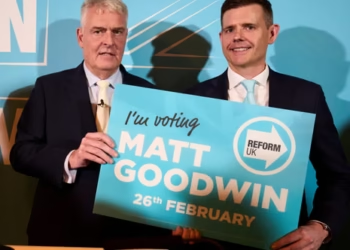
Reform UK’s candidate, Matt Goodwin, who previously worked as an academic and GB News presenter, focused on polarising rhetoric during the campaign, calling for policies aimed at curbing what he described as “the Islamisation of British society.” He also questioned the British identity of ethnic minority residents, a stance widely criticised across the political spectrum. Following the defeat, Goodwin attributed his loss to a coalition of progressives and minority voters, claiming the Greens engaged in “sectarian politics” by sending campaign materials in Urdu.
Labour’s efforts to reinforce its campaign included deploying multiple cabinet ministers to the constituency, although Starmer himself did not arrive until the final days. The party faced additional controversy due to the appointment of Peter Mandelson as US ambassador, despite knowledge of his association with Jeffrey Epstein, generating further negative headlines. Starmer’s decision to block Burnham from standing was interpreted as an attempt to prevent a leadership challenge, a move that has generated internal dissent within Labour ranks.
The Greens’ victory also represents the first time in nearly a century that Gorton will not be represented by a Labour MP, symbolising a profound shift in local political allegiance. Observers note that the result has far-reaching implications for Labour, which may face additional challenges in maintaining cohesion while countering the growing appeal of alternative parties. The Green party, with Spencer now as its fifth MP, has demonstrated that a strong grassroots campaign combined with clear policy messaging can break long-standing political traditions.
The election campaign saw intense scrutiny and accusations of unethical tactics, with both Labour and the Greens trading criticisms throughout the contest. Reform UK faced legal challenges over letters sent without proper political imprint, though the party blamed printing errors for the mishap. The byelection ultimately highlighted the volatility of voter behaviour and the importance of responsive, community-focused campaigning. Analysts suggest the result underscores a shift in voter priorities, with issues such as economic fairness, social equality, and international policy increasingly influencing electoral outcomes.
Spencer’s win is widely regarded as a victory for grassroots politics and a signal that alternative parties can successfully challenge the dominance of Labour in northern England. Her approach emphasised local engagement, transparent messaging, and highlighting systemic inequalities, which resonated with a broad range of voters. Political commentators predict that Labour will need to reassess its strategy, particularly in urban constituencies with diverse populations, to regain credibility and support. The byelection result also poses strategic questions for Reform UK, which may struggle to convert polarising rhetoric into consistent electoral gains.

Labour insiders have already expressed concern that the Gorton and Denton loss might presage similar outcomes elsewhere, particularly in areas with historically high Labour support. The Greens’ success provides a case study in how focused community engagement, appealing to working-class and minority voters, can overcome entrenched political majorities. In response to the result, Starmer has vowed to reflect on the outcome while maintaining leadership, signalling that the party intends to address internal issues without immediate leadership changes.
The Gorton and Denton byelection demonstrates the increasing relevance of alternative parties in reshaping UK politics. The Greens’ ability to secure victory in a traditional Labour stronghold highlights the potential for emerging parties to capitalise on voter dissatisfaction and offer credible policy alternatives. As the political landscape evolves, Labour faces pressure to reconcile internal divisions, redefine its messaging, and strengthen engagement with diverse constituencies. Meanwhile, Spencer’s victory provides the Green party with momentum and a platform to influence national discourse, particularly on issues of economic justice, community solidarity, and social equity.
This historic result signals a new era in UK politics, emphasising the influence of grassroots campaigning and highlighting the electorate’s desire for fresh representation. Voters have clearly indicated their willingness to challenge longstanding party loyalties, with implications for future elections across the country. Analysts predict that the Greens’ ability to maintain momentum will depend on sustaining local engagement and broadening policy appeal to ensure continued relevance in Westminster politics.
Related News:
 British Woman in Iran ‘Losing Hope’ Amid Ongoing Detention
 BBC Journalist Held and Interrogated in Vietnam
 Green Party Surges Past Labour in Latest UK Poll
 Celebrities and Charities Demand UK Government Act on Child Poverty
 Trump’s UK Ambassador Urges North Sea Drilling to Strengthen US Ties
 FBI Director Kash Patel Defends Girlfriend Amid Government Jet Claims
 French Taxi Driver Cleared in David Lammy Theft Case After Fare Dispute
 Boris Johnson accused of undermining BBC leadership
 ‘Reckless’ cuts to victims’ services will cost more than they save
 Millionaires group urge Reeves to introduce wealth tax to ‘lift kids out of poverty’
 Starmer Faces Growing Dissent as Labour MPs Weigh Leadership Challenge
 Reeves rejects £1bn plea for NHS redundancy payouts
 Politics latest: Starmer ‘will fight any leadership coup’ as Streeting denies attempt to oust Labour PM
 PM Condemns Leaks, Vows Loyalty to Ministers and Stability
 Major Rent Reform Ends No-Fault Evictions in England
 Peers Flood Assisted Dying Bill with 942 Amendments
 England’s Special Needs Support Faces Breaking Point
 MoD warned over Excel risks before Afghan data breach
 UK Asylum Overhaul Sparks Debate Over Human Rights and Deportations
 UK Candidate Moved to Safe House After Election Threats
 UK Warns China After MI5 Issues Espionage Alert
 Labour Faces Historic Decline in Wales
 Rama Rebukes Mahmood for Targeting Albanian Families
 PM Highlights UK Business at G20 in South Africa
 Kate Forbes: Motherhood Harder Than Politics
 Most Tories Expect to Support a Farage-Led Government
 Labour MP claims devolution bill is ‘blatant discrimination’ against Cornwall
 Millions Face Higher Taxes Under Reeves New Budget
 Peers Get Extra Time to Debate Assisted Dying Bill
 Planned Palestinian Flag Raising at Belfast City Hall Faces Delay Amid Legal Concerns
 Starmer Says Labour’s Economic Plan Needs Years to Deliver
 Culture secretary to review Telegraph takeover by Daily Mail owner
 Andy Burnham Apologises for Past LGBTQ+ Police Discrimination
 Plans to Limit Jury Trials Face Retreat After Mounting Opposition
 Jenrick Reform defection deepens Tory civil war
 Right Must Unite After Jenrick Defection, Urges Rees-Mogg
 UK Ministers Drop Foreign Student Targets for Global Education Push
 MPs warn AI financial risks threaten UK stability
 MPs warn AI financial risks threaten UK stability
 No Gas Boiler Ban as UK Warm Homes Plan Backs Heat Pumps
 Hugh Grant Joins Call for Under-16 Social Media Ban in UK
 Shinzo Abe’s killer receives life sentence in Japan
 Lords Vote Piles Pressure on Starmer Over Social Media Ban
 Planned Troubles Board Game Sparks Outrage in Northern Ireland
 Reform UK Health Plan ‘Would Cost £1.7bn’, Streeting Says
 Police response times face strict new national limits
 Labour policing overhaul sparks fears over growing central control
 Tories criticised after Braverman defection sparks mental health row
 Burnham Westminster return hopes fade amid Labour rift
 Starmer warns of toxic division politics in Reform challenge
 Starmer China visit raises human rights pressure on Beijing
 Labour Must Revive High Streets to Avoid Election Collapse
 Calls Grow for King Charles to Apologise for Crown’s Role in Slavery
 Starmer Signals UK Return to EU Defence Pact Talks
 Palantir contracts face UK halt calls over transparency
 Labour Thinktank Row Deepens Over Journalist Probe Claims
 Sarwar call shakes Labour as No 10 calms fears
 Labour Lord Doyle Apologises Over Paedophile Ties in Political Storm
 Cabinet Secretary Shake-Up Triggers Due Diligence Warning
 Starmer Faces Inquiry Calls Over Thinktank Probe
 Royal Mail Delivery Crisis Deepens Amid Weather Chaos
 Labour Together probe scandal sparks fresh Cabinet Office investigation
 Farage to Name Jenrick as Reform Chancellor Pick
 Farage Unveils Reform UK Frontbench Team
 NHS Negligence Ruling Raises Payout Costs
 Civil Service Pay: Union Urges Ministers to End ‘Barking Mad’ Limits
 Antonia Romeo appointment sparks criticism
 Trump and Chagos Deal Rift Over Iran Strikes
 Andrew Mountbatten-Windsor Arrest After FBI Radar
 Farage Chagos Islands Row Sparks Fury
 Trump Tariffs Threat Spark UK and EU Alarm
 Gasfield Deal Sparks Debate Over Fracking in Lincolnshire
 Reform UK targets workers’ rights repeal
 Ministers Urged to Ban Crypto Political Donations
 Mandelson Denounces Arrest Over ‘Baseless’ Fleeing Claims
 Russian Trade Routed Through British Islands Exposed
 Mandelson Arrest: Met Apologises to Hoyle
 Palestine Action ban appeal moves forward
 Reeves Must Back Defence Plan or Face Dismissal, Says Unite Chief
 NHS Maternity Units Cover Up Harmful Childbirth Errors