Published: 01 March 2026. The English Chronicle Desk. The English Chronicle Online.
At least nine people have been killed outside the United States consulate in Pakistan’s largest city after protests erupted over the killing of Iranian Supreme Leader Ali Khamenei. The violence in Karachi marks one of the deadliest international flashpoints linked to the escalating confrontation between Iran, the United States and Israel.
According to hospital officials, the fatalities occurred early on Sunday morning when hundreds of pro-Iran demonstrators attempted to march toward the heavily fortified US diplomatic compound on Mai Kolachi Road. Security forces opened fire as protesters tried to breach security barriers, triggering chaos in the surrounding area.
Dr Summaiya Syed, a police surgeon at Karachi’s civil hospital, confirmed that at least nine bodies had been brought to the facility. Several others were reported injured, though the precise number remains unclear as emergency services continued to respond throughout the morning.
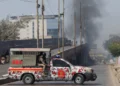
Video footage circulating online and verified by regional media showed wounded individuals being carried by bystanders through smoke-filled streets. Other images captured protesters pushing against barricades and hurling objects toward security personnel stationed near the consulate perimeter. Authorities said the situation was eventually brought under control, though tensions remained high across the city.

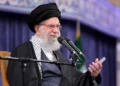
The unrest follows mounting anger across parts of the Muslim world after Iran confirmed the death of Khamenei in coordinated US-Israeli air strikes. Demonstrations condemning Washington have spread beyond Iran’s borders, with Pakistan emerging as one of several countries witnessing significant public reaction.
In northern Pakistan, protesters set fire to a United Nations office in Skardu, located in the Shia-majority Gilgit-Baltistan region known for its Himalayan mountain ranges. Local government spokesperson Shabbir Mir told Reuters that a large crowd had gathered outside the building before setting it ablaze. No casualties were reported in that incident, but images from the scene showed thick plumes of smoke rising above the town.
In the eastern city of Lahore, hundreds assembled outside the US consulate in a separate protest. Witnesses said some demonstrators attempted to damage an outer security gate located hundreds of yards from the diplomatic compound. Police intervened but did not resort to gunfire, and there were no immediate reports of injuries.
Further demonstrations are expected in Islamabad, where organisers have called for a rally near the diplomatic enclave housing the US embassy. Security has been heightened in the capital, with additional police and paramilitary forces deployed to guard sensitive installations.
Pakistan has historically maintained complex ties with both the United States and Iran, balancing strategic cooperation with Washington against regional and religious sensitivities. The killing of Khamenei has placed Islamabad in a delicate position, as public anger spills into the streets while officials seek to prevent a broader diplomatic crisis.

Beyond Pakistan, protests have also been reported in Iraq, Morocco and Indian-administered Kashmir. In Baghdad, demonstrators gathered near the fortified Green Zone, home to government buildings and foreign embassies, including the US mission. Security forces there also braced for possible attempts to breach restricted areas.
The violence in Karachi underscores the volatility of the current geopolitical climate. The United States has defended its strikes on Iranian targets as necessary to curb what it describes as escalating threats linked to Iran’s nuclear and military activities. Iran, meanwhile, has vowed retaliation, and its allies across the region have staged demonstrations condemning Washington and its partners.
Diplomatic compounds worldwide have increased security measures amid fears of further unrest. International observers warn that symbolic targets such as embassies and consulates often become focal points during periods of heightened tension, particularly when events carry strong religious or ideological resonance.
Karachi, a sprawling metropolis of more than 15 million people, has experienced episodes of political and sectarian violence in the past. However, Sunday’s events represent a rare instance of unrest directly tied to developments in the wider Middle East conflict. Law enforcement officials have not yet confirmed whether any arrests were made, though investigations are under way.
Human rights advocates have called for an independent inquiry into the use of lethal force against protesters, emphasising the need for transparency in determining how and why live ammunition was deployed. Authorities maintain that security personnel acted to prevent a breach of a high-risk diplomatic site.
As the regional crisis deepens, governments across South Asia and the Middle East are bracing for further demonstrations. The death toll in Karachi may intensify calls for restraint from both protest organisers and security forces, even as political rhetoric continues to escalate.
With tensions running high and the potential for further mobilisation in the coming days, Pakistan faces the challenge of maintaining domestic stability while navigating the diplomatic aftershocks of a rapidly widening international conflict.
Related News:
 British Woman in Iran ‘Losing Hope’ Amid Ongoing Detention
 BBC Journalist Held and Interrogated in Vietnam
 UK University Suspends Human Rights Research Following Pressure from China
 UK University Faces Counter-Terror Probe Over China Pressure
 Abigail Spanberger Elected Virginia’s First Female Governor
China-critical UK academics face ‘extremely heavy’ pressure from Beijing
Abigail Spanberger Elected Virginia’s First Female Governor
China-critical UK academics face ‘extremely heavy’ pressure from Beijing
 BBC to Apologise Over Edited Trump Speech Amid Backlash
 Britain deploys RAF specialists to assist Belgium with drone threats
 Ukraine-Russia war latest: Putin’s troops exploit bad weather to force Kyiv withdrawal from multiple towns
 Hamas Fighters in Gaza Tunnels Stall Ceasefire Progress
 US Justice Department Files Lawsuit Against California Over Partisan Voting Maps
 Greene Pushes Epstein Files Amid Trump Fallout
 Trump Deploys DHS to Charlotte in Major Arrest Operation
 December Run-Off in Chile as Election Produces No Winner
 Canada Passes Carney’s First Budget in Tight Parliamentary Vote
 Why Russian Liberals Push Strongly Pro-Israel Narratives
 Shadow Fleet at Sea: Europe’s Battle Against Illicit Oil Shipping
 Rama Rebukes Mahmood for Targeting Albanian Families
 Russian Vessel Used Lasers on RAF Pilots, UK Claims
 Pentagon Officials in Ukraine to Discuss War End
 Venezuela Threatens Nobel Winner Machado with Fugitive Status
 Trump Envoy to Discuss Ukraine Peace at Kremlin
 Georgians Defy Government Crackdown After Year of Protests
 India’s Labour Law Overhaul Sparks Fierce Debate
 Video shows Israeli troops kill Palestinians after surrender
 Chinese & Japanese Boats Clash Near Disputed Islands
 EU plans $105bn Ukraine aid using frozen Russian assets
 Global campaign launched to free Palestinian leader Barghouti
 Russia losses Ukraine war peace talks intensify amid rising deaths
 Zelenskyy Accuses Russia of Sabotaging Peace Talks
 Trump ‘Not Worried’ as China Conducts Massive Taiwan Wargame
 Khaleda Zia Laid to Rest with State Honour in Dhaka
 Maduro Faces Court in New York Over Drugs and Weapons Case
 Albanese Opens Door to Bondi Royal Commission Amid Rising Pressure
 Trump Escalates Minnesota Immigration Surge Amid Rising Tensions
 Iran Protesters Defy Crackdown as Violent Clashes Intensify
 Trump Eyes Strong Military Options Amid Iran Protest Crackdown
 Trump Threatens Strong Action If Iran Executes Protesters
 Machado Trump medal gesture reshapes Venezuela power struggle
 Trump Receives Machado’s Nobel Medal in White House Meeting
 EU weighs response amid Greenland tariff crisis with Trump
 US Considers Asylum for British Jews Amid Rising Antisemitism
 ICE street raids expose a chilling future for public freedoms
 US Africa aid remarks spark anger after leaked State email
 Trump Launches “Board of Peace” Amid Global Diplomacy Push
 EU Says US Ties Have Suffered ‘Big Blow’ After Greenland Crisis
 Andrew Hastie Emerges as Leadership Rival to Ley
 Russia Strikes Kyiv and Kharkiv as Peace Talks Enter Day Two
 Starmer China visit underscores clear-eyed national security stance
 Starmer China visit raises human rights pressure on Beijing
 Israel Moves to Bar MSF From Gaza Operations
 Mandelson resignation shakes Labour over Epstein row
 Trump Praises ‘Terrific’ Petro After White House Talks
 Sydney Protest Escalates and Elderly Woman Suffers Severe Injury
 Tarique Rahman’s Rise Toward Bangladesh’s Top Job
 Glass Cliff Debate After Ley’s Ouster
 Japan Seizes Chinese Boat Amid Rising Tensions
 After the Landslide: Can India Reset Ties with BNP Bangladesh?
 Australian Families Leave Syrian Camp for Home
 Trump Attacks UK-California Energy Pact
 Kim Jong-un Unveils Housing for War Families
 South Korea’s Ex-President Faces Death Penalty in Insurrection Trial
 Trump and Chagos Deal Rift Over Iran Strikes
 Andrew Mountbatten-Windsor Arrest After FBI Radar
 Andrew Arrest Sparks Republic Debate in Australia
 Global corruption crisis: Who Washington shields
 Duterte ICC Hearing Begins Amid Defiance
 Farage Chagos Islands Row Sparks Fury
 Trump Tariffs Threat Spark UK and EU Alarm
 Albanese on One Nation and Pocock Attack
 Japan to Deploy Missiles on Island Near Taiwan by 2031
 The Dangerous Rise of Remigration Across Modern Europe
 Trump’s Marathon Speech Fails to Mask a Growing National Disconnect
 Trump Speech Sparks Intense Debate Across Divided America
 Jacinda Ardern Moves To Australia Following Her US Fellowships
 US to offer passport services in West Bank settlements
 Has Europe truly learned from the failures of 2022?
 Health Funding Row Rocks US‑Africa Relations
 Middle East Flights Halted After Iran Strikes
 Iran Confirms Khamenei Killed in Air Strikes