
Published: 2 March 2026
The English Chronicle Desk
The English Chronicle Online
The UK government has announced the start of a formal public consultation on proposals to ban social media use for children under the age of 16, a move aimed at tackling rising concerns over mental health, online harms and data safety among young people. The consultation period — which will gather input from parents, educators, industry experts and platform operators — is expected to shape legislation that could transform how social media platforms operate within the United Kingdom.

Under the proposed plans, leading social media companies would be required to prevent anyone under 16 from accessing their services without robust age verification, or to make platforms off‑limits to that age group entirely. Government officials argue that the ubiquity of platforms such as TikTok, Instagram and Snapchat has contributed to rising levels of anxiety, self‑harm, cyberbullying and other harms among teenagers, and that stronger age‑based protections are overdue.
Children’s charities and health professionals have repeatedly warned that persistent exposure to social media can exacerbate mental‑health problems, distort sleep patterns and encourage unhealthy social comparisons. A Department for Digital, Culture, Media and Sport spokesperson said the consultation is a first step in developing legislation that will “ensure children’s safety online while balancing freedom and innovation.”
The consultation will run for 12 weeks and invite responses from a wide range of stakeholders, including tech companies, parents, researchers and civil liberties groups. It will focus on a number of key questions, such as how age verification systems could be implemented, whether exceptions should be made for educational platforms, and how compliance would be enforced. The government says it plans to publish a white paper later in the year outlining draft regulations based on the feedback received.
Social media companies themselves have expressed mixed reactions. Some operators have welcomed engagement with policymakers and say they already invest in child‑safety features, age‑gating and parental controls. Others have raised concerns that a blanket ban could push younger users toward unregulated or unsafe parts of the internet, including anonymous chat apps and virtual spaces where moderation is limited.
Digital rights advocates have also weighed in, stressing that any policy must balance online safety with freedom of expression and avoid overly intrusive verification methods that could compromise privacy. Experts in internet law caution that age‑checking technologies — such as facial‑recognition or government ID requirements — would need careful design to avoid discrimination or misuse of personal data.
Opposition politicians have broadly supported the consultation’s aim but urged clarity on enforcement. Some have questioned whether existing laws and regulatory agencies, such as the Information Commissioner’s Office (ICO), have sufficient resources to monitor compliance and protect user rights once new rules are in place. Others argue for greater emphasis on digital literacy education for children and parents to accompany any regulatory changes.
Youth charities have largely welcomed the initiative but also called for broader measures, including limits on addictive design features and better access to mental‑health support for young people affected by online harms. Organisations representing educators say schools should be included in the conversation, given the role social media plays in students’ daily lives and wellbeing.

If legislation ultimately follows the consultation, the UK could become one of the first major jurisdictions to impose a broad age‑based restriction on mainstream social media platforms — a development likely to influence international debates around digital safety and children’s rights online.
Related News:
 UK Must Act with Courage and Clarity on Israel-Palestine Conflict, Says Foreign Affairs Committee Report
 London Set to Honour Euro 2025 Champions as Lionesses Take Victory Parade Through the Capital
 Targeted Attack in Bury Sparks Murder Investigation as Community Awaits Justice
 Princess of Wales Launches Animated Video Series to Support Early Childhood Development
 Heartbreak in the New Forest as Shetland Ponies Vanish, Community on Edge
 Fire Contained at Edinburgh’s Arthur’s Seat After Overnight Battle by Firefighters
 Premier League Supercomputer Predicts Tough Season for Man Utd Amid Three-Team Title Battle
 Mystery Wallaby Spotted on Norfolk-Suffolk Border Sparks Police Appeal
 UK Weather: Heat Alerts Extended as Temperatures Set to Reach 30°C This Weekend
 Terence Stamp, ’60s British Film Legend and Star of Superman, Dies at 87
 Merseyside Police Helicopter Crew Cleared After Low-Altitude Pursuit of Suspect
 Is the UK Ready to Put Boots on the Ground in Ukraine? Assessing Military Capacity and Challenges
 Education Leaders Call for End to Compulsory GCSE Resits in English and Maths
 Police Scotland Spends £500,000 Compensating Officers Over Trump Visit
 Thousands of New School Nursery Places to Be Rolled Out Across England
 Urgent Action Needed on Windrush Compensation as Survivors Speak of “Waiting to Die”
 Tanni Grey-Thompson Faces Abuse Over Opposition to Assisted Dying Bill
 Rising Food Bank Dependence Highlights Deepening Hardship Across the UK
 Birmingham Bin Strike Enters Sixth Month as Negotiations Stall
 TfL Invites RMT to Resume Talks as London Tube Strikes End
 Over 40% of Private Renters Forced to Ration Energy to Afford Bills, Study Reveals
 Systemic Racism in Maternity Care Continues to Endanger Black Women in England, MPs Warn
 One in Three GPs in England Do Not Work in NHS, Raising Concerns Over Access to Care
 Northern Ireland Faces Fears of Prolonged Race Riot “Permacrisis”
 Nigel Farage Unveils Controversial Immigration and Welfare Plans at Reform UK Press Conference
 Great Britain’s Energy Operator Commits to Strengthening Grid to Prevent Blackouts
 Scottish Teenager’s Petition on Single-Use Plastics Gains Parliamentary Support
 White Low-Income Pupils in England Show Lowest Levels of School Engagement, Study Finds
 No Evidence Found to Substantiate Alleged Rape in Oxfordshire Churchyard, Police Confirm
 UK House Price Growth Slows as Buyers Exercise Caution Ahead of Autumn Budget
 Massive London Poundland Fire Engulfs High Street
 Paedophile Singer Ian Watkins Dies After Prison Attack
 UK border officers deployed to Balkans to tackle migrant smuggling
 UK MPs warn of repeat riots over online misinformation
 Giuffre’s bombshell memoir names Prince Andrew 88 times in shocking revelations
 M&S and Morrisons Lead Christmas Supermarket Taste Test
 Reeves Faces Setback as Labour May Miss Homes Target
 Kate Winslet to Narrate Film Highlighting King’s Environmental Mission
 Trump’s UK Ambassador Urges North Sea Drilling to Strengthen US Ties
 UK Bans Fake Numbers: Scammers Lose Their Trick
 Millionaires group urge Reeves to introduce wealth tax to ‘lift kids out of poverty’
 Reeves rejects £1bn plea for NHS redundancy payouts
 PM Condemns Leaks, Vows Loyalty to Ministers and Stability
 Inside the Helpline Protecting Missing Children in the UK
 PlayStation PS5 Deals Hit Lowest Prices Ahead of Black Friday
 Five-Year-Old Dies After Rare Tonsil Surgery Complication
 Starmer Says Labour’s Economic Plan Needs Years to Deliver
 Historic £100-Weekly Pension Boost Brings Relief for UK Mineworkers
 Children to Receive Home Vaccines as England Acts
 Cambridge College Faces Backlash Over Private School Recruitment
 Bereaved Fathers Gain New Paternity Leave Rights in UK
 Woman Jailed for Life After Killing E-Bike Rider in Tragic Mistaken Identity Case
 No Gas Boiler Ban as UK Warm Homes Plan Backs Heat Pumps
 Police response times face strict new national limits
 Devon hosts first high-density hydro power system
 Draft Severe Weather Plan Following Storm Flooding
 Major UK Clothing Firm Collapses into Administration — 109 Jobs at Risk
 Send spending gap leaves deprived areas behind
 William Wanted Andrew BANISHED and Rowed With Charles Over ‘Stain on Royal Family’
 Renters Furious as Decent Homes Standard Delayed Until 2035
 Could Manchester Lead the UK’s Economic Revival?
 Starmer Weighs Fast-Tracking Defence Boost
 Motorists Could Face ‘Mandatory’ Driving Ban for Road Offences Under Tougher Laws
 Farage to Name Jenrick as Reform Chancellor Pick
 Snow and Rain Warnings as Cold Snap Continues in the UK
 Lloyds Boss Accepts Concern Over Use of Staff Data in Pay Talks
 With Scottish Freebies Under Threat, University Tuition Is on the ‘Hit List’
 Civil Service Pay: Union Urges Ministers to End ‘Barking Mad’ Limits
 Antonia Romeo appointment sparks criticism
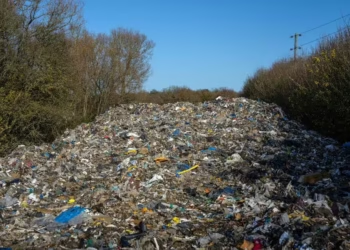 Fly-Tippers to Be Hunted by ‘Drone Squad’ in Crackdown from the Sky
 Australian PM Says Former Prince Andrew Has Suffered ‘Extraordinary Fall’ but That Won’t Prompt Republic Referendum
 Farage Chagos Islands Row Sparks Fury
 UK Job Vacancies Hit Five-Year Pandemic Low
 Meet Robert Aramayo: From Humble Beginnings in Hull to Juilliard and BAFTA Glory After Beating Timothée Chalamet
 Storm Hernando: Edinburgh Airport Flights Cancelled in US Travel Chaos
 UK Youth Unemployment Surges Amid Tax Changes
 Half of Britons Avoid GP When Ill, Survey Reveals Growing Concern
 Russian Trade Routed Through British Islands Exposed
 Rape Accused Had Fight With Man in Alley, Court Told
 Mother Says ‘I Hugged My Daughter’s Killer’ as They Cried Together in Prison