Published: March 6, 2026
The English Chronicle Desk
The English Chronicle Online — delivering trusted global reporting with clarity, balance, and depth.
The political dynamics inside President Donald Trump’s administration shifted sharply this week as he removed Kristi Noem from her high-profile role as secretary of the Department of Homeland Security (DHS), ending a controversial tenure that had come to define the administration’s aggressive immigration strategy.

Trump announced Thursday that Noem would step aside from leading the department responsible for border enforcement and national security operations. In her place, the president nominated Oklahoma Senator Markwayne Mullin to take over the role, pending confirmation by the US Senate. While Noem will remain within the administration, she has been reassigned to serve as a special envoy for a newly proposed regional security initiative called the “Shield of the Americas.”
In a short statement posted on Truth Social, Trump thanked Noem for her work while signaling a transition in leadership. “I thank Kristi for her service at ‘Homeland,’” the president wrote, adding that she would play a role in strengthening cooperation among nations across the Western Hemisphere.
The move effectively ends Noem’s tenure as one of the most visible figures in the administration’s immigration crackdown, a role that had elevated her national profile but also generated persistent controversy.
Noem, the former governor of South Dakota, had been among the most prominent faces of Trump’s second-term cabinet. When she assumed leadership of the Department of Homeland Security after Trump returned to the White House, she quickly adopted a highly public approach to immigration enforcement. Unlike many of her predecessors, who typically managed operations from Washington, Noem frequently appeared on the front lines of immigration raids alongside federal agents.
Television images of the secretary wearing a bulletproof vest while accompanying enforcement teams became a hallmark of the administration’s messaging on border security. Supporters saw the appearances as a demonstration of resolve and commitment to enforcing immigration laws. Critics, however, argued that the displays blurred the line between operational oversight and political theatre.
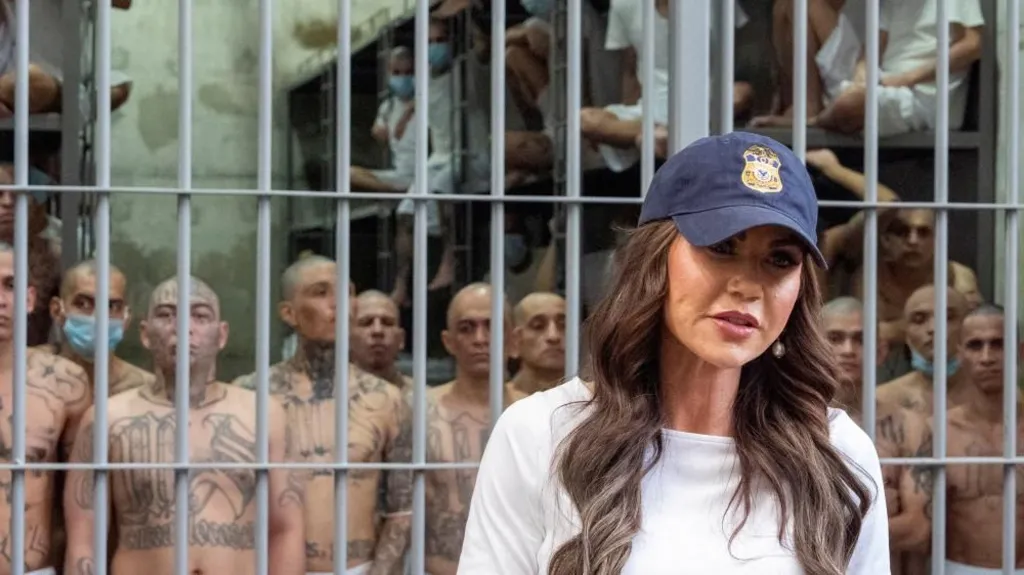
Throughout her tenure, Noem remained a forceful advocate of Trump’s deportation policies and frequently defended measures designed to restrict migration along the US-Mexico border. She also traveled internationally to highlight the administration’s efforts to deter illegal immigration. One widely publicized visit took her to El Salvador, where she toured the notorious Cecot maximum-security prison that houses deported migrants accused of criminal activity.
That trip became one of the defining controversies of her time at DHS. Photographs circulated widely showing Noem wearing a luxury Rolex watch reportedly valued at approximately $50,000 while visiting the prison complex. Critics argued the image projected insensitivity and political posturing, particularly during a trip meant to underscore the seriousness of criminal deportations.
The criticism added to an already growing list of disputes surrounding her leadership. Democrats in Congress repeatedly challenged her spending decisions, particularly a nationwide advertising campaign promoting the administration’s immigration policies. The campaign featured Noem herself prominently and was designed to encourage undocumented immigrants to leave the United States voluntarily.
According to congressional critics, the advertising effort cost roughly $220 million in federal funding. Lawmakers also scrutinized the department’s purchase of two luxury aircraft intended for official travel, reportedly valued at nearly $200 million.
Noem defended both expenditures during a congressional hearing earlier this week, insisting the initiatives were necessary to support the administration’s enforcement strategy and maintain operational capacity for DHS leadership. She also stated that President Trump had been fully aware of the spending decisions.
However, that claim appeared to clash directly with the president’s public comments. Shortly before announcing her removal from the post, Trump told Reuters he had not known about the expensive advertising campaign. “I never knew anything about it,” he said, a remark that immediately intensified speculation about tensions within the administration.
Behind the scenes, reports suggest frustration inside the White House had been building for months. According to CBS News, Trump held an acrimonious phone call earlier this week with Corey Lewandowski, a senior adviser to Noem and a longtime figure in Trump’s political orbit. Lewandowski is also expected to depart the department following the leadership change.
The decision to replace Noem reportedly followed a series of consultations with Republican lawmakers. Trump is said to have contacted several members of Congress to gauge their views on her future at DHS. Some allies were quick to signal support for a leadership change.
South Carolina Senator Lindsey Graham said the department needed new direction, while Representative Dan Newhouse of Washington described the shift as overdue.
Political tensions surrounding immigration enforcement had intensified earlier this year following a deadly incident in Minneapolis. During a federal immigration operation in January, agents shot and killed two US citizens, Renee Good and Alex Pretti, prompting widespread public outrage and scrutiny of federal tactics.
The backlash placed the administration’s immigration strategy under intense political pressure. Rather than assigning Noem to lead the response, the White House dispatched Tom Homan, the administration’s border enforcement coordinator, to take charge of the situation in Minnesota.
The decision was widely interpreted as a sign that Noem’s influence inside the administration had begun to decline. Homan ultimately oversaw a scaling back of the operation, marking a rare moment in which the administration appeared to moderate its messaging on immigration enforcement.
Further controversy followed when Noem publicly claimed that one of the individuals killed had committed an act of domestic terrorism prior to the shooting. The assertion was made without evidence and was strongly disputed by critics, adding to the mounting pressure surrounding her leadership.
Public opinion also appears to have played a role in the administration’s recalibration. While polling data has consistently shown that many Americans support stricter immigration controls, surveys indicate that support weakens when enforcement actions appear overly aggressive or lead to civilian casualties.
For Republican strategists heading into an election year, the distinction has become increasingly significant. Maintaining support for border security policies while avoiding political backlash over enforcement tactics has emerged as a delicate balancing act.
Against that backdrop, Trump’s decision to remove Noem from the department suggests a calculated effort to reset the administration’s public approach without fundamentally changing its underlying policy goals.
Her successor, Senator Markwayne Mullin of Oklahoma, is considered a loyal ally of the president and a staunch supporter of tough immigration enforcement. Mullin has frequently defended federal agents involved in border operations and has argued that law enforcement officers face escalating threats while carrying out their duties.
Following the Minneapolis shooting earlier this year, Mullin publicly praised immigration agents, calling them “patriots” who were confronting hostility simply for enforcing the law.
His nomination indicates that the administration is unlikely to soften its overall immigration agenda, even as it attempts to adjust the tone and leadership surrounding the issue.
Despite the controversy surrounding her tenure, Noem’s reassignment does not represent a complete break with the administration. Her new position as special envoy for the “Shield of the Americas” initiative suggests she will continue to play a role in regional security policy, particularly in coordinating anti-migration efforts with governments across Latin America.
The initiative itself is still being developed but is expected to focus on cross-border security cooperation, migration deterrence, and intelligence sharing among countries in the Western Hemisphere.
The leadership change marks the first major cabinet-level shakeup of Trump’s second term. During his first presidency, frequent staff turnover became a defining feature of his administration, with several high-profile officials departing within the first year.
In contrast, Trump’s second term had largely avoided the same level of internal turbulence until now. Whether Noem’s removal signals the beginning of broader changes within the administration remains uncertain.

What is clear is that the episode reinforces a longstanding reality of Trump’s political environment: loyalty and alignment with the president’s strategic instincts remain central to maintaining influence within his administration.
For Kristi Noem, once one of the most prominent figures shaping the administration’s immigration narrative, the reassignment represents a sharp shift in political trajectory. As the administration moves forward with a new face at Homeland Security, the broader debate over immigration enforcement in the United States is unlikely to diminish anytime soon.
Related News:
 Thousands Protest ICE Operations in Nationwide US Day of Action
 Inside Kyiv’s resolve as conflict nears five‑year mark
 US Partially Evacuates Beirut Embassy Amid Rising Iran Tensions
 US Senate Vote Fails to Rein in Trump War Powers on Iran
 Trump Administration Dismisses 17 Immigration Judges, Sparking Debate Over Judicial Independence
 Ministers Accused of Defamation Over Palestine Action Ban and Mass Arrests
 Father’s Tip Leads to Arrest in Charlie Kirk Murder Case
 Charlie Kirk Killing Used to Mobilise UK’s Largest Far-Right Rally in Decades
 Jailed Georgian Opposition Leaders Warn UK of Iranian Links to Ruling Party
 UK Extradition Law Change Sparks Fears Among Hong Kong Dissidents
 Shabana Mahmood Warns Border Failings Are Eroding Trust in States
 Johnson Approved China’s London ‘Super-Embassy’ in 2018
 China-critical UK academics face ‘extremely heavy’ pressure from Beijing
 Trump Urges Herzog to Grant Netanyahu Full Pardon
 US Justice Department Files Lawsuit Against California Over Partisan Voting Maps
 Trump Deploys DHS to Charlotte in Major Arrest Operation
 Congress Approves Release of Epstein Files, Trump Expected to Sign
 Texas Governor Faces Lawsuit From CAIR
 US National Guard Member Killed in DC Shooting
 Trump to Recheck Green Cards from 19 Nations After DC Attack
 Chinese & Japanese Boats Clash Near Disputed Islands
 Putin Meets US Envoy Amid Key Ukraine Peace Talks
 US Defence Chief on Drug Boat Strike: “Did Not See Survivors”
 Franklin Turtle, Sabrina Carpenter Slam US Social Media Use
 Russia losses Ukraine war peace talks intensify amid rising deaths
 Trump Escalates Minnesota Immigration Surge Amid Rising Tensions
 Trump: US Stands Ready to Help Iran Find Freedom Amid Widespread Unrest
 US Conducts Large-Scale Strikes Against ISIS Targets Across Syria
 Trump Administration Probe of Fed’s Powell Draws Pushback
 US Senator Mark Kelly Sues Pentagon Chief Hegseth Over Demotion Threats
 Greenland Faces Pivotal Summit Over Arctic Power Struggle
 Trump Threatens Strong Action If Iran Executes Protesters
 Trump Receives Machado’s Nobel Medal in White House Meeting
 Greenland Crisis Forces Europe to Draw a Line With Trump
 Guterres Warns Global Cooperation Under Threat at UN’s 80th Year
 Iran Cannot Be Bombed Into Democracy, Only Helped There
 South Korea Jails Ex-President in Martial Law Ruling
 Historic Abu Dhabi Talks Bring US, Ukraine and Russia Together
 Trump Pulls Canada from His Controversial ‘Board of Peace’ Plan
 EU Says US Ties Have Suffered ‘Big Blow’ After Greenland Crisis
 Trump officials continue false claims after Alex Pretti shooting
 UK and EU Signal Fresh Push for Defence Cooperation Talks
 Emails Show Epstein Funded Mandelson’s Husband After Jail
 Partial US Government Shutdown Hits Homeland Security Funding
 Epstein Files Reveal Trump Officials’ Emails with Financier
 Thousands Protest ICE in New York Against Trump Deportation Campaign
 Trump Praises ‘Terrific’ Petro After White House Talks
 Starmer to Release Mandelson Files
 Fears of New Arms Race as US-Russia Nuclear Weapons Treaty Expires
 US Military Says Two Killed in Strike on Alleged Drug Boat in Eastern Pacific
 Sydney Protest Clash Triggers Police Probe
 New Nuclear Talks Between US and Iran Begin in Geneva
 ‘He Did It for Us’: US Soldier Recalls Jesse Jackson’s Efforts to Free Him and Two Other POWs
 Under Pressure From Trump, Venezuela’s New President Has Aces Up Her Sleeve
 Stephen Colbert Says CBS Spiked Interview With Democrat Over FCC Fears
 Suspect in Rhode Island Ice Hockey Shooting Killed Ex‑Wife and Son
 Nine Arrested in France Over Death of Far‑Right Student
 US to Withdraw Troops from Syria
 US Urges Iran to Make Deal as Military Presence Rises
 Desperate Hunt for Breakthrough in Nancy Guthrie Case Turns to Mexico
 How Much Could Andrew’s Arrest Hurt the Royal Family?
 Trump’s Foreign Policy Dilemma Laid Bare by Iran Tensions
 Billionaire Les Wexner Tells US Lawmakers He Was ‘Naive’ and ‘Conned’ by Epstein
 Ex‑Philippine President Duterte on Trial for Crimes Against Humanity: What You Need to Know
 What to Watch for During Trump’s State of the Union Address
 Family Offers $1M Reward to Bring Home Missing Mother
 US ‘Suitcase Murderer’ Deported From Bali After 11 Years in Jail
 Clinton Testimony Erupts in Fiery Exchange
 American Citizen Killed in Cuba Boat Shooting, U.S. Officials Say
 Hillary Clinton Tells House Panel She Had No Idea of Epstein’s Crimes
 At Least 10 FBI Agents Who Worked on Trump Investigation Fired
 Hillary Clinton Tells House Panel She ‘Had No Idea’ of Epstein’s Crimes
 Hopes and Fears as US Iranians Take to Streets After Toppling of Supreme Leader
 Iran, the US, and a World Cup That Starts in Three Months
 Britain’s Position and Trump Vows to Press On in Iran Conflict
 Trump Faces Questions Over Iran Conflict Plan
 Trump’s Iran Endgame Unclear After Mixed Messaging on War Aims
 Rubio Responds to Reported Strike on Iranian School
 US Senate Backs Trump War Powers Amid Iran Missile Barrage
 Six US Soldiers Killed in Iran-Linked Kuwait Strike