Published: 9 March 2026
The English Chronicle Desk
The English Chronicle Online — World
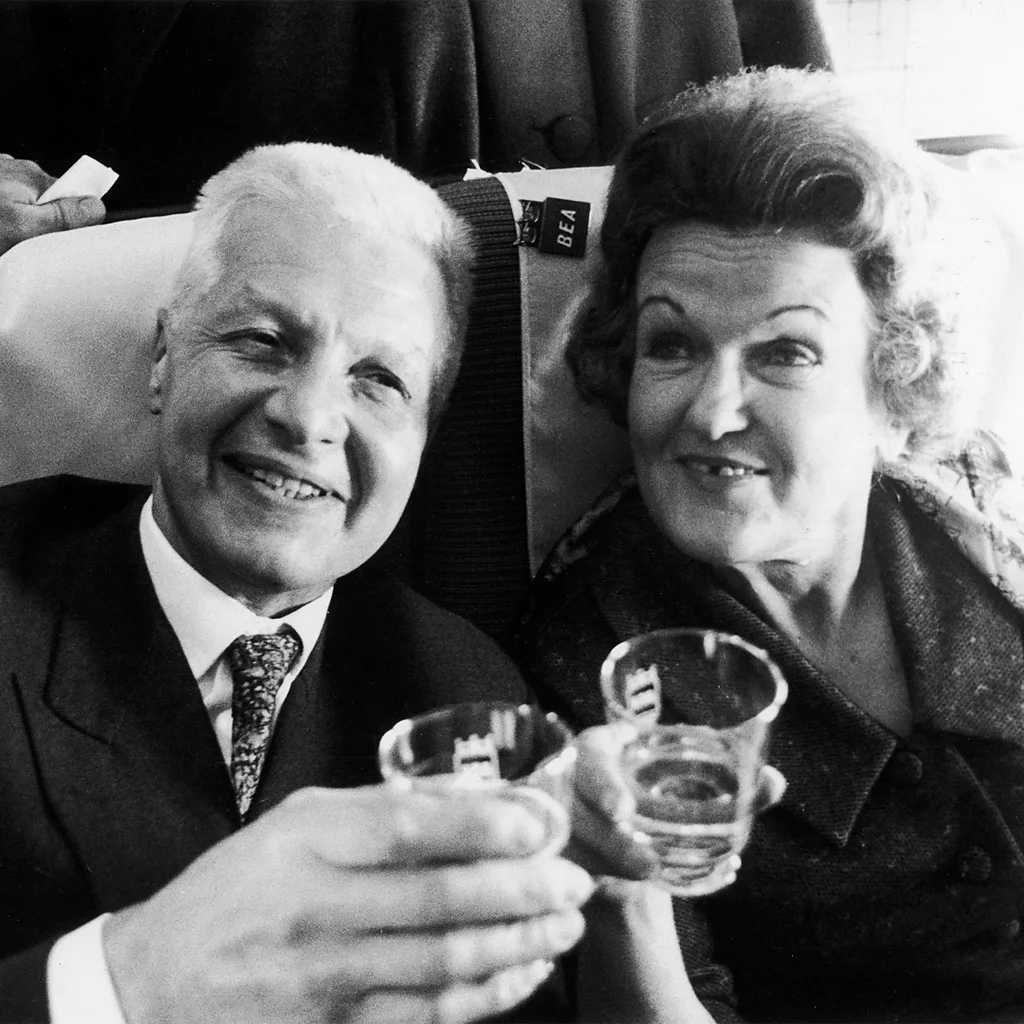
In the quiet London suburb of Ruislip, behind the lace curtains of a modest bungalow, two seemingly ordinary neighbours were running one of the most sophisticated Soviet spy operations of the Cold War. To the families living nearby, Peter and Helen Kroger were polite, book‑loving Americans who dealt in rare volumes and travelled frequently for their antiquarian business. In reality, they were veteran Soviet agents — Morris and Lona Cohen — and key members of the infamous Portland spy ring, a network that stole some of Britain’s most sensitive naval and nuclear secrets and passed them directly to Moscow.

Their story, long buried in classified files and Cold War secrecy, resurfaced recently through newly examined BBC archival reporting and MI5 documents. The tale is one of deception, betrayal, and extraordinary espionage ingenuity — a story that begins not in Moscow or Washington, but in a sleepy English street where no one imagined that a global intelligence war was unfolding next door.
The Portland spy ring was exposed in 1961, but its origins stretched back years earlier. At the centre of the operation were two insiders at the Admiralty Underwater Weapons Establishment in Portland, Dorset — a research facility responsible for some of the Royal Navy’s most sensitive underwater weapons systems. Every prototype, modification, and classified device was meticulously documented, photographed, and filed. For Soviet intelligence, these files were priceless. To obtain them, they needed someone on the inside.
That insider was Harry Houghton, a former Royal Navy officer who had been recruited by communist intelligence while stationed in Poland. When he returned to Britain, he secured a clerical job at the Portland facility and quietly resumed his espionage work. He soon began an affair with a colleague, Ethel “Bunty” Gee, who had access to even higher‑level classified material. Together, posing as a married couple, they travelled regularly to London to hand over stolen documents to their KGB handler.
Their activities might have continued undetected for years had it not been for Houghton’s wife, who became suspicious of his unexplained trips, sudden bursts of cash, and a tiny camera she found hidden under the stairs. She reported her concerns, but her warnings were dismissed as emotional outbursts — a decision that would later haunt British intelligence. The camera she discovered was a microdot device capable of shrinking entire pages of classified documents onto a speck of film the size of a full stop. These microdots could then be embedded into postcards or books and sent to Moscow without raising suspicion.
But the Portland ring was not just about insiders. It required expert couriers and communications specialists — and that is where the Krogers came in. Their unassuming bungalow concealed a fully equipped spy communications centre: a hidden radio transmitter, a photographic darkroom, microdot equipment, and a 74‑foot aerial running through the attic. Their antiquarian book business provided the perfect cover for frequent international travel, even behind the Iron Curtain. To their neighbours, they were friendly, eccentric Americans. To the KGB, they were among the most trusted agents in the West.
Their handler, known publicly as Gordon Lonsdale, was a charismatic Canadian businessman dealing in jukeboxes and vending machines. In truth, he was Konon Molody, a Russian‑born KGB officer whose luxurious lifestyle — complete with cars, a yacht, and a thriving business — masked his role as the central link between the Portland insiders and the Krogers’ suburban spy hub.
The ring might have continued indefinitely had it not been for a tip from one of the Cold War’s most important defectors: Polish intelligence officer Michał Goleniewski, codenamed “Sniper.” He informed Western intelligence that the Soviets had a highly placed British source inside naval research. Though vague, the warning was enough to prompt MI5 to begin surveillance at Portland. Suspicion quickly fell on Houghton, whose clandestine London trips with Gee were soon monitored. When they were seen handing a bag to Lonsdale, the net began to tighten.
MI5 followed Lonsdale to Ruislip, where he frequently visited the Krogers’ home. Over the next two months, officers conducted an elaborate surveillance operation from the house across the street, owned by the Search family. The Searches were instructed to behave normally while MI5 monitored the Krogers’ movements. Their teenage daughter, Gay Search, later recalled the surreal experience of living across from a Soviet spy headquarters without initially knowing it.
By early 1961, MI5 feared the ring might flee. On 7 January, Houghton, Gee, and Lonsdale were arrested in London after one of their meetings. A shopping bag they carried contained undeveloped film and classified Admiralty pamphlets, including details of HMS Dreadnought, Britain’s first nuclear submarine. That same day, police raided the Krogers’ bungalow. Helen Kroger attempted to destroy evidence by asking to stoke the boiler fire, but officers intercepted her handbag and found coded grid references for meeting points. A search of the house uncovered the hidden cellar, darkroom, radio transmitter, and thousands of dollars in cash.
The trial of the Portland spy ring began on 13 March 1961 and lasted two weeks. Lonsdale received 25 years in prison; the Krogers were sentenced to 20 years; Houghton and Gee received 15 years each. But the Cold War had its own rules. In 1966, Lonsdale was exchanged for British businessman Greville Wynne, who had been imprisoned in Moscow. He returned to the Soviet Union a hero and died in 1970. In 1969, the Krogers were swapped for British lecturer Gerald Brooke and flown to Poland before settling in Moscow, where they were awarded the Order of the Red Banner and later commemorated on Russian postage stamps.

Houghton and Gee served nine years before being released. Gee returned to Portland, where she faced taunts of “traitor” from neighbours. The couple married a year later, insisting they wanted only to live quietly.
The Portland spy ring remains one of the most significant espionage cases in British history — a reminder that some of the most dangerous Cold War battles were fought not in distant capitals, but in ordinary homes on ordinary streets. As the BBC’s Tom Mangold reported during the Krogers’ 1969 prisoner exchange, they were “sublimely happy” to return to the communist soil “for which they have lied and spied.” Their story endures as a chilling example of how deeply the Cold War infiltrated everyday life — and how easily the most explosive secrets could be hidden behind the façade of suburban normality.
Related News:
 Ancient Bone May Prove Legendary War Elephant Crossing of Alps
 ‘There Is a Feeling of the Greatest Outrage’: The Mystery of Stolen Champion Racehorse Shergar
 Spain Declassifies Files on 1981 Attempted Coup in Effort to Dispel Conspiracy Theories
 Burning Carcasses and Smoke for Miles — The Outbreak That Killed Millions of Animals
 The Sad, Strange Story of the World’s Most Radioactive Paradise
 UK Must Act with Courage and Clarity on Israel-Palestine Conflict, Says Foreign Affairs Committee Report
 Northern Ireland Family of Three Shot Dead in Maguiresbridge Home Incident
 Tottenham Takes On Newcastle
 Gen Z Embraces the Big, Bold ‘Fake’ Indian Wedding Party Trend
 Radioactive Leak at UK’s Nuclear Warhead Base Sparks Outcry Over Safety and Secrecy
 Mutual Inconvenience: Why Alaska Was Chosen for the Trump-Putin Summit on Ukraine
 China’s crackdown on civil servant perks sparks economic concerns
 Terence Stamp, ’60s British Film Legend and Star of Superman, Dies at 87
 Hong Kong Summons UK and Australian Envoys Following Asylum Grants to Democracy Activists
 Is the UK Ready to Put Boots on the Ground in Ukraine? Assessing Military Capacity and Challenges
 Shein UK Faces Allegations of Shifting Majority of Profits to Singapore to Reduce UK Tax
 Channel Crossings Surge: Over 1,000 People Arrive in the UK in Small Boats in a Single Day
 Macron Phones Trump Over Traffic Jam in New York
 Comey Indictment Deepens Fears of Political Retribution Under Trump
 Yvette Cooper Signals Global Momentum Towards Gaza Peace Deal Amid Humanitarian Crisis
 “It Was Very Tough, But I Love Life”: Former Israeli Hostage Rebuilds Life After Family Killed by Hamas
 Chaos at Ibrox as Martin’s Rangers Era Comes to an End
 Trump Claims Modi Has Agreed to Halt Russian Oil Imports Amid Heightened US Pressure
 Russia’s Latest Push to Win US Favors Shows Deep Desperation
 BBC to Apologise Over Edited Trump Speech Amid Backlash
 Britain deploys RAF specialists to assist Belgium with drone threats
 Trump Urges Herzog to Grant Netanyahu Full Pardon
 Indian authorities demolish Kashmir home linked to Red Fort blast
 Greene Pushes Epstein Files Amid Trump Fallout
 December Run-Off in Chile as Election Produces No Winner
 Zelenskyy Signs Fighter Jet Deal Amid Russian Drone Attacks
 Shadow Fleet at Sea: Europe’s Battle Against Illicit Oil Shipping
 Tiny Curacao Makes History as Smallest Nation to Reach World Cup
 India’s COP30 Delay Raises Global Climate Concerns
 US Suspends Afghan Immigration After White House Shooting
 Georgians Defy Government Crackdown After Year of Protests
 ‘Extinct’ Antelope Returns to Sahara, Bringing Hope
 Facebook Slow to Remove Bondi Attack Praise, Anti-Hate Group Claims
 Trump Weighs Response to Iran Crackdown as Tehran Says Communication Open With US
 US Clears Nvidia AI Chip Sales to China in Policy Shift
 Gulf states warn Trump Iran strikes risk wider Middle East war
 EU weighs response amid Greenland tariff crisis with Trump
 Sydney Shark Attack Surge Shocks Australia Beaches
 EU Says US Ties Have Suffered ‘Big Blow’ After Greenland Crisis
 Videos reveal earlier clash before Alex Pretti shooting
 UK New Car Discounts Near £6,000 as Prices Are Slashed
 Israel Moves to Bar MSF From Gaza Operations
 Portugal Election Delivers Socialist Win as Far Right Surges
 Australian Families Leave Syrian Camp for Home
 Starmer Weighs Fast-Tracking Defence Boost
 Japan’s Lost “Tigers” Were Actually Lions, Study Reveals
 ‘I Would Scream in My Sleep’: Alawite Women from Syria Tell of Kidnap and Rape
 Snow and Rain Warnings as Cold Snap Continues in the UK
 Nine Arrested in France Over Death of Far‑Right Student
 Indian University Kicked Out of AI Summit for Claiming Chinese Robot Dog as Its Own Invention
 Eight Skiers Found Dead After California Avalanche
 Epstein Eyed Record Label Investment to Access Women, Files Suggest
 How Do You Modernise Mango Farming? India’s Growers Urged to Innovate as Climate Change Hits
 Australian PM Says Former Prince Andrew Has Suffered ‘Extraordinary Fall’ but That Won’t Prompt Republic Referendum
 Farage Chagos Islands Row Sparks Fury
 Storm Hernando: Edinburgh Airport Flights Cancelled in US Travel Chaos
 Ukraine Negotiator Reveals What It Feels Like Facing Russia
 Chad Shuts Border With Sudan in Bid to Stop Conflict Spreading
 Drugs, Denial, Stigma: Fiji’s HIV Crisis Hits Children
 ‘We’ve been paying for happy endings for Andrew for years’: inside the royal disgrace, biographer says
 Hilary Knight speaks out on Trump’s recent hockey remarks
 American Citizen Killed in Cuba Boat Shooting, U.S. Officials Say
 Iran’s Regime Still Intact — Coming Days Will Test Its Survival
 In Maps: Strikes Across Iran and the Middle East
 The Third Day of the US‑Israeli War With Iran
 Brit ‘in Good Spirits’ Amid Dubai Missile Attacks, Stranded but Safe
 Herzog Asio meeting sparks security storm
 Civilian Deaths in Iran Pass 700 Amid Fear of Bombs and Regime Clampdown
 ‘Every Day Feels Like a Month’: Iranians Describe Life Under ‘Constant’ US‑Israeli Strikes
 Petrol Prices Soar as Retailers Accused of Gouging Amid Global Tension
 Penny Wong silent on Australian crew in sub strike
 Finland Plans to Lift Decades‑Old Ban on Hosting Nuclear Weapons
 Minister Meets Crews Who Will ‘Take Out’ Iranian Drones
 Oil Prices Surge Above $100 Amid Iran War
 Nine Days of Strikes Reshape the Middle East