Published: 16 March 2026. The English Chronicle Desk. The English Chronicle Online.
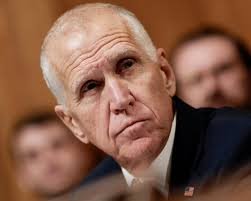
The political landscape in Washington is shifting as Senator Thom Tillis embraces a defiant new persona. After decades of disciplined Republican service, the senior senator from North Carolina has decided to speak his mind. This transformation follows his recent choice to forgo a re-election bid in the upcoming cycle. Freed from the pressures of primary threats, Tillis is now targeting incompetence within his own party. His recent critiques of high-level officials have sent shockwaves through the halls of the United States Capitol. For many observers, this represents a fiery final act for a politician once known for caution.
The tension reached a boiling point during a recent Senate hearing involving the homeland security secretary. Tillis did not hold back his frustration regarding the current leadership and its various failures. He described the situation as a disaster during a ten-minute evaluation that stunned his colleagues. This public dressing down was not an isolated incident but part of a pattern. Tillis has increasingly positioned himself as an internal critic of the current administration’s policy choices. While he remains a Republican, he no longer feels the need to wordsmith his daily thoughts.
This newfound independence emerged clearly after Tillis broke with the president over a major spending bill. The proposal sought to cut Medicaid funding to offset the costs of other federal programs. Tillis argued that such a move would betray hundreds of thousands of his own constituents. When the president lashed out on social media, the senator chose a path of total retirement. He explained that he was already moving toward leaving office before the public spat occurred. Now, he claims to have the pure freedom to call the balls and strikes.
His targets are not just limited to cabinet members but also influential White House advisers. Tillis has been particularly vocal about his disdain for what he calls stupid or absurd ideas. He recently lambasted suggestions regarding the acquisition of foreign territories, calling such talk insulting to allies. The senator also continues to block key financial nominations due to concerns over judicial independence. These actions have placed him in a small camp of Republican dissenters in the Senate. Such a move is rare in a party where absolute loyalty is usually expected.
Democrats are watching this intra-party friction with a mix of surprise and strategic opportunistic hope. They aim to capitalize on voter disenchantment to retake the majority in the November midterm elections. However, Tillis insists his goal is to help his party succeed by offering blunt advice. He believes the president can be successful only if he rejects poor guidance from staff. To Tillis, providing this honest feedback is the most responsible way to serve his country. He views his role as a truth-teller who is no longer bound by campaign constraints.
Before entering the world of national politics, Tillis was a management consultant for major global firms. He famously used data analysis and spreadsheets to help Republicans take control of the state legislature. This analytical background still defines how he views the current political climate in the United States. He treats policy failures as management errors that require immediate and public correction from leadership. His staff recalls his obsession with stay-on-message tactics, including the use of symbolic wristbands. Today, that same intensity is directed at correcting the course of the federal government.
During his time as the Speaker of the House in North Carolina, he was different. He oversaw a period where the state shifted significantly toward more conservative and experimental social policies. His leadership led to restrictive voter laws and various cuts to public education and healthcare funding. Critics argue that his current moderate stance is a departure from his record in the state. They suggest he is moving away from cultural issues to protect his political legacy. Others see it as a pragmatic response to the changing demographics of his home state.
The senator’s reputation for bipartisanship grew during the second term of the current presidential administration. He notably voted for legislation protecting same-sex marriage rights and addressing national concerns over gun violence. These votes earned him a censure from the North Carolina GOP, but he remained unmoved. He argued that these compromises were necessary to achieve meaningful results for the American people. This streak of independence has made him a unique figure in a highly polarized chamber. Colleagues from both sides of the aisle have noted his increased willingness to engage.
One of his most memorable recent confrontations involved a former governor serving in the cabinet. Tillis criticized her handling of immigration enforcement and recent disaster recovery efforts in North Carolina. He even cited stories from her own memoir to question her judgment and leadership abilities. He suggested that making poor choices in private life reflected a lack of professional discipline. Such personal and direct attacks from a fellow Republican are almost unheard of in Washington. It signals that Tillis is truly finished with the traditional rules of political etiquette.
Data remains the primary driver behind this fiery final act and his recent policy disagreements. Tillis points to internal numbers showing that certain administration policies are unpopular in critical swing states. He believes that ignoring this data puts the entire Republican majority at risk in November. By speaking out, he hopes to force a course correction before the next election cycle. He views his outspokenness not as a betrayal, but as a necessary form of survival. For him, the math simply does not support some of the current administration’s goals.
The upcoming race to fill his seat will be one of the most expensive. It features high-profile candidates who are running on platforms of total loyalty to the current president. Tillis’s comments have created a difficult environment for his potential Republican successor in North Carolina. His critiques provide plenty of ammunition for Democratic challengers looking to flip the seat red. Despite the potential for collateral damage, Tillis seems committed to his path of absolute honesty. He appears to enjoy the role of an elder statesman who has nothing left.
As his time in the Senate winds down, Tillis remains focused on his committee responsibilities. He continues to advocate for intellectual property rights and human rights issues on the global stage. Even his fiercest critics acknowledge that he is working harder now than during his campaigns. He has traded the task of fundraising for the task of rigorous and public oversight. Whether his party listens to his warnings remains to be seen in the coming months. For now, he is content to play the role of the outspoken umpire.
The legacy of Thom Tillis will likely be debated for years by political historians and pundits. Some will see him as a principled conservative who stood up for institutional norms and logic. Others will view him as a politician who only found his voice when it was safe. Regardless of the interpretation, his impact on the current session of Congress is undeniable and deep. He has proven that a single senator can still disrupt the status quo in Washington. His fiery final act is a reminder that political power comes in many forms.
Related News:
 Putin Intensifies Territorial Demands Before US Talks
 US National Guard Member Killed in DC Shooting
 Trump to Recheck Green Cards from 19 Nations After DC Attack
 Trump to pause migration from ‘third-world countries’
 Republicans Hold Tennessee Seat Despite Democratic Surge
 Franklin Turtle, Sabrina Carpenter Slam US Social Media Use
 Russia losses Ukraine war peace talks intensify amid rising deaths
 Trump Escalates Minnesota Immigration Surge Amid Rising Tensions
 Homeland security agents deployed amid Minneapolis protests
 Democrats Push Affordability to Challenge Trump Ahead of Votes
 Greenland Faces Pivotal Summit Over Arctic Power Struggle
 Trump Threatens Strong Action If Iran Executes Protesters
 Government Unveils Northern Powerhouse Rail Plans
 Trump press secretary attacks reporter over ICE question
 Kyrsten Sinema Faces High-Profile Lawsuit Over Marriage Interference
 Trump Receives Machado’s Nobel Medal in White House Meeting
 ‘He Believed Help Was Coming’: Why Iran’s Protesters Feel Betrayed
 Trump Fed bid heads to Supreme Court
 EU Says US Ties Have Suffered ‘Big Blow’ After Greenland Crisis
 ‘Unfathomable’: Australian veterans rebuke Trump claims
 Trump officials continue false claims after Alex Pretti shooting
 ‘Evil is resilient’: Pressure Mounts on Stephen Miller
 Fulton election raid hits Georgia election office
 Partial US Government Shutdown Hits Homeland Security Funding
 Thousands Protest ICE Operations in Nationwide US Day of Action
 Epstein Files Reveal Trump Officials’ Emails with Financier
 Thousands Protest ICE in New York Against Trump Deportation Campaign
 Sinema payment row deepens after $9,000 transfer claim
 Trump Praises ‘Terrific’ Petro After White House Talks
 Nurses’ families fear breakup under UK immigration crackdown
 Sanders Condemns Billionaire ‘Greed’ in California Tax Debate
 California Democrats Vow Trump Reckoning
 Trump’s Surgeon General Pick Evades Vaccine Questions
 Minnesota Medicaid funds halted in fraud row
 Clinton Testimony Erupts in Fiery Exchange
 Trump Faces Questions Over Iran Conflict Plan
 Scaramucci on Trump: ‘Epstein files won’t end him’
 Texas Senate seat fight heads to runoff as votes split
 Cooper and Whatley Win Primaries for North Carolina Senate
 Adelaide University Faces Backlash Over Event Cancellation
 Thousands Protest Iran Strikes Outside US Embassy London
 US Bombers Arrive at RAF Base Amid Rising Iran Tensions
 UK Prepares Aircraft Carrier for Middle East Crisis
 Pete Hegseth Iran War Remarks Spark Alarm
 Army Officers Orders to Cut Ties with Men-Only Clubs
 Trump’s UK Ambassador Urges North Sea Drilling to Strengthen US Ties
BBC to Apologise Over Edited Trump Speech Amid Backlash
Trump’s UK Ambassador Urges North Sea Drilling to Strengthen US Ties
BBC to Apologise Over Edited Trump Speech Amid Backlash
 Millionaires group urge Reeves to introduce wealth tax to ‘lift kids out of poverty’
 Reeves rejects £1bn plea for NHS redundancy payouts
 PM Condemns Leaks, Vows Loyalty to Ministers and Stability
 Greene Pushes Epstein Files Amid Trump Fallout
 Shadow Fleet at Sea: Europe’s Battle Against Illicit Oil Shipping
 Starmer Says Labour’s Economic Plan Needs Years to Deliver
 Khaleda Zia Death in Bangladesh: First Female PM Dies at 80
 Minnesota Sues Trump Administration Over ICE Surge
 US Clears Nvidia AI Chip Sales to China in Policy Shift
 US Senate rejects resolution limiting Trump military powers
 UK Ministers Drop Foreign Student Targets for Global Education Push
 No Gas Boiler Ban as UK Warm Homes Plan Backs Heat Pumps
 Shinzo Abe’s killer receives life sentence in Japan
 Sussan Ley leadership milestone shakes Liberal future
 Police response times face strict new national limits
 Australia’s Opposition Coalition Reunites After Rift
 ‘Trump Will Be Gone in Three Years,’ Top Democrats Tell Europe
 Australian Families Leave Syrian Camp for Home
 Farage to Name Jenrick as Reform Chancellor Pick
 Civil Service Pay: Union Urges Ministers to End ‘Barking Mad’ Limits
 Antonia Romeo appointment sparks criticism
 Farage Chagos Islands Row Sparks Fury
 Reform UK targets workers’ rights repeal
 Russian Trade Routed Through British Islands Exposed
 Mandelson Arrest: Met Apologises to Hoyle
 Germany Faces Backlash Over Scrapped Renewable Heating Mandate
 American Citizen Killed in Cuba Boat Shooting, U.S. Officials Say
 Herzog Asio meeting sparks security storm
 Talarico Secures Democratic Victory for US Senate in Texas
 UK Oil and Gas Supplies Reassured Amid Middle East Concerns
 Trump Pressures Congress Over Save America Act
 Iran War Puts Trump at Political Risk Amid Rising Prices
 Queensland Protest Laws Spark Free Speech Backlash