Published: 25 March 2026. The English Chronicle Desk. The English Chronicle Online.
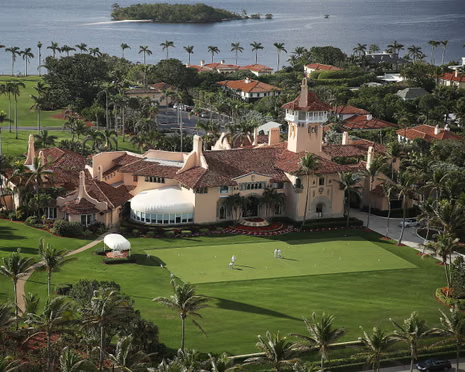
The political landscape of the Sunshine State shifted dramatically this week as news of a Democratic victory sent shockwaves through the Republican establishment. In a stunning special election result, Emily Gregory secured a seat in the Florida State House, flipping a district that includes the Mar-a-Lago club. This Florida win marks a significant moment for the Democratic Party, particularly given the historical leanings of the region. Voters in the 87th district chose a new direction, signaling a potential change in the prevailing political winds across the southern United States.
The victory for Emily Gregory is more than just a local triumph; it represents a symbolic blow to the former president’s influence in his own backyard. Gregory, a respected public health expert and small business owner, managed to overcome a significant Republican advantage to claim the seat. The Associated Press confirmed the result late Tuesday evening, noting that Gregory led her opponent by more than two percentage points. This margin is particularly notable when compared to the previous election cycles in this specific Florida territory.
Just two years ago, the Republican incumbent held this seat with a commanding nineteen-point lead over the Democratic challenger. The rapid erosion of that support suggests that local issues and candidate quality played a massive role in the outcome. Gregory campaigned on a platform of evidence-based policy and economic relief for middle-class families. Her message resonated with a diverse group of voters who felt overlooked by the previous administration. The Florida win serves as a testament to her disciplined campaign strategy and deep connection with the community.

On the other side of the ballot, Republican candidate Jon Maples faced a difficult uphill battle despite high-profile support. Maples, a financial adviser who positioned himself as an “America-First” patriot, received a formal endorsement from the president. However, this endorsement was not enough to overcome the controversies that dogged his campaign in the final weeks. Allegations surfaced regarding his actual residency within the district, leading many voters to question his commitment to the local area. Although Maples denied these claims, the scrutiny likely impacted his standing with undecided residents.
One of the more ironic elements of this election involved the voting methods used by high-profile residents. Donald Trump cast his own ballot in this race via the mail-in system, a practice he has frequently criticized. During a recent event in Tennessee, he referred to such methods as a form of cheating and a scam. Despite these public proclamations, he opted to use a mail-in ballot even while staying in nearby Palm Beach. Early in-person voting was available until Sunday, yet the former president chose the very method he often labels as fraudulent.
Democratic leaders were quick to celebrate the Florida win as a harbinger of things to come in the midterms. Heather Williams, president of the Democratic Legislative Campaign Committee, expressed her excitement on social media shortly after the results. She pointed out that a district leaning so heavily toward the Republican party should not have been competitive. The fact that Mar-a-Lago is located within this district adds a layer of irony that was not lost on political analysts. This shift suggests that even traditional strongholds are becoming vulnerable to well-organized Democratic challenges.
The success of the Gregory campaign was bolstered by support from 314 Action, a committee dedicated to electing scientists. Their endorsement focused on Gregory’s background in public health and her commitment to data-driven decision-making. Shaughnessy Naughton, the group’s president, suggested that a new wave of STEM-focused candidates is beginning to emerge. This approach focuses on solving practical problems rather than engaging in the ideological battles that often dominate Tallahassee. Voters seemed to appreciate a candidate who prioritized healthcare costs and evidence over partisan rhetoric.
Since the last general election, state Democrats have managed to flip nearly thirty districts across the country. This trend highlights a growing frustration among the electorate regarding the rising cost of living and healthcare access. In Florida, these issues are particularly acute, as insurance premiums and housing prices continue to climb. Gregory’s platform addressed these concerns directly, offering a contrast to the Republican focus on cultural issues. The Florida win provides a blueprint for how Democrats might compete in other traditionally conservative regions.
As the news of the victory spread, local activists gathered to celebrate what they described as a turning point. For many, the result proved that no district is truly “safe” when the message resonates with the daily lives of citizens. The 87th district has long been seen as a pillar of Republican strength, making this flip all the more remarkable. Political strategists on both sides are now re-evaluating their plans for the upcoming legislative sessions. The presence of a scientist in the state house is expected to bring a new perspective to environmental and health debates.

The implications of this Florida win extend far beyond the borders of Palm Beach County. It serves as a warning to the Republican party that reliance on high-profile endorsements may not be enough. In an era of intense polarization, local credibility and a focus on economic stability remain the most powerful tools for any candidate. Emily Gregory will now head to the state capitol with a mandate to represent a district that has undergone a profound political transformation. Her journey from a small business owner to a state legislator is a story of persistence and change.
Looking ahead, the Democratic party hopes to build on this momentum as they prepare for the next round of elections. The strategy of running candidates with professional expertise in science and health appears to be paying dividends. By focusing on the “temperature” of political discourse, Gregory managed to appeal to moderate voters who are tired of constant conflict. This victory suggests that the electorate is hungry for leaders who can provide stability and practical solutions to complex problems. The Florida win is a clear signal that the political map is being redrawn.
In conclusion, the election of Emily Gregory marks a historic shift in Florida’s political landscape. By flipping a seat in the heart of Republican territory, Democrats have demonstrated a renewed competitive spirit. The combination of a strong candidate, focused messaging, and local controversy created the perfect storm for this upset. As Gregory prepares to take her seat in Tallahassee, all eyes will be on how she navigates the challenges of state governance. This election will be remembered as the moment when the political tide began to turn in the Sunshine State.
Related News:
 British Woman in Iran ‘Losing Hope’ Amid Ongoing Detention
 BBC Journalist Held and Interrogated in Vietnam
 UK University Suspends Human Rights Research Following Pressure from China
 UK University Faces Counter-Terror Probe Over China Pressure
 BBC to Apologise Over Edited Trump Speech Amid Backlash
 Britain deploys RAF specialists to assist Belgium with drone threats
 Ukraine-Russia war latest: Putin’s troops exploit bad weather to force Kyiv withdrawal from multiple towns
 US Justice Department Files Lawsuit Against California Over Partisan Voting Maps
 Greene Pushes Epstein Files Amid Trump Fallout
 Trump Deploys DHS to Charlotte in Major Arrest Operation
 December Run-Off in Chile as Election Produces No Winner
 Canada Passes Carney’s First Budget in Tight Parliamentary Vote
 Shadow Fleet at Sea: Europe’s Battle Against Illicit Oil Shipping
 Rama Rebukes Mahmood for Targeting Albanian Families
 Pentagon Officials in Ukraine to Discuss War End
 Venezuela Threatens Nobel Winner Machado with Fugitive Status
 Trump Envoy to Discuss Ukraine Peace at Kremlin
 Georgians Defy Government Crackdown After Year of Protests
 India’s Labour Law Overhaul Sparks Fierce Debate
 EU plans $105bn Ukraine aid using frozen Russian assets
 Global campaign launched to free Palestinian leader Barghouti
 Russia losses Ukraine war peace talks intensify amid rising deaths
 Zelenskyy Accuses Russia of Sabotaging Peace Talks
 Albanese Opens Door to Bondi Royal Commission Amid Rising Pressure
 Trump Escalates Minnesota Immigration Surge Amid Rising Tensions
 Iran Protesters Defy Crackdown as Violent Clashes Intensify
 Trump Threatens Strong Action If Iran Executes Protesters
 Machado Trump medal gesture reshapes Venezuela power struggle
 Trump Receives Machado’s Nobel Medal in White House Meeting
 EU weighs response amid Greenland tariff crisis with Trump
 US Considers Asylum for British Jews Amid Rising Antisemitism
 ICE street raids expose a chilling future for public freedoms
 EU Says US Ties Have Suffered ‘Big Blow’ After Greenland Crisis
 Andrew Hastie Emerges as Leadership Rival to Ley
 Starmer China visit underscores clear-eyed national security stance
 Starmer China visit raises human rights pressure on Beijing
 Israel Moves to Bar MSF From Gaza Operations
 Trump Praises ‘Terrific’ Petro After White House Talks
 Sydney Protest Escalates and Elderly Woman Suffers Severe Injury
 Tarique Rahman’s Rise Toward Bangladesh’s Top Job
 Glass Cliff Debate After Ley’s Ouster
 Australian Families Leave Syrian Camp for Home
 Trump Attacks UK-California Energy Pact
 Kim Jong-un Unveils Housing for War Families
 Trump and Chagos Deal Rift Over Iran Strikes
 Andrew Mountbatten-Windsor Arrest After FBI Radar
 Andrew Arrest Sparks Republic Debate in Australia
 Global corruption crisis: Who Washington shields
 Duterte ICC Hearing Begins Amid Defiance
 Farage Chagos Islands Row Sparks Fury
 Trump Tariffs Threat Spark UK and EU Alarm
 The Dangerous Rise of Remigration Across Modern Europe
 Trump Speech Sparks Intense Debate Across Divided America
 Jacinda Ardern Moves To Australia Following Her US Fellowships
 US to offer passport services in West Bank settlements
 Has Europe truly learned from the failures of 2022?
 Health Funding Row Rocks US‑Africa Relations
 Middle East Flights Halted After Iran Strikes
 Trump Faces Questions Over Iran Conflict Plan
 Nick Greiner Warns Over Election Review Fallout
 Herzog Asio meeting sparks security storm
 Trump Rebukes Starmer Over Iran Strikes Row
 UK Prepares Aircraft Carrier for Middle East Crisis
 Pete Hegseth Iran War Remarks Spark Alarm
 Kasasa Island Dispute Fuels Japan-China Tensions
 Trump Pressures Congress Over Save America Act
 Iranian Football Squad Asylum Drama Shocks Australia
 Queensland Protest Laws Spark Free Speech Backlash
 Oil Supply Disruption Shocks Global Energy Markets
 Eswatini Deal Sparks Global Outcry Over US Deportations
 Yvette Cooper: UK Must Follow Principles, Not US Pressure
 Trump Iran War Stance Hardens as Conflict Widens
 Hormuz Strait Crisis: Trump Pressures Allies to Act
 US Citizens Angry Over Lack of Middle East Backup Plan
 Nicolas Sarkozy Faces New Trial Over Libya Funding
 Trump Nato threats expose Iran strategy vacuum
 Trump Cuba blackout: US hints at dramatic takeover
 Philippines energy emergency sparks coal power surge
 Trump Iran Plan Faces Doubts Amid Renewed Tensions
 Ghalibaf Iran: Survivor Emerges in Shifting Power Game