Published: 26 March 2026. The English Chronicle Desk. The English Chronicle Online.
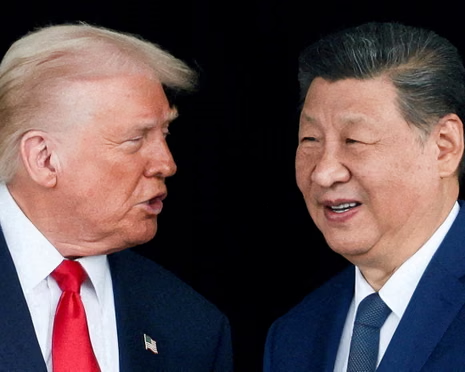
The geopolitical landscape of 2026 has witnessed a dramatic shift as the White House confirms a significant diplomatic reschedule. President Donald Trump is now set to travel to Beijing this coming May for a high-stakes meeting with President Xi Jinping. This pivotal Trump China visit was originally intended to take place much sooner but faced unavoidable delays due to the escalating conflict in Iran. The announcement came directly from the President via a social media post on Wednesday morning. He informed his followers that the new dates for this historic diplomatic mission are now finalized for the middle of May.
The rescheduling of this trip marks a critical moment in the second Trump administration as it balances domestic military priorities with international trade. Washington has spent months preparing for this encounter, which represents the first time an American president has stepped onto Chinese soil in nearly eight years. President Trump expressed high levels of optimism regarding the upcoming summit, describing it as a potentially monumental event for global stability. He also noted that plans are already in motion to host the Chinese leader in Washington later this year. This reciprocal arrangement suggests a mutual desire to maintain open lines of communication despite the heavy pressures of the current global climate.
While the American side has been vocal about the logistical changes, the Chinese embassy has remained characteristically reserved about the specific details. Beijing traditionally maintains a policy of only releasing the official schedule of President Xi a few days before any major international engagement. This silence does not necessarily indicate a lack of preparation, as diplomatic circles suggest that working groups from both nations are in constant contact. The goal of the Trump China visit remains centered on navigating the complex economic and military issues that have surfaced over the past few years. Both nations recognize that the eyes of the world are fixed on their ability to find common ground.

The broader effort to reset relations within the Asia Pacific region has faced numerous hurdles throughout the early months of 2026. In February, a significant ruling by the Supreme Court curtailed the executive power to impose unilateral tariffs on foreign goods. This judicial decision removed a primary source of leverage that the President had previously utilized in trade negotiations with China. Without the threat of immediate tariffs, the American delegation must now rely on more traditional forms of diplomacy and mutual incentive. This shift in domestic power dynamics adds a layer of complexity to the upcoming discussions regarding the vast trade deficit between the two superpowers.
Adding further tension to the diplomatic atmosphere is the ongoing military operation involving the United States and Israel against Iran. This conflict, which began in late February, has created a friction point with Beijing, as China remains a primary buyer of Iranian oil. The energy sector has felt the tremors of this war, leading to a volatile market that affects both the American and Chinese economies. During the Trump China visit, the two leaders are expected to address how the conflict impacts global energy security and shipping lanes. The tension is palpable, as China has yet to formally endorse the American military strategy in the Middle East.
History provides a stark backdrop for this meeting, as the last time President Trump visited China was back in 2017. That trip was characterized by grand ceremonies and a display of personal rapport between the two heads of state. Since then, the relationship has fluctuated between periods of intense competition and brief moments of strategic cooperation. The May summit will be their first in-person dialogue since a truce was reached during a brief encounter in South Korea last October. Observers expect that the two-day itinerary in Beijing will once again blend lavish cultural presentations with intense, closed-door policy negotiations.
Economic experts suggest that some progress could be made on specific trade agreements involving American agricultural exports and aircraft components. These sectors have traditionally served as areas where both nations can find some level of mutual benefit and goodwill. However, the shadow of more difficult topics, such as the status of Taiwan, continues to loom over the diplomatic table. President Trump has notably increased arms sales to Taiwan during his second term, a move that consistently draws sharp criticism from Beijing. While little progress is anticipated on this front, the mere act of discussing it in person is seen as a way to prevent further escalation.
The uncertainty of the Iran war continues to cast a long shadow over the feasibility of long-term international planning. It remains unclear if the military situation will be fully resolved by the time the President arrives in Beijing this spring. The conflict has shaken the global economy and forced a reorganization of traditional alliance structures across the globe. President Trump has actively sought support from major oil-consuming nations to help secure the Strait of Hormuz against potential closures. So far, China has remained non-committal regarding these requests, continuing its massive daily oil imports while observing the conflict from a strategic distance.
White House Press Secretary Karoline Leavitt addressed the timeline of the war during a recent press briefing on Wednesday afternoon. She indicated that the administration originally estimated a duration of approximately four to six weeks for the primary combat operations. If these calculations hold true, the conflict should be winding down just as the Trump China visit begins in May. Leavitt emphasized that the decision to postpone the trip was a mutual understanding between the two world leaders. She conveyed that President Xi respected the necessity for the American Commander-in-Chief to remain in Washington during the height of active military engagements.

The logistical shift also allows both nations more time to refine their respective agendas for what is being called a “monumental” encounter. For the United States, the priority is ensuring that the Chinese market remains open to American goods while navigating the fallout of the Middle East conflict. For China, the focus is on maintaining economic growth and stability while managing a complex relationship with a resurgent Trump administration. The Trump China visit is more than just a photo opportunity; it is a test of whether the world’s two largest economies can coexist in a period of extreme global volatility.
As May approaches, the international community will be watching for any signs of a breakthrough that could signal a more stable era of relations. The previous years of “decoupling” and trade wars have left both nations wary, yet the current global crisis has made cooperation more of a necessity than a choice. The Trump China visit could serve as the foundation for a new era of strategic competition that avoids outright conflict. Whether the two leaders can translate their personal rapport into lasting policy remains the central question for diplomats in London, Washington, and Beijing.
The English Chronicle will continue to provide updates as more details regarding the official itinerary and the delegation list are released. This trip represents a defining moment for the current administration and a significant chapter in the history of the 21st century. With the Iran war acting as a catalyst for change, the May summit in Beijing stands as a beacon of potential diplomacy in a world that has seen far too much recent conflict. The success of the Trump China visit may ultimately determine the trajectory of global trade and security for the remainder of the decade.
Related News:
 British Woman in Iran ‘Losing Hope’ Amid Ongoing Detention
 BBC Journalist Held and Interrogated in Vietnam
 UK University Suspends Human Rights Research Following Pressure from China
 UK University Faces Counter-Terror Probe Over China Pressure
 BBC to Apologise Over Edited Trump Speech Amid Backlash
 Britain deploys RAF specialists to assist Belgium with drone threats
 Ukraine-Russia war latest: Putin’s troops exploit bad weather to force Kyiv withdrawal from multiple towns
 US Justice Department Files Lawsuit Against California Over Partisan Voting Maps
 Greene Pushes Epstein Files Amid Trump Fallout
 Trump Deploys DHS to Charlotte in Major Arrest Operation
 December Run-Off in Chile as Election Produces No Winner
 Canada Passes Carney’s First Budget in Tight Parliamentary Vote
 Shadow Fleet at Sea: Europe’s Battle Against Illicit Oil Shipping
 Pentagon Officials in Ukraine to Discuss War End
 Venezuela Threatens Nobel Winner Machado with Fugitive Status
 Trump Envoy to Discuss Ukraine Peace at Kremlin
 Georgians Defy Government Crackdown After Year of Protests
 India’s Labour Law Overhaul Sparks Fierce Debate
 EU plans $105bn Ukraine aid using frozen Russian assets
 Global campaign launched to free Palestinian leader Barghouti
 Russia losses Ukraine war peace talks intensify amid rising deaths
 Zelenskyy Accuses Russia of Sabotaging Peace Talks
 Albanese Opens Door to Bondi Royal Commission Amid Rising Pressure
 Trump Escalates Minnesota Immigration Surge Amid Rising Tensions
 Iran Protesters Defy Crackdown as Violent Clashes Intensify
 Trump Threatens Strong Action If Iran Executes Protesters
 Machado Trump medal gesture reshapes Venezuela power struggle
 Trump Receives Machado’s Nobel Medal in White House Meeting
 EU weighs response amid Greenland tariff crisis with Trump
 US Considers Asylum for British Jews Amid Rising Antisemitism
 ICE street raids expose a chilling future for public freedoms
 EU Says US Ties Have Suffered ‘Big Blow’ After Greenland Crisis
 Andrew Hastie Emerges as Leadership Rival to Ley
 Starmer China visit underscores clear-eyed national security stance
 Starmer China visit raises human rights pressure on Beijing
 Israel Moves to Bar MSF From Gaza Operations
 Trump Praises ‘Terrific’ Petro After White House Talks
 Sydney Protest Escalates and Elderly Woman Suffers Severe Injury
 Tarique Rahman’s Rise Toward Bangladesh’s Top Job
 Glass Cliff Debate After Ley’s Ouster
 Australian Families Leave Syrian Camp for Home
 Trump Attacks UK-California Energy Pact
 Kim Jong-un Unveils Housing for War Families
 Trump and Chagos Deal Rift Over Iran Strikes
 Andrew Mountbatten-Windsor Arrest After FBI Radar
 Andrew Arrest Sparks Republic Debate in Australia
 Global corruption crisis: Who Washington shields
 Duterte ICC Hearing Begins Amid Defiance
 Farage Chagos Islands Row Sparks Fury
 Trump Tariffs Threat Spark UK and EU Alarm
 The Dangerous Rise of Remigration Across Modern Europe
 Trump Speech Sparks Intense Debate Across Divided America
 Jacinda Ardern Moves To Australia Following Her US Fellowships
 US to offer passport services in West Bank settlements
 Has Europe truly learned from the failures of 2022?
 Health Funding Row Rocks US‑Africa Relations
 Middle East Flights Halted After Iran Strikes
 Trump Faces Questions Over Iran Conflict Plan
 Nick Greiner Warns Over Election Review Fallout
 Herzog Asio meeting sparks security storm
 Trump Rebukes Starmer Over Iran Strikes Row
 UK Prepares Aircraft Carrier for Middle East Crisis
 Pete Hegseth Iran War Remarks Spark Alarm
 Kasasa Island Dispute Fuels Japan-China Tensions
 Trump Pressures Congress Over Save America Act
 Iranian Football Squad Asylum Drama Shocks Australia
 Queensland Protest Laws Spark Free Speech Backlash
 Oil Supply Disruption Shocks Global Energy Markets
 Eswatini Deal Sparks Global Outcry Over US Deportations
 Yvette Cooper: UK Must Follow Principles, Not US Pressure
 Trump Iran War Stance Hardens as Conflict Widens
 Hormuz Strait Crisis: Trump Pressures Allies to Act
 US Citizens Angry Over Lack of Middle East Backup Plan
 Nicolas Sarkozy Faces New Trial Over Libya Funding
 Trump Nato threats expose Iran strategy vacuum
 Trump Cuba blackout: US hints at dramatic takeover
 Philippines energy emergency sparks coal power surge
 Trump Iran Plan Faces Doubts Amid Renewed Tensions
 Ghalibaf Iran: Survivor Emerges in Shifting Power Game
 Air Canada CEO Faces Outcry Over Recent Language Misstep