Published: 30 March 2026. The English Chronicle Desk. The English Chronicle Online.
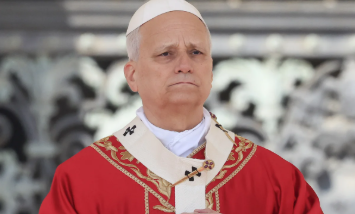
The sun rose over a quiet St Peter’s Square this Sunday morning as thousands gathered for mass. Pope Leo stood before the vast crowd to deliver a message that felt both ancient and urgent. His voice carried a weight that seemed to reflect the heavy atmosphere currently hanging over the world. Palm Sunday traditionally marks a time of peace and the humble arrival of a king on a donkey. However, the pontiff chose this sacred moment to address the dark shadows of modern global warfare directly. He spoke with a firm clarity that resonated far beyond the stone columns of the Vatican walls. His words appeared to target those in power who use faith to justify the act of killing. The Pope made it clear that the divine does not support the mechanics of human destruction today.
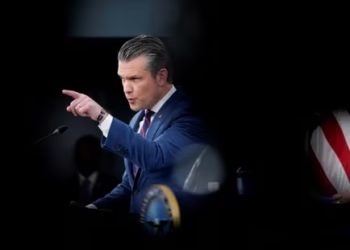
This spiritual intervention comes at a time of extreme volatility within the volatile Middle Eastern region. Thousands of American troops have recently arrived in the area as part of a major deployment strategy. This military buildup follows a period of escalating rhetoric between the United States, Israel, and Iranian forces. Only days ago, the United States Defence Secretary, Pete Hegseth, offered a very controversial public prayer. He called for overwhelming violence against enemies who he claimed deserved absolutely no mercy from the military. Such language has sparked a fierce debate about the intersection of Christian faith and state-sponsored violence. Many observers viewed the Pope’s homily as a direct response to this specific American political rhetoric. The pontiff noted that Jesus cannot be used by anyone to justify the horrors of modern war.
During his sermon, Pope Leo quoted a powerful passage from the Bible regarding the nature of prayer. He reminded the faithful that God ignores those whose hands are stained with the blood of others. The Pope emphasized that Jesus was a king of peace who rejected the use of the sword. He spoke about the “atrocious” nature of the current conflict involving Iran, Israel, and the United States. To the thousands of worshippers listening, his message was a plea for a return to gentle divinity. He explained that Christ revealed the face of a God who always rejects the path of violence. Rather than saving himself through force, Jesus allowed himself to be nailed to a wooden cross. This sacrifice was presented as the ultimate rejection of the power found in military might alone.

While the Pope did not name specific individuals, the timing of his remarks felt incredibly significant. The international community has been watching the Pentagon’s recent preparations for extended ground operations very closely. Reports suggest that United States officials are bracing for weeks of intense military engagement in the region. Meanwhile, the Iranian parliament speaker, Mohammad Bagher Ghalibaf, has issued his own series of fiery warnings. He claimed that his nation’s forces are ready to set any arriving American troops on fire. This cycle of threats has created a dangerous environment where religious language is used as a weapon. The Pope’s insistence on peace stands in stark contrast to the battle cries of political leaders. He lamented the fact that many Christians in the region might not celebrate Easter this year.
The controversy surrounding Defence Secretary Hegseth has added a complex layer to this brewing international crisis. Hegseth belongs to a church affiliated with the Communion of Reformed Evangelical Churches in the United States. The founder of this particular denomination has openly identified himself as a committed Christian nationalist leader. Last week, Hegseth spoke at a worship service for military and civilian workers in Washington D.C. He asked for every round of ammunition to find its mark against the enemies of righteousness. He prayed for the American nation to have the endurance required for the difficult trial ahead. This insertion of specific religious dogma into military policy has drawn widespread international attention and criticism. Critics argue that such language distorts the core message of the Gospel for political gain today.
The Pope has spent months calling for an immediate ceasefire and a total ban on airstrikes. He has watched as destruction has rained down on Lebanon, Israel, and various Gulf state territories. The humanitarian cost of this ongoing conflict has been a primary concern for the Holy See. In his homily, the Pope expressed deep sorrow for the suffering of all innocent civilian populations. He argued that true strength is found in the ability to forgive and seek common ground. For Christians, the start of Holy Week is meant to be a period of deep reflection. It marks the arrival of Christ in Jerusalem just days before his crucifixion and eventual resurrection. However, the physical reality in Jerusalem remains tense and divided for many religious pilgrims this year.
A diplomatic incident occurred on Sunday morning that further complicated the delicate situation in the Holy Land. Israeli police prevented Cardinal Pierbattista Pizzaballa from entering the Church of the Holy Sepulchre for mass. The Cardinal holds Catholic jurisdiction across Israel and the Palestinian territories, making this a significant diplomatic snub. This move sparked immediate and sharp criticism from several major Western powers including France and Italy. The United States Ambassador, Mike Huckabee, described the incident as an unfortunate overreach by local authorities. Italian Prime Minister Giorgia Meloni stated that the move was an offence to all faithful religious communities. French President Emmanuel Macron insisted that the free exercise of worship must be guaranteed for everyone. These reactions highlight the global sensitivity surrounding the management of sacred sites in times of war.
The Israeli Prime Minister, Benjamin Netanyahu, quickly moved to de-escalate the growing tension regarding the Cardinal. He initially claimed that there was no malicious intent behind the decision to block the entrance. The Prime Minister cited safety concerns as the primary reason for the temporary restriction on the archbishop. However, after facing international pressure, Netanyahu reversed the decision and instructed authorities to grant full access. He stated that he understood the concerns raised by the global community regarding religious freedom in Jerusalem. This retreat suggests that even during wartime, political leaders must navigate the complex demands of faith. The incident served as a reminder of how easily religious tensions can boil over during conflict. It underscored the fragile nature of peace in a city held sacred by three major religions.
The Pope’s message serves as a moral compass in a world that feels increasingly lost in violence. He continues to advocate for the vulnerable who are caught in the crossfire of powerful nations. His words remind the global audience that the pursuit of war is a rejection of God. By quoting the prophets, he placed a heavy burden of responsibility on the shoulders of world leaders. The choice between the sword and the cross remains as relevant today as it ever was. As the Middle East stands on the brink of further escalation, the Vatican’s voice remains persistent. It calls for a different kind of courage—the courage to lay down arms and seek peace. Whether the leaders in Washington or Tehran will listen to this plea remains very uncertain.
The English Chronicle will continue to monitor the developments in the Middle East and the Vatican closely. The intersection of faith and foreign policy is currently shaping the future of millions of people worldwide. As Easter approaches, the hope for a peaceful resolution remains the primary prayer for many global citizens. The words of Pope Leo have certainly set a challenging tone for the coming holy days ahead. It is a reminder that the cost of war is paid in more than just money. It is paid in the soul of a nation and the blood of its children. The world now waits to see if the calls for mercy will finally be heard. Peace remains the only path forward that does not lead to further destruction and endless grief.
Related News:
 British Woman in Iran ‘Losing Hope’ Amid Ongoing Detention
 BBC Journalist Held and Interrogated in Vietnam
 UK University Suspends Human Rights Research Following Pressure from China
 UK University Faces Counter-Terror Probe Over China Pressure
 BBC to Apologise Over Edited Trump Speech Amid Backlash
 Britain deploys RAF specialists to assist Belgium with drone threats
 Ukraine-Russia war latest: Putin’s troops exploit bad weather to force Kyiv withdrawal from multiple towns
 US Justice Department Files Lawsuit Against California Over Partisan Voting Maps
 Greene Pushes Epstein Files Amid Trump Fallout
 Trump Deploys DHS to Charlotte in Major Arrest Operation
 December Run-Off in Chile as Election Produces No Winner
 Canada Passes Carney’s First Budget in Tight Parliamentary Vote
 Shadow Fleet at Sea: Europe’s Battle Against Illicit Oil Shipping
 Pentagon Officials in Ukraine to Discuss War End
 Venezuela Threatens Nobel Winner Machado with Fugitive Status
 Trump Envoy to Discuss Ukraine Peace at Kremlin
 Georgians Defy Government Crackdown After Year of Protests
 India’s Labour Law Overhaul Sparks Fierce Debate
 EU plans $105bn Ukraine aid using frozen Russian assets
 Global campaign launched to free Palestinian leader Barghouti
 Russia losses Ukraine war peace talks intensify amid rising deaths
 Zelenskyy Accuses Russia of Sabotaging Peace Talks
 Albanese Opens Door to Bondi Royal Commission Amid Rising Pressure
 Trump Escalates Minnesota Immigration Surge Amid Rising Tensions
 Iran Protesters Defy Crackdown as Violent Clashes Intensify
 Trump Threatens Strong Action If Iran Executes Protesters
 Machado Trump medal gesture reshapes Venezuela power struggle
 Trump Receives Machado’s Nobel Medal in White House Meeting
 EU weighs response amid Greenland tariff crisis with Trump
 US Considers Asylum for British Jews Amid Rising Antisemitism
 ICE street raids expose a chilling future for public freedoms
 EU Says US Ties Have Suffered ‘Big Blow’ After Greenland Crisis
 Andrew Hastie Emerges as Leadership Rival to Ley
 Starmer China visit underscores clear-eyed national security stance
 Starmer China visit raises human rights pressure on Beijing
 Israel Moves to Bar MSF From Gaza Operations
 Trump Praises ‘Terrific’ Petro After White House Talks
 Sydney Protest Escalates and Elderly Woman Suffers Severe Injury
 Tarique Rahman’s Rise Toward Bangladesh’s Top Job
 Glass Cliff Debate After Ley’s Ouster
 Australian Families Leave Syrian Camp for Home
 Trump Attacks UK-California Energy Pact
 Kim Jong-un Unveils Housing for War Families
 Trump and Chagos Deal Rift Over Iran Strikes
 Andrew Mountbatten-Windsor Arrest After FBI Radar
 Andrew Arrest Sparks Republic Debate in Australia
 Global corruption crisis: Who Washington shields
 Duterte ICC Hearing Begins Amid Defiance
 Farage Chagos Islands Row Sparks Fury
 Trump Tariffs Threat Spark UK and EU Alarm
 The Dangerous Rise of Remigration Across Modern Europe
 Trump Speech Sparks Intense Debate Across Divided America
 Jacinda Ardern Moves To Australia Following Her US Fellowships
 US to offer passport services in West Bank settlements
 Has Europe truly learned from the failures of 2022?
 Health Funding Row Rocks US‑Africa Relations
 Middle East Flights Halted After Iran Strikes
 Trump Faces Questions Over Iran Conflict Plan
 Nick Greiner Warns Over Election Review Fallout
 Herzog Asio meeting sparks security storm
 Trump Rebukes Starmer Over Iran Strikes Row
 UK Prepares Aircraft Carrier for Middle East Crisis
 Pete Hegseth Iran War Remarks Spark Alarm
 Kasasa Island Dispute Fuels Japan-China Tensions
 Trump Pressures Congress Over Save America Act
 Iranian Football Squad Asylum Drama Shocks Australia
 Queensland Protest Laws Spark Free Speech Backlash
 Eswatini Deal Sparks Global Outcry Over US Deportations
 Yvette Cooper: UK Must Follow Principles, Not US Pressure
 Trump Iran War Stance Hardens as Conflict Widens
 Hormuz Strait Crisis: Trump Pressures Allies to Act
 US Citizens Angry Over Lack of Middle East Backup Plan
 Nicolas Sarkozy Faces New Trial Over Libya Funding
 Trump Nato threats expose Iran strategy vacuum
 Trump Cuba blackout: US hints at dramatic takeover
 Philippines energy emergency sparks coal power surge
 Trump Iran Plan Faces Doubts Amid Renewed Tensions
 Ghalibaf Iran: Survivor Emerges in Shifting Power Game
 Air Canada CEO Faces Outcry Over Recent Language Misstep
 Trump Facing Backlash from Epstein Survivors Over Files