Published: 6 April 2026 . The English Chronicle Desk. The English Chronicle Online—Celebrating the heroes of the natural world on the frontlines of extinction.
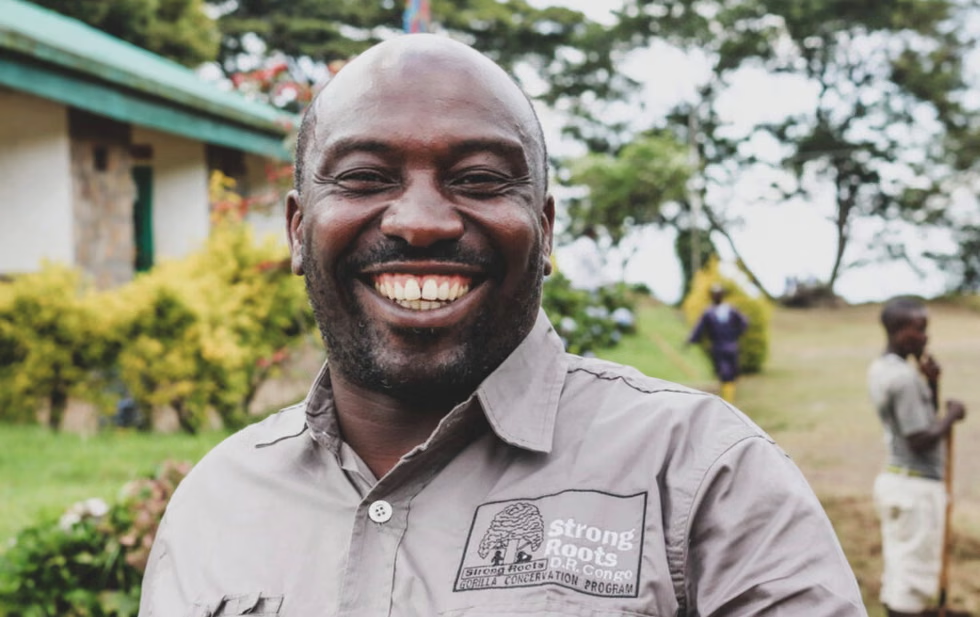
While the world’s eyes are fixed on the stars with the Artemis II flyby or the geopolitical firestorm in Iran, a different kind of war is being waged in the emerald heart of Africa. Dominique Bauma, a 62-year-old park ranger in the Democratic Republic of Congo’s Virunga National Park, recently sat down with international correspondents to recount a career that reads like a survival epic. After four decades of protecting the world’s last mountain gorillas from poachers, rebels, and the crossfire of civil war, Bauma’s message is as resilient as the silverbacks he guards: “I escaped death a lot of times, but the forest is my life.”

Virunga is Africa’s oldest national park and arguably its most dangerous. Since the mid-1990s, more than 200 rangers have been killed in the line of duty.
-
The Rebel Threat: Bauma has survived countless ambushes by the M23 and FDLR rebel groups, who often use the park as a base for illegal charcoal trade and gold mining. “You learn to hear the difference between a falling branch and a cocked rifle,” Bauma says.
-
The 2012 Siege: He recalls the harrowing weeks in 2012 when rebels seized the park headquarters at Rumangabo. While others fled, Bauma and a skeleton crew stayed behind to ensure the orphaned gorillas at the Senkwekwe Center were fed and shielded from the shelling.
-
The Gorilla Bond: For Bauma, the gorillas are not just “wildlife”; they are kin. He is one of the few humans to have gained the total trust of the Rugendo family, a group he has tracked through three generations of silverbacks.
Bauma’s philosophy has evolved from “fortress conservation” to a “community-first” approach. He argues that you cannot protect the trees if the people living beneath them are starving.
-
The Hydroelectric Revolution: Bauma has been a key advocate for the Virunga Alliance, which has built hydroelectric plants around the park. By providing electricity to local villages, the project has reduced the need for “blood charcoal” and created thousands of legal jobs.
-
The Ranger-Farmer Pact: He spends as much time in village meetings as he does on patrol, negotiating compensation for farmers whose crops are damaged by roaming elephants or gorillas. “A hungry man is a poacher,” he notes. “A man with a job is a protector.”
-
The Senkwekwe Legacy: As the head of the world’s only sanctuary for orphaned mountain gorillas, Bauma has raised infants whose parents were murdered by poachers, teaching them the social cues they need to survive in a semi-wild environment.
As he nears retirement age, Bauma is focused on mentoring the next generation of Congolese rangers. Despite the ongoing conflict in the East, the mountain gorilla population has actually tripled during his tenure—one of the few genuine success stories in modern conservation.

“People ask me why I didn’t leave when the bullets started flying,” Bauma says, smoothing a weathered map of the Mikeno Sector. “But if I leave, who stays for the gorillas? They have no voice in the Parliament. I am their voice.” His story is a powerful reminder that while technology like Orion can take us to the Moon, it is the courage of individuals like Bauma that ensures we still have a vibrant Earth to return to.
Virunga National Park: Impact Report (1986–2026)
| Metric | 1986 (Start of Career) | 2026 (Today) |
| Mt. Gorilla Population | ~250 | ~1,100+ |
| Ranger Force | ~150 | 800+ |
| Community Power Access | 0% | 25% (Regional Hydro) |
| Security Status | Volatile | Ongoing Conflict (M23/FDLR) |
| Tourism Status | Emerging | Restricted (Safety Dependent) |
Related News:
 ‘Extinct’ Antelope Returns to Sahara, Bringing Hope
 Guterres Warns Global Cooperation Under Threat at UN’s 80th Year
 Japan Prepares for Kashiwazaki Restart After Fukushima Legacy
 Half the World’s Largest Cities Face Rising Water Stress
 The Sound of Mayhem’: Terror and Loss at Mount Maunganui
 Reindeer Deaths Rise as Finnish Herders Blame Border Wolves
 Moment Officers Rescue Injured Bald Eagle From Icy Hudson River
 Shutting North Sea ‘Will Drive Up Carbon Emissions’
 As Trump Retreats from Climate Goals, China Is Becoming a Green Superpower
 Storm Hernando: Edinburgh Airport Flights Cancelled in US Travel Chaos
 Storm Hernando: Edinburgh Airport Flights Cancelled in US Travel Chaos
 Greenpeace $345m Ruling Sparks Appeal Battle
 The Sad, Strange Story of the World’s Most Radioactive Paradise
 Fuel and Remittances: How Iran Conflict Hits India At Home
 Tiny Possum and Glider Thought Extinct for 6,000 Years Found in Remote West Papua
 US Eases Sanctions on Russian Oil Sales to India During Iran Conflict
 Musk’s xAI Permit Sparks Fury Over Power Plant Expansion
 The Truth Behind Rising Energy Costs and Fossil Fuel Myths
 Millions Left Without Power as Grid Fails
 Extreme Weather: Europe Shivers as Cyclone Narelle Hits
 Tropical Cyclone Narelle Batters the Western Australian Coast
 Trump to Deploy “God Squad” Over Gulf Wildlife Protections
 ‘The Invisible Killer’: Chiang Mai Air Pollution Sparks Health Crisis as Children Suffer Nosebleeds
 ‘The Invisible Killer’: Chiang Mai Air Quality Crisis Sparks Pediatric Health Emergency
 Red Skies and Raging Floods: One Dead as Storm Erminio and Saharan Dust Grip Greece
 The Banbridge Rescue: 300 Sheep Saved from Massive Hay Shed Inferno
 Tragic End to Outback Search as Floods Claim a Life
 Paradise Aground: Cruise Ship Evacuated After Striking Reef Near ‘Cast Away’ Island
 UK Must Act with Courage and Clarity on Israel-Palestine Conflict, Says Foreign Affairs Committee Report
 Yvette Cooper Signals Global Momentum Towards Gaza Peace Deal Amid Humanitarian Crisis
 Chaos at Ibrox as Martin’s Rangers Era Comes to an End
 Trump Claims Modi Has Agreed to Halt Russian Oil Imports Amid Heightened US Pressure
 Russia’s Latest Push to Win US Favors Shows Deep Desperation
 BBC to Apologise Over Edited Trump Speech Amid Backlash
 Britain deploys RAF specialists to assist Belgium with drone threats
 Trump Urges Herzog to Grant Netanyahu Full Pardon
 Indian authorities demolish Kashmir home linked to Red Fort blast
 Greene Pushes Epstein Files Amid Trump Fallout
 Zelenskyy Signs Fighter Jet Deal Amid Russian Drone Attacks
 Shadow Fleet at Sea: Europe’s Battle Against Illicit Oil Shipping
 US Suspends Afghan Immigration After White House Shooting
 Conservatives Pledge to Scrap 2030 Petrol and Diesel Car Ban
 UK Weather: End of Cold Spell in Sight as Temperatures Rise
 Sydney Shark Attack Surge Shocks Australia Beaches
 No Gas Boiler Ban as UK Warm Homes Plan Backs Heat Pumps
 Devon hosts first high-density hydro power system
 Portugal Election Delivers Socialist Win as Far Right Surges
 Australian Families Leave Syrian Camp for Home
 ‘I Would Scream in My Sleep’: Alawite Women from Syria Tell of Kidnap and Rape
 Epstein Eyed Record Label Investment to Access Women, Files Suggest
 How Do You Modernise Mango Farming? India’s Growers Urged to Innovate as Climate Change Hits
 Ukraine Negotiator Reveals What It Feels Like Facing Russia
 Drugs, Denial, Stigma: Fiji’s HIV Crisis Hits Children
 Hilary Knight speaks out on Trump’s recent hockey remarks
 American Citizen Killed in Cuba Boat Shooting, U.S. Officials Say
 Iran’s Regime Still Intact — Coming Days Will Test Its Survival
 In Maps: Strikes Across Iran and the Middle East
 The Third Day of the US‑Israeli War With Iran
 Brit ‘in Good Spirits’ Amid Dubai Missile Attacks, Stranded but Safe
 Herzog Asio meeting sparks security storm
 Civilian Deaths in Iran Pass 700 Amid Fear of Bombs and Regime Clampdown
 ‘Every Day Feels Like a Month’: Iranians Describe Life Under ‘Constant’ US‑Israeli Strikes
 Petrol Prices Soar as Retailers Accused of Gouging Amid Global Tension
 Penny Wong silent on Australian crew in sub strike
 Finland Plans to Lift Decades‑Old Ban on Hosting Nuclear Weapons
 Minister Meets Crews Who Will ‘Take Out’ Iranian Drones
 Oil Prices Surge Above $100 Amid Iran War
 Nine Days of Strikes Reshape the Middle East
 Trump Pressures Congress Over Save America Act
 Real Estate Brothers Convicted in Sex Trafficking Trial
 Iran War Puts Trump at Political Risk Amid Rising Prices
 Goma Drone Attack Kills Three as Conflict Escalates
 Queensland Protest Laws Spark Free Speech Backlash
 Trump Nato threats expose Iran strategy vacuum
 Trump Facing Backlash from Epstein Survivors Over Files
 UK Forces Ready to Seize Russian Shadow Fleet Vessels
 Trump Considers Military Operation to Seize Iran’s Uranium
 “It Ends With Trial”: Judge Tosses Blake Lively’s Sexual Harassment Claims Against Justin Baldoni
 Report Says Pezzullo Acted ‘Recklessly’ in Dealings
 Oil and Diplomacy: Russian Refineries Burn as Zelenskyy Secures Middle East Shield