Published: April 7, 2026. The English Chronicle Desk.
The English Chronicle Online — Navigating the intersection of art, history, and regional identity.
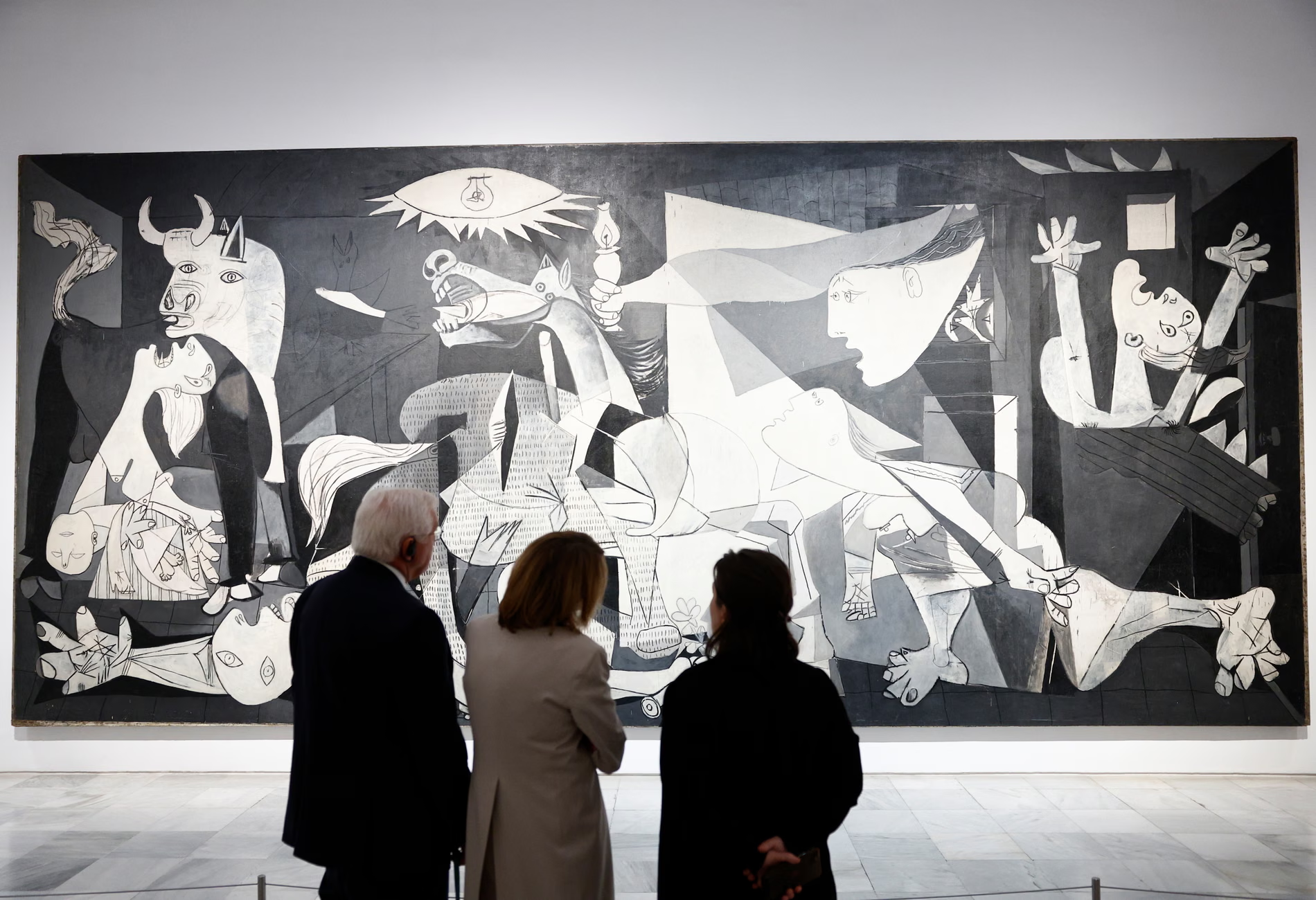
MADRID — A fierce political storm has erupted in Spain following a formal request by the Basque regional government to relocate Pablo Picasso’s anti-war masterpiece, Guernica, to the city from which it takes its name. The demand, issued on Monday to coincide with the upcoming 89th anniversary of the town’s devastating 1937 bombing, has reignited a decades-old debate that pits Basque nationalist aspirations against the Spanish central government’s commitment to “national heritage” and the painting’s physical preservation.

Currently housed in the Museo Reina Sofía in Madrid, Guernica is widely considered the world’s most powerful artistic indictment of fascism and war. Basque President (Lehendakari) Imanol Pradales argued that the painting’s “moral and historical home” is the Basque Country, specifically the Guggenheim Museum Bilbao, which he claims possesses the state-of-the-art facilities required to host the massive canvas. “The painting was born from the blood of the Basque people,” Pradales stated during a televised address. “It is time for this symbol of our suffering and resilience to return to the land that inspired it.”
The request was immediately met with a stinging rejection from Spain’s Minister of Culture, Ernest Urtasun. Citing a team of international restorers, the Ministry maintained that the 3.5-meter-high, 7.7-meter-wide oil painting is in a “precarious state of structural fragility.” Restorers warn that even the slightest vibration from a 400-kilometer journey could cause irreversible cracking in the lead-white paint layers, which were already stressed by the work’s globetrotting history before its final “homecoming” to Spain in 1981.
However, Basque nationalist parties, including EH Bildu, have dismissed the technical concerns as “political excuses,” labeling the painting a “cultural hostage of Madrid.” They argue that modern transport technology—the same used to move fragile Renaissance altarpieces—is more than capable of ensuring a safe transfer. The clash has quickly moved into the halls of the Cortes Generales (Spanish Parliament), where the conservative People’s Party (PP) has accused the socialist-led coalition of “weakening the national fabric” by even entertaining the discussion.
The controversy is not merely about art; it is a battle over the memory of the Spanish Civil War. For many in the Basque Country, Guernica represents the specific horror of the Nazi Condor Legion’s carpet-bombing of their holy city. For the central government, the painting belongs to “all Spaniards” as a symbol of the transition to democracy, following Picasso’s famous decree that the work should only return to Spain once “public liberties” were restored.
“To move Guernica is to tear a page out of the national story,” said a spokesperson for the Reina Sofía. “It was placed here specifically to be part of a dialogue with other works of the 20th century. Removing it would be an act of cultural provincialism.”

As the April 26 anniversary of the bombing approaches, local activists in the town of Guernica-Lumo have begun a “Return the Canvas” petition, which has already garnered 150,000 signatures. With the Basque regional elections looming later this year, the fate of the black-and-white mural has become a high-stakes proxy for the broader struggle over regional autonomy. For now, the screaming horse and the weeping mother remain in Madrid, but the political cries surrounding them have never been louder.
Related News:
 EU weighs response amid Greenland tariff crisis with Trump
 EU Says US Ties Have Suffered ‘Big Blow’ After Greenland Crisis
 Macron Rebuked in Franco-German Defence Row
 Five Young People Die in Spain Apartment Block Fire
 Police Assessing Stansted Airport Private Flights Over Epstein Ties
 The Russian Village That Lost Its Men to War
 Zelensky Says Putin Has Started WW3, Must Be Stopped
 New Russia Sanctions on Hold as Hungary Blocks EU Package Ahead of Fourth Ukraine War Anniversary
 Inside Kyiv’s resolve as conflict nears five‑year mark
 What to Watch for During Trump’s State of the Union Address
 US Partially Evacuates Beirut Embassy Amid Rising Iran Tensions
 Rob Jetten becomes Netherlands’ youngest ever prime minister
 Ukraine remembers its dead as war enters a fifth year
 Spain Declassifies Files on 1981 Attempted Coup in Effort to Dispel Conspiracy Theories
 ‘It’s Eerie’ – Dubai on Edge as City Comes Under Attack
 Muslim Group Wants Mosques to Be Used as Polling Stations Ahead of UK Elections
 Macron Finds ‘Freedom Fries’ Redemption in Iran Crisis
 Manchester Students Mourn Ayatollah Amid Protest
 Baba Vanga’s Chilling World War 3 Prediction and Russia’s New Leader
 Ukraine Accuses Hungary of Taking Seven Bank Workers Hostage in Budapest
 Finland Plans to Lift Decades‑Old Ban on Hosting Nuclear Weapons
 Putin Orders Evacuation at Iran Nuclear Plant Amid ‘Catastrophe’ Fears
 Istanbul Mayor Faces Corruption Trial Amid Political Storm
 Iranian Players Get Australian Visas After Anthem Protest
 Ukraine War Becomes Flashpoint in Hungarian Election
 Ecuador Deploys 75,000 Forces in Anti-Gang Drive
 Missing Cuba-Bound Aid Ships Spark Urgent Search
 PM Seeks to Reassure Australians Over Fuel Supply
 Status Quo Restored: Netanyahu Intervenes After Police Block Latin Patriarch from Holy Sepulchre
 India Begins Mammoth Census for 1.4 Billion People
 Italian Town Buys Mussolini Villa to Keep Away Fascist Fans
 Pope Leo Urges Peace in First Easter Mass Address
 Who Is Viktor Orbán, Hungary’s Long-Serving PM?
 ‘I Will Not Abandon Him’: Pauline Hanson Stands by Ben Roberts-Smith After War Crime Charges
 UK Must Act with Courage and Clarity on Israel-Palestine Conflict, Says Foreign Affairs Committee Report
 Radioactive Leak at UK’s Nuclear Warhead Base Sparks Outcry Over Safety and Secrecy
 Hong Kong Summons UK and Australian Envoys Following Asylum Grants to Democracy Activists
 Is the UK Ready to Put Boots on the Ground in Ukraine? Assessing Military Capacity and Challenges
 Channel Crossings Surge: Over 1,000 People Arrive in the UK in Small Boats in a Single Day
 Yvette Cooper Signals Global Momentum Towards Gaza Peace Deal Amid Humanitarian Crisis
 Russia’s Latest Push to Win US Favors Shows Deep Desperation
 BBC to Apologise Over Edited Trump Speech Amid Backlash
 Britain deploys RAF specialists to assist Belgium with drone threats
 Trump Urges Herzog to Grant Netanyahu Full Pardon
 Indian authorities demolish Kashmir home linked to Red Fort blast
 Greene Pushes Epstein Files Amid Trump Fallout
 December Run-Off in Chile as Election Produces No Winner
 Shadow Fleet at Sea: Europe’s Battle Against Illicit Oil Shipping
 India’s COP30 Delay Raises Global Climate Concerns
 Georgians Defy Government Crackdown After Year of Protests
 Portugal Election Delivers Socialist Win as Far Right Surges
 Australian Families Leave Syrian Camp for Home
 Starmer Weighs Fast-Tracking Defence Boost
 Snow and Rain Warnings as Cold Snap Continues in the UK
 Nine Arrested in France Over Death of Far‑Right Student
 Epstein Eyed Record Label Investment to Access Women, Files Suggest
 Australian PM Says Former Prince Andrew Has Suffered ‘Extraordinary Fall’ but That Won’t Prompt Republic Referendum
 Farage Chagos Islands Row Sparks Fury
 Ukraine Negotiator Reveals What It Feels Like Facing Russia
 American Citizen Killed in Cuba Boat Shooting, U.S. Officials Say
 Iran’s Regime Still Intact — Coming Days Will Test Its Survival
 Herzog Asio meeting sparks security storm
 ‘Every Day Feels Like a Month’: Iranians Describe Life Under ‘Constant’ US‑Israeli Strikes
 Minister Meets Crews Who Will ‘Take Out’ Iranian Drones
 Nine Days of Strikes Reshape the Middle East
 Trump Pressures Congress Over Save America Act
 Iran War Puts Trump at Political Risk Amid Rising Prices
 Queensland Protest Laws Spark Free Speech Backlash
 Trump Nato threats expose Iran strategy vacuum
 Trump’s Confidence Undimmed — But Every Iran Option Carries Risk
 Israel Says Iran Security Chief Larijani ‘Killed’
 Trump Facing Backlash from Epstein Survivors Over Files
 Nepal to swear in ex-rapper as new prime minister
 UK Forces Ready to Seize Russian Shadow Fleet Vessels
 US Lawmaker Demands Testimony Over Sarah Ferguson’s ‘Close Epstein Ties’
 Trump Considers Military Operation to Seize Iran’s Uranium
 ‘The Cost of Living’: Asia’s Migrant Workers Debate if Gulf Jobs are Worth the Risk of War
 Report Says Pezzullo Acted ‘Recklessly’ in Dealings
 Hungary Claims Plot to Target Gas Pipeline Pre-Vote
 Oil and Diplomacy: Russian Refineries Burn as Zelenskyy Secures Middle East Shield