Published: 11 April 2026.The English Chronicle Desk.The English Chronicle Online
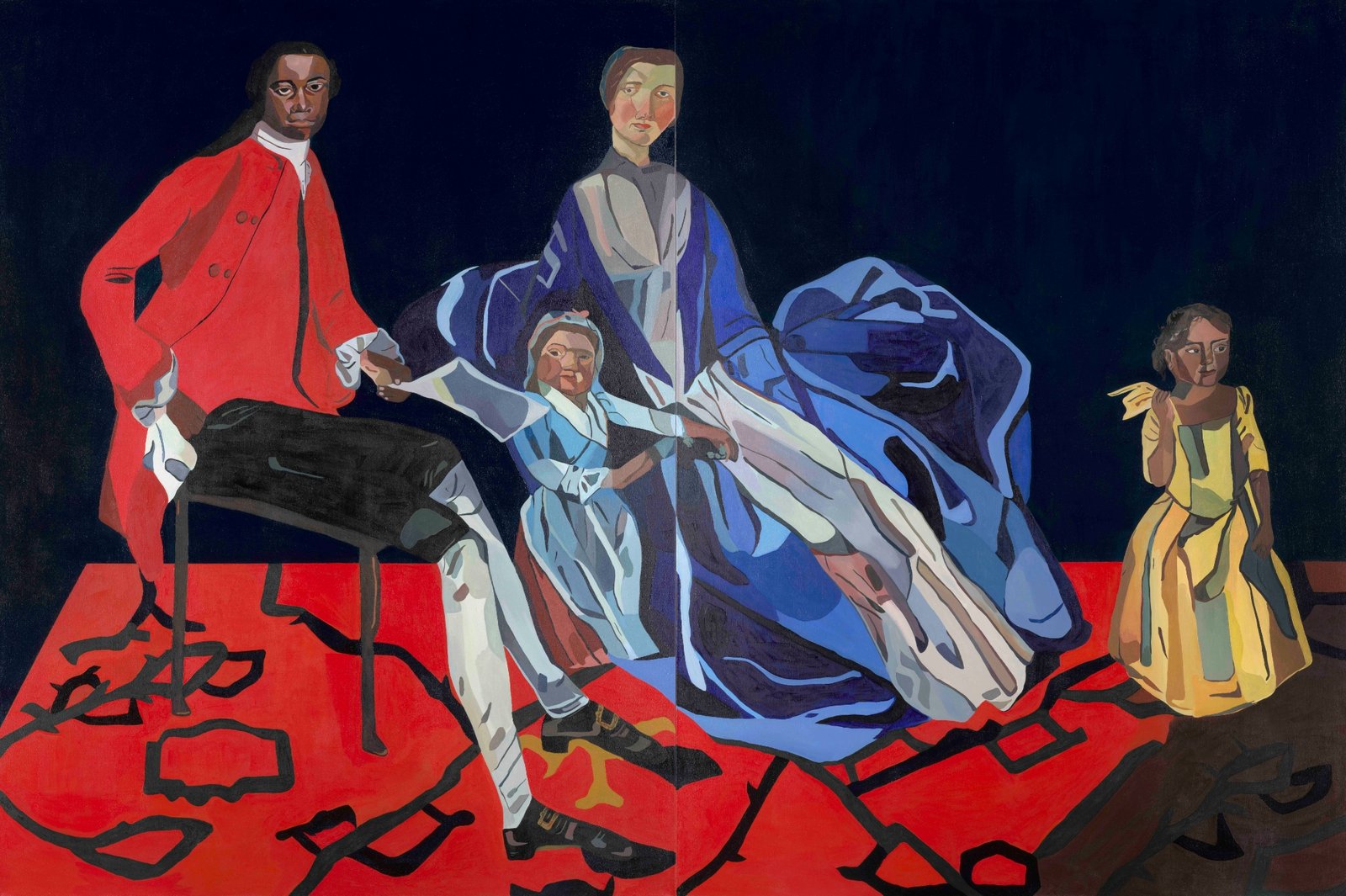
A landmark exhibition in Sweden is shedding new light on the extraordinary life of an 18th-century Black intellectual whose writings and personal reflections offer rare insight into race, identity and power in early modern Europe. The exhibition explores the story of Adolf Ludvig Gustav Fredrik Albrecht Couschi, widely known as Badin, a man born into slavery who later became an influential presence within the Swedish royal court, leaving behind a remarkable legacy of diaries, books and correspondence.
Badin’s life is one of the most unusual documented personal histories of African origin individuals in Scandinavia during the 18th century. Historians believe he was born between 1747 and 1750 in St Croix, then part of the Danish West Indies, now the United States Virgin Islands. During childhood he was taken to Denmark and eventually presented as a “gift” to the Swedish queen Louisa Ulrika of Prussia, a practice that reflected the colonial mindset and social hierarchies of the era.

Despite the deeply troubling circumstances of his arrival, Badin’s life developed in unexpected ways within the Swedish royal household. He was educated according to the intellectual ideals of Enlightenment philosopher Jean-Jacques Rousseau, who believed children should be encouraged to grow freely and develop independent thought. Unlike most individuals of enslaved origin during that period, Badin was given access to education, learned to read and write fluently, and later served in multiple roles within the royal court, including chamberlain, civil servant and dance instructor.
His writings provide a rare first-person account of identity formation within elite European society at a time when racial difference was often exoticised or marginalised. Through diaries, letters and an autobiography, Badin documented everyday court life, intellectual interests and reflections on his social position, creating an invaluable archive for scholars studying early Black European history.
The new exhibition, titled Badin – Beyond Surface and Mask, is being presented at the Nationalmuseum, where Badin’s surviving writings are displayed together for the first time. The exhibition aims to provide a more nuanced understanding of his life beyond stereotypical portrayals that have historically reduced him to a symbolic or decorative figure within Swedish cultural memory.
A central feature of the exhibition is a newly commissioned film by Salad Hilowle, an Afro-Swedish visual artist who has devoted much of his artistic practice to exploring Badin’s story. Hilowle’s film Maroonen (The Marooned) draws inspiration directly from Badin’s own words, imagining the historical figure addressing modern audiences about his experiences navigating European society as a Black intellectual during the Enlightenment period.
Hilowle has expressed concern that Badin has frequently appeared in Swedish cultural works primarily as an image rather than as a thinker and writer. His presence can be found in fictionalised form in works such as August Strindberg’s 1902 play Gustav III, where depictions often reflected racial stereotypes common in earlier artistic traditions. The exhibition seeks to challenge these portrayals by foregrounding Badin’s own voice and intellectual contributions.
The film incorporates music and operatic performance to bring Badin’s writings to life. One passage from his texts includes the words “I as one of the Blacks,” which Hilowle presents through a powerful vocal performance designed to encourage audiences to reflect on identity, representation and historical memory. The artistic approach aims to emphasise both the humanity and emotional complexity of Badin’s lived experience.
Curator Åsa Bharathi Larsson describes Badin’s position in the royal court as uniquely situated between privilege and marginalisation. Although he was granted education and status, his life was still shaped by the racial hierarchies and colonial ideologies of the period. Researchers note that very few individuals of African origin lived in Sweden between the early 18th and early 19th centuries, and even fewer left written records. Badin’s archive therefore represents an exceptional historical resource.
His extensive personal library and written reflections demonstrate intellectual curiosity and a desire to document his own existence within European society. Through these writings, historians argue, Badin effectively preserved his voice for future generations, ensuring that his perspective would not be entirely erased from historical narratives.
The exhibition also explores how performance and identity may have served as survival strategies within the rigid structure of court life. Scholars suggest that Badin’s nickname, derived from the French word for joker or trickster, may have functioned as a protective social role allowing him to navigate expectations while maintaining intellectual independence. His diaries reveal both humour and introspection, suggesting a deeply thoughtful individual negotiating complex cultural boundaries.

By bringing together archival material, artistic interpretation and academic research, the exhibition represents an important step in expanding public understanding of Black European history. It highlights how individual stories can challenge dominant historical narratives and encourage broader reflection on identity, memory and representation.
Hilowle, who has previously created works inspired by Badin and plans future projects exploring his legacy, emphasises the emotional depth of the diarist’s story. He suggests that behind the public persona existed a sensitive individual whose resilience required significant personal strength. The exhibition therefore not only restores visibility to a largely overlooked historical figure but also invites contemporary audiences to consider how historical narratives are shaped and who is given the opportunity to speak within them.
As cultural institutions across Europe continue to reassess historical collections and broaden representation, the rediscovery of figures such as Badin offers an opportunity to enrich understanding of the continent’s diverse past. His writings stand as testimony to both the constraints and possibilities faced by individuals navigating identity and belonging in early modern Europe.
Related News:
 Toddlers in Finland Lead the Fight to Save Sámi Language
 Six-Figure Tutors Teach Toddlers to ‘Be British’
 How Bringing Forests Into Preschools Boosts Children’s Health
 Is a two-week half-term a good deal? Some parents in England aren’t so sure
 Posthumous books are messy and fraught – but Virginia Giuffre’s gives her a voice
 Children to Learn Local History in Major Curriculum Overhaul
 UK University Suspends Human Rights Research Following Pressure from China
 UK University Faces Counter-Terror Probe Over China Pressure
 Top Christmas Books Reads: Classics to Cozy Romcoms
 Greta Thunberg Backs Student Facing UK Visa Revocation
 Audio Books deals and promo codes to explore in November 2025
China-critical UK academics face ‘extremely heavy’ pressure from Beijing
Audio Books deals and promo codes to explore in November 2025
China-critical UK academics face ‘extremely heavy’ pressure from Beijing
 Labour immigration crackdown could cost UK £4.4bn
 London’s Childlessness Crisis: Schools Closing as Families Shrink
 No link found between paracetamol in pregnancy and autism
 Government urges schools to ban phones to curb classroom disruption
 Nigeria’s $25m Museum Faces Political Storm Amid Benin Bronzes Debate
 Algeria Pardons French-Algerian Novelist Sansal After Year in Jail
 Phillipson Accused of Appeasing Unions by Diluting EBacc
 ‘I’ve Read 38 Books, but This Is My Standout Favourite’
 England’s Special Needs Support Faces Breaking Point
 Nigerian Education Reversal: Mother-Tongue Teaching Scrapped
 Higgs Donates Nobel Medal to His Beloved University
 UK Schools Face Staff Exodus Amid Wellbeing Crash
 Ex-Harvard President Pauses Teaching Over Epstein Emails
 Scottish Families Take Legal Action Over School CO Leak
 Men Aren’t Vanishing From Fiction, But Misconceptions Persist
 Schools urged to trial four-day week to ease pressure on teachers in England and Wales
 Oxford Names ‘Rage Bait’ Word of the Year
 Cambridge College Faces Backlash Over Private School Recruitment
 Glasgow rector cleared by watchdog in antisemitism case
 Pressure mounts on No 10 over under-16s social media ban
 UK Launches First Town of Culture Competition
 UK Ministers Drop Foreign Student Targets for Global Education Push
 City & Guilds pay surge sparks backlash amid £22m cuts
 ‘Crunch time’ on rising Send costs in England, says thinktank
 Parents Fear Losing Support Amid England’s Send Reforms
 Cambridge Faces Scrutiny Over Arms Investment Transparency
 Harvey Willgoose School Stabbing Red Flags Missed
 Kingsbury stabbing probe led by counter-terror police
 Send spending gap leaves deprived areas behind
 Hindu Man’s Stand Sparks Hope in India
 Royal Mail Blames Poor Weather and Sickness for Delayed Deliveries
 Teacher Who Lied About Cambridge Degree Banned From Profession
 Singapore Offers to Set Up Single Americans with ‘Epic’ First Dates – There’s Just One Catch
 Revealed: The Billions Given to Charity by Ordinary Indians Every Year
 NSW to Introduce Minimum Age for Ebike Riders
 ‘Don’t Make Us Security Guards,’ Says Teacher Stabbed by Pupil
 Schools in England to Get Budget for Children with Special Needs as Part of SEND Overhaul
 Science Reveals How We Truly Learn Languages
 Germany’s Fairy Tale Route: The Real Places Behind the Grimm Stories
 Only 10% of Boys Aged 14–16 Read Daily for Pleasure, National Literacy Trust Finds
 Karen Gillan Reveals What She Misses Most About Scotland’s Food and People
 ‘We Pray for Peace’: Indian Filmmaker From Troubled State Who Won a BAFTA
 BBC Apologises After Racial Slur Aired at BAFTAs by Guest With Tourette’s
 Sadistic Pair Jailed for Blowing Up Sheep
 Man discovers £18k trading card stash in his loft
 Will the New SEND Reforms in England Work? You Have Your Say
 Larry Summers Resigns From Harvard Amid Epstein Files
 New Era for UK Special Needs Support
 After Decades of Decline, Why Welsh Male Voice Choirs Are Back
 Adelaide University Faces Backlash Over Event Cancellation
 Yorkshire School Issues Warning Over Social Media Trend Targeting Pupils
 Why Every Culture Has a Healing Broth
 Undercover officer deceived women with ‘grotesque and cruel’ lies, spycops inquiry told
 Scots Head Teacher Pays Tribute to Teen Who Died in Car Fire
 New Survey Reveals Troubling Rise in Campus Antisemitism
 UK Banks Maintain £100 Contactless Limit Despite FCA Rule Change
 Rising Costs Force Families to Rethink Days Out
 Sydney Teacher Arrested in Teenage Grooming Investigation
 Keir Starmer Vows Strong Action Against Online Tech Giants
 Schools Lack Staff to Make SEND Reforms Work, Union Warns
 How and When to See April’s Full Pink Moon
 National Treasure: Raja Ravi Varma Masterpiece Smashes Indian Art Record with $17.9m Sale
 Is AI Eroding the Foundations of Learning in England?
 Peretz Targets FA Cup Upset Amid War Concerns
 Archbishop Prays for Middle East Peace in First Easter Sermon
 Storm Dave Disrupts Travel but Conditions Set to Ease
 The Pre-School Lottery: Families Left in ‘Holding Pattern’ as Local Places Vanish
 The Lough’s Lament: Can Fiction Spark a ‘Seismic’ Rescue for Lough Neagh?