Published: 22 April 2026. The English Chronicle Desk. The English Chronicle Online.
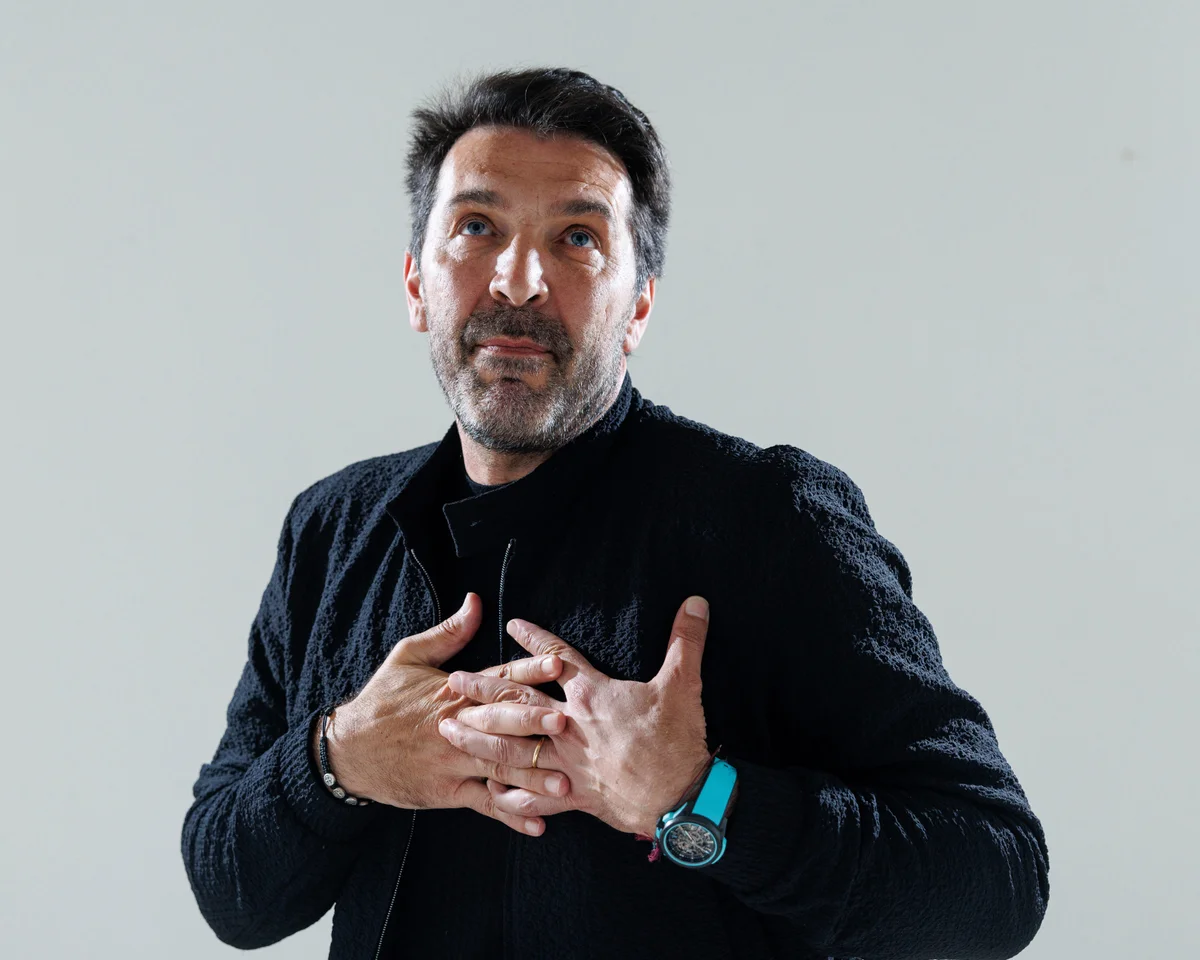
Gianluigi Buffon describes the surreal moment of leaving the pitch after his final professional game. He recalls tearing his gloves off while staring at his knuckles in the bright neon lights. The legendary goalkeeper admits that he felt completely dead inside during that strange, quiet moment. At forty-five, he felt older than the younger teammates walking beside him toward the changing rooms. The intimate tone of his new book, Saved, captures this profound sense of personal loss. It opens with his final appearance in a Serie B playoff match for the club Parma. The great goalkeeper played at the highest level for twenty-eight years with incredible skill today. His reflections remain deeply moving while appearing sombre as he contemplates a life after the sport. He asks if one can live without the beautiful game, and he admits he cannot. When a player outlives their youth, the feeling of strength and total power eventually fades away. Muscles, joints, and reflexes start to wear out, and the process feels like a slow death.
Today, however, Buffon appears to be a man who is now absolutely full of life. He stands on a street in King’s Cross smoking while greeting a delighted security officer. He walks into the office like a cheerful force of goodwill, impressing everyone he meets. During our lengthy conversation, Buffon considers every question with deep thought and total professional focus. He moves from discussing his retirement to his complex role in the current national management. Italy felt crushed in March when they failed to qualify for the World Cup again. He compares those painful feelings with the pure elation of winning the tournament back in 2006. That brilliant victory was famously preceded by the bitter fallout from the infamous Calciopoli scandal. Buffon was implicated in the mess, yet he found a way to win the world title.

I ask Buffon if his retirement still feels like a kind of death to him. He replies that he has very opposite emotions now because it was the right choice. He felt happy to finally end his long journey after so many dedicated, hard years. However, he obviously had fears because his life would become completely different from before. Buffon understands my questions in English, but he chooses to answer in his native Italian. He laughs when I ask if he has played in any casual matches recently. He insists that he really does not miss playing the game at all now. He feels convinced that it was the right time to finally finish his career. He used to have conflicted emotions, but then he realised his life had changed. He is living in a different, much quieter way than his previous hectic life allowed.
It helps to find deep acceptance when your list of achievements is so incredibly impressive. He is Italy’s most capped men’s player, with one hundred and seventy-six total international appearances. Buffon has also been a part of five different World Cup squads for his nation. He has won the most Serie A titles, lifting the Scudetto ten times with Juventus. He set the domestic league record for the longest time without conceding a single goal. There are two things that he is particularly proud of in his long, storied career. The first is the longevity and continuity of his high-level performance over many decades. The second is the bond he formed with his teammates and their chemistry together.
He might have seemed totally flawless during that record-breaking season ten years ago today. However, Buffon believes his best campaign was back during the 2002-03 season in Italy. He was in superb form, a feeling he also experienced during the 2006 World Cup. In those golden moments, it seems that everything is perfectly in order for the player. You feel almost omnipotent, and you have a perception that you are completely unbeatable. The fleeting nature of that sensation makes it all the more precious to the athlete. Buffon smiles as he recalls feeling invincible during those peak moments of his career. The flow of energy and the mental clarity are very difficult to explain today. He does not know what happens within you, but you see so much clarity.
I am intrigued by how Buffon found that elusive state during the 2006 tournament. The buildup was smeared by the murky scandal of Calciopoli which hurt the national team. As he admits in his book, the Italian squad was then considered decidedly unpopular. There were accusations that Juventus and other clubs had manipulated the referees’ association constantly. Buffon was also accused of placing illegal bets and had to leave the camp. He was eventually exonerated, but the process was incredibly stressful for everyone involved then. Twenty years on, Buffon tells me that it was hard to find any real peace. It was not easy to find the calm and serenity to focus on their priority. But the real difference is that you realise you are not a liar yourself. We knew we had not done anything bad, despite what the newspapers were saying then. We were paying an inexplicable price, but the injustice brought out the best in us.
The 2006 World Cup final between France and Italy was held in Berlin. Buffon shrugs when he remembers that Zinedine Zidane scored a penalty against him early. Marco Materazzi equalised later, and the score remained one all at full-time today. Then, just before the first period of extra time ended, Buffon made history. He denied Zidane with a brilliant, iconic save that is still discussed by fans today. Buffon displayed astonishing reflexes to tip the ball over the bar with his hand. When Zidane hit the ball, he headed it with such strength and real nastiness. It was as if he had connected with his foot rather than his head. I knew he was convinced he had scored, so he was frustrated by me. Being the incredible champion he is, I believe he appreciated my save eventually.
Rage soon enveloped Zidane shortly after that incredible save by the Italian goalkeeper today. Materazzi, the Italy defender, insulted the French captain in a very heated moment. No one else heard what was said, and it seemed as if Buffon saw everything. I was about fifteen metres away and I could hear the loud thud clearly. If he had done that to anyone else, they would have been knocked out. The linesman did not see it, and I was the only one who witnessed it. So I ran to the referee and assistant in order to attract their immediate attention. The referee eventually consulted his assistants and, with television cameras capturing the incident, acted. He sent off Zidane, and Italy went on to win the cup on penalties.
 Buffon admits of Zidane’s dismissal that he was shaken up by the sudden event. He knew it was Zidane’s last game, and he was one of the greats. He was sorry that it was ending for him in that way today. Buffon shakes his head when I ask if he and Zidane ever discussed it. We never spoke about it, because there is a relationship based on trust. I never wanted to talk about it as a matter of pure respect. He is a champion who won everything, but this was a painful situation. I did not want him to remember that particular day during our meetings together.
Buffon suggests that Parma resemble his mother, Juventus his father, and Paris Saint-Germain is like a friend. So what does Italy, as a team, represent to him right now? He thinks carefully before, with some tenderness, replying that the team is a grandfather. There is a notion of legacy that means it needs to be protected with delicacy. The grandpa needs to be supported in his old age by the whole family.
Last month, with Buffon as the head of delegation, Italy lost another playoff. That disappointment followed Italy failing to beat Sweden in a qualification decider in 2017. In 2022, a defeat to North Macedonia meant they did not compete at all. As he considers the latest calamity, Buffon says it has been a painful page. If they had told me this would happen twelve years ago, I would disagree. I would have said that it is easier to see aliens than that failure. But that is the reality we must face now to build a future. In order to overcome this we need to understand why there are difficulties. We need to change, and if we are clear about this, we have potential. But if you deny there is a problem, then that problem will always be there.
What are the reasons for the decline of Italian football in recent years? I would say there are three clear ones, Buffon says very firmly. The first is globalisation, which has made it possible for all teams to be competitive. The average level of play has increased a lot across the whole world recently. Secondly, up to fifteen years ago, we were stronger tactically than our many opponents. And thirdly, we have some fantastic players but what is missing is creative talent. Buffon does not shy away from acknowledging that he was sometimes affected by depression. But he says now that he learned sharing your vulnerability can be a strength. I feel more secure and more balanced now than I ever did before today. I am at ease when I talk about how vulnerable I have been during life. When I was experiencing that tough period, I realised that talking was good therapy.
Does Buffon worry about the increasing sanitisation of the beautiful game of football? That is a tough one and we need a good debate about it, he replies. I think that when sport becomes business, the risk is that you lose values. You also lose the passion and sense of belonging you have when you play. Now that he is no longer working with the national team, he is focused. He wants to be a good father to his two young sons today. It is a big job in itself, and I have not been very present. But the game runs through him so powerfully that it seems likely he will return. It is the world I know and understand best, so I will always stay. That world is football, and I will always be a part of it somehow.
In the UK and Ireland, Samaritans can be contacted on freephone 116 123, or email jo@samaritans.org or jo@samaritans.ie. In the US, you can call or text the National Suicide Prevention Lifeline on 988, chat on 988lifeline.org, or text HOME to 741741 to connect with a crisis counselor. In Australia, the crisis support service Lifeline is 13 11 14. Other international helplines can be found at befrienders.org.
Related News:
 Granit Xhaka Rescue Earns Everton Draw at Sunderland
 Bellingham has ‘the edge’ among England No 10s
 Man City Masterclass on Guardiola’s Milestone Day Exposes Liverpool Woes
 VAR Must Rein Its Neck In to Save Football’s Spirit
 Mary Earps’s Manchester United Return Faces Mixed Reception
 UK and Ireland Announce Venues for Euro 2028 Tournament
 Saka Solidifies Role as Tuchel’s Key England Lieutenant
 Former Lion Heskey Warns of Shortage of England Strikers
 Tiny Curacao Makes History as Smallest Nation to Reach World Cup
 Haiti Qualifies for World Cup Despite Coach Never Visiting Country
 Australia Face Big Changes as Cummins and Lyon Ruled Out of Ashes
 Van de Ven Tackle Leaves Isak with Fractured Leg
 ECB powerless to halt England’s recurring Ashes failures
 Stokes urges empathy for England players amid Ashes struggles
 Aston Villa Remain Arsenal’s Key Obstacle in Title Pursuit
 Salah Shines as Egypt Knock Out Ivory Coast at Afcon
 Raphinha doubles up as Barcelona beat Real Madrid in Super Cup
 Xabi Alonso leaves Real Madrid, Arbeloa Takes Over
 Maya Joint stunned by Valentová in Australian Open upset
 Chelsea warn fans of danger in Naples after hospital incidents
 Liverpool Chase Champions Glory With Stunning Qarabag Victory
 Carlos Alcaraz Triumphs Over Zverev in Five-Set Australian Open Epic
 Ben Stokes injury joke after brutal ball strike
 Wrestler at 60: A Powerful New Start in the Ring
 Arsenal blow lead as Arteta rues Wolves draw
 England v Ireland: Scrum Battle Takes Centre Stage
 BBC World Cup Presenting Duties Shared Among Trio
 Craig Tiley Leaves Australian Open Legacy
 English Cricket Faces Moral Crisis Over Indian Investment
 Hudson-Odoi Sends Nottingham Forest Into Europa Last 16
 Buttler Eyes Vital Run Surge as England Face New Zealand
 World Cup Drinks Breaks Could Bring ITV Ad Debate
 Saka criticism response: Arsenal star dismisses outside noise
 Spurs Coach Defends Early Kinsky Substitution at Atlético
 Abramovich Chelsea Sale Cash Faces Jersey Probe
 Champions League Failure Sparking Premier League Crisis
 African World Cup Fans Face $15,000 Entry Bond Fee
 Teenage Titan: Sooryavanshi Smashes IPL Records
 Sam Konstas Dropped as Australia Unveils New Contract List
 ECB Faces Backlash Over Disability Premier League Inclusion
 The Wildest Plastico: Leverkusen and Wolfsburg Thriller
 Maguire Commits Future to Manchester United with New Deal
 Can De Zerbi Restore Belief to Save Spurs From the Drop?
 Robots Outpace Humans in Beijing Half-Marathon
 Ashley Cole: Finding His Voice and Vision in Italy
 A Nine-Goal Thriller Redefines European Football Brilliance
 George North Announces Retirement From Rugby
 $13bn World Cup Set to Break All Revenue Records
 Disney+ Wins Champions League Rights in Key Markets
 FIFA Confirms Global Ban for Benfica Star Prestianni
 The Global Battle for Control Over the Women’s Game
 Fernandes Equals Assist Record as United Secure Third
 Bracing for the Cherries: Guardiola Likens Vital Bournemouth Trip to the Dentist
 De Zerbi Rallies Spurs To Fight Relegation Threat
 The Battle for Wembley Sparking Unprecedented Legal Warfare
 Chasing Glory: The Quest for a New World Cup Champion
 Tuchel Defends Tough England Squad Decisions
 Farewell to an Icon: Pep Guardiola to Exit Manchester City
 Chasing Paris Glory Amid Familiar Echoes
 Tom Pidcock On Chasing Tadej Pogacar And His Future Ambitions
 Is Ollie Robinson the Chaos English Cricket Needs Today?
 Saka Playing Through Pain As England World Cup Campaign Looms
 Iran Files Official Fifa Complaint Over World Cup Travel
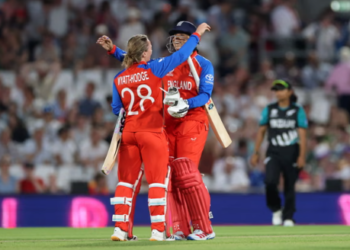 Women’s T20 World Cup Breaks Records But Gaps Remain
 Serena Williams Returns to Wimbledon Centre Court
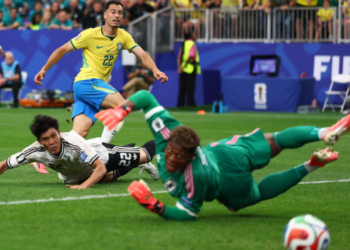 Martinelli Strikes Late as Brazil Edge Past Brave Japan
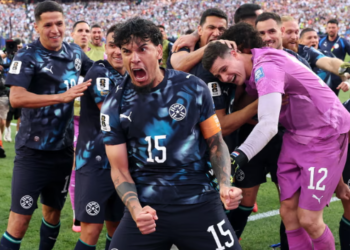 Paraguay Shock Germany in Historic Penalty Shootout
 France Dominate Sweden as Deschamps’ New Era Takes Shape
 Mexico World Cup Joy Turns to Tragedy as Two Die in Crowds
 US Advance Past Bosnia in World Cup Thriller
 Kane Saves Tuchel as England Survive Dramatic Exit
 The Stokes Departure: A New Era or a Tactical Mistake?
 Taylor Swift and Travis Kelce Marry at Madison Square Garden
 Trump’s Red-Card Intervention Hurts the US World Cup
 Trump Intervenes in Fifa World Cup Balogun Ban
 NCAA Rules Unchanged After Supreme Court Transgender Ruling
 USA World Cup Heartbreak: Belgium Ends Their Dream
 Mbappé Brilliance Leads France Into Semi-Finals
 Spain’s Superstar Fan: Keyne Yamal Steals the Spotlight
 Lamine Yamal’s Birthday: Football, Fame, and France