Published: 15 May 2026. The English Chronicle Desk. The English Chronicle Online.
The British energy landscape is facing a profound moment of reckoning today. Great Britain’s independent energy regulator has delivered a historic and truly unprecedented financial ruling. British Gas must now provide a massive redress package worth up to £112m. This record-breaking settlement follows a detailed investigation into the forced installation of prepayment meters. Thousands of vulnerable households across the country were impacted by these aggressive debt collection practices. The sheer scale of this financial penalty reflects the severity of the corporate failings. It represents the largest total settlement in the history of the domestic energy sector. The regulatory watchdog has sent a remarkably clear message to the entire utility industry. Treating struggling households with a lack of empathy will result in severe financial consequences.
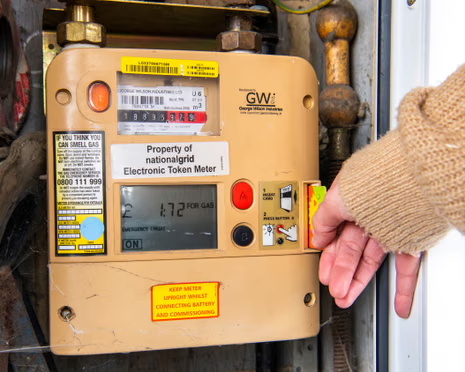
The roots of this complex scandal trace back to a period of intense economic anxiety. The global energy market was experiencing severe volatility during the historic Russian gas crisis. Wholesale energy prices spiked to unprecedented levels and created immense pressure on ordinary households. Many families quickly found themselves unable to keep up with their soaring monthly bills. Instead of offering meaningful support, the nation’s largest supplier chose a much harsher route. Debt collection agents were sent to break into properties and install prepayment meters. These actions were taken without the genuine consent of the residents living inside. Many of the affected individuals were dealing with severe physical or mental health vulnerabilities. The regulatory investigation concluded that British Gas failed to protect these highly exposed customers. The financial package is carefully structured to provide immediate relief to those affected. British Gas will pay a direct £20m penalty into Ofgem’s voluntary redress fund. This specific money will be used to support charities that help vulnerable energy consumers. Furthermore, the company must write off a staggering £70m in outstanding household debt. This debt write-off will offer a vital clean slate for thousands of families. The final part of the package involves a continuing £22.4m voluntary assistance programme. This fund was initially launched by the supplier in the immediate wake of disclosure. It is designed to provide targeted financial aid specifically for existing prepayment meter customers. Combined, these sums form an unprecedented response to a truly systemic corporate failure.
The current chief executive of Ofgem has spoken decisively about the comprehensive investigation. Tim Jarvis stated that British Gas fell remarkably short of its basic regulatory requirements. He noted that an unacceptable number of vulnerable customers suffered from these forced installations. Jarvis emphasized that it is entirely right for the company to pay this redress. The watchdog believes this package represents a fair outcome for the public interest. The regulatory action ensures that victims receive substantial compensation for their distressing personal experiences. This intervention aims to restore some measure of equity to the domestic energy market. The regulator remains committed to holding powerful corporate entities fully accountable for their actions.
The public first learned about these deeply concerning practices through investigative journalism efforts. A major newspaper report in early 2023 exposed the reality of the situation. Undercover reporters revealed how debt agents consistently ignored clear signs of household vulnerability. Representatives were seen forcing entry into homes containing vulnerable children and elderly residents. The public backlash to these media revelations was immediate, fierce, and entirely justified. Ofgem responded by implementing a temporary ban on all forced prepayment meter installations. This moratorium allowed investigators to look deeply into the practices of all suppliers. The subsequent findings revealed that the problem extended far beyond just British Gas.
Most of Great Britain’s major energy suppliers were found to be using similar tactics. The cost of living crisis had created a widespread spike in customer debt levels. Companies chose to utilize warrants to force prepayment meters as a standard collection method. This approach allowed suppliers to automatically recover debts whenever a customer topped up. If a resident could not afford to top up, their energy stopped. This resulted in vulnerable people being left in cold, dark homes without heating. The regulator had to step in to redefine the boundaries of acceptable corporate behaviour. The entire industry faced intense scrutiny over its collective treatment of the British public.
A separate investigation into other major suppliers concluded approximately one year ago today. Companies like ScottishPower, EDF, E.ON, and Octopus Energy were also found at fault. Smaller providers including Utility Warehouse, Good Energy, TruEnergy, and Ecotricity also fell short. These corporations collectively agreed last May to pay over £18.6m in total compensation. That package helped approximately 40,000 households who had faced unfair prepayment meter fittings. However, the British Gas settlement completely dwarfs that collective industry agreement by comparison. The massive scale of the British Gas failings required a much more severe response. The regulator needed to ensure the punishment matched the scope of the harm.
The enforcement of warrants must always be viewed strictly as a last resort. Tim Jarvis reiterated that suppliers must perform rigorous checks before taking legal action. Debt must always be recovered in a lawful, proportionate, and safe manner. This specific investigation is part of a much wider campaign to raise standards. Ofgem is currently working to strengthen consumer protections across the entire retail market. The watchdog continues to challenge all energy suppliers to improve their customer service. Providers must become much better at identifying households that are experiencing financial hardship. Proactive support should always be offered before any punitive debt collection measures begin.
The true total scale of the scandal remains somewhat uncertain for now. The regulator based its final conclusions on a carefully selected sample of customers. This methodology allowed investigators to identify the general proportion of unfair treatment cases. Because it was a sample, the precise number of victims is unknown. British Gas has been granted exactly one year to review its internal records. The company must now identify every single household that qualifies for financial compensation. This will be a complex task requiring significant administrative effort from the supplier. Consumers will be watching closely to ensure this process is completed transparently.
The political response to the regulatory announcement has been equally swift and supportive. Martin McCluskey, the minister for energy consumers, shared his thoughts on the matter. He stated very clearly that British consumers deserve an energy market they can trust. The minister noted that trust was severely broken for far too many families. He officially described the forced installation of prepayment meters as an unacceptable scandal. The government is currently planning comprehensive reforms to prevent future market injustices from occurring. These reforms will include granting significantly enhanced enforcement powers to the energy market regulator. Ministers want to ensure that utility companies can never exploit vulnerable citizens again.
The corporate leadership at British Gas has offered a full public apology. Chris O’Shea, the chief executive of parent company Centrica, expressed deep regret today. He stated sincerely that what happened should never have been allowed to occur. O’Shea offered an unreserved apology to every prepayment customer who was negatively affected. He claimed that the company has treated the matter with absolute seriousness throughout. Over the last three years, British Gas has altered its internal governance practices. The company has implemented strict new safeguards to protect vulnerable households from harm. These changes are intended to deliver the high standards that consumers rightfully expect.
The wider energy industry has slowly started to restart some meter installations recently. The regulator lifted the total moratorium less than a year after it began. However, the rules governing forced installations have been made significantly more stringent now. Forced fittings remain completely banned in homes with very young children living inside. Households containing residents over the age of 75 are also permanently protected. Suppliers must also use body-worn cameras during the execution of any warrant. These measures are designed to ensure that history does not repeat itself again. The British public will be hoping these new protections prove robust enough.
Related News:
 Reeves Faces Setback as Labour May Miss Homes Target
 Kate Winslet to Narrate Film Highlighting King’s Environmental Mission
 Trump’s UK Ambassador Urges North Sea Drilling to Strengthen US Ties
 UK Bans Fake Numbers: Scammers Lose Their Trick
 Millionaires group urge Reeves to introduce wealth tax to ‘lift kids out of poverty’
 Reeves rejects £1bn plea for NHS redundancy payouts
 PM Condemns Leaks, Vows Loyalty to Ministers and Stability
 Inside the Helpline Protecting Missing Children in the UK
 PlayStation PS5 Deals Hit Lowest Prices Ahead of Black Friday
 Five-Year-Old Dies After Rare Tonsil Surgery Complication
 Starmer Says Labour’s Economic Plan Needs Years to Deliver
 Starmer Faces Parliamentary Battles Over UK-EU ‘Reset’ Plan
 Met Police Vetting Failures Let Serial Rapists Remain
 Google Employee Claims Redundancy After Harassment Report
 Fatal Bolton Taxi Crash Claims Three Teens and Driver
 ScottishPower Tops List of Worst UK Energy Suppliers
 Judi Dench Champions Fight to Save London’s Green Spaces
 Crowborough Camp Welcomes First Asylum Seekers
 BBC Funding Crisis: Tim Davie Warns of Jeopardy Ahead
 Storm Chandra floods Somerset, triggers major incident declaration
 Artificial intelligence will cost jobs, admits Liz Kendall
 Older Women Vanish from BBC Screens, Review Confirms Bias
 Mandelson Faces Police Inquiry Over Epstein Leak
 Streeting moves on doctor pay to end strike dispute
 UK reports baby formula toxin poisoning cases across the country
 Morgan McSweeney downfall shocks Labour leadership
 Send spending gap leaves deprived areas behind
 Hidden Crisis: Domestic Abuse Suicide Toll in UK
 UK Unemployment Rate Climbs to 5.2% Peak
 Farage Unveils Reform UK Frontbench Team
 BBC World Cup Presenting Duties Shared Among Trio
 Placenta Accreta Warning as Hunt Urges Action
 Wales Approves Assisted Dying Bill Consent
 CPS Updates Guidance on Honour-Based and Dowry Abuse
 Rolling Hills and Heritage: A Car-Free Break in Leicestershire
 Corbyn Leads Your Party in Coordinated Left-Flank Strategy
 Asylum Seekers to Work After Year-Long Wait
 Starmer Row as Greens Demand Apology
 Major Fire Causes Chaos at Glasgow Central Station
 Gordon Brown urges court for crimes against children
 Inquiry into HMRC child benefit errors launched by NAO
 Farage Faces Backlash Over Crypto Cameo Endorsements
 Rising Costs Force Families to Rethink Days Out
 Sarah Mullally: The Solid Choice for Canterbury
 Scott Mills Sacked by BBC Over Personal Conduct Claims
 Palantir Boss Defends NHS Deal Amid Government Break Clause
 Police Chiefs Under Fire for Failing to Address Racism
 Relationship with Trump may be beyond repair, Starmer warned
 Unions Raise Concerns Over Doctors’ Pay Dispute
 UK Government Poised to Revive Stalled Hillsborough Law
 UK Staycations Rise as Travel Fears Grow
 Home Office Faces Legal Risks Over Asylum Hotel Living
 Official Admits Debate Over Mandelson Vetting Records
 Crisis in NHS Surgery Scheduling Hits Patients Hard
 Blue Badge Abuse: The Rising Tide of Public Hostility
 Scott Parker Leaves Burnley After Premier League Drop
 Silent Tracks: Rail Line Without Passengers
 RFU Backs Borthwick Despite England’s Poor Six Nations
 Major test for Labour as polls open in Great Britain
 Keir Starmer Struggles to Secure His Grip on Downing Street
 Farage Faces Standards Probe Over Cash Property Purchase
 UK Firms Freeze Spending as Iran Conflict Bites
 Reeves to Fast-Track Clean Energy Amid Iran Crisis
 The Battle for Wembley Sparking Unprecedented Legal Warfare
 Secret Role of UK Security Services in Troubles Amnesty Law
 Tube Strike Brings Capital to a Standstill Over Shift Disputes
 Teaching Machines Right From Wrong in the Digital Age
 The Hidden Crisis Eroding Trust in British Communities
 Stolen Mobiles Could Soon Become Useless Bricks
 Clean Air Initiatives Spark Major Fall in London Hospital Admissions
 Shocking Zoo Incident Sparks Attempted Murder Probe
 The Hybrid School Revolution Defying the Social Media Ban
 UK Care Crisis: Row Explodes Over New Visa Settlement Rules
 Sainsbury’s Boss Optimistic As Grocery Inflation Eases
 NHS Urges Investigation For Irregular Periods
 US Airman Avoids British Court in Indecent Exposure Case
 Farage Warns Sky News Following Financial Inquiry
 Ann Widdecombe, Formidable Political Figure, Dies at 78
 UK Schools Struggle as Classrooms Top 40C
 Westminster Council Threatens Charing Cross Soup Kitchen