Published: 15 May 2026. The English Chronicle Desk. The English Chronicle Online.
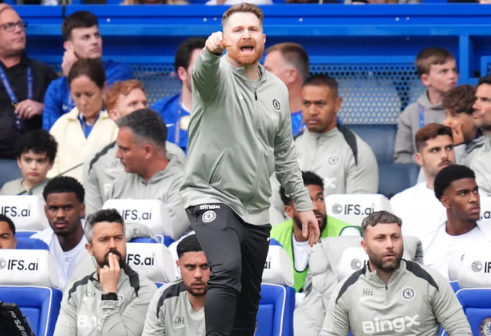
The dramatic trajectory of modern football coaching often defies traditional expectations, yet few stories match the remarkable rise of Calum McFarlane. Just six years ago, he was working alongside his close assistants Harry Hudson and Dan Hogan in south London. Their daily focus was a local charity dedicated to providing football and education for disadvantaged children. This weekend, the trio will walk out at Wembley Stadium to lead Chelsea against Manchester City in the FA Cup final. It represents an astonishing shift from the grassroots pitches of the capital to the absolute pinnacle of English football. Such a rapid ascent has inevitably captured the attention of fans and pundits across the United Kingdom.
Naturally, this swift journey into the elite game has brought intense media scrutiny and public debate. Critics have raised questions regarding the connections between the new Chelsea coaching staff and Joe Shields. Shields currently serves as the co-head of recruitment at Stamford Bridge and possesses long-standing links to the trio. These relationships date back to their shared time at the charity, known as the Kinetic Foundation. Some observers have gone so far as to label the appointments as an example of footballing cronyism. However, those closest to the coaches strongly reject any suggestion that their current success is unearned.
James Fotheringham, the co-founder of the Kinetic Foundation, remains entirely dismissive of the negative narratives surrounding the appointments. He acknowledges that a vocal backlash has occurred, resulting in abusive messages on the charity’s social media channels. This online hostility intensified immediately after McFarlane was named Chelsea’s interim manager for the second time this season. Fotheringham insists that the perception of an unfair opportunity does not reflect the reality of the situation. He points out that McFarlane has spent years working diligently within the academy systems of several major clubs. The interim manager has earned valuable experience during productive spells at Manchester City, Southampton, and Chelsea.
The decision to bring in familiar assistants is viewed by insiders as a logical move for survival. Fotheringham explains that being thrust into a high-pressure, six-game environment requires absolute trust on the touchline. Having colleagues who understand your exact methods after three hundred games together is an invaluable asset for any manager. The existing bond between Joe Shields and Harry Hudson began during their time at the Crystal Palace academy. Shields has never held an official position at Kinetic, though he monitored their talent while scouting. He had already left Southampton for Chelsea before McFarlane arrived at the south-coast club as under-18s coach.
The coaching setup at Stamford Bridge evolved further during the summer when McFarlane, Hudson, and Hogan arrived. McFarlane quickly impressed the club hierarchy and earned a promotion to Liam Rosenior’s first-team coaching staff in January. This advancement followed a successful initial stint as interim manager, which included a commendable draw against Manchester City. A subsequent academy reshuffle saw long-serving under-18s coach Hassan Sulaiman move into a new role. Sulaiman became the pathways relationship manager, creating a vacancy that allowed Dan Hogan to step up. Hogan had previously been managing the under-16s and was deemed ready for the promotion.
Meanwhile, Harry Hudson moved from his role as assistant to become the head coach of the under-21 team. Fotheringham notes that Hudson remains entirely unfazed by the public discussion, largely because he avoids social media. Hudson has always maintained a philosophical attitude, believing that people are entitled to hold their own opinions. His focus rests entirely on the football pitch and the development of the players under his care. This grounded approach has been a defining characteristic of the coaching group since their early days. Their collective success suggests that their methods translate effectively to higher levels of the game.
The track record of Dan Hogan further validates the credentials of this young coaching team at Chelsea. After captaining the Crystal Palace under-18 side, Hogan began his coaching journey at the Kinetic Foundation. He has recently guided the Chelsea under-18 team to the national final after securing their league title. Fotheringham emphasizes that Hogan has been coaching for a decade, making him exceptionally experienced for his age. He describes Hogan as an apprentice to McFarlane and Hudson who absorbed every bit of knowledge available. This dedication has clearly paid off, establishing him as one of the brightest young coaches in the country.
Since McFarlane took the reins as interim head coach in April, his trusted partners have remained constant. This elite environment is a world away from the origins of the Kinetic Foundation in south London. The charity was established by Fotheringham and his school friend Hudson in the wake of the 2011 riots. What began as a well-intentioned passion project quickly gathered immense momentum within the local community. The organisation focused on transforming lives by using football as a tool for social mobility and education. Its impact on young people in the area has been profound and long-lasting.
The academy programme has proven remarkably successful at developing professional football talent over the last fifteen years. More than eighty graduates from the sixteen-to-eighteen programme have gone on to sign with professional clubs. Notable alumni include Joe Aribo of Leicester City, Kwadwo Baah of Watford, and West Bromwich Albion striker Josh Maja. Despite these sporting successes, the primary objective of the foundation has always extended beyond the football pitch. The organisation remains dedicated to ensuring that the four hundred youngsters joining annually receive excellent career guidance.
Educational achievement stands as a core pillar of the work done by the foundation in London. Last year, more than sixty percent of the participants progressed to university education after completing the programme. Fotheringham hopes that a fresh partnership with St Mary’s University will inspire even more students to follow. The ultimate goal is to shift mindsets and encourage young people to broaden their long-term horizons. The intensive two-year programme is designed to prepare these young individuals for various paths in adult life. This holistic approach to development has earned the charity widespread praise from educational experts.
McFarlane originally joined the foundation in 2014 following a brief coaching spell with Norwegian club Tromsø. His professional partnership with Hudson blossomed rapidly, and the two quickly formed a highly effective working relationship. In a reversal of their current Chelsea roles, Hudson acted as manager with McFarlane serving as assistant. Together, they took charge of local non-league side Croydon FC back in the autumn of 2017. This move followed a strategic partnership that allowed the charity to take over the club’s youth system. McFarlane remained the trusted number two when the duo was later hired by Isthmian League side Whyteleafe.
The journey continued upward when McFarlane departed for a prestigious coaching position at Manchester City in 2020. Hudson maintained his own path, working at Brentford before leaving the foundation entirely two years ago. His departure followed an appointment as the under-18s coach at Wycombe Wanderers, marking another step forward. Fotheringham recalls that Hudson possessed an incredible passion for coaching and an extensive network of football contacts. This network was used constantly to secure trials and genuine professional opportunities for disadvantaged young players. Hudson was determined to prove his worth at the highest level of the sport.
This weekend, McFarlane has an opportunity to become the first English manager to win the FA Cup since 2008. The last domestic coach to lift the famous trophy was Harry Redknapp with Portsmouth eighteen years ago. Some pundits still question McFarlane’s readiness to manage a squad that cost over one billion pounds to assemble. His lack of prior experience at the elite level remains a talking point in the sports media. Nevertheless, Fotheringham remains optimistic that the trio can overcome the odds and secure a historic victory. He believes the final represents an incredible platform for the three ambitious coaches.
The ability to manage elite players effectively often comes down to communication rather than personal reputation or status. Hudson has always maintained that coaching is about treating individuals as players, regardless of the level. This philosophy involves focusing entirely on the training pitch rather than worrying about player perceptions or egos. Implementing such an approach requires a strong-willed personality and complete confidence in one’s own coaching philosophy. Those who know the trio best confirm that they possess this mental strength in abundance. As the whistle approaches, the football world watches to see if grassroots methods can conquer the elite.
Related News:
 Tottenham shine at Everton but Frank wary of title push
 Matty Cash seals Villa win as City falter again at Villa Park
 Sarr Double Sinks Young Liverpool in Carabao Cup
 Nwaneri and Saka Secure Arsenal Win Over Brighton
 Woltemade Hot Streak Fires Newcastle Past Spurs
 Kieffer Moore Hat-Trick Ends Coventry’s Unbeaten Run
 Salah & Gravenberch Lead Liverpool to Win Against Villa
 Dyche Criticises Corner Decision as Forest Draw with United
 Caicedo Shines as Chelsea Edge Spurs in Chaotic Derby
 Granit Xhaka Rescue Earns Everton Draw at Sunderland
 Liverpool Edge Real Madrid 1-0 in Champions League Thriller
 Van de Ven Stunner Lifts 10-Man Spurs to UCL Glory
 Merino Shines as Arsenal Beat Slavia 3-0 Without Gyokeres
 Burn and Joelinton Head Newcastle to Victory Over Bilbao
 Foden shines as Man City dismantle Dortmund in dominant display
 Garnacho Spares Chelsea From Shock Champions League Loss in Baku
 Tension and Turmoil at Aston Villa v Maccabi Match
 Bellingham has ‘the edge’ among England No 10s
 Arteta Left Frustrated as Sunderland Deny Arsenal Late Win
Chelsea Cruise Past Wolves to Go Second in the Premier League
Man City Masterclass on Guardiola’s Milestone Day Exposes Liverpool Woes
Arteta Left Frustrated as Sunderland Deny Arsenal Late Win
Chelsea Cruise Past Wolves to Go Second in the Premier League
Man City Masterclass on Guardiola’s Milestone Day Exposes Liverpool Woes
 Lando Norris Dominates Brazil GP to Strengthen F1 Title Bid
 England cannot afford to be in awe of the All Blacks, warns Jamie George
 VAR Must Rein Its Neck In to Save Football’s Spirit
 Trescothick Hints Pope Will Keep Number Three Spot
 Ronaldo Confirms Final World Cup and Plans Retirement
 Mary Earps’s Manchester United Return Faces Mixed Reception
 Sam Kerr Stars in Chelsea Return with Champions League Double
 This kid is something else: Alex Scott’s rise to England call-up
 Anthony Joshua Faces Backlash Over Proposed Jake Paul Fight
 Former Lion Heskey Warns of Shortage of England Strikers
 Rogers Double Aston Villa as Leeds Slip Deeper into Trouble
 Moyes Defends Gueye After Dramatic Everton Bust-Up
 Gerrard warns Liverpool’s terrible run could worsen
 Jac Morgan to Miss Six Nations Start After Surgery
 Alexander Isak ends drought as Liverpool stop rot with win at West Ham
 Mbappe rescues Real Madrid with a penalty at Girona
 Wales hits 20,000-strong milestone in women’s football
 Stokes urges empathy for England players amid Ashes struggles
 Sports piracy surges in UK with 3.6bn illegal streams reported
 Chelsea fans inquiry launched after Charlton match policing concerns
 Arsenal vs Man Utd LIVE: Jesus Starts as Carrick Stays Loyal
 Arsenal Edge Closer to Ending ‘Nearly-Men’ Era After Cup Breakthrough
 Newcastle fans face bleak reality under Saudi ambitions
 Hugo Ekitike Becomes Liverpool’s New Cult Hero
 BBC World Cup Presenting Duties Shared Among Trio
 Steve Borthwick Turns to 2003 Icons for Inspiration
 British Success at the Isle of Wight Masters Chess
 Japan Triumphs 1-0 Over Australia to Claim Women’s Asian Cup
 Romero Vows Fight as Spurs Face Relegation Threat
 Middlesex Icons Launch Bold Revolt Against Club Leadership
 Farke’s Leeds revival: from pressure to FA Cup glory chase
 John Terry Faces Backlash Over Political Posts
 Scott Parker Leaves Burnley After Premier League Drop
 Premier League drama defines crucial weekend
 Foden Commits Future to Man City Until 2030
 Rugby Faces Crisis Over Referee Row Culture
 RFU Backs Borthwick Despite England’s Poor Six Nations
 World Cup Ticket Price Surge Leaves Many National Teams Stunned
 Southampton Face Misconduct Charge Amid Spying Claims
 Aaron Rai Triumphs in Thrilling PGA Championship Finish
 De Zerbi Rallies Spurs To Fight Relegation Threat
 Southampton Face Player Legal Action Over Playoff Scandal
 The Battle for Wembley Sparking Unprecedented Legal Warfare
 Tuchel Defends Tough England Squad Decisions
 Guardiola to Leave Man City After Historic Era
 Farewell to an Icon: Pep Guardiola to Exit Manchester City
 Huddersfield Giants Face Fight to Save Super League Status Amid Stadium Crisis
 Safeguarding Probe Limits West Ham Owner’s Role
 England Cruise Past Costa Rica as World Cup Warm-Up Sharpens Tuchel’s Vision
 Inside the Three Lions: Bellingham Reveals Euro 2024 Flaws
 Blackpool Cricket Stands Firm Amid County Struggles
 Declan Rice Facing Burnout as Tuchel Confronts Midfield Crisis
 Ben Stokes Was Fallible But That Made Him Our Champion
 Morocco Beat Dutch in Wild World Cup Penalty Drama
 Ben Stokes Retires: The End of an Extraordinary Era
 The Last Stand of English Cricket’s Greatest Partners
 England’s 10 Men Hold Firm in World Cup Thriller
 Kylian Mbappé Slams Paraguayan Senator Over Racist Attack
 World Cup Fever Set to Boost UK Economy by £500m