Published: 15 May 2026. The English Chronicle Desk. The English Chronicle Online.
The British political landscape has descended into a state of high drama this week. Downing Street is facing a profound challenge that threatens to destabilise the government. Prime Minister Keir Starmer is now fighting for his long-term political survival. A series of coordinated events has pushed his leadership into a critical phase. Senior cabinet members are moving fast to contain a growing internal rebellion. The atmospheric tension in Westminster is palpable as rival factions begin their manoeuvres. Speculation about a potential challenge has moved from whispers into open public debate.
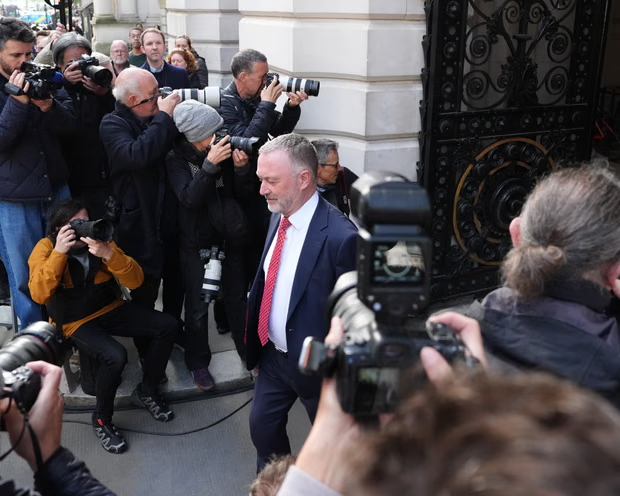
A prominent cabinet member has made a candid admission about the prime minister. Housing Secretary Steve Reed openly conceded that Starmer is currently highly unpopular. This remarkably frank assessment came during a series of urgent media broadcast interviews. Reed is widely recognised as one of Starmer’s most steadfast political defenders. His public intervention was carefully designed to lower the temperature within the party. The senior minister issued a stern warning against launching a destructive leadership contest. He urged his parliamentary colleagues to avoid repeating the mistakes of their predecessors.
The immediate catalyst for this current crisis stems from recent electoral performances. Labour suffered a series of disastrous results in the local elections last week. Voters across the nation sent a clear message of dissatisfaction to the government. This poor performance has severely emboldened the prime minister’s internal party critics. Calls for his immediate resignation have mounted steadily over the last few days. Eighty-nine members of parliament have now publicly demanded that Starmer step down. This represents a significant and dangerous level of dissent on the backbenches.
The internal pressure intensified dramatically following a surprise announcement by Josh Simons. The loyal Labour member of parliament confirmed he would stand aside voluntarily. This tactical move is intended to facilitate a dramatic return to Westminster. Greater Manchester Mayor Andy Burnham is widely expected to contest the vacant seat. Burnham remains a highly popular figure among the wider Labour party membership. His potential return to parliament represents a direct threat to Starmer’s authority. Analysts believe Burnham is positioning himself for a definitive run at the leadership.
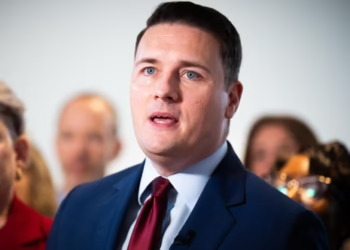
The sense of a government in terminal crisis deepened with another departure. Wes Streeting chose to resign from his vital post as health secretary. His sudden exit has deprived the cabinet of a highly capable communicator. Streeting was previously viewed as a core pillar of the modernising project. His departure suggests deep ideological fractures exist at the very heart of government. Furthermore, former Deputy Prime Minister Angela Rayner has received some significant news. HM Revenue and Customs formally cleared her of any deliberate tax wrongdoing.
This official clearance removes a major legal obstacle from Rayner’s political path. She is now free to consider a potential tilt at the leadership. Her allies believe she possesses the necessary appeal to unite the party. This confluence of events has left Downing Street looking exposed and vulnerable. The prime minister’s authority is being tested like never before in his career. Every single move by ambitious cabinet ministers is being scrutinised with intensity. The sense of an impending political showdown continues to build across Westminster.
During his interview on Sky News, Steve Reed attempted to contextualise the situation. He noted that the last four prime ministers faced similar popularity deficits. Modern political leaders routinely experience intense public anger during their periods in office. Reed argued that voters focus their frustrations directly on the person in charge. The public is currently incredibly angry about public services and economic stagnation. This structural anger inevitably impacts the standing of whoever resides in Downing Street. The housing secretary believes this pattern is a feature of modern British politics.
Reed drew a direct and unflattering parallel with the previous Conservative administration. He argued that the Tories doomscrolled through a succession of different leaders. The Conservatives famously burned through five separate prime ministers in just eight years. This constant instability ultimately alienated the electorate and destroyed their economic credibility. Reed insisted that changing leaders did not help the Conservative party one jot. He warned that Labour would suffer a similar fate if it chose replication. The British public desires stability and delivery rather than endless internal warfare.
The housing secretary provided some specific historical data to reinforce his warnings. Between the years 2016 and 2024, the Conservatives experienced unprecedented structural chaos. The country witnessed nine different education secretaries and seven separate chancellors of exchequer. This constant ministerial turnover completely paralysed the effective delivery of public services. It eventually culminated in the worst election result for the Tories in two centuries. Reed asked his colleagues if they truly wanted that specific future for Labour. He suggested that internal warfare is a guaranteed route to comprehensive electoral ruin.
Despite the intense media speculation, Reed insisted that no contest has begun. The party rules require a challenger to secure eighty-one nominations from MPs. Currently, no single alternative candidate has managed to unite the diverse rebels. The eighty-nine dissenting MPs remain fractured and divided behind different potential leaders. This lack of unity provides the prime minister with a vital lifeline. Without a consensus candidate, the rebellion may struggle to find sufficient momentum. Reed urged the entire parliamentary party to unite immediately behind the prime minister.
The senior minister invoked a key slogan from the previous election campaign. He reminded colleagues of the foundational mantra stating country first, party second. This phrase was repeated constantly by Starmer during his successful election bid. Reed argued that this principle must guide the party through this difficult moment. The national interest requires a stable government focused on delivering essential public services. Engaging in a self-indulgent leadership contest would betray the British electorate completely. The government must focus entirely on the urgent needs of the wider public.
To bolster his case, Reed highlighted several positive economic indicators this week. Recent figures indicate that the United Kingdom is experiencing strong economic growth. The nation achieved the fastest gross domestic product growth in the G7 recently. This positive economic data suggests the government’s long-term plan is working effectively. Additionally, official statistics show that National Health Service waiting lists are falling. Reed cited these achievements as tangible evidence of real progress under Starmer. He argued that these successes should form the basis of Labour’s message.
The coming days will undoubtedly prove critical for the future of government. Starmer must work tirelessly to rebuild his shattered authority among his colleagues. He needs to convince his backbenchers that he can reverse their fortunes. The threat from figures like Andy Burnham and Angela Rayner remains potent. If the rebels find a single candidate, the prime minister’s position worsens. For now, loyalists like Steve Reed are holding the line with determination. They are reminding the party that unity is the only path forward.
Related News:
 Reeves Faces Setback as Labour May Miss Homes Target
 Kate Winslet to Narrate Film Highlighting King’s Environmental Mission
 Trump’s UK Ambassador Urges North Sea Drilling to Strengthen US Ties
 UK Bans Fake Numbers: Scammers Lose Their Trick
 M&S Profits More Than Halve After Cyber-Attack
 Patients to Test Health at Home to Ease NHS Winter Pressure
 Millionaires group urge Reeves to introduce wealth tax to ‘lift kids out of poverty’
 Reeves rejects £1bn plea for NHS redundancy payouts
 Northern Lights may illuminate UK skies this week
 PM Condemns Leaks, Vows Loyalty to Ministers and Stability
 Major Rent Reform Ends No-Fault Evictions in England
 Stroke Patient Mistaken for Drunk, Care Delayed
 Inside the Helpline Protecting Missing Children in the UK
 Boots Showstopper Beauty Bundle Outshines Many Advent Calendars This Holiday Season
 PlayStation PS5 Deals Hit Lowest Prices Ahead of Black Friday
 Five-Year-Old Dies After Rare Tonsil Surgery Complication
 Starmer Says Labour’s Economic Plan Needs Years to Deliver
 UK unemployment rises to four-year high of 5.1% before budget
 Wiltshire Police Use Lasso to Catch Rampaging Village Goat
 Coasting Drinks: The Trend Redefining Alcohol Enjoyment This New Year
 Rising Hate Crimes Threaten Safety on UK Public Transport
 Starmer Faces Parliamentary Battles Over UK-EU ‘Reset’ Plan
 Met Police Vetting Failures Let Serial Rapists Remain
 Google Employee Claims Redundancy After Harassment Report
 Fatal Bolton Taxi Crash Claims Three Teens and Driver
 ScottishPower Tops List of Worst UK Energy Suppliers
 Judi Dench Champions Fight to Save London’s Green Spaces
 Crowborough Camp Welcomes First Asylum Seekers
 BBC Funding Crisis: Tim Davie Warns of Jeopardy Ahead
 Artificial intelligence will cost jobs, admits Liz Kendall
 Older Women Vanish from BBC Screens, Review Confirms Bias
 Streeting moves on doctor pay to end strike dispute
 Send spending gap leaves deprived areas behind
 Hidden Crisis: Domestic Abuse Suicide Toll in UK
 UK Unemployment Rate Climbs to 5.2% Peak
 BBC World Cup Presenting Duties Shared Among Trio
 Wales Approves Assisted Dying Bill Consent
 CPS Updates Guidance on Honour-Based and Dowry Abuse
 Asylum Seekers to Work After Year-Long Wait
 Inquiry into HMRC child benefit errors launched by NAO
 Rising Costs Force Families to Rethink Days Out
 Scott Mills Sacked by BBC Over Personal Conduct Claims
 Palantir Boss Defends NHS Deal Amid Government Break Clause
 Relationship with Trump may be beyond repair, Starmer warned
 UK Government Poised to Revive Stalled Hillsborough Law
 Home Office Faces Legal Risks Over Asylum Hotel Living
 Crisis in NHS Surgery Scheduling Hits Patients Hard
 Welsh Labour Faces Potential Historic Election Defeat
 Blue Badge Abuse: The Rising Tide of Public Hostility
 UK Faces Future Where Deaths Outnumber Births Yearly
 Scott Parker Leaves Burnley After Premier League Drop
 Silent Tracks: Rail Line Without Passengers
 RFU Backs Borthwick Despite England’s Poor Six Nations
 Major test for Labour as polls open in Great Britain
 Keir Starmer Struggles to Secure His Grip on Downing Street
 Fear and Betrayal: The Chilling Case of Kouri Richins
 Farage Faces Standards Probe Over Cash Property Purchase
 UK Firms Freeze Spending as Iran Conflict Bites
 Rugby Legend Scott Hastings Dies Aged 61
 Reeves to Fast-Track Clean Energy Amid Iran Crisis
 The Battle for Wembley Sparking Unprecedented Legal Warfare
 Record Spending Highlights Growing Crisis In National Health Service
 Secret Role of UK Security Services in Troubles Amnesty Law
 Tube Strike Brings Capital to a Standstill Over Shift Disputes
 BP Stands Firm on Amanda Blanc Amid Boardroom Storm
 Teaching Machines Right From Wrong in the Digital Age
 UK House Prices Drop For Third Month Due To War Fears
 The Hidden Crisis Eroding Trust in British Communities
 Deepfake Abuse on X Sparks Safety Concerns for Dissidents
 Stolen Mobiles Could Soon Become Useless Bricks
 Clean Air Initiatives Spark Major Fall in London Hospital Admissions
 United Kingdom Politics Worse Now Than Before Brexit, Warns MP
 Russian Tanker Captain Remanded in UK Court After Channel Seizure
 Shocking Zoo Incident Sparks Attempted Murder Probe
 UK Care Crisis: Row Explodes Over New Visa Settlement Rules
 Sainsbury’s Boss Optimistic As Grocery Inflation Eases
 US Airman Avoids British Court in Indecent Exposure Case
 Ann Widdecombe, Formidable Political Figure, Dies at 78
 UK Schools Struggle as Classrooms Top 40C
 Former Diplomats Urge UK and France to Act on Palestine