Published: 6 July 2026 | The English Chronicle Desk | The English Chronicle Online
Britain’s system of police leadership requires a fundamental overhaul if policing is to regain public confidence and meet the increasingly complex demands of modern society, according to an independent review that has delivered one of the strongest assessments of policing in recent years. The report concludes that the current leadership structure is no longer fit for purpose, highlighting deep-rooted problems in recruitment, training, accountability and organisational culture.
The review argues that while police officers continue to perform an essential role in protecting communities, the institutions responsible for developing and supporting senior leaders have failed to keep pace with the changing nature of crime, technology and public expectations. It warns that unless substantial reforms are introduced, police forces across England and Wales may struggle to address growing challenges ranging from organised crime and terrorism to cybercrime, domestic abuse and public trust.
The findings have prompted renewed debate about the future of policing, with ministers, police chiefs and criminal justice experts acknowledging that meaningful reform will be necessary to strengthen leadership at every level of the service.

Commissioned to examine how police leaders are selected, trained and supported throughout their careers, the independent review paints a picture of a system that often promotes officers based on operational experience while placing insufficient emphasis on strategic leadership, management skills and ethical decision-making.
According to the report, modern policing requires leaders who can navigate increasingly complicated legal, technological and social issues while maintaining the confidence of both officers and the communities they serve. However, the review suggests that existing leadership development programmes are fragmented and inconsistent, leaving many senior officers without the preparation required for their responsibilities.
One of the central conclusions is that leadership within policing should no longer be viewed simply as a progression through operational ranks. Instead, the report argues that leadership should become a professional discipline supported by continuous education, structured mentoring and regular performance evaluation.
Review authors say policing has evolved dramatically over recent decades. While responding to emergencies and preventing crime remain core responsibilities, senior officers must now also oversee complex investigations involving digital evidence, artificial intelligence, financial crime and cross-border criminal networks. At the same time, they face heightened public scrutiny through social media, greater demands for transparency and increased expectations regarding diversity, equality and accountability.
The report concludes that leadership structures have not evolved at the same pace as these expanding responsibilities.
Among the most significant recommendations is the creation of a more consistent national approach to leadership development. Rather than allowing individual police forces to adopt widely differing systems, the review proposes clearer standards governing recruitment, promotion and professional development.
Supporters argue that national consistency would help ensure senior officers possess comparable skills regardless of where they serve, while also making career progression more transparent.
The review also recommends strengthening leadership training from the earliest stages of an officer’s career. Instead of waiting until individuals reach senior ranks, leadership skills should be developed continuously through education, practical experience and formal assessment.
This approach, the report argues, would create a stronger pipeline of future leaders capable of managing increasingly complex organisations.
Another major concern identified by the review relates to organisational culture.
Investigators found that many officers continue to demonstrate exceptional professionalism and commitment despite operating within systems that can discourage innovation or constructive challenge. The report suggests that more open leadership styles should be encouraged, allowing staff at every level to raise concerns, contribute ideas and learn from mistakes without fear of unnecessary reprisal.
According to the review, effective leadership depends not only on operational competence but also on integrity, communication and the ability to inspire confidence both within police forces and among the public.
Public trust features prominently throughout the report.
Confidence in policing has faced significant pressure in recent years following several high-profile criminal cases involving serving officers, misconduct investigations and criticism of police responses to incidents involving violence against women, racism and institutional failures.
The review argues that rebuilding trust will require visible, accountable and ethical leadership capable of demonstrating that misconduct is addressed decisively while recognising the dedication of the overwhelming majority of officers who serve with professionalism.
It also stresses that leadership reform should not be interpreted as criticism of frontline policing alone. Instead, the report emphasises that strong leadership provides the foundation for better operational performance, improved officer wellbeing and more effective public service.
Officer welfare is another area highlighted for improvement.
Police leaders increasingly oversee workforces exposed to traumatic incidents, heavy workloads and growing mental health pressures. The review suggests that leadership training should include greater emphasis on supporting staff wellbeing, managing organisational stress and creating healthier working environments.
Experts argue that officers who feel supported are more likely to make sound decisions, remain motivated and deliver better outcomes for the public.
Technology also receives significant attention throughout the review.
Modern police forces rely heavily on digital intelligence, data analysis, surveillance technology and cybercrime investigations. Senior leaders are expected to make informed decisions about complex technological systems while ensuring legal compliance and protecting individual rights.
The report argues that leadership programmes should provide greater education in digital policing, emerging technologies and responsible innovation.
Financial management forms another key recommendation.
Police chiefs today manage budgets worth hundreds of millions of pounds while balancing demands for neighbourhood policing, specialist investigations and national security responsibilities. The review recommends strengthening financial and strategic planning skills among senior leaders to ensure public resources are used effectively.
Diversity within leadership ranks is also addressed.
The review concludes that senior leadership should better reflect the communities police forces serve. While progress has been made in improving representation, further efforts are recommended to remove barriers preventing talented candidates from diverse backgrounds reaching senior positions.
Supporters argue that broader representation can strengthen public confidence while bringing a wider range of experiences and perspectives into decision-making.
Government ministers have welcomed the publication of the review, describing it as an important contribution to ongoing efforts to modernise policing. Officials indicated that many of the recommendations will be carefully considered alongside existing reform programmes already underway across England and Wales.
The Home Office is expected to consult police forces, oversight bodies and professional organisations before deciding how individual recommendations should be implemented.
Police leaders have also acknowledged the importance of the report.
Many chief officers agree that policing continues to evolve rapidly and that leadership development must evolve alongside it. However, some have cautioned that successful reform will require sustained investment in training, education and workforce development rather than relying solely on structural changes.
Police representative organisations similarly emphasised that officers already face considerable operational pressures and warned that reforms must be accompanied by adequate funding and practical support.
Criminal justice experts have broadly welcomed the review, describing leadership as one of the most influential factors determining organisational performance. Research consistently suggests that effective leadership improves decision-making, strengthens ethical standards, supports officer wellbeing and enhances public confidence.
Conversely, weak leadership can contribute to inconsistent standards, reduced morale and diminished trust in public institutions.
Community organisations have also responded positively to calls for greater accountability and transparency.
Many campaigners believe stronger leadership standards could help improve relationships between police and local communities by promoting clearer communication, more consistent decision-making and faster responses to public concerns.
While implementing the recommendations will likely take several years, the review argues that reform cannot be delayed indefinitely.

The challenges facing modern policing continue to grow, with organised crime, online fraud, terrorism, child exploitation and cyber threats demanding increasingly sophisticated responses. At the same time, officers must maintain traditional neighbourhood policing while responding to rising public expectations regarding openness, fairness and professionalism.
The report concludes that meeting these demands requires leadership capable of balancing operational effectiveness with ethical responsibility and organisational resilience.
Ultimately, the review presents its recommendations not as criticism of policing itself but as an opportunity to strengthen one of the country’s most important public institutions. By investing in better leadership, the authors argue, police forces will be better equipped to protect communities, support officers and rebuild public confidence in the years ahead.
As ministers consider the findings, the review is likely to become a central reference point in shaping the next phase of police reform, potentially influencing leadership standards across England and Wales for a generation to come.
Related News:
 Tasers Introduced in UK Prisons to Combat Rising Violence and Protect Staff
 Police Advised to Disclose Ethnicity of Suspects in High-Profile Cases
 Charlie Kirk Killing Used to Mobilise UK’s Largest Far-Right Rally in Decades
 Jailed Georgian Opposition Leaders Warn UK of Iranian Links to Ruling Party
 UK Police to Gain New Powers to Manage Repeated Protests, Home Office Announces
 Boris Johnson Breached Rules on Post-Office Business Contacts
 China Spy Case Hearing Reveals Key Gaps in Prosecution
 It’s time to come clean on the China spy case
 French Taxi Driver Cleared in David Lammy Theft Case After Fare Dispute
 Met Police Culture Makes Racial Harm ‘Inevitable’
 Remaining rebel Labour MPs have whip restored
 Victims’ commissioner Baroness Newlove dies aged 63
 Emails Show Epstein Funded Mandelson’s Husband After Jail
 Police Probe Mandelson Over Alleged Epstein Leak
 Last‑ditch Call to Save Police Front Counters in London
 How Much Could Andrew’s Arrest Hurt the Royal Family?
 Andrew Released Under Investigation After Arrest
 Labour MP’s Partner Arrested on Suspicion of Spying for China
 Police Scotland Pays £8m Compensation to Staff
 ‘An Evil Man is Dead’: Australian Fugitive Dezi Freeman Shot Dead After 216 Days
 Case Closed: No Criminal Wrongdoing by Officer in Simpson Murder Investigation
 Justice in Motion: Police Driver Charged Over Fatal Collision
 Mass Arrests at London Palestine Protest Spark Debate
 The London “Safe Houses”: BBC Reveals Epstein Housed Victims in Secret UK Flats
 The “Invisible” Tape: Leaked Video Contradicts Police Denial in Brutal Arrest Case
 “I Won’t Be Silenced”: Candidate Reveals Arson Threat as “Political Terror” Grips Local Elections
 Under the Lens: Senior Officer Suspended as IOPC Probes “Disturbing” Arrest Footage
 US Criticises UK Policing After Henry Nowak Case
 US Condemns Alleged ‘Two-Tier’ UK Policing
 Teen Among Arrests at Nowak Protest as Three Charged
 Six More to Appear in Court Over Henry Nowak Protest Arrests
 Henry Nowak Murder: How the Case Shocked Britain and Drew US Attention
 Starmer Says ‘Justice Has Been Done’ After Arson Attacks
 Targeted Attack in Bury Sparks Murder Investigation as Community Awaits Justice
 Man Remanded After Children Fall Ill at Leicestershire Summer Camp in Shocking Child Cruelty Case
 Merseyside Police Helicopter Crew Cleared After Low-Altitude Pursuit of Suspect
 Urgent Action Needed on Windrush Compensation as Survivors Speak of “Waiting to Die”
 Tanni Grey-Thompson Faces Abuse Over Opposition to Assisted Dying Bill
 UK Launches Major Crackdown on Networks Profiting from Online Child Sexual Abuse
 Zarah Sultana Seeks Legal Action After Bitter Clash with Jeremy Corbyn Over Party Membership Funds
 Mahmood Pledges Reform of Modern Slavery Laws After Court Blocks Deportation Appeal
 No Evidence Found to Substantiate Alleged Rape in Oxfordshire Churchyard, Police Confirm
 Digital ID Plans Ignite Debate Over £600m Treasury Tax Boost and Privacy Concerns
 Just Stop Oil Protesters Convicted Amid Climate Defence Row
 Major Rent Reform Ends No-Fault Evictions in England
 Peers Flood Assisted Dying Bill with 942 Amendments
 Serial Rapist and Former Cop Found Guilty Again
 Most Tories Expect to Support a Farage-Led Government
 Woman Jailed for Life After Killing E-Bike Rider in Tragic Mistaken Identity Case
 Police response times face strict new national limits
 Nine Arrested in France Over Death of Far‑Right Student
 Civil Service Pay: Union Urges Ministers to End ‘Barking Mad’ Limits
 Fly-Tippers to Be Hunted by ‘Drone Squad’ in Crackdown from the Sky
 Rape Accused Had Fight With Man in Alley, Court Told
 Suspects in Lisa Dorrian Case Released on Bail
 Driver Jailed Over Fatal Water Treatment Tank Crash
 Man on Trial for Rape That Led to Andrew Malkinson’s Wrongful Jailing
 Armed police incident closes major road
 Scots Man Convicted in Dirty Money Case After DNA Found on Cash
 Liverpool Shooting Horror as Girl, 17, Shot in Legs in ‘Targeted Attack’
 Mandelson’s Phone Messages Requested in Files Release
 Families Tortured by Authorities During Investigations Inquiry Told
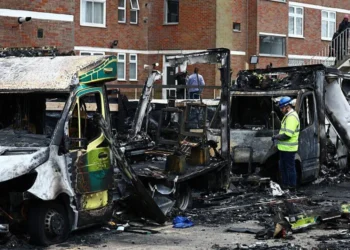 Two Men Bailed Following Arson Attack on Jewish Charity Ambulances
 Watchdog Probes Police Handling of Andrew Tate Abuse Claims
 US Lawmaker Demands Testimony Over Sarah Ferguson’s ‘Close Epstein Ties’
 The Last of the Lords: Two Hereditary Peers to Retain Ceremonial Roles Amid Historic Ousting
 ‘Eye in the Sky’ Blinded: Photos Reveal Destroyed US Radar Jet at Saudi Base
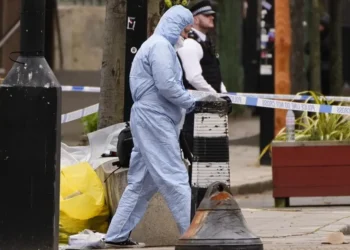 Police Hunt Bike-Riding Gunman After Man Shot Dead Near Euston
 Heartbreak in Bournemouth: The Tragic Death of James Blanch
 Misconduct Inquiry Launched Over Fatal Schoolgirl Crash Response
 MoD Has Lost Track of Veteran Recall List, Says Adviser
 A Crime of Pure Hatred’: Court Hears Harrowing Details of Racially Aggravated Rape in Bristol
 ‘A Sacred Space Shattered’: Two Found Guilty in London Church Drive-By Murder Trial
 Crackdown Backfires on UK Climate Protesters
 A “Breaking Point” for Britain: Terror Adviser Warns Antisemitism is Now a National Security Emergency
 Cartel crackdown raises fears of fresh violence
 “The Cost of Conviction”: Palestine Action Activists Found Guilty Over ‘Clinical’ Factory Damage
 Zelensky Invites Putin to Direct Peace Talks
 UK Faces Most Dangerous Era, Military Chief Warns
 Son Urges Iran Prisoner Exchange for Jailed British Pair