Published: 07 August 2026. The English Chronicle Desk. The English Chronicle Online
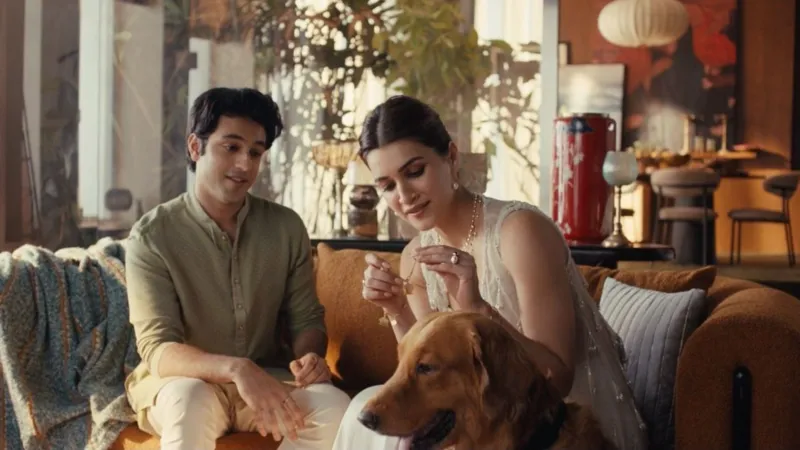
An Indian jewellery advertisement featuring Bollywood actor Kriti Sanon has been withdrawn after criticism over her outfit and the way the campaign portrayed the Hindu festival of Rakshabandhan, commonly known as Rakhi.
The advertisement, created for jewellery brand Giva ahead of the festival, showed Sanon celebrating Rakshabandhan in a contemporary outfit consisting of a cropped top, skirt and cape. The campaign also depicted her tying a Rakhi on her pet dog, alongside scenes centred on the festival’s broader message of affection and protection.
The campaign quickly became the subject of a heated debate online, with critics arguing that the styling was inappropriate for a religious and cultural occasion. Others defended Sanon, saying that a woman’s clothing should not be used as a measure of her respect for tradition and that festivals can be celebrated in contemporary ways.
The dispute intensified after actor and Bharatiya Janata Party MP Kangana Ranaut criticised the advertisement on social media. Although Ranaut did not directly name Sanon, her comments were widely understood to refer to the campaign.

Ranaut questioned why a woman would appear in what she described as bikini-like clothing while tying a Rakhi to her brother. Her remarks were rapidly shared online, prompting both criticism and support.
Some social media users echoed her concerns, arguing that the campaign crossed a line between modern fashion and sensitivity towards religious traditions. Others rejected that interpretation, saying the criticism amounted to moral policing of women.
The controversy placed Sanon at the centre of a wider argument that has repeatedly emerged in India: whether women should be expected to follow particular standards of dress when participating in religious, cultural or public events.
Sanon responded directly to the criticism without naming Ranaut. In an Instagram statement, she argued that culture and tradition were not determined by a woman’s clothing.
“The essence of festivals is not in the clothes you wear, it is in the emotions and meaning you hold for the traditions,” she said.
She questioned why women continued to be told what they should wear and argued that Indian fashion had evolved while cultural respect remained a matter of personal feeling and connection.
Her most widely circulated line was a pointed response to the controversy: “Culture and traditions are in a woman’s heart, not in her neckline.”
Sanon also defended the advertisement’s decision to include her pet. Rakshabandhan traditionally celebrates the bond between brothers and sisters, with sisters tying a Rakhi around their brothers’ wrists as a symbolic expression of affection and protection.
Sanon argued that the wider spirit of the festival could also extend to other loved ones. For her, that included her sister and her pet.
The response drew support from several people online, including Congress leader Rahul Gandhi, who defended Sanon’s right to decide what she wears.
The dispute therefore became larger than the advertisement itself. It turned into another debate about women’s autonomy, social expectations and the extent to which clothing should be associated with cultural respect.
Some commentators also noted the apparent contrast between Ranaut’s criticism and her own earlier public image. Before entering politics, she frequently appeared in Western-style clothing and short dresses in films and at public events. Critics of her comments used those images to argue that standards applied to women in public life can change depending on their political or social roles.
The advertisement also attracted criticism over the inclusion of Sanon’s dog. Some users questioned whether tying a Rakhi to a pet was appropriate given the festival’s traditional meaning.
Supporters of the campaign, however, viewed the scene differently. They argued that the advertisement was attempting to present Rakshabandhan as an occasion celebrating bonds between loved ones rather than restricting the festival to one conventional representation.
Giva ultimately decided to withdraw the campaign.
In a statement, the jewellery company said it had the “highest regard and deep respect for Indian culture, traditions and festivals”. The company explained that it had intended to celebrate the occasion with families and extend the idea of affection to pets.
The company said it had not intended to offend anyone and announced that the advertisement would be removed from all media.
The decision highlights the increasingly difficult environment faced by brands advertising around religious and cultural festivals in India, where campaigns can attract millions of views and intense scrutiny within hours of appearing online.
Social media has made such controversies particularly rapid. An advertisement that might once have been discussed by a relatively small audience can now become a national debate after individual posts are amplified across multiple platforms.
For brands, the situation creates a difficult balance between traditional expectations and attempts to appeal to younger consumers through contemporary fashion, language and imagery.
The Giva controversy is also part of a longer pattern of advertising disputes in India.
In 2020, jewellery company Tanishq withdrew an advertisement featuring an interfaith couple after facing strong criticism from right-wing groups and users online. The campaign had sought to portray an interfaith family celebrating a traditional ceremony, but the backlash became so intense that the company removed it.
Questions over women’s clothing have similarly produced repeated public controversies.
In one widely discussed case, a beauty pageant contestant was praised after standing up to men who attempted to criticise contestants for wearing skirts and Western-style dresses. The incident prompted renewed discussions about moral policing and women’s freedom to choose their clothing.
Another controversy involved a teenage student who attended an examination wearing shorts. A teacher objected to her clothing and she was reportedly forced to cover her legs with a curtain. The incident triggered widespread criticism and a debate over institutional control of women’s clothing.
There has also been public debate over ripped jeans. After a senior Indian politician criticised women wearing ripped jeans, thousands of women and some men responded by sharing photographs of themselves wearing the clothing item.
These episodes demonstrate how seemingly ordinary questions about fashion can become connected to much broader debates about gender, morality, religion and personal freedom.
The latest controversy involving Sanon and Giva has again exposed that tension.
For critics, the advertisement represented a failure to understand the cultural significance of Rakshabandhan and the expectations surrounding a religious festival. For supporters, the backlash demonstrated how quickly women can become the focus of criticism over their appearance rather than the message they are attempting to convey.
The withdrawal means Giva has chosen to prioritise avoiding further offence over defending the campaign in its original form. Sanon’s own comments, however, indicate that the underlying debate is unlikely to disappear with the advertisement.

At its heart, the dispute raises a broader question about how Indian traditions should be represented in modern commercial culture. Festivals remain deeply rooted in religious and family traditions, but the way people dress, communicate and celebrate them continues to evolve.
For advertisers, that evolution creates opportunities but also risks. Campaigns attempting to modernise traditional occasions must navigate cultural sensitivities while appealing to increasingly diverse audiences.
For women, the controversy raises an additional question: whether cultural participation should be judged primarily through clothing or through personal meaning, behaviour and respect.
The Giva advertisement may have been removed, but the argument surrounding it has become another chapter in India’s continuing conversation about fashion, tradition, women’s autonomy and the boundaries of commercial representation.
Related News:
 Is This the End of Harry and Meghan’s US Dream?
 London Bids for 2029 World Athletics Championships with £45 Million Government Backing
 Ozzy Osbourne: The Prince of Darkness Bows Out, Leaving Behind a Legacy of Metal and Myth
 Farewell to a Legend: The World Mourns Ozzy Osbourne, Rock’s Unforgettable Rebel
 Justin Timberlake Shares His Lyme Diagnosis and the Strain of Performing Through Illness
 Unseen Killers of the Deep Inside the UK Lab Uncovering the Silent Deaths of Sea Creatures
 Gen Z Embraces the Big, Bold ‘Fake’ Indian Wedding Party Trend
 My Husband Won’t Stop Playing with Lego and It’s Driving Me Nuts
 Jack Osbourne Breaks Silence with Heartfelt Tribute Following Ozzy Osbourne’s Funeral
 Sean Hayes Reimagined: From Sitcom Stardom to Serious Stage Acclaim
 Russell T Davies Warns of Declining UK Gay Rights Amid Rise of Reform UK and Trump Influence
 Terence Stamp, ’60s British Film Legend and Star of Superman, Dies at 87
 Millie Bobby Brown and Jake Bongiovi Begin Parenthood Through Adoption
 Kneecap Pushes Forward with European Tour Despite Hungary Ban and Canceled Gigs
 September’s Must-See Films: From Spinal Tap II to Leonardo DiCaprio’s Latest Thriller
 Robert Redford: The Indispensable Patron of American Independent Cinema
 Watchdog, Cornflakes and Courage: Remembering John Stapleton, a Broadcaster Who Did It All
 Dawson’s Creek” Cast Reunites for Special Broadway Benefit to Support James Van Der Beek
 Actor Noel Clarke Arrested at London Home Amid Ongoing Investigation
 Patricia Crowther, Known as UK’s Oldest Witch, Dies Aged 97
 Beloved Actress Dame Patricia Routledge Dies Aged 96
 Karen Carney Shines on Strictly Come Dancing Week Two Despite Tango Wobbles
 Jilly Cooper: The Bonkbuster Queen Who Redefined Romantic Fiction
 Celebrity Traitors First Look: A Star-Studded Highland Adventure That Hooks from the Start
 Who is Ruth Codd? All about the Irish actress on Celebrity Traitors
 Paedophile Singer Ian Watkins Dies After Prison Attack
 Strictly Celebs Starstruck as Cynthia Erivo Shines
 Alan Davies Criticises England Flag Displays and Patriotism
 D’Angelo: Neo-Soul’s Radical Genius and Lasting Legacy
 Man Charged Over 2020 Death of Tattoo Artist Georgina Ward
 Dave Ball: The Unsung Genius Behind Soft Cell’s Bold Sound
 Fabio Wardley stuns Joseph Parker to earn Usyk title shot
 British Airways suspends podcast sponsorship after controversial interview
 Prunella Scales: From Fawlty Towers Icon to Beloved Canal Explorer
 Charlie Kaufman: They told me Being John Malkovich would never get made
 Kate Winslet to Narrate Film Highlighting King’s Environmental Mission
 Hollywood Is an Industry of Looney Tunes Pretending to Be Normal
 Top Christmas Books Reads: Classics to Cozy Romcoms
 Oprah enjoys Meghan’s jam on English muffins
 Pauline Collins, Beloved ‘Shirley Valentine’ Star, Dies at 85
 I’m a Celebrity 2025 line-up revealed: Osbourne joins
 VAR Must Rein Its Neck In to Save Football’s Spirit
 From Lego to Pokémon: How Adults Are Driving UK Toy Market Growth
 Pop Stars Call on UK Government to Cap Resale Prices for Fans
 Pat Butcher Returns to EastEnders in Touching Dementia Storyline
 Pokémon to open world’s first theme park in Japan next year
 SS Rajamouli Announces ‘Varanasi,’ a Mythic Time-Travel Epic
 Tom Cruise Receives Honorary Oscar, Celebrates Cinema
 Eminem Takes Legal Aim at Australian ‘Swim Shady’ Brand
 The Lasting Legacy of Seven: Crime, Morality, and Urban Decay
 Director Michael Caton-Jones Reflects on Career and Beginnings
 Reggae Legend Jimmy Cliff Dies at 81
 Rosalía Inspires Young Listeners to Discover Classical Music
 Rusty Bond-Era Aston Martin Restored to £1m Glory
 Pavarotti statue frozen in Italian ice rink sparks backlash
 Prince Andrew Named Punchline in Top Christmas Cracker Joke
 Amanda Seyfried, Faith and Fear in a Radical Musical Leap
 Victoria Beckham Breaks Silence as Spice Girls Close Ranks
 John Lithgow criticises Rowling stance in trans debate
 Draco Malfoy Emerges as Lunar New Year Icon in China
 Top 10 Must-See Films Arriving This February
 ‘People feel like they’re in on the joke’: the new wave of pseudo-biopics
 The Hidden Dark Side of Early Reality TV Fame
 Last Weekend of Summer Brings Sparkle and Stars to Sydney
 Ticketmaster Fees Rise Despite Recent US Junk Fee Crackdown
 Scott Mills Sacked by BBC Over Personal Conduct Claims
 Army Probes Apache Flyover at Kid Rock’s Nashville Estate
 US Senators Slam Ticketmaster Over Sneaky New Fee Hikes
 Keir Starmer Expresses Concern Over Kanye West Wireless Festival Dates
 Rebel Wilson Accused of Orchestrating Smear Campaign
 Rebel Wilson Denies Role in Smear Campaign Trial
 Stephen Fry Sues Tech Organisers For £100k Following Stage Fall
 Whistler’s Mother and why its fame frustrated artist
 Cannes filmmakers split over AI’s role in cinema
 Mandalorian Movie Hits Record Disney Era Low at Box Office
 Saving the Scalloped Hammerhead: The Pacific Battle
 BBC Faces Backlash Over Ashley Cain Vetting Failures
 BBC Faces Backlash Over Ashley Cain Vetting Failures
 Taylor Swift and Travis Kelce Marry at Madison Square Garden
 Dua Lipa Backs Albania’s Fight Against Kushner Resort