Published: 08 September ‘2025. The English Chronicle Desk
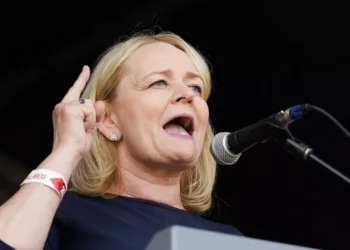
Tanni Grey-Thompson, the renowned Paralympic legend and crossbench peer, has revealed that she has received a wave of “abusive” emails accusing her of being “responsible for people dying in pain” because of her opposition to the assisted dying bill currently before the House of Lords.
The multiple Paralympic gold medallist, who has long been an advocate for disability rights, is expected to speak during the second reading of the Terminally Ill Adults (End of Life) Bill. The legislation, if passed, would permit terminally ill individuals in England and Wales to seek medical assistance to end their lives, a proposal that has ignited one of the most polarising debates in recent parliamentary history.
In a candid interview with the Press Association, Grey-Thompson spoke of the deeply divided reactions her stance has provoked. “I’ve had emails, people saying: ‘thank you so much for protecting us’,” she said. “And I’ve had some incredibly abusive ones as well, saying that I’m responsible for people dying in pain, and it will be on me.”

The former athlete explained that her perspective has been shaped by personal experience, notably her mother’s battle with cancer. While she acknowledged the genuine fears many have about suffering at the end of life, she stressed that the real focus should be on improving access to high-quality palliative care. “It’s absolutely appalling that people are scared about how they’re going to die. But we should be having proper specialist palliative care,” she said.
On the issue of online and email abuse, Grey-Thompson remarked with characteristic resilience that criticism is part of political life. “If you accept the role in the House of Lords, you have to accept there’s a lot of people who don’t like what you do,” she added.
The assisted dying bill, which was narrowly approved by MPs in June, has attracted unprecedented attention in the Lords, with nearly 200 peers scheduled to speak during its second reading. The legislation’s path forward remains uncertain. “The bill could still fall. It could run out of [parliamentary] time,” Grey-Thompson warned.
Should it progress, the bill will undergo committee and report stages for further scrutiny. Supporters hope it could reach the statute book by the end of the current parliamentary session, although its provisions would not be implemented for at least four years. The measure is being championed in the Lords by former lord chancellor Charlie Falconer, who has defended the bill’s safeguards as sufficient to prevent abuse. “I feel very positive that the bill will pass,” he said, adding that peers would have ample opportunity to improve the legislation.
Campaigners such as broadcaster Esther Rantzen have publicly urged peers not to obstruct the bill, while Labour MP Kim Leadbeater, who introduced the legislation in the Commons, has called for a fair and transparent debate, free of procedural manoeuvres. Falconer himself has dismissed fears of deliberate obstruction, insisting that the focus should be on ensuring safeguards while recognising the bill as “very, very safeguarded.”
Despite the growing momentum behind the legislation, Grey-Thompson has made clear her intention to push for amendments to strengthen protections further. She voiced concerns about potential coercion and the possibility of the law fundamentally altering the doctor-patient relationship. “It’s my intention to bring a number of amendments to make it as safe as it can possibly be. But we do need to have a really detailed discussion,” she said.
Acknowledging that many peers’ positions are shaped by deeply personal experiences, she nonetheless cautioned against legislating on sentiment alone. “We have to be mindful of people but our job is not to govern on emotion. Emotion makes bad law,” she remarked.

As the House of Lords prepares for one of its most closely watched debates in years, Grey-Thompson stressed the importance of reasoned, balanced deliberation. “We’re a long way off knowing what the outcome of this is going to be. What is really important is we absolutely have to debate the issue in a really sensible and calm way. Because whatever way you look at it, there’s a lot of people on the outside who are scared – scared of it not happening and scared of it happening.”
The coming days will therefore prove critical, not only for the fate of the assisted dying bill but also for the wider moral, ethical, and medical questions it raises. For now, Grey-Thompson remains resolute in her belief that the best path forward lies in strengthening end-of-life care rather than altering the law to allow assisted dying.
Related News:
 Tasers Introduced in UK Prisons to Combat Rising Violence and Protect Staff
 Peter Kyle Condemns Nigel Farage Over Reform UK’s Promise to Scrap Online Safety Act
 David Lammy Faces Possible Legal Challenge Over Foreign Office Secondment Scheme
 Ministers Accused of Defamation Over Palestine Action Ban and Mass Arrests
 Police Advised to Disclose Ethnicity of Suspects in High-Profile Cases
 Sally Rooney Pledges BBC Royalties to Support Palestine Action Despite UK Terror Ban
 UK’s First Transgender Judge Seeks Rehearing of Supreme Court Ruling on Biological Sex
 Government Signs Deal with Iraq to Return Illegal Migrants in Latest Bid to Deter Small Boats
 Migrant Hotel Chaos as Councils Consider Legal Action to Ban Asylum Seekers
 DWP Launches Independent Review of Post Office Staff Prosecutions
 Angela Rayner Admits Underpaying Stamp Duty on £800,000 Seaside Flat
 Angela Rayner Faces Scrutiny as Stamp Duty Row Deepens
 Shabana Mahmood Faces Daunting Challenges as New UK Home Secretary
New Home Secretary Hosts International Talks as Small-Boat Migrant Crossings Surge
Shabana Mahmood Faces Daunting Challenges as New UK Home Secretary
New Home Secretary Hosts International Talks as Small-Boat Migrant Crossings Surge
 Police Watchdog Calls for End to Recording Non-Crime Hate Incidents
 Charlie Kirk Killing Used to Mobilise UK’s Largest Far-Right Rally in Decades
 First “One In, One Out” Deportation Flight Departs Without Migrants Amid Legal Challenges
 Hillsborough Law to Hold Public Officials Accountable, Promising Jail for Serious Misconduct
 Labour Urged to Rethink Growth Strategy as Top Economist Warns of Far-Right Surge
 Corbyn and Sultana Clash Over Membership Portal as Divisions Surface in New Leftwing Party
 Commons Speaker Warns UK Parliament Vulnerable to Foreign Espionage After China-Linked Case Dropped
Mahmood Pledges Reform of Modern Slavery Laws After Court Blocks Deportation Appeal
Commons Speaker Warns UK Parliament Vulnerable to Foreign Espionage After China-Linked Case Dropped
Mahmood Pledges Reform of Modern Slavery Laws After Court Blocks Deportation Appeal
 Migrants in UK May Need to Contribute or Face Removal, Home Secretary Signals
 Jailed Georgian Opposition Leaders Warn UK of Iranian Links to Ruling Party
 UK Police to Gain New Powers to Manage Repeated Protests, Home Office Announces
 MPs’ pay watchdog seeks to give public greater voice in how politicians are funded
 Digital ID Plans Ignite Debate Over £600m Treasury Tax Boost and Privacy Concerns
 Boris Johnson Breached Rules on Post-Office Business Contacts
 Shabana Mahmood Warns Border Failings Are Eroding Trust in States
 Lucy Powell urged ministers to reconsider costly legal case for Labour donor’s firm
 Starmer Accused of Creating ‘Toxic Downing Street’
 Tories Push to Dilute Labour’s Workers’ Rights Bill
 China Spy Case Hearing Reveals Key Gaps in Prosecution
 It’s time to come clean on the China spy case
Johnson Approved China’s London ‘Super-Embassy’ in 2018
It’s time to come clean on the China spy case
Johnson Approved China’s London ‘Super-Embassy’ in 2018
 Rachel Reeves Admits Renting Home Without Required Licence
 Experts Question HMRC Over Possible Child Benefit Privacy Breach
 Phillipson urges careful review of gender recognition guidance
 French Taxi Driver Cleared in David Lammy Theft Case After Fare Dispute
 Met Police Culture Makes Racial Harm ‘Inevitable’
 Remaining rebel Labour MPs have whip restored
 Tim Davie resigns as BBC director general amid bias claims
 Palace to reinstate hyphen in Andrew’s surname
 Victims’ commissioner Baroness Newlove dies aged 63
 BBC Apologises to Trump but Rejects $1bn Compensation Claim
 Major Rent Reform Ends No-Fault Evictions in England
 Peers Flood Assisted Dying Bill with 942 Amendments
 Nandy says BBC review to probe political board influence
 Your Party Turmoil Deepens Over Withheld Donations
 UK Unveils Fast-Track Deportation and Asylum Overhaul
 UK Asylum Overhaul Sparks Debate Over Human Rights and Deportations
 UK Asylum Reforms: Temporary Refugee Status and Faster Deportations
 Mahmood Defends Tough Overhaul of UK Asylum System
 Scottish Ministers Express Alarm Over UK Asylum Reforms
 Westminster Advances Legacy Bill Amid Criticism
 Minister Defends Tough New Asylum Reform Plan
 UK Net Migration Falls Sharply After ONS Revisions
 Peers Get Extra Time to Debate Assisted Dying Bill
 UK Must Act with Courage and Clarity on Israel-Palestine Conflict, Says Foreign Affairs Committee Report
 Targeted Attack in Bury Sparks Murder Investigation as Community Awaits Justice
 Radioactive Leak at UK’s Nuclear Warhead Base Sparks Outcry Over Safety and Secrecy
 Merseyside Police Helicopter Crew Cleared After Low-Altitude Pursuit of Suspect
Zarah Sultana Seeks Legal Action After Bitter Clash with Jeremy Corbyn Over Party Membership Funds
Merseyside Police Helicopter Crew Cleared After Low-Altitude Pursuit of Suspect
Zarah Sultana Seeks Legal Action After Bitter Clash with Jeremy Corbyn Over Party Membership Funds
 Ed Miliband Urges Labour to Confront Billionaire-Backed Opposition to Net Zero Goals
 Public Trust in SNP Hits Historic Low Amid NHS Concerns
 Yvette Cooper Backs Digital ID Plan for UK Teens
 Johnson Suggests Mandelson Linked to China Spy Controversy
 Ministry of Justice fails to file £11bn in spending receipts
 Rachel Reeves signals welfare reform ahead of key budget
 Reform UK candidate fined £19,000 after using AI-generated cases to challenge election
 William Steps Up Over Prince Andrew Palace Response
 Green Party Surges Past Labour in Latest UK Poll
 Zarah Sultana Launches Party to Change Politics
 Just Stop Oil Protesters Convicted Amid Climate Defence Row
 King Charles to Lead Nation in Remembrance Sunday Service
 Starmer Faces Growing Dissent as Labour MPs Weigh Leadership Challenge
 Trump Deploys DHS to Charlotte in Major Arrest Operation
 Serial Rapist and Former Cop Found Guilty Again
 Most Tories Expect to Support a Farage-Led Government
 Virgin Media Fined £23.8m Over Telecare Safety Failures