Published: 21 September ‘2025. the English Chronicle Desk. English Chronicle Online
Manchester United secured a vital and hard-fought victory over Chelsea at Old Trafford on Saturday, in a match that showcased both the resilience and adaptability of Ruben Amorim’s squad. The contest, played under heavy rain, began with United dominating a depleted Chelsea side, who had already been reduced to ten men within the opening minutes. The early dismissal of Chelsea goalkeeper Robert Sánchez set the tone for what would become an intense and dramatic fixture in the Premier League calendar.
Chelsea’s nightmare began almost immediately. A routine long ball from Altay Bayindir was flicked on by Benjamin Sesko, leaving Bryan Mbeumo in a perfect position to capitalize. Sánchez’s attempt to intervene ended with him committing a foul on the Cameroonian forward, resulting in a straight red card that sent the visiting side reeling. The enforced reshuffle by Chelsea manager Enzo Maresca saw Estêvão Willian substituted to allow the introduction of replacement goalkeeper Filip Jörgensen, while Tosin Adarabioyo came on to cover for Pedro Neto. Despite the early chaos, Chelsea attempted to regroup, but the relentless pace, precision, and physicality of United’s attack proved too much to handle.

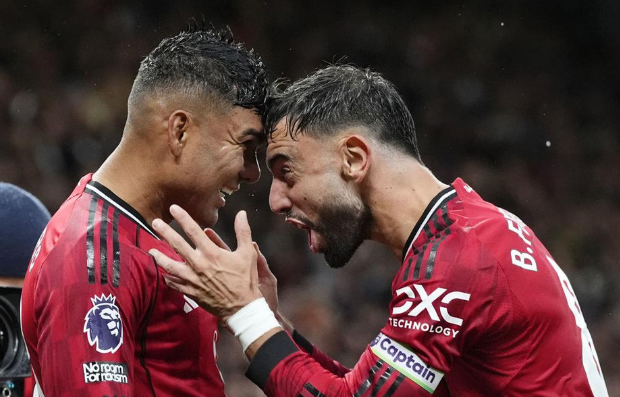
Manchester United, sensing the advantage, pressed relentlessly. Noussair Mazraoui’s pace and crossing ability on the right flank proved pivotal, as he delivered a well-weighted ball into the box for Patrick Dorgu, whose header was expertly converted by Bruno Fernandes. The goal was a landmark for Fernandes, marking his 100th goal for United and injecting a surge of confidence into the home side. The VAR review confirmed the goal was legitimate, despite initial concerns over Chalobah’s positioning during the play.
Chelsea’s early difficulties were compounded by injuries, forcing the use of all three permitted substitutes within the first 20 minutes. The disruption to their starting XI left them vulnerable defensively, and United took full advantage. Luke Shaw’s tireless runs and strategic positioning allowed the visitors’ defensive errors to be exploited, leading to the second goal. A series of misjudgments by Reece James and Enzo Fernández allowed Casemiro to nod the ball past Jörgensen, doubling United’s lead and effectively putting Chelsea on the back foot.
As the first half drew to a close, Chelsea briefly regained hope when Casemiro, normally a key figure for United’s midfield stability, received a second yellow card for a reckless challenge on Andrey Santos. The sending-off leveled the numbers, bringing both sides to ten players each, but United’s dominance in possession and territorial control ensured that they remained in command despite the numerical equality. The occurrence was rare in Premier League history, marking one of the few instances since 2012 where a player scored and then received a red card in the same half, highlighting the dramatic swings in momentum characteristic of the match.
The second half saw Chelsea attempt to mount a response. Despite being a player down for much of the first period, they sought to exploit counter-attacks and set-piece opportunities. Trevoh Chalobah’s header in the 80th minute, assisted by Reece James, narrowed the deficit to 2-1, igniting a brief flurry of hope among the visiting fans. Yet United’s defensive cohesion, combined with disciplined positioning and timely interventions, allowed them to weather the late Chelsea pressure. Amad Diallo, Patrick Dorgu, and other United forwards worked tirelessly to disrupt Chelsea’s build-up, ensuring that the visitors could not capitalize fully on their limited opportunities.
Ruben Amorim reflected on the performance post-match, emphasizing the importance of both defensive and offensive execution. “This result is really important,” he remarked. “We needed to be sharper in both penalty areas, and today the players showed commitment and understanding of what was required. Despite the red card, we managed to adapt and maintain control, which speaks volumes about the squad’s mentality and preparation.” United’s victory represented a turning point, lifting them from the pressures of mid-table obscurity and giving the team a renewed sense of purpose in the ongoing Premier League campaign.
Chelsea, meanwhile, were left to contemplate what went wrong. Maresca’s tactical plan was undermined almost immediately, and repeated defensive lapses allowed United to capitalize at crucial moments. Individual errors, compounded by the challenging conditions on a waterlogged pitch, meant that the visitors were rarely able to establish a rhythm. Isolated moments, such as João Pedro’s attempts to break through the defensive lines, failed to yield meaningful results as United’s defenders, led by Luke Shaw and Noussair Mazraoui, responded efficiently. Even after Casemiro’s dismissal, Chelsea were unable to sustain sustained pressure, highlighting issues with cohesion and strategic adaptability.
The match also provided narrative intrigue beyond the scoreboard. Former United talent Alejandro Garnacho, returning as an unused substitute, received a mixed reception from fans, who initially booed his appearance. Nevertheless, his presence underscored the ongoing connections and rivalries within the club and provided a subplot that enriched the atmosphere. United supporters, witnessing a combination of historic milestones, tactical resilience, and individual brilliance, were rewarded with a performance that will be remembered for its intensity and drama.
Late in the game, Chelsea made further substitutions, introducing Mason Mount, Yoro, and Matheus Cunha, while United rotated Harry Maguire, Patrick Mbeumo, and Mazraoui. These changes reflected the managers’ tactical adjustments but did little to shift the outcome. Despite a final flurry of attempts, including a close-range header by Wesley Fofana that was correctly ruled offside, Chelsea could not alter the result. United’s ability to withstand pressure in the final moments, even with depleted numbers, emphasized their growing composure under Amorim’s guidance.
The victory offered multiple layers of significance. For United, it was not merely three points but also a validation of Amorim’s strategies, an opportunity to restore confidence, and a demonstration of the team’s capacity to perform under challenging conditions. For Chelsea, it highlighted vulnerabilities that must be addressed if the club hopes to compete consistently at the top end of the table. Errors in defensive coordination, the impact of early red cards, and the inability to adapt effectively to changing circumstances all point to lessons that Maresca and his coaching staff will need to consider moving forward.
Ultimately, the 2-1 scoreline at Old Trafford reflected the hard work, tactical planning, and moments of individual brilliance that defined the match. Manchester United emerged with deserved acclaim, Casemiro’s controversial red card notwithstanding, while Chelsea were left to regroup and analyze their performance in the days ahead. Fans, analysts, and pundits alike will likely reference this encounter as a case study in resilience, adaptability, and the often-unforgiving nature of top-flight football.

As the Premier League season progresses, matches like this underscore the fine margins between victory and defeat, the importance of disciplinary control, and the impact of in-game tactical decisions. For Ruben Amorim and Manchester United, this result may serve as a benchmark for future performances, demonstrating that with preparation, determination, and a bit of fortune, the club can navigate complex challenges and secure critical points. Chelsea, meanwhile, face the task of rebuilding confidence, tightening defensive strategies, and finding ways to compete more effectively against resilient, well-organized opposition.
In conclusion, Manchester United’s victory over Chelsea at Old Trafford was more than just a win; it was a testament to tactical execution, individual skill, and the unpredictable drama inherent in Premier League football. From early dominance against a reduced Chelsea side to managing the complexities of Casemiro’s red card, United showed adaptability and mental strength. For fans and neutrals alike, it was a thrilling encounter that reinforced why football at this level remains captivating, unpredictable, and endlessly compelling.
Related News:
 Predicted Leicester Line-ups Reflect Cifuentes’ Tactical Plans Ahead of New Season
 Lionesses Return in Glory with an Open-Top Parade, Spark National Pride and Rewrite the Future of Women’s Football
 Central London Gears Up for Lionesses’ Victory Parade as Thousands Prepare to Celebrate Historic Women’s Euros Win
 London Set to Honour Euro 2025 Champions as Lionesses Take Victory Parade Through the Capital
 Rangers Boss Russell Martin Launches Blistering Critique After Disappointing Draw with Motherwell
 Ngumoha Shines Bright as Liverpool’s Future Looks Fiercely Promising
 Minute’s Silence for Diogo Jota Abruptly Ended After Wembley Tribute Disrupted
 Premier League Supercomputer Predicts Tough Season for Man Utd Amid Three-Team Title Battle
 Diogo Jota’s Empty Seat at Liverpool: A Symbol of Grief, Inspiration, and Duty
 Aston Villa Under Pressure as Newcastle Take on Hosts in Premier League Opener
 Isaac Price Shines as West Brom Clinch 3-2 Victory at Wrexham’s Championship Return
 Tottenham Make Three Changes as Spurs Prepare to Host Burnley in Premier League Opener
 FIFA Eyes Biennial Club World Cup from 2029, Plans Possible Expansion
 European Football: Atlético Madrid Stumble at Espanyol as Vitinha Secures PSG Win
 Leeds Mark Premier League Return with Gritty Win Over Everton
 Arsenal Move to Secure Eberechi Eze, Outpacing Tottenham
 Mateta’s Strike Gives Crystal Palace First-Leg Edge in Conference Playoff
 British Paralympians Accused of Disrespect After Turning Backs During Israeli Anthem
 Ruby Tui Emerges as the BBC Rugby Pundit Fans Never Knew They Needed
 Grimsby Stun Manchester United in Dramatic Penalty Shootout
 Club Brugge Crush Ten-Man Rangers to Deepen Russell Martin’s Crisis
 Guardiola Admits City ‘Forgot to Play’ After Shock Defeat to Brighton
 Morgan MacRae: From 17 Minutes Dead to Returning to Rugby in Six Weeks
 Serbia Humiliated 0-5 by England in World Cup Qualifier
 Fábio Carvalho’s Last-Minute Heroics Deny Chelsea Victory at Brentford
 Tottenham Cruise to 3-0 Victory Over 10-Man West Ham in London Derby
 Terence Crawford Shocks Canelo Álvarez to Claim Undisputed Super-Middleweight Crown
 Guardiola Faces Criticism for Defensive Approach in Manchester City’s Clash with Arsenal
 England Must Stay True to Their Style Ahead of Women’s Rugby World Cup Final: Lessons from 1991
Liverpool Vs outhampton Set for Carabao Cup Clash at Anfield
England Must Stay True to Their Style Ahead of Women’s Rugby World Cup Final: Lessons from 1991
Liverpool Vs outhampton Set for Carabao Cup Clash at Anfield
 Chelsea Survive Lincoln City Scare to Advance in Carabao Cup
 Dickie Bird: Cricket’s Beloved Umpire Who Won Hearts with Wit and Integrity
 Aston Villa Edge Bologna as Europa League Campaign Kicks Off
 Tottenham Salvage Point with Stoppage-Time Palhinha Strike Against Wolves
 Manchester City Dominate Burnley 5-1 as Haaland’s Brace Secures Vital Win
 Arsenal VS Newcastle Hearts with Dramatic Late Turnaround at St James’ Park
 Aston Villa Fight Back to End Winless Run with Convincing Victory over Fulham
 Tragic Death Strikes Half-Marathon in Stoke-on-Trent: Runner Dies Shortly After Crossing Finish Line
 Postecoglou Stands Firm Amid Mounting Forest Fan Frustration
 Tuchel Criticises ‘Silent Wembley’ After England Win
 Kane’s Double Seals England’s World Cup Qualification
 Ronaldo’s Record Not Enough as Hungary Hold Portugal
 Fulham vs Arsenal Trossard Strike Sends Gunners Three Points Clear
 Ange Postecoglou’s Naivety Premier League Misadventure Ends
 Arsenal vs Atlético Madrid,Gyökeres Double Secures 4-0 Champions League Victory
 Barnes Inspires Newcastle to Champions League Triumph Over Benfica
 Gibbs-White Inspires Forest to Thrilling Win Over Porto
 Go Ahead Eagles Shock Aston Villa as Buendía Misses Late Penalty
 Aaronson and Rodon Punish West Ham as Leeds Claim Victory
 Manchester United triumph as Mbeumo brace seals thrilling win
 Fabio Wardley stuns Joseph Parker to earn Usyk title shot
 Tottenham shine at Everton but Frank wary of title push
 Brentford Dominate Grimsby in Carabao Cup, Collins Seals 5-0 Triumph
 Lecomte Shines as Fulham Edge Wycombe in Nervy Carabao Cup Win
 Sarr Double Sinks Young Liverpool in Carabao Cup
 Nwaneri and Saka Secure Arsenal Win Over Brighton
 Woltemade Hot Streak Fires Newcastle Past Spurs
 Salah & Gravenberch Lead Liverpool to Win Against Villa
 Dyche Criticises Corner Decision as Forest Draw with United
Caicedo Shines as Chelsea Edge Spurs in Chaotic Derby
Dyche Criticises Corner Decision as Forest Draw with United
Caicedo Shines as Chelsea Edge Spurs in Chaotic Derby
 Granit Xhaka Rescue Earns Everton Draw at Sunderland
 Burn and Joelinton Head Newcastle to Victory Over Bilbao
 Foden shines as Man City dismantle Dortmund in dominant display
 Garnacho Spares Chelsea From Shock Champions League Loss in Baku
 Tension and Turmoil at Aston Villa v Maccabi Match
 Bellingham has ‘the edge’ among England No 10s
Man City Masterclass on Guardiola’s Milestone Day Exposes Liverpool Woes
Bellingham has ‘the edge’ among England No 10s
Man City Masterclass on Guardiola’s Milestone Day Exposes Liverpool Woes
 Lando Norris Dominates Brazil GP to Strengthen F1 Title Bid
 England cannot afford to be in awe of the All Blacks, warns Jamie George
 VAR Must Rein Its Neck In to Save Football’s Spirit
 Trescothick Hints Pope Will Keep Number Three Spot
 Ronaldo Confirms Final World Cup and Plans Retirement
 Mary Earps’s Manchester United Return Faces Mixed Reception
 Sam Kerr Stars in Chelsea Return with Champions League Double
 This kid is something else: Alex Scott’s rise to England call-up
 Former Lion Heskey Warns of Shortage of England Strikers
 Moyes Defends Gueye After Dramatic Everton Bust-Up
 Jac Morgan to Miss Six Nations Start After Surgery
 Alexander Isak ends drought as Liverpool stop rot with win at West Ham
 Mbappe rescues Real Madrid with a penalty at Girona