Published: 11 October 2025. The English Chronicle Desk. The English Chronicle Online.
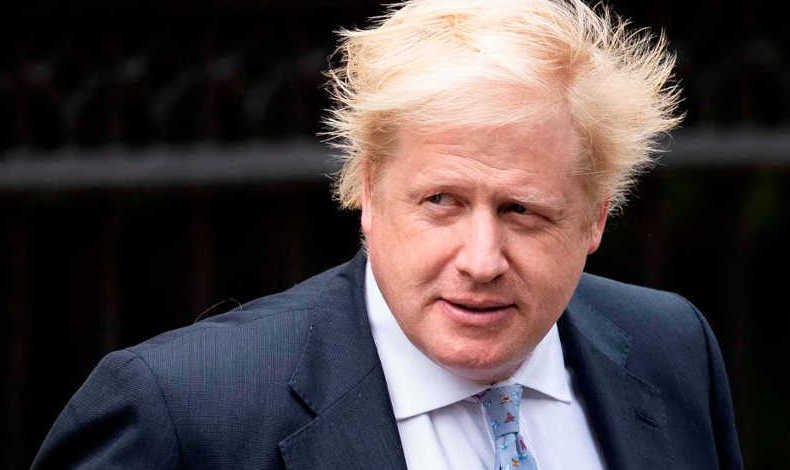
Boris Johnson, the former UK prime minister, has been found to have breached rules designed to prevent the misuse of contacts and influence gained while in public office, according to an ethics watchdog. The Advisory Committee on Business Appointments (Acoba) concluded that Johnson failed to cooperate fully with inquiries into his conduct after leaving office, prompting concerns over potential exploitation of his former position for private gain.
The findings follow revelations published last month by the Guardian, which examined a collection of documents from Johnson’s private office, known as “The Boris Files.” These materials suggested that Johnson repeatedly ignored rules restricting former ministers from leveraging government contacts to benefit private ventures. According to the reports, Johnson allegedly lobbied for a billion-dollar deal in the United Arab Emirates and used connections within the Saudi government, cultivated during his tenure as prime minister, to promote the interests of consultancy firms seeking lucrative contracts.

Following the Guardian’s reporting, Acoba formally questioned Johnson about his interactions with Better Earth, a consultancy targeting the Saudi government, and Bia Advisory, a venture pursuing investment opportunities in the UAE. The watchdog sought clarity on whether Johnson had mentioned either company during meetings with senior foreign officials, including Saudi Crown Prince Mohammed bin Salman and Khaldoon al-Mubarak, CEO of an Abu Dhabi sovereign wealth fund.
Johnson responded to the inquiry on 15 September, denying that he had acted improperly. He claimed that the Guardian’s reporting was “based on material illegally hacked by a hostile state actor” and suggested the documents contained “false or misleading” assertions. He also insisted that he had followed Acoba’s rules at all times. However, he did not provide direct factual denials of the specific allegations raised by the committee.
Acoba, under the leadership of chair Isabel Doverty, found Johnson’s responses inadequate and determined that he had breached the rules. Doverty described Johnson’s refusal to engage substantively with the committee’s questions as “highly disappointing” and emphasised that public trust in government requires full accountability from former ministers.
Johnson’s history of circumventing Acoba’s rules is extensive. Past controversies include seeking retrospective approval to become a £275,000-a-year columnist for the Telegraph, applying for a £500,000-a-year column for the Daily Mail just half an hour before its announcement, and failing to answer questions regarding meetings with Venezuelan President Nicolás Maduro and a hedge-fund manager who subsequently paid him £240,000. In each case, Acoba’s enforcement mechanism was limited to reporting breaches to the Cabinet Office.
Despite Acoba’s formal findings, no further action is expected against Johnson, as he is no longer subject to the business appointment rules. A government spokesperson highlighted that new arrangements for overseeing post-office appointments will come into effect from 13 October, including the closure of Acoba. Under these reforms, former ministers found to have seriously breached the rules could be asked to repay ministerial severance payments, reflecting a broader effort to restore public confidence and accountability.
During his time as prime minister, Johnson issued a version of the ministerial code that explicitly enshrined principles of integrity, objectivity, transparency, honesty, and leadership in the public interest. The code also outlined the restrictions now found to have been breached, intended to prevent former ministers from exploiting privileged contacts or insider knowledge for personal or commercial gain. Despite this, Johnson opted not to answer substantive questions from Acoba, leaving the watchdog with no choice but to report a breach.
Acoba’s investigation also highlighted Johnson’s use of high-profile contacts in sensitive foreign governments. Leaked documents indicated that Johnson had met senior Saudi officials and influential UAE figures during his premiership and allegedly attempted to leverage these relationships for the benefit of private consultancy ventures. While Johnson asserted that Bia Advisory had never been formally established and that he had only joined Better Earth after receiving Acoba approval, the committee was not satisfied with the explanations, particularly given the lack of clarity on whether foreign contacts were used to pitch these ventures.
The Guardian, which reviewed the leaked documents, has confirmed no evidence that the materials were false or misleading. The files were obtained via Distributed Denial of Secrets, a US-based non-profit that archives leaked data. The organisation has stated that it does not know the original source of the leak, but the materials provided a detailed record of Johnson’s post-office activities.
Doverty stressed that Acoba has a responsibility to investigate any allegation of rule-breaking, regardless of how the information comes to light, noting that public interest in ensuring ethical conduct remains paramount. She added that Johnson’s lack of cooperation prevented the committee from establishing a full understanding of his actions, leaving unresolved questions about the propriety of his lobbying and interactions with foreign governments.
The breach underscores ongoing concerns about the potential for former political leaders to exploit their positions for private advantage. Critics argue that the current mechanisms for enforcement are weak, relying on self-reporting and limited follow-up. While Acoba can issue findings and communicate breaches to the Cabinet Office, it cannot impose fines or criminal penalties. The case highlights the challenges of maintaining ethical oversight for individuals with extensive political and commercial networks.

Johnson’s conduct adds to a series of high-profile controversies that have dogged his post-premiership career. From media columns to advisory roles, his activities have repeatedly raised questions about the boundaries between public service and private enterprise. The latest findings serve as a reminder of the importance of robust oversight and transparency mechanisms for former ministers, particularly when international financial interests are involved.
The government has indicated that reforms to the post-office appointment system aim to strengthen accountability and public confidence. By closing Acoba and introducing stricter rules for repayment of severance payments in cases of serious breaches, ministers will be incentivised to adhere to ethical standards and avoid any appearance of impropriety. While Johnson himself may not face further consequences due to his departure from the rules’ jurisdiction, the case is expected to inform future policy on managing former officials’ activities in the private sector.
In conclusion, Boris Johnson’s refusal to fully cooperate with Acoba, coupled with evidence suggesting potential exploitation of high-level contacts for private gain, has led the ethics watchdog to formally record a breach of rules designed to uphold integrity and transparency in public office. The case highlights ongoing debates about the effectiveness of current oversight mechanisms, the responsibilities of former political leaders, and the need for strong governance standards to maintain public trust.
Related News:
 Tasers Introduced in UK Prisons to Combat Rising Violence and Protect Staff
 Police Advised to Disclose Ethnicity of Suspects in High-Profile Cases
 Charlie Kirk Killing Used to Mobilise UK’s Largest Far-Right Rally in Decades
 Jailed Georgian Opposition Leaders Warn UK of Iranian Links to Ruling Party
 UK Police to Gain New Powers to Manage Repeated Protests, Home Office Announces
 China Spy Case Hearing Reveals Key Gaps in Prosecution
 It’s time to come clean on the China spy case
 French Taxi Driver Cleared in David Lammy Theft Case After Fare Dispute
 Met Police Culture Makes Racial Harm ‘Inevitable’
 Remaining rebel Labour MPs have whip restored
 Victims’ commissioner Baroness Newlove dies aged 63
 MPs Warn Thousands Still Face Poverty Despite Labour’s Welfare Reform Retreat
 Targeted Attack in Bury Sparks Murder Investigation as Community Awaits Justice
 Man Remanded After Children Fall Ill at Leicestershire Summer Camp in Shocking Child Cruelty Case
 Hunt Intensifies for Southport Riot Suspects as Police Release Full List of 40 Still at Large
 AI Revolutionises Grooming Gang Investigations as Police Target Cold Cases Across England and Wales
 Police Prepare for Potential Disorder as Far-Right Groups Promote Anti-Migrant Protests Across England
 Mass Arrests in London as Protest Defies Ban on Palestine Action
 David Lammy Faces Possible Legal Challenge Over Foreign Office Secondment Scheme
 Sally Rooney Pledges BBC Royalties to Support Palestine Action Despite UK Terror Ban
 Government Signs Deal with Iraq to Return Illegal Migrants in Latest Bid to Deter Small Boats
 Merseyside Police Helicopter Crew Cleared After Low-Altitude Pursuit of Suspect
 UK Police Face ‘Chronic Pressure’ Amid Surge in Protests Over Asylum and Gaza
 Angela Rayner Admits Underpaying Stamp Duty on £800,000 Seaside Flat
 Urgent Action Needed on Windrush Compensation as Survivors Speak of “Waiting to Die”
 Angela Rayner Faces Scrutiny as Stamp Duty Row Deepens
 Tanni Grey-Thompson Faces Abuse Over Opposition to Assisted Dying Bill
 Peter Mandelson Referred to Jeffrey Epstein as ‘My Best Pal’ in 50th Birthday Letter
 UK Launches Major Crackdown on Networks Profiting from Online Child Sexual Abuse
 First “One In, One Out” Deportation Flight Departs Without Migrants Amid Legal Challenges
 Corbyn and Sultana Clash Over Membership Portal as Divisions Surface in New Leftwing Party
Zarah Sultana Seeks Legal Action After Bitter Clash with Jeremy Corbyn Over Party Membership Funds
Corbyn and Sultana Clash Over Membership Portal as Divisions Surface in New Leftwing Party
Zarah Sultana Seeks Legal Action After Bitter Clash with Jeremy Corbyn Over Party Membership Funds
 Anti-Immigration Protesters and Counter-Protesters Clash in Glasgow
 Mahmood Pledges Reform of Modern Slavery Laws After Court Blocks Deportation Appeal
 Metropolitan Police Considers Requiring Officers to Declare Freemasonry Membership
 Migrants in UK May Need to Contribute or Face Removal, Home Secretary Signals
 No Evidence Found to Substantiate Alleged Rape in Oxfordshire Churchyard, Police Confirm
 MPs’ pay watchdog seeks to give public greater voice in how politicians are funded
 Stephen Lawrence’s Father Demands Justice Before Killer’s Parole
 Starmer Condemns 7 October Student Protests as ‘Un-British’
 Digital ID Plans Ignite Debate Over £600m Treasury Tax Boost and Privacy Concerns
 Madeleine McCann Detectives to Testify Against Woman Accused of Stalking the Family
 Zarah Sultana and Jeremy Corbyn Reunite Amid New Party Plans
 UK Charities Warn Rising Hate Threatens Staff Safety
 Human Rights Groups Challenge UK-France “One in, One Out” Deal
 Kosovo agrees to host Britain’s refused asylum seekers
 Sex offenders to lose parental rights for children born of rape
 Lucy Powell urged ministers to reconsider costly legal case for Labour donor’s firm
 Starmer Accused of Creating ‘Toxic Downing Street’
 Migrant Sex Offender Deported After Erroneous Prison Release
 Johnson Approved China’s London ‘Super-Embassy’ in 2018
 Five More Prisoners Freed by Mistake in Essex Week
 Nearly 48,000 Zombie Knives Removed from UK Streets in a Year
 Afghan man charged with murder after west London knife attack
 FBI Director Kash Patel Defends Girlfriend Amid Government Jet Claims
 Phillipson urges careful review of gender recognition guidance
 Just Stop Oil Protesters Convicted Amid Climate Defence Row
 British Grandmother to Return Home After Death Sentence in Bali
 Eleven Arrested After Pro-Palestine Protest at Villa Match
Boris Johnson accused of undermining BBC leadership
Eleven Arrested After Pro-Palestine Protest at Villa Match
Boris Johnson accused of undermining BBC leadership
 ‘Reckless’ cuts to victims’ services will cost more than they save
 BBC Faces Backlash as Reform UK Withdraws from Film
 Palace to reinstate hyphen in Andrew’s surname
 New review urges UK to repatriate Shamima Begum, others from Syria
 Peers Flood Assisted Dying Bill with 942 Amendments
 Navy cuts scrap key landing upgrade for UK F-35B jets
 UK Unveils Fast-Track Deportation and Asylum Overhaul
 UK Asylum Overhaul Sparks Debate Over Human Rights and Deportations
 UK Asylum Reforms: Temporary Refugee Status and Faster Deportations
 UK Candidate Moved to Safe House After Election Threats
 Mahmood Defends Tough Overhaul of UK Asylum System
 Paralegal Fired After Exposé on Illegal Worker Scam
 South African Detained After Neo-Nazi Rally in Australia
 Westminster Advances Legacy Bill Amid Criticism
 Minister Defends Tough New Asylum Reform Plan
 Serial Rapist and Former Cop Found Guilty Again
 Trump Signs Bill Releasing Justice Department Files on Epstein
 Most Tories Expect to Support a Farage-Led Government
 Peers Get Extra Time to Debate Assisted Dying Bill
 Met Police Under Scrutiny for Vetting Failures Among Hundreds of Recruits