Published: 16 October 2025 . The English Chronicle Desk
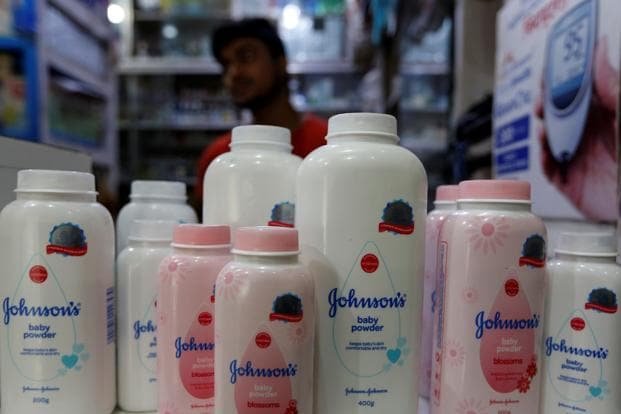
A major class-action lawsuit has been launched in the United Kingdom against the pharmaceutical and consumer goods giant Johnson & Johnson (J&J), accusing the company of knowingly selling asbestos-contaminated talcum powder for decades while concealing the health risks from the public. The claim, filed by over 3,000 people, could become the largest product liability case in British legal history.
According to court documents and internal company memos obtained by the BBC, J&J allegedly knew as early as the 1960s that its talc-based baby powder contained fibrous forms of minerals such as tremolite and actinolite—both of which, in their fibrous form, are classified as asbestos and have long been linked to deadly cancers, including mesothelioma and ovarian cancer. Despite this knowledge, the company is accused of continuing to market its baby powder as a symbol of purity, safety, and gentleness for mothers and infants worldwide.
The lawsuit, brought forward by KP Law, alleges that the company not only failed to warn consumers but also took active steps to suppress scientific evidence and manipulate safety standards. Instead of alerting regulators or the public, J&J allegedly focused on protecting its multibillion-dollar baby care brand, which became one of the company’s most iconic and profitable products.

Johnson & Johnson, however, has vehemently denied all allegations. In a statement, the firm maintained that its baby powder “was compliant with all applicable regulatory standards, did not contain asbestos, and does not cause cancer.” The company also pointed out that independent laboratories and global health authorities have repeatedly confirmed the safety of its talc products. Sales of talc-based baby powder were discontinued in the UK in 2023 and in the United States three years earlier.
The British case mirrors extensive litigation in the United States, where thousands of lawsuits have been filed over similar allegations. While some U.S. plaintiffs have won multimillion-dollar verdicts, others have seen those rulings overturned on appeal. Legal experts say the UK lawsuit could result in hundreds of millions of pounds in damages and reshape consumer safety law in the country.
Internal Evidence and Concealment Allegations
The claims against J&J centre on the long-debated link between talcum powder and cancer. Talc, a naturally occurring mineral used in cosmetics and hygiene products, is often mined near asbestos deposits. The fibrous form of asbestos, known for its needle-like structure, is a well-established cause of various cancers when inhaled or absorbed into the body.
Internal J&J documents cited in the lawsuit suggest that as early as 1973, the company was aware of the contamination issue. One memo reportedly stated: “Our baby powder contains talc fragments classifiable as fibres. Occasionally, sub-trace quantities of tremolite or actinolite are identifiable.” Rather than addressing the contamination, executives discussed ways to protect the brand image and even considered patenting a process to remove asbestos fibres from talc. However, they ultimately decided to keep the research confidential to avoid public scrutiny.

According to the claimants, J&J’s internal communications reveal a pattern of concealment stretching over decades. The company allegedly lobbied regulators, including the U.S. Food and Drug Administration (FDA), to adopt less sensitive testing methods that would fail to detect trace amounts of asbestos. The court filings allege that J&J advocated for standards that allowed up to one percent asbestos contamination, a threshold that would have permitted the company to maintain its claim of product purity.
Marketing Over Safety
While scientific evidence mounted, J&J’s marketing campaigns continued to portray its baby powder as the embodiment of softness, safety, and maternal care. During the 1970s and 1980s, U.S. advertisements targeted new mothers with slogans about purity and trust. By the 1990s and early 2000s, the company shifted its focus toward African American women, an expansion that critics now describe as a calculated effort to exploit underinformed consumers.
A 2008 internal email, obtained by the BBC, allegedly expressed concern about the product’s safety, reading: “The reality that talc is unsafe for use on or around babies is disturbing… I don’t think we can continue to call it baby powder and keep it in the baby aisle.” J&J later said the comment referred to asphyxiation risks from powder inhalation rather than asbestos-related cancers.
Voices of the Victims
Among the thousands of claimants is Siobhan Ryan, a 63-year-old mother from Somerset, who used Johnson & Johnson baby powder for decades, first as a child and later on her own children. “My mother used it, I used it, and it smelled lovely. I believed I was doing the best for my babies,” she told the BBC. In 2023, she was diagnosed with stage four ovarian cancer.
“It was such a shock. We just hugged and cried,” Ryan said. After enduring several rounds of chemotherapy, a severe case of sepsis, and major abdominal surgery, she is now undergoing further treatment as her cancer has returned. “They knew it was contaminated and still sold it to new mothers and babies,” she added.
Medical experts note that ovarian cancer can result from a combination of genetic and environmental factors. Professor Christina Fotopoulou, a leading gynaecological oncologist at Imperial College London, explained that “any external agent capable of disrupting the cell’s reproductive cycle can contribute to cancer development.”
Common symptoms of ovarian cancer include persistent abdominal bloating, pelvic pain, loss of appetite, and changes in urinary frequency. Doctors urge women experiencing such symptoms frequently to seek medical attention, as early diagnosis can dramatically improve survival rates.
Legal Fallout and Corporate Response
Earlier this month, a U.S. court in Connecticut ordered Johnson & Johnson and its successor entities to pay $25 million to a man who developed terminal mesothelioma after lifelong use of the company’s baby powder. The jury concluded that the company was negligent in continuing to sell asbestos-contaminated products despite knowing safer alternatives, such as cornstarch-based powders, were available.
Testimony from former J&J toxicologist Dr. Steve Mann revealed that company officials made public safety claims without reviewing laboratory test data. He admitted to receiving reports confirming asbestos in the powder but chose not to disclose them to regulators or management.

In recent years, Johnson & Johnson restructured its consumer health business under a new subsidiary named Kenvue, which now oversees its personal care brands. Kenvue issued a statement following the latest court rulings, saying: “We deeply sympathize with individuals and families affected by cancer. The safety of our products has been supported by decades of testing by independent laboratories, universities, and regulatory authorities worldwide.”
Despite repeated legal challenges, J&J maintains that its baby powder never contained asbestos and continues to insist that science supports its safety record. However, with thousands of lawsuits ongoing across multiple continents, the controversy surrounding the company’s iconic baby powder shows no sign of ending soon.
— The English Chronicle Online
Related News:
 Kinnock’s Rebuke Echoes Loudly as Corbyn Allies Launch Left-Wing Breakaway: “A Gift to Farage”
 Post Office Scandal Compensation Tops £1 Billion as Victims Finally See Justice
 UK and Norway Forge Stronger Ties Through Joint Sanctions and Enhanced Defence Cooperation
 Exclusive: Leaked Documents Reveal Khan’s Controversial Road Policy Overhaul – Drivers Warn of ‘Final Nail in Coffin’
 UK Banks Granted Reprieve as BoE Delays Basel III Capital Rules Until 2028
 Trump Administration Dismisses 17 Immigration Judges, Sparking Debate Over Judicial Independence
 England Grapples with Unprecedented Bluetongue Virus Outbreak: Entire Nation Declared Infected Zone
 Justice Deferred, Not Denied: Government Orders Full Statutory Inquiry into Orgreave Clash Four Decades On
 Northern Ireland Family of Three Shot Dead in Maguiresbridge Home Incident
 West End Exposed as London’s Knife Crime Epicentre Amid Alarming Surge in Violence
 Singapore Corruption Scandal: Details Emerge on Iswaran’s Luxury Flight and Ties to Tycoon Ong Beng Seng
 Mystery Wallaby Spotted on Norfolk-Suffolk Border Sparks Police Appeal
 Manchester Airport Faces Delays After EasyJet Planes’ Wings ‘Clip’ on Runway
 Peter Andre Breaks 16-Year Silence with Scathing Statement Against Katie Price
 UK Weather: Heat Alerts Extended as Temperatures Set to Reach 30°C This Weekend
 Access to Iconic Cornish Beach Cut Off by National Trust Amid Safety Concerns
 Where Is Prince William and Kate Middleton’s New House? Inside the Historic Lodge Set to Become Their ‘Forever Home’
 Costa Blanca Holiday Horror as Food Poisoning Outbreak Hits Four-Star Hotel
 Hundreds of Swimming Pool Closures Leave Children ‘At Risk of Drowning’, Union Warns
 Xi, Putin and Kim Display Unified Front at Massive Beijing Military Parade
 British Holidaymaker’s Tragic Death in Greece Confirmed as Drowning
 India Triumph in Dubai Amid Unexpected Twists
 Public Executions in Gaza City Captured on Video Amid Ongoing Conflict
 Macron Phones Trump Over Traffic Jam in New York
 Comey Indictment Deepens Fears of Political Retribution Under Trump
 “It Was Very Tough, But I Love Life”: Former Israeli Hostage Rebuilds Life After Family Killed by Hamas
 Arsenal Edge Past West Ham Amid Injury Concerns
 Chaos at Ibrox as Martin’s Rangers Era Comes to an End
 Arsenal Showcase Depth and Flexibility as Arteta Eyes Title Challenge
 Nobel Prize Honours Pioneers Behind Materials That Could Heal the Planet
 UK Affirms No Relaxation of Visa Rules for India Amid Trade Push
 Vice President Vance Warns of ‘Painful’ Job Cuts as U.S. Government Shutdown Deepens
 Sir Michael Caine Urges Starmer to End Smacking in England
 Former Premier League Referee David Coote Pleads Guilty to Child Image Offence
 Japanese Court Sentences Man to Death for 2023 Quadruple Murder in Rare Gun and Knife Attack
 Zelensky to Urge Missile Aid as Trump and Putin Plan Summit
 Gibbs-White Inspires Forest to Thrilling Win Over Porto
 Manchester United triumph as Mbeumo brace seals thrilling win
 Fabio Wardley stuns Joseph Parker to earn Usyk title shot
 Hospice Cuts Raise Alarm Across England Amid Funding Crisis
 Tragedy on Lizard Island: Cruise Passenger Dies
 Fed Cuts US Interest Rates Again Amid Labour Market Uncertainty
 Zarah Sultana Launches Party to Change Politics
 Ex-Army Sergeant Jailed for Assault on Soldier Who Later Died
 US Senate Passes Funding Bill to End Historic Shutdown
 Mary Earps’s Manchester United Return Faces Mixed Reception
 Son Reveals UK Couple in Iran Resort to Hunger Strike for Help
 Pressure Mounts on Starmer to Sack Chief of Staff Over Briefing Row
 US Justice Department Files Lawsuit Against California Over Partisan Voting Maps
 Former Lion Heskey Warns of Shortage of England Strikers
 How Cultures Interpreted the Aurora Through History
 Orban Says Ukraine Has ‘No Chance’ as EU Support Continues
 Mother Watches in Horror as Teen Daughter Dies on Tracks
 Seven Countries, One Winner: Europe’s Best Christmas Market
 Israeli Strike Kills 13 Near Palestinian Camp in Lebanon
 Commuters warned as yellow snow and ice alert hits Northern Ireland
 Haiti Qualifies for World Cup Despite Coach Never Visiting Country
 US Judge Says Meta Did Not Hold Illegal Social Media Monopoly
 Serial Rapist and Former Cop Found Guilty Again
 Pentagon Officials in Ukraine to Discuss War End
 Ex-Harvard President Pauses Teaching Over Epstein Emails
 Vietnam Battles Deadly Floods as Rains Continue
 Scottish Families Take Legal Action Over School CO Leak
 Venezuela Threatens Nobel Winner Machado with Fugitive Status
 At Least Three Dead in Bangladesh Earthquake
 Vicki Fears Losing Motability Car
 Israel Confirms Hamas Returned Dror Or’s Body
 Millions Face Higher Taxes Under Reeves New Budget
 Two National Guard Soldiers Critically Injured Near White House
 Mbappe Scores 4 as Real Madrid Edge Olympiakos
 Sri Lanka Floods Leave 56 Dead, Dozens Missing
 Scotland Gains 33 New Towns – Life in Growing Communities
 Jordan Bardella: France’s Young Presidential Contender
 AI Actress Creator Says Tilly Norwood Won’t Replace Actors
 Search underway for British man overboard off Tenerife
 Pavarotti statue frozen in Italian ice rink sparks backlash
 Barcelona, Atletico set for decisive La Liga showdown
 EU plans $105bn Ukraine aid using frozen Russian assets
 Global campaign launched to free Palestinian leader Barghouti
 Kenya Signs $2.5bn Health Deal with US Amid Data Concerns