Published: 13 October. The English Chronicle Desk.
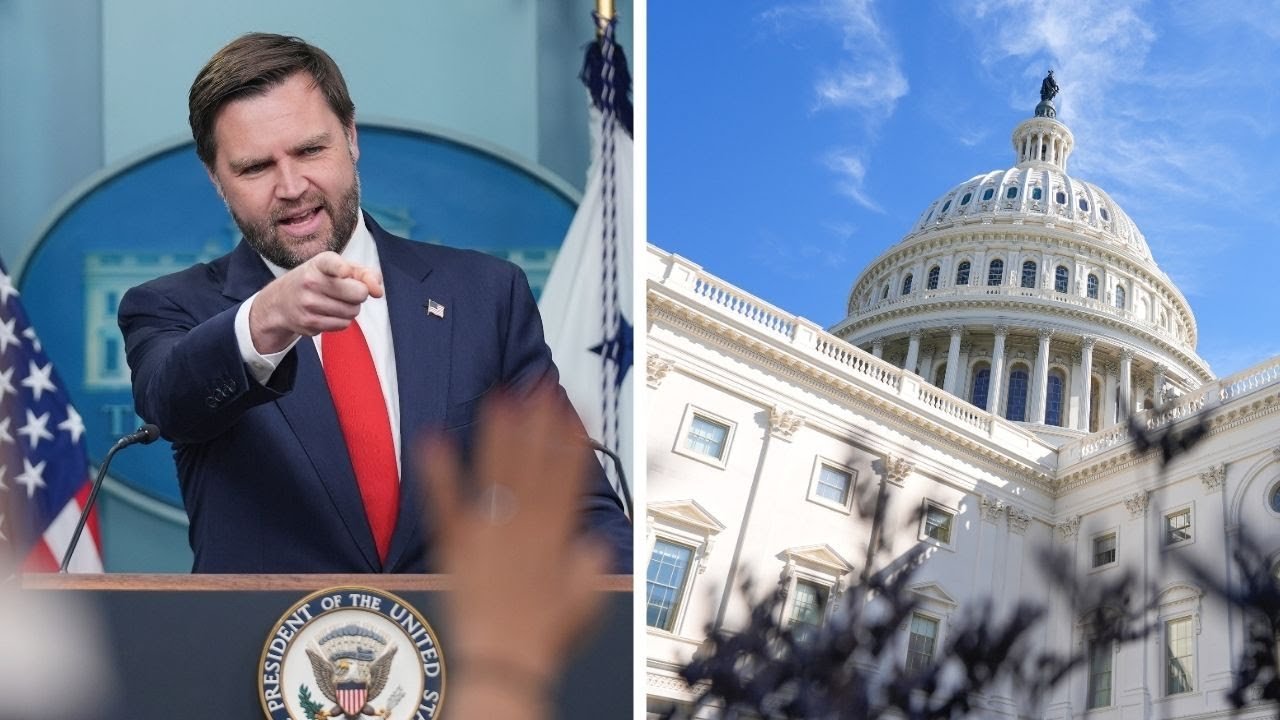
As the United States government shutdown enters its third week with no resolution in sight, Vice President JD Vance has warned that further “painful” job cuts are imminent if the political stalemate continues. In a stark warning delivered during an interview with Fox News, Vance said, “The longer this goes on, the deeper the cuts are going to be. To be clear, some of these cuts are going to be painful.” His remarks underscore the mounting strain on federal agencies and employees as the crisis drags on without any sign of compromise between the two major parties.

The shutdown, which began on October 1, followed the Democrats’ rejection of a short-term funding bill proposed by Republicans. The Democratic leadership has insisted that any budget agreement must include an extension of federal subsidies for health insurance under the Affordable Care Act, a provision Republicans have refused to include. This deadlock has resulted in hundreds of thousands of federal employees being placed on leave without pay, while many essential services remain in limbo.
The Trump administration has already begun implementing significant layoffs across several government departments. On Friday, officials confirmed that seven agencies, including the Centers for Disease Control and Prevention (CDC), had initiated the termination of more than 4,000 employees. However, confusion quickly emerged when it was revealed that some of the CDC’s layoff notices had been issued in error. Andrew Nixon, a spokesperson for the U.S. Department of Health and Human Services — which oversees the CDC — confirmed that those affected employees “have all been notified that they are not subject to the reduction in force.” According to the employees’ union, out of the 1,300 CDC staff who received termination notices, around 700 were reinstated the following day.
Despite these corrections, the situation remains dire for many federal workers. Essential personnel such as law enforcement officers, border patrol agents, and air traffic controllers are required to continue working without pay, deepening financial hardship for thousands of families.
However, the Trump administration has made a notable exception for military personnel. President Donald Trump directed Secretary of War Pete Hegseth to find available funds to ensure that U.S. service members receive their paychecks this week, even if the funding impasse persists. According to Pentagon sources, the Department of Defense will reallocate approximately $8 billion (£6 billion) from “unobligated research development testing and evaluation funds” to pay active-duty troops on October 15.
The political blame game over the shutdown has intensified in recent days. Senator Mark Kelly, a Democrat from Arizona, reaffirmed his party’s stance during an appearance on NBC’s Meet the Press, stating that he would not back down from the demand to reinstate healthcare subsidies as part of the current budget. “They don’t have to do this,” he said, referring to the layoffs. “They don’t have to punish people.” In contrast, Republican Senator Lindsey Graham of South Carolina told the same program that he would not support extending the subsidies, aligning firmly with his party’s fiscal position.
Vice President Vance, meanwhile, placed responsibility for the crisis squarely on the Democrats, telling Fox News, “This is not a situation we relish. These layoffs are not something we’re looking forward to, but the Democrats have dealt us a pretty difficult set of cards.”
As the political standoff continues, the effects of the shutdown are rippling far beyond Washington. Several Smithsonian museums, research centres, and the National Zoo in the U.S. capital have now closed after running out of funds to remain operational. Analysts warn that the longer the shutdown lasts, the greater its impact will be on both the economy and the daily lives of ordinary Americans.

With no congressional vote scheduled to reopen the government, the impasse remains unresolved. Each passing day brings greater uncertainty for federal employees, institutions, and contractors who depend on government funding. As both parties stand firm on their positions, the cost of political brinkmanship continues to mount — not only in economic terms but also in human hardship, as tens of thousands of families face a future clouded by financial insecurity and growing frustration.
The coming weeks will be critical in determining whether Washington’s leaders can bridge the widening political divide or whether the nation will continue to pay the price for partisan paralysis. For now, the shutdown remains a symbol of deep dysfunction at the heart of American governance, with millions waiting anxiously for relief that shows no immediate sign of arriving.
Related News:
 Kinnock’s Rebuke Echoes Loudly as Corbyn Allies Launch Left-Wing Breakaway: “A Gift to Farage”
 Post Office Scandal Compensation Tops £1 Billion as Victims Finally See Justice
 UK and Norway Forge Stronger Ties Through Joint Sanctions and Enhanced Defence Cooperation
 Exclusive: Leaked Documents Reveal Khan’s Controversial Road Policy Overhaul – Drivers Warn of ‘Final Nail in Coffin’
 UK Banks Granted Reprieve as BoE Delays Basel III Capital Rules Until 2028
 Trump Administration Dismisses 17 Immigration Judges, Sparking Debate Over Judicial Independence
 England Grapples with Unprecedented Bluetongue Virus Outbreak: Entire Nation Declared Infected Zone
 Justice Deferred, Not Denied: Government Orders Full Statutory Inquiry into Orgreave Clash Four Decades On
 Northern Ireland Family of Three Shot Dead in Maguiresbridge Home Incident
 West End Exposed as London’s Knife Crime Epicentre Amid Alarming Surge in Violence
 Singapore Corruption Scandal: Details Emerge on Iswaran’s Luxury Flight and Ties to Tycoon Ong Beng Seng
 Mystery Wallaby Spotted on Norfolk-Suffolk Border Sparks Police Appeal
 Manchester Airport Faces Delays After EasyJet Planes’ Wings ‘Clip’ on Runway
 Peter Andre Breaks 16-Year Silence with Scathing Statement Against Katie Price
 UK Weather: Heat Alerts Extended as Temperatures Set to Reach 30°C This Weekend
 Access to Iconic Cornish Beach Cut Off by National Trust Amid Safety Concerns
 Where Is Prince William and Kate Middleton’s New House? Inside the Historic Lodge Set to Become Their ‘Forever Home’
 Costa Blanca Holiday Horror as Food Poisoning Outbreak Hits Four-Star Hotel
 Hundreds of Swimming Pool Closures Leave Children ‘At Risk of Drowning’, Union Warns
 Xi, Putin and Kim Display Unified Front at Massive Beijing Military Parade
 British Holidaymaker’s Tragic Death in Greece Confirmed as Drowning
 India Triumph in Dubai Amid Unexpected Twists
 Public Executions in Gaza City Captured on Video Amid Ongoing Conflict
 Macron Phones Trump Over Traffic Jam in New York
 Denmark Investigates Professional Drone Incursions Across Multiple Airports, No Evidence of Russian Involvement
 Comey Indictment Deepens Fears of Political Retribution Under Trump
 “It Was Very Tough, But I Love Life”: Former Israeli Hostage Rebuilds Life After Family Killed by Hamas
 Arsenal Edge Past West Ham Amid Injury Concerns
 Chaos at Ibrox as Martin’s Rangers Era Comes to an End
 Arsenal Showcase Depth and Flexibility as Arteta Eyes Title Challenge
 Nobel Prize Honours Pioneers Behind Materials That Could Heal the Planet
 UK Affirms No Relaxation of Visa Rules for India Amid Trade Push
 Hope Amid Heartbreak: The Stories Behind the Freed Israeli Hostages
 Japanese Court Sentences Man to Death for 2023 Quadruple Murder in Rare Gun and Knife Attack
 Zelensky to Urge Missile Aid as Trump and Putin Plan Summit
 Gibbs-White Inspires Forest to Thrilling Win Over Porto
 Manchester United triumph as Mbeumo brace seals thrilling win
 Fabio Wardley stuns Joseph Parker to earn Usyk title shot
 Hospice Cuts Raise Alarm Across England Amid Funding Crisis
 Tragedy on Lizard Island: Cruise Passenger Dies
 Fed Cuts US Interest Rates Again Amid Labour Market Uncertainty
 Zarah Sultana Launches Party to Change Politics
 Ex-Army Sergeant Jailed for Assault on Soldier Who Later Died
 US Senate Passes Funding Bill to End Historic Shutdown
 Mary Earps’s Manchester United Return Faces Mixed Reception
 Sam Kerr Stars in Chelsea Return with Champions League Double
 Son Reveals UK Couple in Iran Resort to Hunger Strike for Help
 Pressure Mounts on Starmer to Sack Chief of Staff Over Briefing Row
 Hitler’s DNA Confirms He Truly Had Only One Testicle
 US Justice Department Files Lawsuit Against California Over Partisan Voting Maps
 Former Lion Heskey Warns of Shortage of England Strikers
 How Cultures Interpreted the Aurora Through History
 Orban Says Ukraine Has ‘No Chance’ as EU Support Continues
 Mother Watches in Horror as Teen Daughter Dies on Tracks
 Seven Countries, One Winner: Europe’s Best Christmas Market
 Israeli Strike Kills 13 Near Palestinian Camp in Lebanon
 Zelensky Meets US Envoy in Turkey to Push Ukraine Peace Talks
 Commuters warned as yellow snow and ice alert hits Northern Ireland
 Haiti Qualifies for World Cup Despite Coach Never Visiting Country
 US Judge Says Meta Did Not Hold Illegal Social Media Monopoly
 Serial Rapist and Former Cop Found Guilty Again
 Pentagon Officials in Ukraine to Discuss War End
 Ex-Harvard President Pauses Teaching Over Epstein Emails
 Vietnam Battles Deadly Floods as Rains Continue
 Scottish Families Take Legal Action Over School CO Leak
 Venezuela Threatens Nobel Winner Machado with Fugitive Status
 At Least Three Dead in Bangladesh Earthquake
 Vicki Fears Losing Motability Car
 Israel Confirms Hamas Returned Dror Or’s Body
 Millions Face Higher Taxes Under Reeves New Budget
 Peers Get Extra Time to Debate Assisted Dying Bill
 Two National Guard Soldiers Critically Injured Near White House
 Mbappe Scores 4 as Real Madrid Edge Olympiakos
 Sri Lanka Floods Leave 56 Dead, Dozens Missing
 Scotland Gains 33 New Towns – Life in Growing Communities
 Jordan Bardella: France’s Young Presidential Contender
 AI Actress Creator Says Tilly Norwood Won’t Replace Actors
 Search underway for British man overboard off Tenerife
 Pavarotti statue frozen in Italian ice rink sparks backlash
 Barcelona, Atletico set for decisive La Liga showdown