Published: 08 September 2025. The English Chronicle Desk
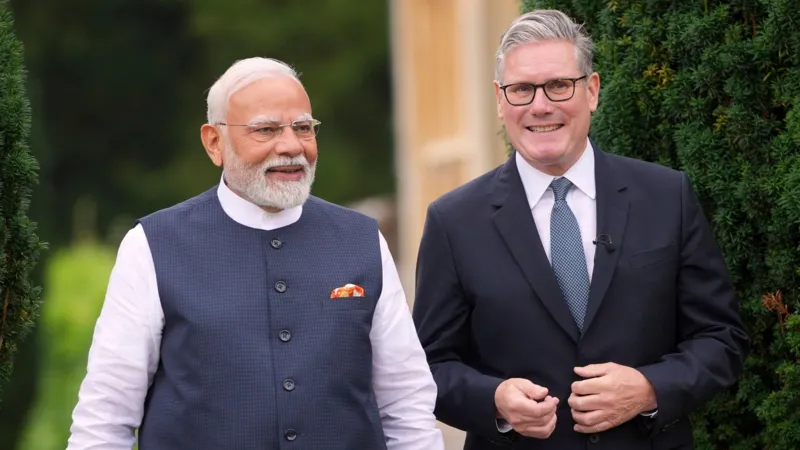
In a visit aimed at strengthening trade and cultural ties, UK Prime Minister Sir Keir Starmer has clarified that the United Kingdom will not be relaxing visa regulations for Indian workers or students, despite the ongoing negotiations and recently signed trade agreements between the two nations. The remarks come as he arrived in Mumbai, leading a delegation of over 100 entrepreneurs, cultural leaders, and university vice-chancellors to explore opportunities for bilateral investment and economic growth.

Sir Keir emphasized that while there are “massive opportunities” to enhance trade and cultural connections with India, there is no plan to open additional visa routes for Indian nationals. He pointed out that none of the business leaders he had engaged with during his trip had raised concerns regarding visas. Instead, the focus of the visit, he noted, is to facilitate Indian businesses in leveraging the UK-India trade deal, which was finalized in July after years of negotiation.
The trade deal, designed to stimulate multi-billion-pound exchanges between the two economies, includes measures such as lowering export costs for UK cars and whisky to India and making Indian textiles and jewellery more competitively priced in the UK market. It also offers a three-year exemption on social security contributions for Indian employees working in the UK on short-term visas. However, UK ministers have stressed that the agreement does not signal broader changes to the country’s immigration policies.
The Labour government, under Sir Keir’s leadership, has consistently sought to limit immigration levels, a stance reinforced during the party’s conference last week with new measures regarding settlement status for foreign nationals. Addressing reporters on the flight to Mumbai, Sir Keir reiterated that visas were not part of the trade agreement, and this position remains unchanged.
When questioned about whether the UK might consider attracting tech entrepreneurs in the wake of recent changes to the US H-1B visa program under President Donald Trump, Sir Keir acknowledged the UK’s ambition to attract “top talent” from around the globe to strengthen the economy. Yet he reaffirmed that there are no immediate plans to introduce new visa pathways specifically for India.
Highlighting the scale of the delegation, Sir Keir described it as “the single biggest trade mission ever to come to India,” underscoring the current high point in UK-India relations. Beyond trade, the visit also carries a cultural dimension. Sir Keir announced that from 2026, three Bollywood films by Yash Raj Films will be produced in the UK, ending an eight-year hiatus in such collaborations. The move is expected to create 3,000 jobs and inject significant economic activity, as noted by Downing Street.
Akshaye Widhani, CEO of Yash Raj Films, remarked on the cultural significance of returning to the UK, citing its infrastructure, technology, and creative talent as unmatched. The delegation also includes major businesses like British Airways, which revealed plans to introduce a third daily flight between Delhi and Heathrow next year, while Manchester Airport announced a new direct route to Delhi.
During the two-day visit, Sir Keir is scheduled to meet Indian Prime Minister Narendra Modi. On various international and diplomatic issues, Sir Keir maintained a cautious stance. Regarding Russia, he emphasized the UK’s leadership role in monitoring the so-called “shadow fleet” of unregulated tankers transporting oil from Russia. On bilateral matters, he signaled that consular issues, such as the case of British Sikh Jagtar Singh Johal—detained in India for seven years without conviction—would be raised at appropriate levels.
Addressing questions about diplomatic gestures, Sir Keir clarified that he had not sent, nor intends to send, birthday greetings to Russian President Vladimir Putin, highlighting a focus on substantive issues rather than symbolic acts. On India’s controversial purchase of Russian oil, he suggested that UK attention is centered on tracking and addressing the unregulated maritime transport rather than directly criticizing New Delhi’s policy choices.
The visit, combining trade, investment, and cultural initiatives, reflects the UK government’s broader strategy of strengthening economic ties with India while maintaining strict immigration policies. Sir Keir’s statements underscore a careful balancing act—promoting bilateral cooperation, encouraging foreign investment, and attracting global talent, all without altering existing visa frameworks for Indian nationals.

This trip, marked by high-level engagement across commerce, culture, and diplomacy, represents a significant moment in the UK-India partnership. Yet, it simultaneously reinforces the UK’s position on immigration, signaling that trade incentives and collaboration will not come at the cost of loosening visa restrictions.
Related News:
 Kinnock’s Rebuke Echoes Loudly as Corbyn Allies Launch Left-Wing Breakaway: “A Gift to Farage”
 Post Office Scandal Compensation Tops £1 Billion as Victims Finally See Justice
 UK and Norway Forge Stronger Ties Through Joint Sanctions and Enhanced Defence Cooperation
 Exclusive: Leaked Documents Reveal Khan’s Controversial Road Policy Overhaul – Drivers Warn of ‘Final Nail in Coffin’
 UK Banks Granted Reprieve as BoE Delays Basel III Capital Rules Until 2028
 Trump Administration Dismisses 17 Immigration Judges, Sparking Debate Over Judicial Independence
 England Grapples with Unprecedented Bluetongue Virus Outbreak: Entire Nation Declared Infected Zone
 Justice Deferred, Not Denied: Government Orders Full Statutory Inquiry into Orgreave Clash Four Decades On
 Northern Ireland Family of Three Shot Dead in Maguiresbridge Home Incident
 West End Exposed as London’s Knife Crime Epicentre Amid Alarming Surge in Violence
 Singapore Corruption Scandal: Details Emerge on Iswaran’s Luxury Flight and Ties to Tycoon Ong Beng Seng
 Mystery Wallaby Spotted on Norfolk-Suffolk Border Sparks Police Appeal
 Manchester Airport Faces Delays After EasyJet Planes’ Wings ‘Clip’ on Runway
 Peter Andre Breaks 16-Year Silence with Scathing Statement Against Katie Price
 UK Weather: Heat Alerts Extended as Temperatures Set to Reach 30°C This Weekend
 Access to Iconic Cornish Beach Cut Off by National Trust Amid Safety Concerns
 Where Is Prince William and Kate Middleton’s New House? Inside the Historic Lodge Set to Become Their ‘Forever Home’
 Costa Blanca Holiday Horror as Food Poisoning Outbreak Hits Four-Star Hotel
 Hundreds of Swimming Pool Closures Leave Children ‘At Risk of Drowning’, Union Warns
 Xi, Putin and Kim Display Unified Front at Massive Beijing Military Parade
 British Holidaymaker’s Tragic Death in Greece Confirmed as Drowning
 India Triumph in Dubai Amid Unexpected Twists
 Public Executions in Gaza City Captured on Video Amid Ongoing Conflict
 Macron Phones Trump Over Traffic Jam in New York
 Denmark Investigates Professional Drone Incursions Across Multiple Airports, No Evidence of Russian Involvement
 Comey Indictment Deepens Fears of Political Retribution Under Trump
 “It Was Very Tough, But I Love Life”: Former Israeli Hostage Rebuilds Life After Family Killed by Hamas
 Arsenal Edge Past West Ham Amid Injury Concerns
 Chaos at Ibrox as Martin’s Rangers Era Comes to an End
 Arsenal Showcase Depth and Flexibility as Arteta Eyes Title Challenge
 Nobel Prize Honours Pioneers Behind Materials That Could Heal the Planet
 Nobel Peace Prize Officials Probe Suspicious Online Bets
 Women Challenge Meta Over Targeted Ads After Miscarriage
 Vice President Vance Warns of ‘Painful’ Job Cuts as U.S. Government Shutdown Deepens
 Hope Amid Heartbreak: The Stories Behind the Freed Israeli Hostages
 Japanese Court Sentences Man to Death for 2023 Quadruple Murder in Rare Gun and Knife Attack
 Zelensky to Urge Missile Aid as Trump and Putin Plan Summit
 Gibbs-White Inspires Forest to Thrilling Win Over Porto
 Manchester United triumph as Mbeumo brace seals thrilling win
 Fabio Wardley stuns Joseph Parker to earn Usyk title shot
 Hospice Cuts Raise Alarm Across England Amid Funding Crisis
 Tragedy on Lizard Island: Cruise Passenger Dies
 Fed Cuts US Interest Rates Again Amid Labour Market Uncertainty
 Zarah Sultana Launches Party to Change Politics
 Ex-Army Sergeant Jailed for Assault on Soldier Who Later Died
 US Senate Passes Funding Bill to End Historic Shutdown
 Mary Earps’s Manchester United Return Faces Mixed Reception
 Sam Kerr Stars in Chelsea Return with Champions League Double
 Son Reveals UK Couple in Iran Resort to Hunger Strike for Help
 Pressure Mounts on Starmer to Sack Chief of Staff Over Briefing Row
 Hitler’s DNA Confirms He Truly Had Only One Testicle
 US Justice Department Files Lawsuit Against California Over Partisan Voting Maps
 Former Lion Heskey Warns of Shortage of England Strikers
 How Cultures Interpreted the Aurora Through History
 Orban Says Ukraine Has ‘No Chance’ as EU Support Continues
 Mother Watches in Horror as Teen Daughter Dies on Tracks
 Seven Countries, One Winner: Europe’s Best Christmas Market
 Israeli Strike Kills 13 Near Palestinian Camp in Lebanon
 Commuters warned as yellow snow and ice alert hits Northern Ireland
 Haiti Qualifies for World Cup Despite Coach Never Visiting Country
 US Judge Says Meta Did Not Hold Illegal Social Media Monopoly
 Serial Rapist and Former Cop Found Guilty Again
 Pentagon Officials in Ukraine to Discuss War End
 Ex-Harvard President Pauses Teaching Over Epstein Emails
 Vietnam Battles Deadly Floods as Rains Continue
 Scottish Families Take Legal Action Over School CO Leak
 Venezuela Threatens Nobel Winner Machado with Fugitive Status
 At Least Three Dead in Bangladesh Earthquake
 Vicki Fears Losing Motability Car
 Israel Confirms Hamas Returned Dror Or’s Body
 Millions Face Higher Taxes Under Reeves New Budget
 Two National Guard Soldiers Critically Injured Near White House
 Mbappe Scores 4 as Real Madrid Edge Olympiakos
 Sri Lanka Floods Leave 56 Dead, Dozens Missing
 Scotland Gains 33 New Towns – Life in Growing Communities
 Jordan Bardella: France’s Young Presidential Contender
 AI Actress Creator Says Tilly Norwood Won’t Replace Actors
 Search underway for British man overboard off Tenerife
 Pavarotti statue frozen in Italian ice rink sparks backlash
 Barcelona, Atletico set for decisive La Liga showdown