Published: 19 October 2025. The English Chronicle Desk. The English Chronicle Online.
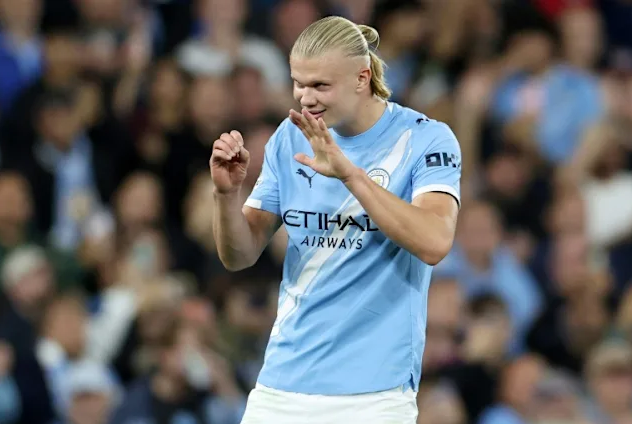
Erling Haaland once again proved unstoppable as Manchester City secured a 2-0 victory over Everton, with the Norwegian striker scoring both goals to extend his phenomenal tally to 23 in just 13 appearances across club and country this season. The win further reinforced City’s domestic dominance while keeping Tottenham as the only Premier League side yet to feel the impact of Haaland’s lethal finishing.
The match, held at the Etihad Stadium, was not without its moments of intrigue, but ultimately it was Haaland’s clinical instincts that decided the outcome. His first goal arrived on 58 minutes, following a well-executed build-up that showcased City’s attacking fluidity. Just five minutes later, he doubled the lead, breaking Everton’s resistance with a perfectly timed finish. These two high-quality moments underscored the striker’s growing reputation as one of the most formidable forwards in world football.

Pep Guardiola, though visibly pleased with the result, remained measured in his assessment. “I am disappointed he did not score four or five,” he quipped after the match, before adding more seriously, “All jokes aside, really pleased, but we cannot rely solely on him. We need contributions from other players—wingers and attacking midfielders. The chances were clear, and they must be taken. At this level, players must demand more of themselves.” Guardiola’s comments reflected the manager’s awareness that while Haaland provides a consistent goal threat, Manchester City’s attacking depth must be maximised to sustain their dominance.
City were without Rodri, sidelined by injury, and Kevin De Bruyne, who has recently departed, leaving Guardiola’s side without two of its usual orchestrators. The absence of De Bruyne, in particular, was notable, given his ability to unlock defences and provide incisive passes. Jack Grealish, loaned out under City’s parent-club regulations, was also unavailable, prompting Guardiola to consider the implications of such arrangements on squad depth and creativity. Despite these limitations, City’s experience, positional discipline, and individual quality proved enough to overcome Everton.
Everton, under David Moyes, showed glimpses of threat, particularly in the first half, but ultimately lacked the cutting edge to challenge Donnarumma’s goal effectively. Nico O’Reilly, operating at left-back, tested Jordan Pickford from distance, sliding a 20-yard attempt narrowly wide of the post. Phil Foden, orchestrating City’s midfield, attempted a defence-splitting pass for Jérémy Doku that almost created a chance, but Everton’s defensive awareness prevented a clear opportunity.
There were moments when City’s defensive frailties were exposed. Nathan Aké’s misplaced pass to the opposition gifted Iliman Ndiaye an opportunity to advance down Everton’s right flank. Ndiaye’s square ball found Beto, who came close to beating Donnarumma, but the goalkeeper’s positioning kept the scoreline intact. These rare lapses highlighted that despite City’s dominance, Everton could exploit openings, particularly when City attempted intricate passing moves or overran their attacks.
City’s response was immediate and decisive. Adopting a more direct approach, Phil Foden delivered a precise corner from the right. Jake O’Brien rose in an attempt to clear, but his header inadvertently tested Pickford, striking the crossbar rather than crossing the goal line. Moments later, Ndiaye’s movement mirrored that of a younger Grealish, cutting inside and forcing Donnarumma into another important save. Despite these scares, City’s composure and tactical adjustments ensured they retained control.
The breakthrough came when Foden orchestrated play down the left flank, finding O’Reilly, who advanced and delivered a precise cross into the box. Haaland, demonstrating his trademark power and timing, rose above Everton defenders to head emphatically into the net. The Etihad erupted as City’s star striker reaffirmed his role as the focal point of Guardiola’s attack.
Everton attempted to respond immediately. James Garner forced a close-range shot that struck the hand of Bernardo Silva, newly introduced into the match, prompting Everton appeals for a penalty. Referee Tony Harrington, however, remained unmoved, and the opportunity was lost. City quickly capitalised on the reprieve. Foden orchestrated another attack down the left, combining with Savinho before cutting the ball back to Haaland, whose low finish doubled the advantage, effectively securing the points for the hosts.
In added time, Haaland had two further chances to complete a hat-trick, yet for the first time in the season, the striker’s composure faltered slightly, allowing Pickford to make saves and deny a third goal. Everton’s Moyes joked with Haaland post-match, commenting, “I was just telling him I wished he had been somewhere else,” highlighting the Norwegian’s dominance and the light-hearted nature of their exchange despite the defeat.
While Haaland’s brilliance was the defining feature, Guardiola’s post-match analysis highlighted a broader concern: City cannot rely solely on their striker for goals. Other attacking players, including Savinho, Doku, and Reijnders, must take responsibility and convert opportunities, particularly in tighter games or against stronger opposition. The manager’s emphasis on shared accountability reflects City’s ambition to maintain domestic and European supremacy.
Beyond the goals, City’s performance also showcased their ability to manage phases of the game where Everton applied pressure. Early in the match, City successfully repelled Everton’s attempts, demonstrating defensive organisation and individual skill. Moments such as Ndiaye’s incursions and Beto’s near-misses tested the hosts, but collective discipline and tactical awareness allowed City to withstand these challenges, a testament to Guardiola’s coaching philosophy.
The match also underlined City’s depth issues in the absence of key personnel. Rodri’s injury and De Bruyne’s departure left a creative vacuum, with Guardiola relying heavily on Foden, Haaland, and peripheral attackers to construct and finish moves. Despite this, City’s overall structure allowed them to dominate possession, control transitions, and exploit Everton’s defensive gaps when opportunities arose.
For Everton, the result was disappointing but contained positives. Moyes’ side demonstrated organisation, resilience, and occasional attacking intent, particularly from Ndiaye and Garner. However, the inability to convert chances or maintain pressure highlighted the gulf in quality and cohesion compared to City, illustrating the challenge faced by mid-table clubs when confronting elite opposition.

In the broader context of the Premier League, Haaland’s performance reinforces his status as one of the game’s most prolific forwards. Scoring 23 goals in just 13 matches across all competitions is an extraordinary feat, emphasising his consistency, physicality, and tactical intelligence. For Manchester City, his contributions are central to Guardiola’s strategy, yet the manager’s insistence on diversifying goal sources remains crucial for long-term success.
Ultimately, the 2-0 victory over Everton adds another chapter to City’s campaign, combining individual brilliance with tactical discipline. Haaland’s dominance, Foden’s creativity, and City’s overall structure ensured a controlled performance, while Everton’s occasional threat served as a reminder that even the strongest sides must remain vigilant. Guardiola’s post-match reflections, balancing praise with constructive critique, underline the ongoing evolution of Manchester City under his stewardship.
Related News:
 Sri Lanka Crush Bangladesh by 99 Runs to Seal ODI Series 2-1
 England’s Euro Odyssey: A Tale of Grit, Glory and the Lionesses’ Miraculous March to the Final
 Predicted Leicester Line-ups Reflect Cifuentes’ Tactical Plans Ahead of New Season
 Central London Gears Up for Lionesses’ Victory Parade as Thousands Prepare to Celebrate Historic Women’s Euros Win
 London Set to Honour Euro 2025 Champions as Lionesses Take Victory Parade Through the Capital
 Rangers Boss Russell Martin Launches Blistering Critique After Disappointing Draw with Motherwell
 Tottenham Takes On Newcastle
 Ngumoha Shines Bright as Liverpool’s Future Looks Fiercely Promising
 Golden Glory Beckons: Ballon d’Or 2025 Nominee Frenzy Ignites Global Football Stage
 It’s Thanks to Gabby That I Caught My Prostate Cancer in Time’ – Kenny Logan Opens Up on His Battle and His Mission to Save Lives
 Minute’s Silence for Diogo Jota Abruptly Ended After Wembley Tribute Disrupted
 Rugby Confronts Safety Concerns with Smart Mouthguards at Women’s World Cup
 Premier League Supercomputer Predicts Tough Season for Man Utd Amid Three-Team Title Battle
 Aston Villa Under Pressure as Newcastle Take on Hosts in Premier League Opener
 Isaac Price Shines as West Brom Clinch 3-2 Victory at Wrexham’s Championship Return
 FIFA Eyes Biennial Club World Cup from 2029, Plans Possible Expansion
 European Football: Atlético Madrid Stumble at Espanyol as Vitinha Secures PSG Win
 Leeds Mark Premier League Return with Gritty Win Over Everton
 Nottingham Forest Clarifies Position on Nuno Espirito Santo’s Future Following Opening Weekend Victory
 Manchester United Face £300m Transfer Loss as Squad Value Highlights Long-Term Mismanagement
 Grimsby Stun Manchester United in Dramatic Penalty Shootout
 Club Brugge Crush Ten-Man Rangers to Deepen Russell Martin’s Crisis
 Guardiola Admits City ‘Forgot to Play’ After Shock Defeat to Brighton
 India Triumph in Dubai Amid Unexpected Twists
 Fábio Carvalho’s Last-Minute Heroics Deny Chelsea Victory at Brentford
 Dembélé and Bonmatí Shine as Ballon d’Or Winners in Glittering Paris Ceremony
Liverpool Vs outhampton Set for Carabao Cup Clash at Anfield
Dembélé and Bonmatí Shine as Ballon d’Or Winners in Glittering Paris Ceremony
Liverpool Vs outhampton Set for Carabao Cup Clash at Anfield
 Chelsea Survive Lincoln City Scare to Advance in Carabao Cup
 Dramatic Derby: Sorloth Strikes as Atletico and Real Madrid Share the Spoils
 Arsenal VS Newcastle Hearts with Dramatic Late Turnaround at St James’ Park
 Aston Villa Fight Back to End Winless Run with Convincing Victory over Fulham
 Everton Held by West Ham as Bowen Cancels Out Keane’s Header in Nuno’s First Game
 ICC Women’s World Cup 2025: India to Host as Pakistan Fixtures Moved to Neutral Venues
 Mbappé Hat-Trick Powers Real Madrid to 5-0 Rout Over Kairat
 Monaco Hold Man City to Dramatic 2-2 Draw as Eric Dier Converts Late Penalty
 Postecoglou Stands Firm Amid Mounting Forest Fan Frustration
 Bournemouth Stun Fulham with Dramatic Comeback in Premier League Thriller
 Arsenal Edge Past West Ham Amid Injury Concerns
 Chaos at Ibrox as Martin’s Rangers Era Comes to an End
 Arsenal Showcase Depth and Flexibility as Arteta Eyes Title Challenge
 Questions Remain as Rugby Legend Lewis Moody Faces Motor Neurone Disease Diagnosis
 Cristiano Ronaldo Becomes Football’s First Billionaire Player
 Tuchel Critiques Wembley Atmosphere After England Victory, Sparks Debate on Fan Engagement
 Hyped by Zlatan, Hidden by Maldini: Italy’s Rising Star Francesco Camarda
 Fulham vs Arsenal Trossard Strike Sends Gunners Three Points Clear
Arsenal vs Atlético Madrid,Gyökeres Double Secures 4-0 Champions League Victory
Fulham vs Arsenal Trossard Strike Sends Gunners Three Points Clear
Arsenal vs Atlético Madrid,Gyökeres Double Secures 4-0 Champions League Victory
 Gibbs-White Inspires Forest to Thrilling Win Over Porto
 Go Ahead Eagles Shock Aston Villa as Buendía Misses Late Penalty
 Manchester United triumph as Mbeumo brace seals thrilling win
 Fabio Wardley stuns Joseph Parker to earn Usyk title shot
 Sarr Double Sinks Young Liverpool in Carabao Cup
 Salah & Gravenberch Lead Liverpool to Win Against Villa
 Dyche Criticises Corner Decision as Forest Draw with United
 Granit Xhaka Rescue Earns Everton Draw at Sunderland
 Burn and Joelinton Head Newcastle to Victory Over Bilbao
 Tension and Turmoil at Aston Villa v Maccabi Match
 Bellingham has ‘the edge’ among England No 10s
Man City Masterclass on Guardiola’s Milestone Day Exposes Liverpool Woes
Bellingham has ‘the edge’ among England No 10s
Man City Masterclass on Guardiola’s Milestone Day Exposes Liverpool Woes
 Lando Norris Dominates Brazil GP to Strengthen F1 Title Bid
 England cannot afford to be in awe of the All Blacks, warns Jamie George
 VAR Must Rein Its Neck In to Save Football’s Spirit
 Trescothick Hints Pope Will Keep Number Three Spot
 Ronaldo Confirms Final World Cup and Plans Retirement
 Mary Earps’s Manchester United Return Faces Mixed Reception
 Sam Kerr Stars in Chelsea Return with Champions League Double
 This kid is something else: Alex Scott’s rise to England call-up
 Former Lion Heskey Warns of Shortage of England Strikers
 Australia Mourns Paralympic Champion Paige Greco
 Irish Hero Parrott Says Goal Brought First Tears in Years
 From heartbreak to glory: Scotland’s dramatic return to the World Cup
 Haiti Qualifies for World Cup Despite Coach Never Visiting Country
 Barcelona Returns to Camp Nou vs Athletic Bilbao
 Moyes Defends Gueye After Dramatic Everton Bust-Up
 Mbappe Scores 4 as Real Madrid Edge Olympiakos
 Man City Lose, Champions League Risk
 Jac Morgan to Miss Six Nations Start After Surgery
 Alexander Isak ends drought as Liverpool stop rot with win at West Ham
 Barcelona, Atletico set for decisive La Liga showdown
 Maxwell withdraws from IPL 2026 after 13 seasons
 Mbappe stars as Real Madrid thrash Athletic, close on Barca