Published: 29 October 2025. The English Chronicle Desk. The English Chronicle Online.
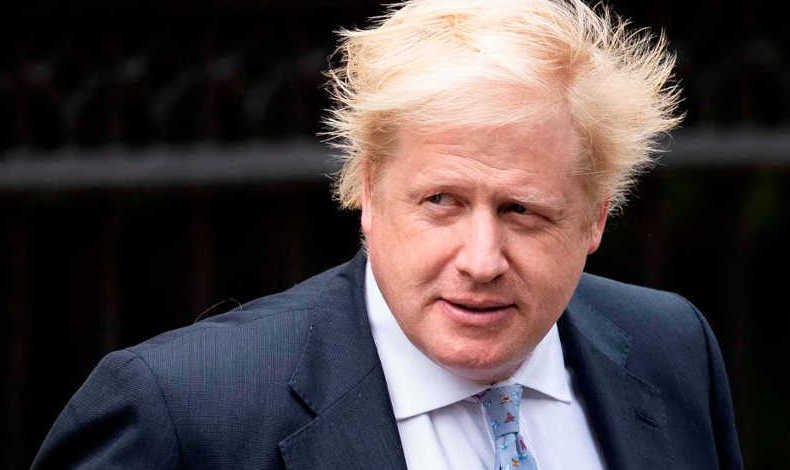
Documents disclosed by The Guardian reveal that Boris Johnson, then UK foreign secretary, approved China’s proposal to establish a sprawling “super-embassy” in London in 2018. The approval, sent in a letter to China’s top diplomat Wang Yi, described the development as “China’s largest overseas diplomatic investment” and laid the groundwork for what would become one of the most contentious real estate and diplomatic projects in recent UK history.
Johnson’s consent allowed Royal Mint Court, a 20,000-square-metre site in central London, to be designated as diplomatic premises. The Chinese government purchased the property the same month for £255 million. In his letter, Johnson praised the proposal, emphasising that the redevelopment of China’s embassy in Beijing and the London project would be “bold expressions of the strength of UK-China bilateral relations.” He also referenced political commitments at the highest levels, citing assurances previously given to the British embassy in Beijing and Eddie Lister, Johnson’s former chief of staff in City Hall who later held a senior Downing Street role. Lister played a key part in brokering China’s purchase of the site.

“I am pleased to confirm that I have today agreed to grant consent for Royal Mint Court to be designated as diplomatic premises, on the basis of your assurances and the further detail provided by the Chinese ambassador to London,” Johnson wrote in May 2018. “I welcome the fact this is China’s largest overseas diplomatic investment. The redevelopment of our embassy in Beijing will be one of our largest overseas diplomatic investments. I am committed, as I am convinced you are, to ensuring that our projects develop alongside each other.”
The disclosure highlights that the Conservative government, under Theresa May, privately gave Beijing assurances that allowed the project to proceed. Yet, seven years later, the plans remain stalled, facing intense political, local, and security scrutiny. Tower Hamlets council initially refused planning permission in December 2022, and the application eventually expired. The project resurfaced after China reapplied for permission once Labour entered government. Ministers subsequently called in the decision, removing it from local council control, reportedly following direct discussions between Chinese President Xi Jinping and UK Prime Minister Keir Starmer.
The issue has sparked tensions between the Conservative opposition and the current Labour government. Conservative figures have questioned whether Labour also offered private assurances to China, similar to those given under Johnson’s tenure, without making them public. Tory minister Kemi Badenoch told ITV’s Peston that the plans should be scrapped, saying, “Given everything we know, this project is no longer appropriate.”
A spokesperson for the Chinese embassy confirmed the purchase of Royal Mint Court in 2018 and said the UK government had given its consent at the time. The embassy representative criticised the UK for repeatedly delaying approval, accusing it of showing “a total lack of the spirit of contract, credibility and ethics.” The statement also noted that both countries had plans to build new embassies in each other’s capitals and urged mutual facilitation of these projects.
The British government has been caught in a complex diplomatic balancing act. Starmer told Bloomberg that decisions regarding the embassy would be made “in the proper way regardless of any views or pressure from anyone,” rejecting claims of capitulation to Chinese demands. Meanwhile, Oliver Robbins, the top Foreign Office official, visited China in October 2025 to try to unblock the situation and resume refurbishment of the British embassy in Beijing, which has been stalled while London deliberates on the super-embassy.
The controversy has also intersected with broader security concerns. Ministers have faced scrutiny following the collapse of a high-profile trial against two men accused of spying for Beijing under the Official Secrets Act. Christopher Cash, a former parliamentary researcher, and Christopher Berry, a teacher, both denied the charges. Conflicting accounts emerged at a parliamentary committee hearing over why the case failed. Prosecutors argued that the fault lay with evidence provided by the government, while a government official claimed legal advice suggested the evidence was sufficient.
Conservative MPs demanded that the government release minutes of a Whitehall meeting held on 1 September 2025 that discussed the trial’s implications and its potential link to broader security risks, including the embassy project. Some MPs argue that the collapse of the trial illustrates deeper gaps in UK oversight of Chinese activities, both commercially and diplomatically, adding urgency to debates over the embassy’s approval.

The Johnson-era approval has reignited discussions about transparency in UK foreign policy and the handling of Chinese investment in sensitive locations. Critics argue that granting consent without thorough parliamentary scrutiny raises questions about national security, local governance, and the influence of private diplomatic assurances. Supporters claim the approval was part of normal diplomatic practice, reflecting efforts to maintain strong bilateral relations with China while modernising diplomatic infrastructure in London and Beijing.
As the debate continues, the Royal Mint Court project remains in limbo, emblematic of broader tensions in UK-China relations. The Chinese embassy has argued that delays hinder both nations’ plans for new diplomatic premises, effectively freezing a long-term bilateral development. For local residents and officials in Tower Hamlets, concerns over scale, security, and community impact remain unresolved, highlighting the complex intersection of national foreign policy and municipal planning.
While Johnson’s letter demonstrates early Conservative support, the project now falls under the scrutiny of a Labour government that faces pressure to balance diplomacy, local concerns, and national security imperatives. The disclosure of the 2018 approval adds another layer to the political debate, illustrating how decisions made by former ministers continue to influence UK-China relations today.
Related News:
 Ministers Accused of Defamation Over Palestine Action Ban and Mass Arrests
 Charlie Kirk Killing Used to Mobilise UK’s Largest Far-Right Rally in Decades
 Jailed Georgian Opposition Leaders Warn UK of Iranian Links to Ruling Party
 Shabana Mahmood Warns Border Failings Are Eroding Trust in States
 Trump Administration Dismisses 17 Immigration Judges, Sparking Debate Over Judicial Independence
 UK Must Act with Courage and Clarity on Israel-Palestine Conflict, Says Foreign Affairs Committee Report
 Tasers Introduced in UK Prisons to Combat Rising Violence and Protect Staff
 MPs Call on UK Government to Delay Biometric Visa Checks for Gaza Students Amid Humanitarian Crisis
 Radioactive Leak at UK’s Nuclear Warhead Base Sparks Outcry Over Safety and Secrecy
 Mutual Inconvenience: Why Alaska Was Chosen for the Trump-Putin Summit on Ukraine
 “I Don’t Expect to Live a Normal Life”: How a Leeds Teenager Became the Target of a Chinese Bounty
 David Lammy Faces Possible Legal Challenge Over Foreign Office Secondment Scheme
 Police Advised to Disclose Ethnicity of Suspects in High-Profile Cases
 Sally Rooney Pledges BBC Royalties to Support Palestine Action Despite UK Terror Ban
 Government Signs Deal with Iraq to Return Illegal Migrants in Latest Bid to Deter Small Boats
 Is the UK Ready to Put Boots on the Ground in Ukraine? Assessing Military Capacity and Challenges
 Angela Rayner Admits Underpaying Stamp Duty on £800,000 Seaside Flat
 Angela Rayner Faces Scrutiny as Stamp Duty Row Deepens
 Tanni Grey-Thompson Faces Abuse Over Opposition to Assisted Dying Bill
 Protests Expected as Israeli Arms Firms Join Global Defence Trade Fair in London
 UK Immigration Figures: Separating Facts from Perceptions
 First “One In, One Out” Deportation Flight Departs Without Migrants Amid Legal Challenges
 Hillsborough Law to Hold Public Officials Accountable, Promising Jail for Serious Misconduct
 Thousands Gather in London to Protest Donald Trump’s Second UK State Visit
 Trump Urges UK to “Call Out the Military” to Secure Borders Amid State Visit
 Corbyn and Sultana Clash Over Membership Portal as Divisions Surface in New Leftwing Party
 Commons Speaker Warns UK Parliament Vulnerable to Foreign Espionage After China-Linked Case Dropped
 Mahmood Pledges Reform of Modern Slavery Laws After Court Blocks Deportation Appeal
Trump’s UN Speech Criticises London and UK Policies, Draws Far-Right Attention
Mahmood Pledges Reform of Modern Slavery Laws After Court Blocks Deportation Appeal
Trump’s UN Speech Criticises London and UK Policies, Draws Far-Right Attention
 UK Fighter Jet Purchase Could Breach Nuclear Treaty, Warns CND
 Migrants in UK May Need to Contribute or Face Removal, Home Secretary Signals
 A Third of EU Citizens in UK Report Discrimination by Public Bodies Post-Brexit
 Russia repeatedly targets UK military satellites, warns Space Command chief
 Pro-Palestine March to Proceed in London Despite Calls to Cancel After Manchester Attack
 MPs’ pay watchdog seeks to give public greater voice in how politicians are funded
 UK Universities Warn Students Ahead of 7 October Pro-Palestine Protests
 Digital ID Plans Ignite Debate Over £600m Treasury Tax Boost and Privacy Concerns
 Public Trust in SNP Hits Historic Low Amid NHS Concerns
 Boris Johnson Breached Rules on Post-Office Business Contacts
 Johnson Suggests Mandelson Linked to China Spy Controversy
 UK Extradition Law Change Sparks Fears Among Hong Kong Dissidents
 Witness statements reveal the CPS China spy row collapse in the UK
 Nigel Farage Calls Vladimir Putin ‘A Very Bad Dude’
 Rachel Reeves signals welfare reform ahead of key budget
 Kosovo agrees to host Britain’s refused asylum seekers
 Lucy Powell urged ministers to reconsider costly legal case for Labour donor’s firm
 Starmer Accused of Creating ‘Toxic Downing Street’
 Plaid Cymru Triumphs in Caerphilly, Ending Labour Century-Long Hold
 Rachel Reeves to lead UK trade push in Saudi Arabia amid rights debate
 British Woman in Iran ‘Losing Hope’ Amid Ongoing Detention
 BBC Journalist Held and Interrogated in Vietnam
 Phillipson urges careful review of gender recognition guidance
 Just Stop Oil Protesters Convicted Amid Climate Defence Row
 China-critical UK academics face ‘extremely heavy’ pressure from Beijing
 Met Police Culture Makes Racial Harm ‘Inevitable’
 British Grandmother to Return Home After Death Sentence in Bali
 Remaining rebel Labour MPs have whip restored
 Tim Davie resigns as BBC director general amid bias claims
 BBC director-general and news chief resign amid bias row
 Palace to reinstate hyphen in Andrew’s surname
 New review urges UK to repatriate Shamima Begum, others from Syria
 Victims’ commissioner Baroness Newlove dies aged 63
 Peers Flood Assisted Dying Bill with 942 Amendments
 US Justice Department Files Lawsuit Against California Over Partisan Voting Maps
 Nandy says BBC review to probe political board influence
 UK Unveils Fast-Track Deportation and Asylum Overhaul
 Trump Deploys DHS to Charlotte in Major Arrest Operation
 UK Asylum Overhaul Sparks Debate Over Human Rights and Deportations
 UK Asylum Reforms: Temporary Refugee Status and Faster Deportations
 Mahmood Defends Tough Overhaul of UK Asylum System
 Scottish Ministers Express Alarm Over UK Asylum Reforms
 Westminster Advances Legacy Bill Amid Criticism
 Minister Defends Tough New Asylum Reform Plan
 Congress Approves Release of Epstein Files, Trump Expected to Sign
 Rama Rebukes Mahmood for Targeting Albanian Families
 Russian Vessel Used Lasers on RAF Pilots, UK Claims
 Texas Governor Faces Lawsuit From CAIR
 Peers Get Extra Time to Debate Assisted Dying Bill
 Chinese & Japanese Boats Clash Near Disputed Islands
 Putin Meets US Envoy Amid Key Ukraine Peace Talks