Published: 07 November 2025. The English Chronicle Desk. The English Chronicle Online.
At least eleven people were arrested following a pro-Palestine protest outside Villa Park during Aston Villa’s controversial Europa League fixture against Israeli side Maccabi Tel Aviv. The incident highlighted tensions surrounding politics, sports, and fan safety, as authorities sought to maintain order while protests escalated prior to the match.
Hundreds of demonstrators gathered outside the Trinity Road Stand ahead of the Thursday evening match. Among them were members of the Palestine Solidarity Campaign and other advocacy groups, all calling for Israel’s domestic football teams to be excluded from UEFA competitions. Organizers emphasized their desire for a peaceful protest, aiming to raise awareness over civilian casualties in Gaza and broader humanitarian concerns.

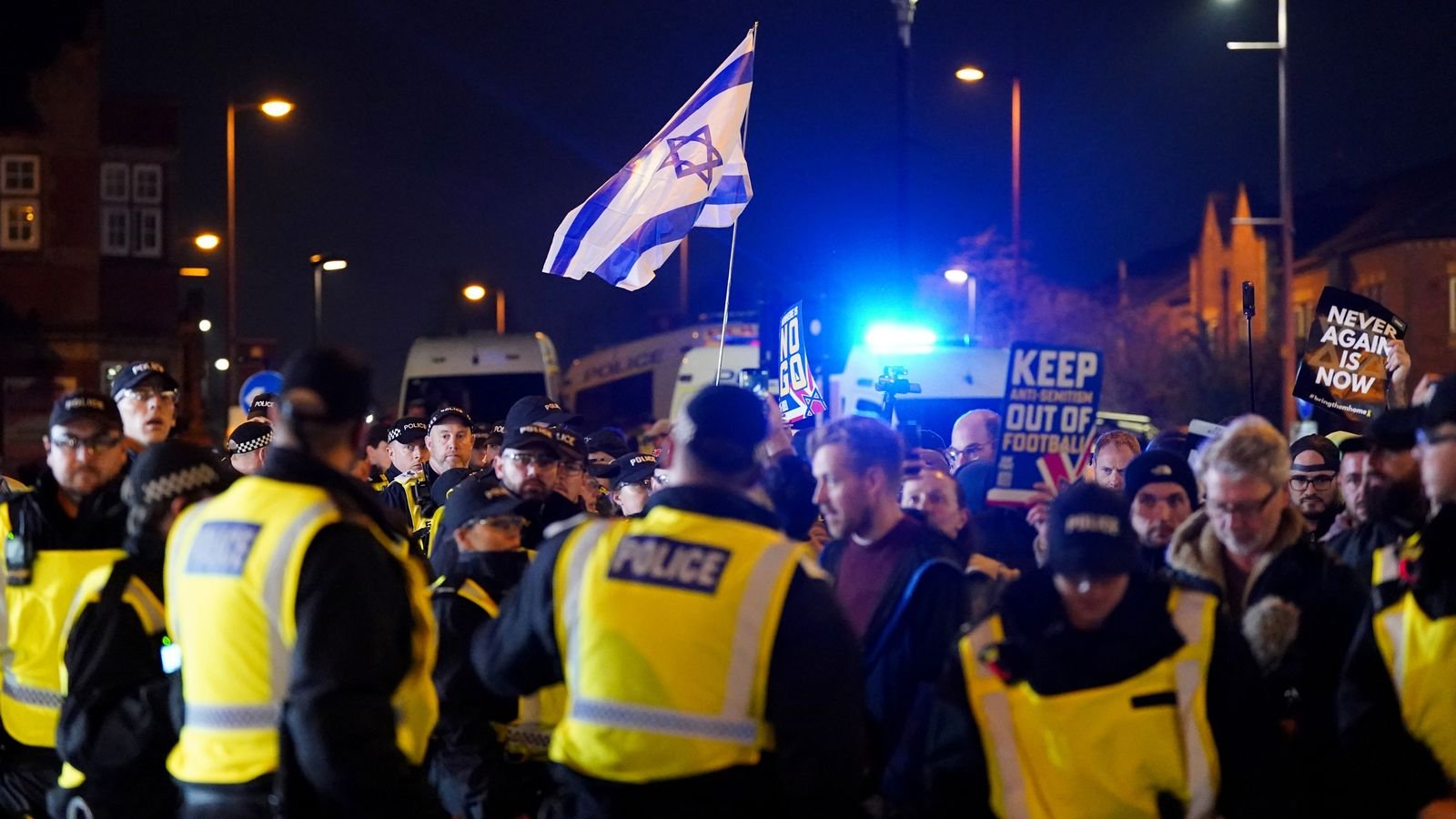
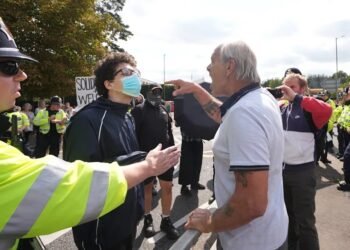
However, verbal clashes soon broke out between demonstrators and bystanders or other supporters outside the stadium, prompting rapid intervention by law enforcement. More than 700 officers were deployed in a major policing operation to prevent escalation, separate groups, and ensure public safety. The West Midlands Police took measures to move protesters away from entrances and maintain clear pathways for fans arriving at the stadium.
Despite these efforts, tensions resurfaced during half-time. As Villa fans returned to the concourse, some confronted the remaining demonstrators through a metal fence. Police quickly intervened again to prevent escalation and ensure that supporters and protesters were kept apart. By 8:30 pm, the protest was called to an end, but officers continued monitoring the area to avoid further incidents.
The arrests included a range of offences. A 21-year-old man was detained for failing to comply with an order to remove a face mask, while another 21-year-old attempted to throw fireworks onto the ground and was arrested. A 17-year-old boy was taken into custody for failing to comply with a dispersal order, and a man was arrested on suspicion of possession with intent to supply drugs. In addition, five men were arrested for racially aggravated public order offences, one individual for breach of the peace, and another 17-year-old refused to leave the area after being issued a dispersal order.
The scale of police deployment underscored the sensitivity of the situation, as Birmingham authorities, through the Safety Advisory Group, had previously raised concerns about fan safety. In line with these recommendations, the match proceeded without visiting supporters, a decision that fueled both public debate and the protests themselves. Authorities emphasized that maintaining public safety was their primary concern, balancing the rights of demonstrators with those of football fans.
Among those addressing the crowd was Perry Barr independent MP Ayoub Khan, who drew parallels between the treatment of Israeli football teams and the bans imposed on Russian clubs following the Ukraine invasion. Khan highlighted the humanitarian crisis in Gaza, referencing reports of casualties and the deaths of athletes, and framed the protest within the wider moral and political context.
Demonstrators used flatbed vehicles equipped with electronic billboards to deliver anti-antisemitism messages prior to kick-off. One display featured a Star of David alongside the slogan “Ban hatred, not fans,” while another showed a quote from football legend Thierry Henry emphasizing that football is about bringing people together rather than division. These visual displays aimed to promote unity, counter perceived discrimination, and underscore the political nuance of the protest.
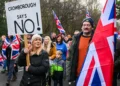
Approximately forty additional demonstrators gathered near the Doug Ellis Stand on Witton Lane, including some holding Israeli flags and placards reading “Keep antisemitism out of football.” Speakers addressed the crowd on issues of inclusion, fairness, and the right for fans to attend sporting events without political interference.
Villa supporters themselves expressed mixed views on the protest. Adam Selway, a lifelong fan, said he sympathized with those unable to attend the match and stressed that the issue was not inherently political. “It’s not about politics, it’s about football,” he explained. “It’s not the Villa fans who don’t want anyone here – the Villa fans want the away fans here. They simply want to enjoy the sport.”
Maccabi Tel Aviv subsequently declined the allocation of away tickets after the government intervened to coordinate fan safety. Prime Minister Sir Keir Starmer called for the ban on visiting supporters to be overturned, describing it as “the wrong decision” that unfairly restricted fans’ access to the match. Government sources emphasized their ongoing work to facilitate safe attendance for supporters from both sides while avoiding conflict outside the stadium.
The protest and ensuing arrests reflect a growing intersection of sports and politics in the UK, as football matches increasingly serve as platforms for advocacy and public expression. Campaigners argue that such demonstrations raise awareness about pressing humanitarian issues, while critics contend that they risk compromising the safety of fans and players. The West Midlands Police highlighted the need to balance public expression with the protection of attendees, noting that rapid response and strategic deployment helped prevent violent escalation.
For some protesters, the event provided an opportunity to voice moral objections to perceived inequalities in international football governance, particularly around the exclusion or treatment of teams in politically charged contexts. For others, it was an occasion to express broader solidarity with Palestinians and raise awareness of global conflicts, drawing attention to the role that sport can play in political and social discourse.

In addition to political messaging, organizers stressed anti-violence and anti-antisemitism themes throughout the protest. By employing visual messaging, public speeches, and coordinated demonstration strategies, they aimed to communicate a focus on ethical conduct while avoiding harm to bystanders. Despite these intentions, police intervention was necessary due to instances of non-compliance and minor offences, which ultimately led to the eleven arrests.
As football clubs, government authorities, and advocacy groups reflect on the incident, the event is likely to inform future safety planning, particularly around high-profile matches with international or political dimensions. It underscores the need for careful risk assessment, crowd management, and the importance of dialogue between law enforcement and community stakeholders to ensure both public safety and the protection of civil liberties.
While the match itself proceeded without further incident, the protests and arrests illustrate the complex dynamic between political activism, public safety, and sporting events in the UK. Authorities, campaigners, and fans alike will continue to navigate these challenges, seeking to balance freedom of expression with the enjoyment of sport and the maintenance of public order.
Related News:
 Reform Councillor Defects to Tories Over ‘Uncomfortable’ Policies
 FBI Director Kash Patel Defends Girlfriend Amid Government Jet Claims
 French Taxi Driver Cleared in David Lammy Theft Case After Fare Dispute
 Company linked to Michelle Mone owes £39m in tax
 Met Police Culture Makes Racial Harm ‘Inevitable’
 ‘Reckless’ cuts to victims’ services will cost more than they save
 British state supplied victims to ‘worst sex offender in history’
 UK Candidate Moved to Safe House After Election Threats
 Ex-Classmate Accuses Farage of Dishonesty on Racism Claims
 Ex-Brexit MEP Rejects Claim of Pro-Russia Payments
 Tasers Introduced in UK Prisons to Combat Rising Violence and Protect Staff
 Police Prepare for Potential Disorder as Far-Right Groups Promote Anti-Migrant Protests Across England
 Mass Arrests in London as Protest Defies Ban on Palestine Action
 Police Advised to Disclose Ethnicity of Suspects in High-Profile Cases
 UK Police Face ‘Chronic Pressure’ Amid Surge in Protests Over Asylum and Gaza
 Peter Mandelson Referred to Jeffrey Epstein as ‘My Best Pal’ in 50th Birthday Letter
 Metropolitan Police Considers Requiring Officers to Declare Freemasonry Membership
 Stephen Lawrence’s Father Demands Justice Before Killer’s Parole
 Peterborough Mosques Tighten Security After Attack
 British Woman in Iran ‘Losing Hope’ Amid Ongoing Detention
 BBC Journalist Held and Interrogated in Vietnam
 Green Party Surges Past Labour in Latest UK Poll
 Celebrities and Charities Demand UK Government Act on Child Poverty
 Afghan man charged with murder after west London knife attack
 Trump’s UK Ambassador Urges North Sea Drilling to Strengthen US Ties
 Trump Speaks on Prince Andrew’s Royal Scandal Fallout
 Rachel Reeves Set to Break Labour Pledge and Raise Income Tax
 UK Bans Fake Numbers: Scammers Lose Their Trick
 Just Stop Oil Protesters Convicted Amid Climate Defence Row
 MPs Press Rachel Reeves to Hike Gambling Taxes
 Jailed UK climate protesters face extremist-style restrictions
 Boris Johnson accused of undermining BBC leadership
 Remaining rebel Labour MPs have whip restored
 How to get help when a child goes missing – call 999 urgently
 Starmer Faces Growing Dissent as Labour MPs Weigh Leadership Challenge
 BBC Faces Backlash as Reform UK Withdraws from Film
 Madeleine McCann Suspect Forced into Woodland Hideout After Release
 Farage appointee to lead Reform youth accused of anti-British views
 Palace to reinstate hyphen in Andrew’s surname
 Politics latest: Starmer ‘will fight any leadership coup’ as Streeting denies attempt to oust Labour PM
 New review urges UK to repatriate Shamima Begum, others from Syria
 Victims’ commissioner Baroness Newlove dies aged 63
 ‘Fever Pitch’ Screaming: Red Flags Before Sara Sharif’s Death
 Peers Flood Assisted Dying Bill with 942 Amendments
 England’s Special Needs Support Faces Breaking Point
 MoD warned over Excel risks before Afghan data breach
 UK Unveils Fast-Track Deportation and Asylum Overhaul
 UK Asylum Overhaul Sparks Debate Over Human Rights and Deportations
 UK Asylum Reforms: Temporary Refugee Status and Faster Deportations
 Mahmood Defends Tough Overhaul of UK Asylum System
 Paralegal Fired After Exposé on Illegal Worker Scam
 Mother Watches in Horror as Teen Daughter Dies on Tracks
 South African Detained After Neo-Nazi Rally in Australia
 UK Warns China After MI5 Issues Espionage Alert
 Westminster Advances Legacy Bill Amid Criticism
 UK Vulnerable to Attack, Defence Committee Finds
 Labour Faces Historic Decline in Wales
 Rama Rebukes Mahmood for Targeting Albanian Families
 Russian Vessel Used Lasers on RAF Pilots, UK Claims
 PM Shares Emotional Letter to Son on Men’s Struggles
 Serial Rapist and Former Cop Found Guilty Again
 PM Highlights UK Business at G20 in South Africa
 Kate Forbes: Motherhood Harder Than Politics
 Welsh Government Christmas 2020 Lockdown Criticised
 WhatsApp Messages Expose Nathan Gill’s Bribery
 Venezuela Threatens Nobel Winner Machado with Fugitive Status
Reeves to Crack Down on Benefit Fraud While Lifting Two-Child Limit
Venezuela Threatens Nobel Winner Machado with Fugitive Status
Reeves to Crack Down on Benefit Fraud While Lifting Two-Child Limit
 Police Name Woman Who Died in Swindon as Murder Probe Continues
 Most Tories Expect to Support a Farage-Led Government
 Swindon Counsellor Dies; Teen Arrested and Released
 Labour MP claims devolution bill is ‘blatant discrimination’ against Cornwall
 English Mayors Set to Introduce Tourist Taxes
 Trump Envoy to Discuss Ukraine Peace at Kremlin
 Millions Face Higher Taxes Under Reeves New Budget
 Peers Get Extra Time to Debate Assisted Dying Bill
 Planned Palestinian Flag Raising at Belfast City Hall Faces Delay Amid Legal Concerns
 Sudanese Family Vows to Stay After Racist Graffiti
 Video shows Israeli troops kill Palestinians after surrender
 Government righting decades-old injustice for miners
 UK delays ruling on China embassy plan until January