Published: 07 November 2025. The English Chronicle Desk. The English Chronicle Online.
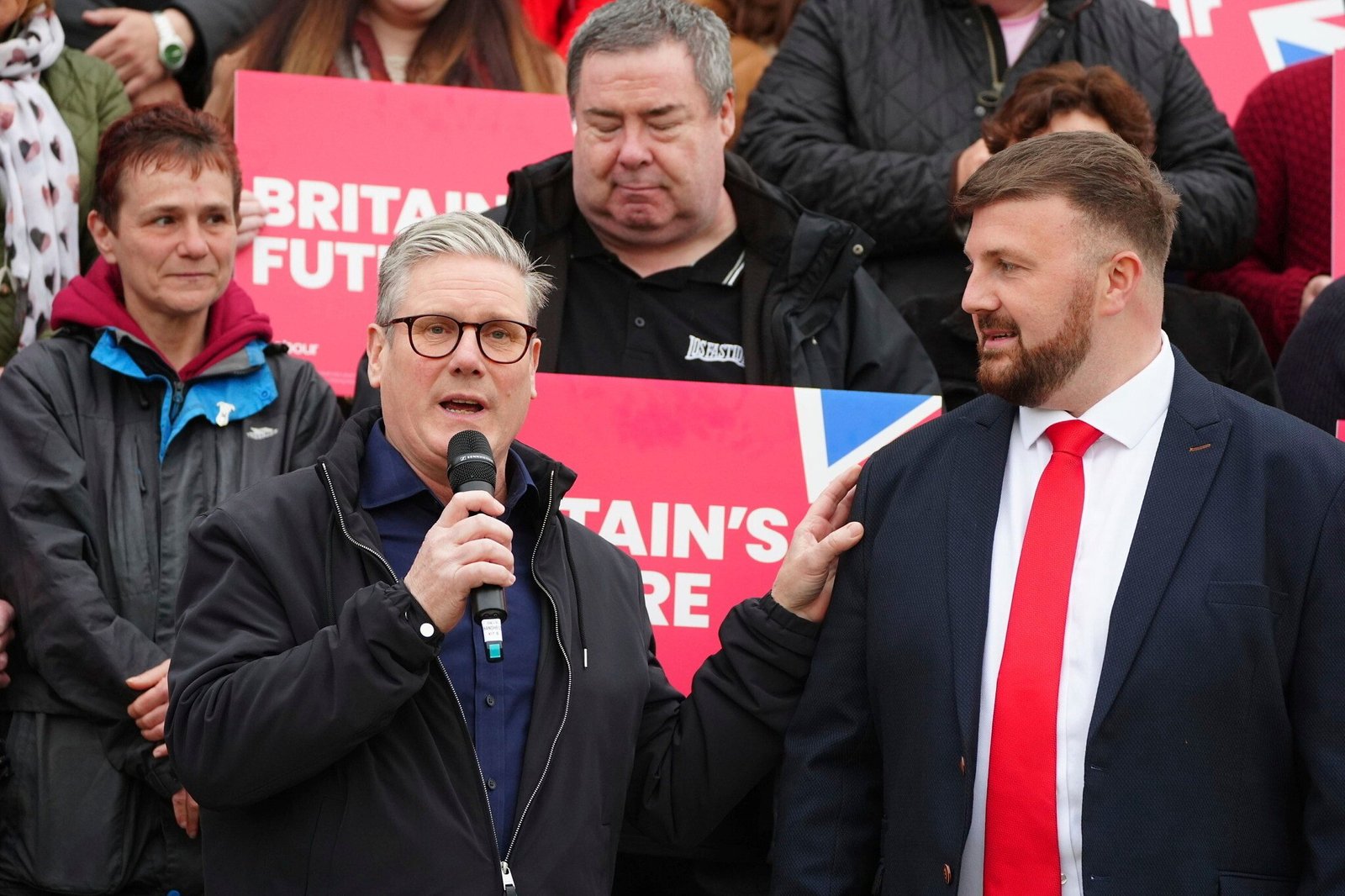
Labour has plummeted to fourth place in a new nationwide opinion poll, raising concerns that the party is on course for its worst general election result in over a century. The survey, conducted among 2,717 adults, indicates that support for Sir Keir Starmer’s party has fallen to just 15 per cent, trailing behind Reform UK, the Green Party, and even the Conservatives in some regions.
The results mark a dramatic shift in the political landscape of the United Kingdom. In recent months, Labour has struggled to maintain its footing amid growing support for newer parties. Reform UK, led by former Brexit Party leader Nigel Farage, has surged in popularity, with the poll suggesting the party could win 386 seats if the election were held tomorrow—enough for a commanding overall majority. Meanwhile, the Greens, under the recently elected leadership of Zack Polanski, have overtaken Labour in several surveys, securing 55 seats in cities and university towns, including seats currently held by high-profile Labour MPs such as Emily Thornberry in Islington South and Finsbury, and Louise Haigh in Sheffield Heeley.

The Liberal Democrats, long considered a centrist alternative, would take 73 seats and emerge as the official opposition to Mr. Farage’s Reform UK, while the SNP would secure 46 seats in Scotland. Labour, by contrast, would be reduced to the fourth-largest party in the House of Commons with just 25 seats—a catastrophic collapse for a party that has dominated British politics for much of the past century. Even the Conservatives, traditionally one of the two major parties, would secure only 17 seats under this scenario, illustrating a historic shake-up of the UK’s political order.
The results are the latest in a series of polls highlighting Labour’s difficulties, particularly in the wake of Zack Polanski’s leadership of the Greens. Since his election in September, the Greens have consistently outperformed Labour, marking a significant challenge to the traditional party system. Polanski, who identifies as an “eco-populist,” has cultivated a distinctive public image, previously making headlines for unconventional claims such as suggesting women could influence breast size through mental exercises—a statement that has drawn widespread attention and scrutiny.
Polanski won the leadership ballot after overcoming a joint challenge from Adrian Ramsay and Ellie Chowns. His victory has energized the party’s base, particularly among younger voters and those prioritizing climate change and wealth redistribution. In a recent interview on BBC’s Sunday with Laura Kuenssberg, Polanski defended the Greens’ proposals for a wealth tax, arguing that it is primarily aimed at reducing deep societal inequalities rather than funding public investment. “Whatever you’re going to create from a wealth tax, it’s ultimately about reducing inequality,” he stated. “This isn’t about creating public investment. We can do that anyway, we don’t need to tax the wealthy to do that. This is ultimately about tackling the deep inequality in our society.”
Labour’s decline is being attributed to a combination of leadership challenges, policy positioning, and internal party dynamics. Analysts note that Sir Keir Starmer’s attempts to balance traditional Labour values with a broader electoral appeal may have left the party appearing directionless to voters. The erosion of Labour support is particularly pronounced among younger voters, urban constituencies, and those concerned with progressive issues such as climate change and social justice—areas where the Greens have gained traction.
The implications of the poll extend beyond seat numbers. A Labour collapse of this magnitude could fundamentally reshape British politics, accelerating the rise of smaller parties and increasing voter fragmentation. The dominance of Reform UK and the Greens in key constituencies signals a growing appetite for alternatives to the two-party system, reflecting broader societal changes and shifting priorities among the electorate. Political commentators have suggested that if these trends continue, the next general election may witness unprecedented levels of volatility, with traditional party loyalties increasingly unreliable.
Labour’s internal response to the poll has been measured but urgent. Senior figures within the party have emphasized the need to reconnect with grassroots supporters and reaffirm policy priorities that resonate with voters. Some insiders have called for a renewed focus on economic issues, public services, and social equality, arguing that failure to address core voter concerns has contributed to the recent slump. Others point to the necessity of a more visible leadership presence in local constituencies, particularly in areas where the Greens and Reform UK are gaining ground.
The Labour decline also raises questions about the future of party strategy in Scotland and Northern England, regions historically critical to Labour’s electoral success. With the SNP performing strongly in Scotland and Reform UK making gains in former industrial heartlands, Labour faces the dual challenge of retaining existing support while attempting to attract new voters in competitive constituencies. The party’s ability to adapt its messaging and policies to these changing dynamics will likely be a determining factor in its performance in the next general election.

Observers note that the political environment in the UK has shifted considerably since the 2019 general election, with Brexit, economic uncertainty, and climate concerns reshaping voter priorities. In this context, Labour’s traditional messaging may be seen as insufficiently responsive to evolving public sentiment. By contrast, Reform UK has capitalized on nationalist and populist themes, while the Greens have framed their platform around progressive policies and environmental activism, appealing to a younger and more socially conscious demographic.
The emerging political scenario presents both challenges and opportunities. While Labour’s position appears precarious, the party still retains a base of long-standing supporters and significant organizational infrastructure. Political analysts suggest that effective leadership, strategic messaging, and engagement with key constituencies could allow Labour to regain ground, even amid the rise of new political forces. However, failure to address internal divisions, policy clarity, and voter concerns could leave the party marginalized in a rapidly transforming political landscape.
As the UK prepares for the next general election, parties across the spectrum are recalibrating strategies to respond to shifting voter sentiment. Labour’s recent polling results underscore the importance of adaptability, messaging, and grassroots engagement, as well as the increasing influence of smaller parties that can reshape the traditional political order. Whether Labour can reverse the current trend and reconnect with voters remains uncertain, but the stakes could not be higher for a party with a century-long legacy of political influence.
Related News:
 Green Party Surges Past Labour in Latest UK Poll
 Celebrities and Charities Demand UK Government Act on Child Poverty
 Trump’s UK Ambassador Urges North Sea Drilling to Strengthen US Ties
 Rachel Reeves Set to Break Labour Pledge and Raise Income Tax
 Thinktanks Urge Rachel Reeves to Reform UK Tax System
MPs Press Rachel Reeves to Hike Gambling Taxes
Thinktanks Urge Rachel Reeves to Reform UK Tax System
MPs Press Rachel Reeves to Hike Gambling Taxes
 Labour Urged to Honour Tax Pledges Ahead of Budget
 Cuts to home insulation funding threaten UK climate goals
 PM Highlights UK Business at G20 in South Africa
Reeves to Crack Down on Benefit Fraud While Lifting Two-Child Limit
PM Highlights UK Business at G20 in South Africa
Reeves to Crack Down on Benefit Fraud While Lifting Two-Child Limit
 Starmer Says Labour’s Economic Plan Needs Years to Deliver
 MPs Warn Thousands Still Face Poverty Despite Labour’s Welfare Reform Retreat
 Chancellor Faces Mounting Pressure Amid “Impossible Trilemma” Over Tax Rises
 Larger Families Could Gain Thousands if Labour Ends Two-Child Benefit Cap
 Rachel Reeves Hosts Top UK and US Financial Executives as Trump’s State Visit Begins
 Privatisation of UK Industries Exacerbates Cost of Living Crisis, Warns Green Party Leader
 Resolution Foundation Chief Urges Chancellor Reeves to Rethink Budget Before November
 King Charles Earns Over £1 Million from Duchy Land Linked to Scrapped HS2 Project
 UK Employment Bill Set to Grant Millions Greater Job Security, Thinktank Analysis Finds
 Kemi Badenoch Unveils ‘Golden Rule’ to Halve Spending Cuts for Deficit Reduction at Tory Conference
 Rachel Reeves to Confirm Changes to Britain’s Planning System
Rachel Reeves Signals Tax Rises, Spending Cuts Ahead
Rachel Reeves to Confirm Changes to Britain’s Planning System
Rachel Reeves Signals Tax Rises, Spending Cuts Ahead
 Rachel Reeves to lead UK trade push in Saudi Arabia amid rights debate
 British Woman in Iran ‘Losing Hope’ Amid Ongoing Detention
 BBC Journalist Held and Interrogated in Vietnam
 UK Small Business Owner to Challenge L’Oréal in Tribunal
 FBI Director Kash Patel Defends Girlfriend Amid Government Jet Claims
 Court Hears Challenge Over Water Bills Funding Sewage Fixes
 Millions of Brits Adjust Lifestyle to Afford Essentials
 French Taxi Driver Cleared in David Lammy Theft Case After Fare Dispute
 Tony Blair think tank warns Rachel Reeves must cut taxes if manifesto broken
 Met Police Culture Makes Racial Harm ‘Inevitable’
 Boris Johnson accused of undermining BBC leadership
 Remaining rebel Labour MPs have whip restored
 Crisis charity to become landlord amid UK housing emergency
 Tim Davie resigns as BBC director general amid bias claims
 ‘Reckless’ cuts to victims’ services will cost more than they save
 Warning as Britons prepare to spend £4 billion this Black Friday
 BBC director-general and news chief resign amid bias row
 Starmer Faces Growing Dissent as Labour MPs Weigh Leadership Challenge
 BBC Faces Backlash as Reform UK Withdraws from Film
 Tim Davie Defends BBC Amid Bias Scandal Storm
 Farage appointee to lead Reform youth accused of anti-British views
 Palace to reinstate hyphen in Andrew’s surname
Donald Trump threatens BBC over edited speech
Palace to reinstate hyphen in Andrew’s surname
Donald Trump threatens BBC over edited speech
 Politics latest: Starmer ‘will fight any leadership coup’ as Streeting denies attempt to oust Labour PM
 Peers Flood Assisted Dying Bill with 942 Amendments
 England’s Special Needs Support Faces Breaking Point
 MoD warned over Excel risks before Afghan data breach
 Reeves’s Tax U-Turn Triggers Fresh Jitters in UK Markets
 Global markets drop amid tech sell-off and China slowdown
 UK Unveils Fast-Track Deportation and Asylum Overhaul
 UK Asylum Overhaul Sparks Debate Over Human Rights and Deportations
 UK Asylum Reforms: Temporary Refugee Status and Faster Deportations
 UK Candidate Moved to Safe House After Election Threats
 Mahmood Defends Tough Overhaul of UK Asylum System
 UK Warns China After MI5 Issues Espionage Alert
 Westminster Advances Legacy Bill Amid Criticism
 Minister Defends Tough New Asylum Reform Plan
 UK Vulnerable to Attack, Defence Committee Finds
 Labour Faces Historic Decline in Wales
 Rama Rebukes Mahmood for Targeting Albanian Families
 Russian Vessel Used Lasers on RAF Pilots, UK Claims
 PM Shares Emotional Letter to Son on Men’s Struggles
 MP Offers Seat to Help Burnham Challenge Starmer
 Mossmorran Plant Closure Hits Cowdenbeath Hard
 Kate Forbes: Motherhood Harder Than Politics
 Welsh Government Christmas 2020 Lockdown Criticised
 BBC to Expand Standards Panel and Create Deputy Director Role
 Most Tories Expect to Support a Farage-Led Government
 Labour MP claims devolution bill is ‘blatant discrimination’ against Cornwall
 English Mayors Set to Introduce Tourist Taxes
 Millions Face Higher Taxes Under Reeves New Budget
 Peers Get Extra Time to Debate Assisted Dying Bill
 Planned Palestinian Flag Raising at Belfast City Hall Faces Delay Amid Legal Concerns
 India’s Labour Law Overhaul Sparks Fierce Debate
 Carney’s Alberta Pipeline Deal Sparks Immediate Pushback
 Government righting decades-old injustice for miners
 UK delays ruling on China embassy plan until January
 Rising Water Bills Lift Troubled Thames Back to Profit