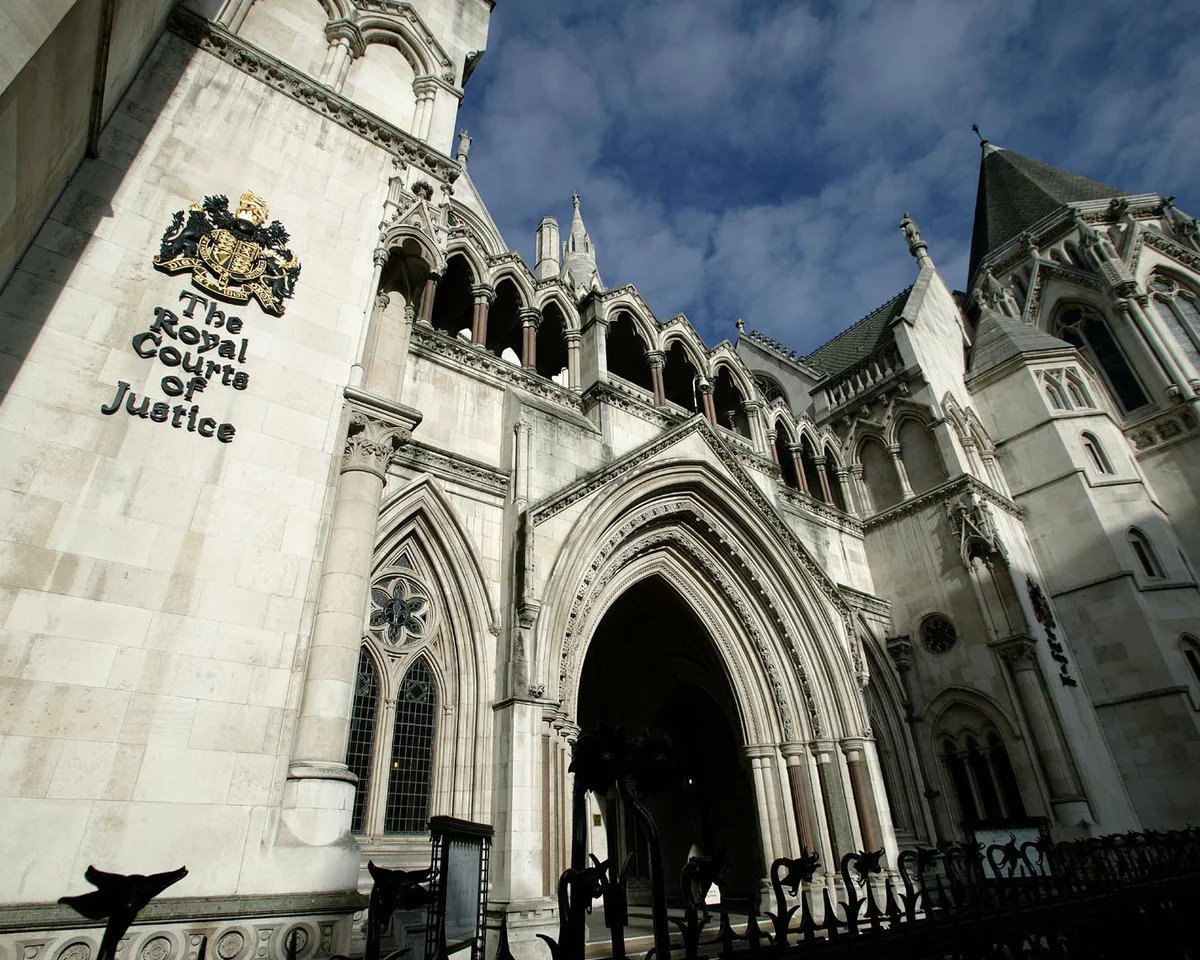
Published: 12 November 2025. The English Chronicle Desk. The English Chronicle Online
Northamptonshire’s police chief constable, Ivan Balhatchet, has been found guilty of contempt of court, with judges set to decide whether he should face imprisonment or a fine. The ruling marks the conclusion of a four-year legal struggle stemming from the wrongful arrest of a woman, highlighting both the persistence of ordinary citizens seeking justice and the accountability of public authorities.
The Court of Appeal issued its judgment on Tuesday, concluding that Northamptonshire Police had been “willfully disobedient” by repeatedly failing to comply with court orders to hand over video evidence to Nadine Buzzard-Quashie, the woman who was arrested in September 2021. Her arrest, which she contested as wrongful, involved three police officers and became the focus of a protracted legal battle over transparency and accountability.
Buzzard-Quashie alleged that she had been physically assaulted during the arrest. According to the judgment, she claimed that she was “thrown to the ground” and “had her face pushed into stinging nettles,” painting a stark picture of the treatment she endured. She requested access to all video recordings of the arrest, including footage from officers’ body-worn cameras. Her requests were repeatedly denied, prompting her to appeal to the Information Commissioner’s Office (ICO), which ordered the police to release the footage. Northamptonshire Police ignored the order. When a county court judge issued a subsequent directive, the force again failed to comply.

At a hearing in October, the police force reversed its position, acknowledging the existence of additional video evidence. The Court of Appeal’s judgment noted that this admission revealed that “all the statements made to the court on behalf of the police force prior to mid-October 2025 were false.”
Three senior judges—Lady Justice Asplin, Lord Justice Coulson, and Lord Justice Fraser—issued a unanimous and highly critical ruling. They emphasised that “misleading and untrue statements … have been made to the court on behalf of the chief constable, both to the county court … and also to the Court of Appeal in relation to the application for permission to appeal and the appeal itself. To list every single statement made on behalf of the chief constable that has proved to be inaccurate over this lengthy period would lengthen this judgment considerably.”
Ivan Balhatchet has served as Northamptonshire’s chief constable since October 2023. The ruling leaves him potentially facing up to two years’ imprisonment or a fine. The former chief constable, Nick Adderley, is facing separate criminal charges unrelated to this case.
Buzzard-Quashie initially represented herself, taking on the force and its taxpayer-funded legal team single-handedly. Her persistence in pursuing the case has now been vindicated. The three judges emphasised the broader significance of the case, noting: “What has occurred in this case concerning the retention, production, refusal to produce and possible deletion of such video footage is a matter of significant concern.”
The appeal overturned a previous decision in which a lower court had refused to find the chief constable in contempt. In their ruling, the judges affirmed that the law allows a chief constable to be held personally liable, with the punishment ranging up to two years in prison or a fine.
Following the judgment, Buzzard-Quashie spoke publicly about her relief and vindication. She said: “Northamptonshire Police acted in an arrogant and high-handed manner by ignoring my requests for documents, as well as the findings of the Information Commissioner’s Office and a county court order. It is astonishing that after four years I am still battling to get a frank, open and honest response about what they did to the evidence around my wrongful arrest and why. I am elated that justice has finally prevailed within the lordships’ judgment, not just for me, but for all of the other little people that have been silenced or obstructed by institutional power. I hope that this judgment, and whatever sanction may follow for the chief constable, serve as an important demonstration that no authority is above the law.”
Marc Livingston, the lawyer representing Buzzard-Quashie at the appeal stage, echoed her sentiments, emphasising the force’s lack of appreciation for its legal obligations. “It is a matter of deep regret that throughout the history of this matter, Northamptonshire Police did not appear to have appreciated the position they were in and the duties they owed to the court and my client,” he said. “It is absolutely astonishing that the scale of their non-compliance only became clear in the two weeks before the appeal hearing, over four years after the incident.”
Northamptonshire Police issued a statement acknowledging shortcomings in handling the case. The force said: “An apology for the issues has already been given in the shape of the chief constable’s witness statement, which has been entered as evidence. We acknowledge we fell short in terms of providing the body-worn footage in a timely fashion and our failure to locate further missing footage when asked. The matter has been referred to the Independent Office for Police Conduct (IOPC).”
The case highlights the challenges faced by individuals seeking accountability from public authorities, particularly when confronting bureaucratic resistance or legal obfuscation. It also underscores the judiciary’s role in enforcing compliance and protecting citizens’ rights against institutional misconduct.
Legal experts observing the case have noted that it sets an important precedent, demonstrating that chief officers of police can be personally accountable for contempt of court if they or their staff provide misleading or false statements. The ruling reinforces the principle that no public authority is above the law and that systemic failures cannot shield senior officials from scrutiny or consequences.
The hearing to decide the chief constable’s punishment is scheduled for 20 November. Observers expect the sentencing to be closely watched, not only by the legal community but also by civil rights advocates and members of the public concerned with police accountability.

Beyond the immediate legal ramifications, the case has wider implications for policing in England. It raises questions about transparency, governance, and the responsibilities of senior officials in upholding legal and ethical standards. The Court of Appeal’s judgment makes clear that repeated failures to comply with legal orders, coupled with misleading statements, represent serious breaches of both law and public trust.
Buzzard-Quashie’s persistence throughout the four-year saga exemplifies the impact an individual can have when challenging institutional authority. By pursuing the case from initial arrest through appeal, she has brought attention to the broader issues of police accountability and citizens’ rights in the UK. Her case is likely to influence policy discussions around record-keeping, transparency, and the obligations of police forces to comply promptly with court orders.
As the sentencing approaches, all eyes will be on the judiciary’s decision regarding whether Balhatchet should face imprisonment or a fine. The outcome will send a strong message about the seriousness of contempt of court and the accountability of senior public officials. Regardless of the specific penalty, the judgment reinforces a fundamental principle: that the rule of law applies to all, and public authorities are not immune from scrutiny when they fail to comply with legal obligations.
Related News:
 Nearly 48,000 Zombie Knives Removed from UK Streets in a Year
 British Grandmother to Return Home After Death Sentence in Bali
 Bar Council urges legal aid for all domestic abuse family cases
 Victim of Catfish Predator Max Hollingsbee Speaks Out: “I Will Always Be Angry He Took My Innocence”
 Madeleine McCann Detectives to Testify Against Woman Accused of Stalking the Family
 Grooming Gang Inquiry Faces Delays Amid Dispute Over Jess Phillips’ Role
 Mother dies after black market weight loss injection
 Young Woman Missed 13 Times by GPs Before Bowel Cancer Diagnosis
 Peterborough Mosques Tighten Security After Attack
 It’s time to come clean on the China spy case
 Five More Prisoners Freed by Mistake in Essex Week
 Rachel Reeves Admits Renting Home Without Required Licence
 Prince Andrew Stripped of Title: Giuffre Family Hails Historic Moment
 Afghan man charged with murder after west London knife attack
 Experts Question HMRC Over Possible Child Benefit Privacy Breach
 Metal Detectors at Stations ‘Would Make Life Impossible,’ Says Minister
 Man Charged Over Cambridgeshire Train Stabbing
 Pregnant UK Teen to Be Freed from Georgian Jail
 Experts Warn on Home Birth Risks, Call for Skilled Midwives
 French Taxi Driver Cleared in David Lammy Theft Case After Fare Dispute
 Just Stop Oil Protesters Convicted Amid Climate Defence Row
 Lammy ‘misinformed’ over Wandsworth prisoner releases
 Met Police Culture Makes Racial Harm ‘Inevitable’
 Newcastle United Lifts Ban on Fan Over Gender-Critical Views
 Jailed UK climate protesters face extremist-style restrictions
 Boris Johnson accused of undermining BBC leadership
 Remaining rebel Labour MPs have whip restored
 Tim Davie resigns as BBC director general amid bias claims
 Second world war veterans honoured as King leads Remembrance Sunday
 How to get help when a child goes missing – call 999 urgently
 ‘Reckless’ cuts to victims’ services will cost more than they save
 NHS trust fined after woman takes life in mental health unit
 How age progression images help trace missing people
 Leading doctors issue warning amid ‘bad’ flu season
 South Korea’s Jeju Island Faces Rising Tide of Illicit Drugs
 Victims’ commissioner Baroness Newlove dies aged 63
 ‘Fake Admiral’ Sparks Outrage at Remembrance Event
 Couple Win Damages Over Arrest Linked to WhatsApp Chat
 UK Asylum Overhaul Sparks Debate Over Human Rights and Deportations
 UK Asylum Reforms: Temporary Refugee Status and Faster Deportations
 Mum Calls for New Licence Rules After Teen Road Death
 Paralegal Fired After Exposé on Illegal Worker Scam
 Dan Wootton Rejects Catfishing Allegation in Court
 Mother Watches in Horror as Teen Daughter Dies on Tracks
 Convicted Killer Challenges Vegemite Ban Behind Bars
 Newport Man Left Injured After Electric Bike Collision
 Court to Hear Challenge to Wimbledon Expansion Plan
 Liverpool Council ‘Failed to Respond’ Before Fatal Flood
 Serial Rapist and Former Cop Found Guilty Again
 Podcaster Faces Abuse Charges Over Controlling Behaviour
 Inside the Helpline Protecting Missing Children in the UK
 DWP to Reassess Hundreds of Thousands in Carer Allowance Scandal
 Gardener Guilty of Brutal Attack on Teacher Partner
 Sudanese Family Vows to Stay After Racist Graffiti
 Man Arrested Over Manchester Synagogue Terror Attack
 Second homes curbs quashed in Gwynedd legal ruling
 Virgin Media Fined £23.8m Over Telecare Safety Failures
 Twelve Prisoners Released in Error, Two Still Missing
 Targeted Attack in Bury Sparks Murder Investigation as Community Awaits Justice
 Merseyside Police Helicopter Crew Cleared After Low-Altitude Pursuit of Suspect
 Northern Ireland Faces Fears of Prolonged Race Riot “Permacrisis”
 No Evidence Found to Substantiate Alleged Rape in Oxfordshire Churchyard, Police Confirm
 Massive London Poundland Fire Engulfs High Street
 Children to Learn Local History in Major Curriculum Overhaul
 UK Bans Fake Numbers: Scammers Lose Their Trick
 Prince William Plants Trees with Brazil’s Nature Heroes
 Kent village told to remove flags before Christmas lights go up
 King Charles to Lead Nation in Remembrance Sunday Service
 Son Reveals UK Couple in Iran Resort to Hunger Strike for Help
 Peers Flood Assisted Dying Bill with 942 Amendments
 Rio Raid’s Death Toll Raises Questions About Gang Impact
 Charlotte Raids: 130 Arrested in Major Immigration Sweep
 ‘Traumatic Wait’: Northern Ireland Women Face Breast Cancer Delays
 Commuters warned as yellow snow and ice alert hits Northern Ireland
 Coffins Now Too Large to Cremate Amid Rising Obesity Crisis
 Most Tories Expect to Support a Farage-Led Government
 Labour MP claims devolution bill is ‘blatant discrimination’ against Cornwall
 Fibromyalgia Patients Struggle as NHS Fails to Provide Care
 Search underway for British man overboard off Tenerife
 Prince George Helps Father at London Homelessness Charity