Published: 12 November 2025. The English Chronicle Desk. The English Chronicle Online
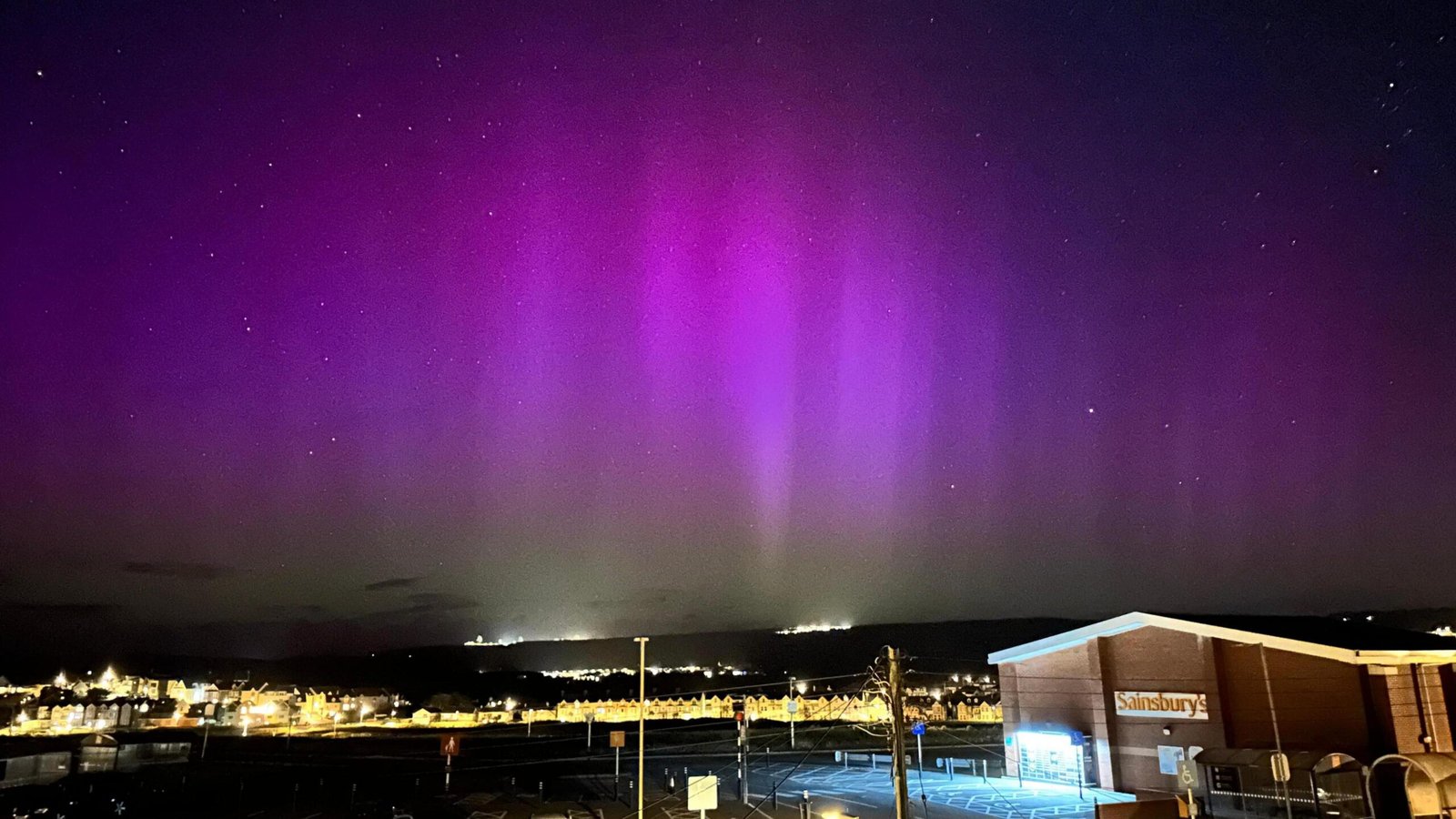
The Northern Lights are set to dazzle parts of the UK this week, with a potential “severe” geomagnetic storm expected to increase the likelihood of auroral displays. Stargazers may be treated to glimpses of the Aurora Borealis on Wednesday night, with the spectacle possibly extending into Thursday morning.
This marks the second time in a week that the natural phenomenon has been predicted to appear over the UK, following sightings on Tuesday night across northern regions of the country. The Met Office confirmed on social media: “Aurora possible tonight! Most likely across northern Scotland but perhaps further south across Northern Ireland, England and Wales, although widespread cloud in these areas will likely limit any sightings.”

Experts say the best viewing opportunities will be in northern Scotland, although clear skies and low light pollution in more southern areas could also offer lucky observers the chance to witness the spectacle. The Northern Lights are generally most visible within the auroral oval, a band of light that encircles Iceland and the polar regions, although strong geomagnetic activity can push the phenomenon further south.
The current auroral activity is linked to three coronal mass ejections (CMEs) expected to reach Earth between Tuesday and Thursday. CMEs are bursts of solar plasma and magnetic fields that travel millions of kilometres per hour. When these particles interact with Earth’s magnetic field, they can trigger geomagnetic storms, which in turn generate the vivid displays of light known as the Northern Lights.
The British Geological Survey explains that the colours of the aurora depend on the molecules affected in Earth’s atmosphere. Oxygen and nitrogen interact with the incoming solar particles to produce a range of hues including blues, greens, pinks, yellows, and reds. On Tuesday night, pink and green rays were reportedly seen over St Mary’s Lighthouse in Whitley Bay, North East England.
Visibility of the phenomenon, however, is contingent on several factors, including cloud cover, light pollution, and the moon’s brightness. Observers are advised to find dark, open spaces away from city lights for the clearest views. Remote locations with an unobstructed horizon provide the best conditions to experience the full grandeur of the aurora.

Photographers looking to capture the spectacle are encouraged to plan carefully. The Royal Photographic Society recommends aiming for a windless, clear night and choosing a location with minimal light interference. Creative foregrounds such as trees or lakes can enhance photos, and the use of additional lighting like strobes or LED lamps can bring out details in the landscape.
The Met Office notes that auroral activity tends to peak around the Equinoxes and Solstices, with March and April or September and October being particularly favourable months. However, strong solar activity can create exceptional viewing opportunities outside these periods, allowing lucky skywatchers to witness the awe-inspiring natural display even in the UK’s higher latitudes.
With conditions appearing favourable this week, astronomers and amateur stargazers alike are urged to look to the skies for what promises to be a rare and unforgettable display of the Northern Lights.
Related News:
 Northern Lights May Illuminate UK Skies Amid Strong Solar Storm
 How Bringing Forests Into Preschools Boosts Children’s Health
 Critically Endangered Spider Rediscovered in UK After 40 Years
 Biggest Supermoon of the Year to Dazzle Sky on Wednesday
 UK Bans Fake Numbers: Scammers Lose Their Trick
 England Curriculum Review Recommends Major Changes
 Mortgages and AI Set to Feature in English Schools
 Experts Urge Legal Right to Timely Cancer Care
 Patients to Test Health at Home to Ease NHS Winter Pressure
 One of world’s last dinosaurs on sale for £3m
 North Sea oil workers must lose weight or face job loss
 No link found between paracetamol in pregnancy and autism
 Government urges schools to ban phones to curb classroom disruption
 UK Greenlights First Small Nuclear Plant in North Wales
 Storm Claudia: Torrential Rain to Batter England and Wales
 Higgs Donates Nobel Medal to His Beloved University
 Cold Snap Brings Snow Risk as Flood Recovery Continues
 Witnesses Recall Tragedy as Couple Die in Flood
 Commuters warned as yellow snow and ice alert hits Northern Ireland
 UK Energy Bills to Rise Slightly in January
 Coffins Now Too Large to Cremate Amid Rising Obesity Crisis
 UK Taskforce Unveils Plan to Streamline Nuclear Reactor Rules
 Thinktank Urges Smaller Hospitals to End NHS ‘Permacrisis’
 NHS paediatric leave parents waiting months for answers
 Ofcom urges platforms to limit abuse and curb online ‘pile-ons’
 Fire Contained at Edinburgh’s Arthur’s Seat After Overnight Battle by Firefighters
 UK Heatwave Continues with Temperatures Soaring, Thunderstorms Forecast Across the Country
 UK Weather: Heat Alerts Extended as Temperatures Set to Reach 30°C This Weekend
 Jaguar Land Rover Extends Production Halt Following Cyber-Attack
 Persistent Offenders Owe Over £700m in Ulez Fines as TfL Cracks Down on Evasion
 Reform UK candidate fined £19,000 after using AI-generated cases to challenge election
 UK Campaigners Launch Bill to Grant Legal Rights to Nature
 Peterborough Mosques Tighten Security After Attack
 Reeves Faces Setback as Labour May Miss Homes Target
 Hospice Cuts Raise Alarm Across England Amid Funding Crisis
 Virgin Trains Moves Closer to Challenging Eurostar Monopoly
 Kate Winslet to Narrate Film Highlighting King’s Environmental Mission
 Green Party Surges Past Labour in Latest UK Poll
 Trump’s UK Ambassador Urges North Sea Drilling to Strengthen US Ties
 Children to Learn Local History in Major Curriculum Overhaul
 French Taxi Driver Cleared in David Lammy Theft Case After Fare Dispute
 Prince William Plants Trees with Brazil’s Nature Heroes
 M&S Profits More Than Halve After Cyber-Attack
 Kent village told to remove flags before Christmas lights go up
 Vibe coding’ named Collins dictionary’s word of the year
 King Charles to Lead Nation in Remembrance Sunday Service
 Britain deploys RAF specialists to assist Belgium with drone threats
 Palace May Restore Hyphen to Andrew Mountbatten-Windsor’s Name
 Millionaires group urge Reeves to introduce wealth tax to ‘lift kids out of poverty’
 Starmer Faces Growing Dissent as Labour MPs Weigh Leadership Challenge
 Shouting Works Best to Deter Gulls, UK Study Finds
 Reeves rejects £1bn plea for NHS redundancy payouts
 Stop using ChatGPT to write speeches, AI minister tells MPs
 New laws to bolster UK’s defences against cyber attacks on NHS, transport and energy
 Son Reveals UK Couple in Iran Resort to Hunger Strike for Help
 Valve Opens the Door for Android Games on Steam
 Working-Class Men with Prostate Cancer Left Behind by NHS
 Peers Flood Assisted Dying Bill with 942 Amendments
 Former Lion Heskey Warns of Shortage of England Strikers
 Global markets drop amid tech sell-off and China slowdown
 Mum Calls for New Licence Rules After Teen Road Death
 Mother Watches in Horror as Teen Daughter Dies on Tracks
 Google Chief Urges Caution: Don’t Trust AI Blindly
 ‘Traumatic Wait’: Northern Ireland Women Face Breast Cancer Delays
 Healthy Habits in Your 30s That Boost Life in Your 70s
 Serial Rapist and Former Cop Found Guilty Again
 Mossmorran Plant Closure Hits Cowdenbeath Hard
 Most Tories Expect to Support a Farage-Led Government
 HS2 woes leave Warwickshire village struggling with pollution
 Bill Murray Terrified Wes Anderson but Became His Closest Collaborator
 Labour MP claims devolution bill is ‘blatant discrimination’ against Cornwall
 Karen Carney Stuns on Blackpool Week, Deserves Strictly Final
 Prisoner 951 Review: arrowing Retelling of Nazanin Zagharz-Ratcliffe
 Millions Face Higher Taxes Under Reeves New Budget
 Delhi’s Toxic Air Crisis Leaves Children Sick and Vulnerable
 Sri Lanka Floods Leave 56 Dead, Dozens Missing
 Fibromyalgia Patients Struggle as NHS Fails to Provide Care
 Search underway for British man overboard off Tenerife
 Virgin Media Fined £23.8m Over Telecare Safety Failures
 Rising Water Bills Lift Troubled Thames Back to Profit