Published: 13 November 2025. The English Chronicle Desk. The English Chronicle Online.
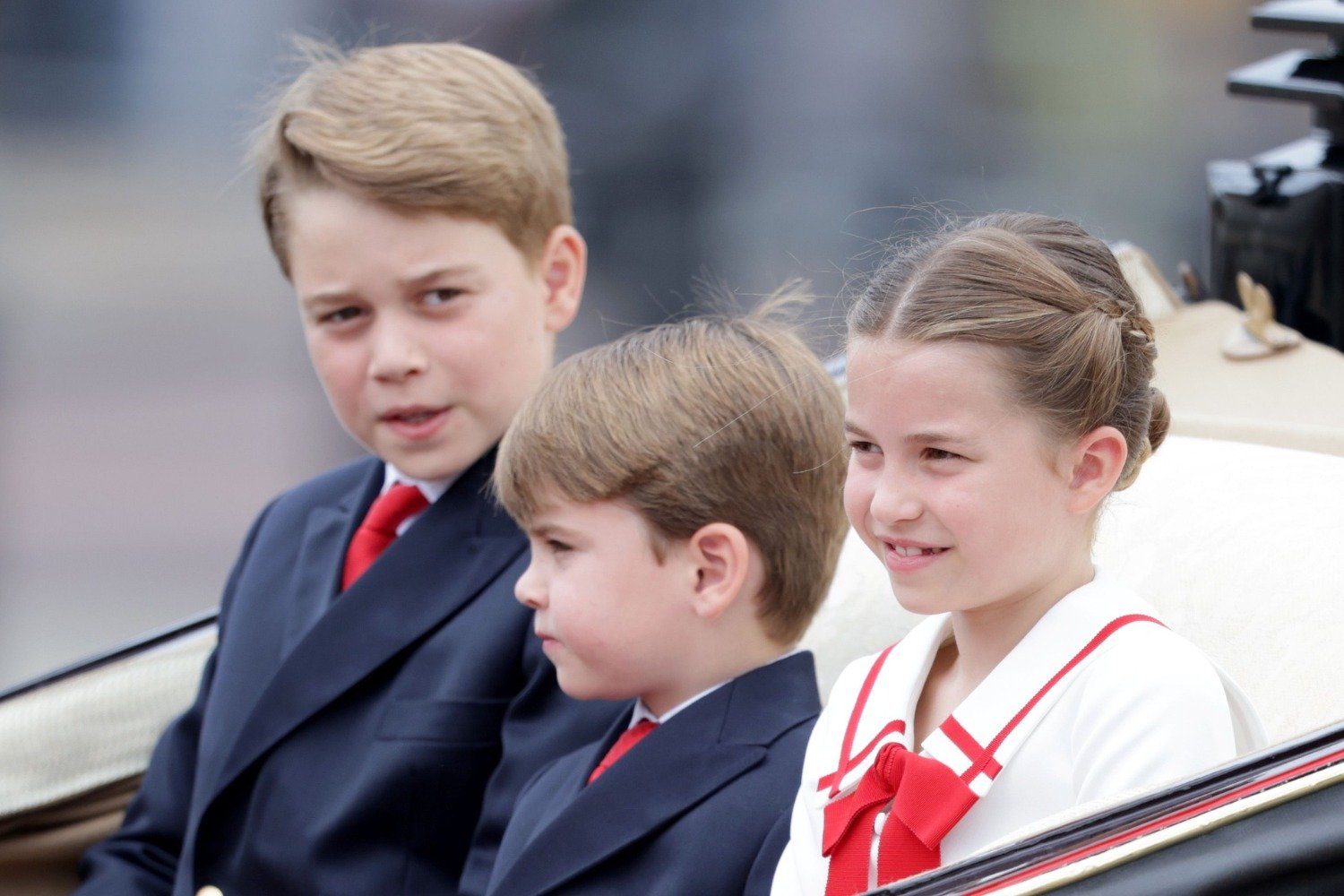
A glance at the Albert Hall’s royal box on Saturday night offered a glimpse of the monarchy’s future. For those observing the evolving Firm, already slimmed down and steadily shrinking, the line-up suggested how the next generation might step into the spotlight. On the back row sat the Duke and Duchess of Edinburgh, while front and centre were the King, the Queen, the Princess of Wales, and Prince George. The occasion was not only a high-profile public event but also a symbolic moment, demonstrating how the royal household is increasingly leaning on its younger members to carry forward tradition and responsibility.
Prince George, attending in his father’s absence as Prince William returned from Brazil, appeared strikingly composed, demonstrating the ease with which he could navigate royal duties even at a young age. At just ten, he seemed remarkably self-assured, quietly assuming a role that, in years to come, could define the monarchy’s public image. His presence underscored the central role the Wales children are expected to play, and highlighted the balance the royal household is attempting to strike between maintaining public visibility and preserving private childhoods.

Behind George were his great aunt and uncle, whose daughter Lady Louise celebrated her 22nd birthday at St Andrews University that same day. Looking further ahead, one can imagine a future in which seats once filled by multiple generations of Windsors may increasingly be occupied by George, Charlotte, and Louis, alongside the children of the Duke and Duchess of Edinburgh. In the long term, these young royals may collectively represent the working core of a streamlined monarchy, reflecting the King’s ongoing vision for a leaner, more efficient institution.
The reduction in the number of official working royals has been a deliberate strategy. The King has repeatedly emphasised the importance of a small, central team capable of fulfilling essential duties while preserving the broader family’s privacy. This approach raises questions about the future of the younger generation: will Prince George, Princess Charlotte, and Prince Louis shoulder the responsibilities of the monarchy alone, or will cousins like Lady Louise and James, Earl of Wessex, step into more formal roles to support them?
The dynamics among the Wales children suggest a potential model of collaboration similar to that of previous generations. Just as Princess Anne and Prince Edward, alongside their late brother Prince Andrew before his withdrawal, have shared patronages, military and sporting duties, and international representation, it is possible that Charlotte and Louis could likewise contribute meaningfully as they mature. Ingrid Seward, editor-in-chief of Majesty Magazine, observes that Princess Charlotte already projects a commanding presence among her siblings, while Prince Louis attracts attention in his own right, hinting at a complementary distribution of roles in the years ahead.
Despite these early indications, it is not yet certain whether Charlotte and Louis will assume full-time working royal responsibilities. Joe Little, managing editor of Majesty Magazine, notes that their participation may be intermittent, supporting the monarchy as needed while enjoying a relatively private life. This model reflects a broader shift from the traditional expectation that all royal children would automatically take on formal duties. In this evolving context, George’s role as the heir apparent remains central, but the nature of support from his siblings could be flexible, allowing the monarchy to maintain visibility without overextending the family.
Meanwhile, the Duke and Duchess of Edinburgh continue to play a vital role, supporting the King and Queen in ceremonial, philanthropic, and charitable work. Their children, Louise and James, may also assume varying degrees of public engagement. Louise, who has shown a keen interest in military and civic responsibilities, participated recently in the St Andrews Regiments’ Day Parade, displaying the composure and discipline associated with traditional royal training. Her experience with the Officers’ Training Corps and expressed interest in diplomacy, law, or the military suggests a natural affinity for public service, even if she is not a full-time working royal.
James, who turns 18 next month, may follow a similar trajectory, though his role is likely to remain supportive rather than central. Unlike the immediate heirs of the Wales family, the children of the Duke and Duchess of Edinburgh occupy a more peripheral position, yet their potential contribution to charitable or ceremonial initiatives should not be underestimated. Their proximity to the throne ensures that they will remain part of the public’s perception of the monarchy while offering flexibility in the allocation of duties among younger generations.
The children of Princesses Beatrice and Eugenie also fall into this category. Sienna, Beatrice’s four-year-old daughter, and Eugenie’s sons, August, four, and Ernest, two, are unlikely to have formal roles, reflecting the modern structure of the royal household. Beatrice and Eugenie have successfully combined professional careers with charitable work, illustrating that active engagement with public life can coexist with private pursuits. Beatrice, as one of the seven Counsellors of State, retains a limited formal role, while Eugenie continues her work with the King’s Foundation. Their children may be influenced by this example, engaging in philanthropy rather than full-time royal responsibilities.
Zara Tindall’s three children—Mia, 11, Lena, seven, and Lucas, four—similarly appear set to live largely private lives. Their mother has never been a working royal, yet the Tindall children are exposed to a philanthropic culture and are likely to participate in charitable activities aligned with their parents’ interests. Seward suggests that while the Tindalls may appear at major occasions, they will remain on the periphery of official duties, embodying a form of royal engagement that balances visibility with privacy.
The monarchy’s careful calibration of duties and visibility reflects a deliberate strategy to modernise the institution while preserving its core traditions. By focusing on a smaller number of working royals, the King ensures that the most senior family members carry the weight of public duties, while younger members have the flexibility to pursue education, careers, and personal development. This approach also mitigates public scrutiny and reduces the operational burden on the household, allowing for a more sustainable model as the family navigates the demands of the 21st century.

Ultimately, the royal family’s strategy hinges on the next generation. Prince George, as heir apparent, will naturally assume a leading role, with Charlotte and Louis positioned to provide complementary support. The Duke and Duchess of Edinburgh, alongside cousins like Louise and James, create a broader framework of potential contributors, capable of reinforcing the monarchy’s public presence when needed. The extended network, including Beatrice, Eugenie, and Zara Tindall’s children, illustrates how the institution balances tradition, duty, and modern flexibility.
Observers agree that the monarchy is increasingly defined by its adaptability. As Little notes, the next generation may operate in a hybrid model, participating in public life where appropriate while enjoying periods of relative normalcy. This evolution reflects both a pragmatic response to contemporary expectations and an acknowledgment that the monarchy must remain relevant to future generations. Prince George and his siblings embody this future, blending duty with modernity, and ensuring continuity in the public’s perception of the royal family.
Saturday night at the Albert Hall, in this context, was more than a ceremonial appearance; it was a rehearsal for the monarchy of tomorrow. In the presence of George, Charlotte, Louis, and their extended family, the audience glimpsed a blueprint for how the next generation of royals will navigate their responsibilities—balancing visibility, philanthropy, and family life in a world where tradition meets modern expectation. While questions remain about which members will ultimately assume working roles, the trajectory is clear: the monarchy is pinning its hopes on George and his contemporaries to carry the institution forward with a renewed sense of purpose and adaptability.
Related News:
 Prince Andrew Stripped of Title: Giuffre Family Hails Historic Moment
 Prince William Plants Trees with Brazil’s Nature Heroes
 Oprah enjoys Meghan’s jam on English muffins
 Earl of Yarmouth Faces £1.3m Legal Bill Over Family Estate
 Second world war veterans honoured as King leads Remembrance Sunday
 The Debate Over Princess Beatrice and Eugenie’s Royal Status Intensifies
 Princess of Wales Hosts Festive Christmas Service at Abbey
 Princess of Wales Hosts Carol Service Celebrating Love for All
 107-Year-Old Veteran Credits Whiskey for Longevity
 What Now for the Queen’s Childhood Playhouse After Andrew’s Eviction?
 Prince Harry Cleared of Bullying Allegations Amid Charity Dispute Fallout
 Sussexes Warn on Children’s Phone Use Echoing Princess of Wales
 Prince Andrew May Leave Royal Lodge for Frogmore Cottage
 King Charles Heckled Over Prince Andrew-Epstein Links
 Peterborough Mosques Tighten Security After Attack
 Prunella Scales: From Fawlty Towers Icon to Beloved Canal Explorer
 Hospice Cuts Raise Alarm Across England Amid Funding Crisis
 UK Woman Loses Child Benefit After Booking Flight She Never Took
 Kate Winslet to Narrate Film Highlighting King’s Environmental Mission
 UK launches search for first-ever ‘town of culture’ to highlight overlooked areas
 Army Officers Orders to Cut Ties with Men-Only Clubs
 Children to Learn Local History in Major Curriculum Overhaul
 Hollywood Is an Industry of Looney Tunes Pretending to Be Normal
 Experts Warn on Home Birth Risks, Call for Skilled Midwives
 The Lowry Hotel: Manchester’s Iconic Five-Star Retreat
 World Whisky Tour: 9 Global Gems
 Greta Thunberg Backs Student Facing UK Visa Revocation
 Kent village told to remove flags before Christmas lights go up
 Newcastle United Lifts Ban on Fan Over Gender-Critical Views
 Jailed UK climate protesters face extremist-style restrictions
 Boris Johnson accused of undermining BBC leadership
 King Charles to Lead Nation in Remembrance Sunday Service
 How to get help when a child goes missing – call 999 urgently
 ‘Reckless’ cuts to victims’ services will cost more than they save
 From Lego to Pokémon: How Adults Are Driving UK Toy Market Growth
 UK Faces Arctic Blast as Polar Vortex Disruption Brings Heavy Snow
 Seven Conditions That Automatically Qualify You for a Free Bus Pass
 Shouting Works Best to Deter Gulls, UK Study Finds
 Reeves rejects £1bn plea for NHS redundancy payouts
 UK toy market enjoys bumper year as ‘kidults’ fuel demand
 Farage appointee to lead Reform youth accused of anti-British views
 Politics latest: Starmer ‘will fight any leadership coup’ as Streeting denies attempt to oust Labour PM
 PM Condemns Leaks, Vows Loyalty to Ministers and Stability
 Son Reveals UK Couple in Iran Resort to Hunger Strike for Help
 South Korea’s Jeju Island Faces Rising Tide of Illicit Drugs
 Working-Class Men with Prostate Cancer Left Behind by NHS
 Pat Butcher Returns to EastEnders in Touching Dementia Storyline
 Princess Anne Takes the Controls in Airbus Flight Simulator
 Australia Mourns Paralympic Champion Paige Greco
 UK Asylum Overhaul Sparks Debate Over Human Rights and Deportations
 UK Asylum Reforms: Temporary Refugee Status and Faster Deportations
 Mum Calls for New Licence Rules After Teen Road Death
 From War to Wales: Teen Innovator Eyes Net Zero Future
 Mother Watches in Horror as Teen Daughter Dies on Tracks
 Agency Workers Vote to Join Picket Lines Amid Dispute
 Irish Hero Parrott Says Goal Brought First Tears in Years
 Seven Countries, One Winner: Europe’s Best Christmas Market
 ‘Traumatic Wait’: Northern Ireland Women Face Breast Cancer Delays
 Commuters warned as yellow snow and ice alert hits Northern Ireland
 Arctic Blast Hits UK as Snow and Ice Warnings Trigger Travel Disruption
 Healthy Habits in Your 30s That Boost Life in Your 70s
 Woman Meets Boy Whose Life She Saved with Kidney
 Raccoons Could Become America’s Next Pet
 Australia to Ban Social Media for Kids Under-16 Starting December
 Kate Forbes: Motherhood Harder Than Politics
 Coffins Now Too Large to Cremate Amid Rising Obesity Crisis
 Reeves to Crack Down on Benefit Fraud While Lifting Two-Child Limit
 Labour MP claims devolution bill is ‘blatant discrimination’ against Cornwall
 Vicki Fears Losing Motability Car
 Planned Palestinian Flag Raising at Belfast City Hall Faces Delay Amid Legal Concerns
 Delhi’s Toxic Air Crisis Leaves Children Sick and Vulnerable
 Residents Face £3.6m Bill for Unsafe Kirkby Flats
 Families wait in agony for missing after Hong Kong tower blaze
 Fibromyalgia Patients Struggle as NHS Fails to Provide Care
 Scotland Gains 33 New Towns – Life in Growing Communities
 Machynlleth High Street Left Without Christmas Lights
 A Colourful Cultural Escape in Mexico’s Querétaro
 Search underway for British man overboard off Tenerife
 Virgin Media Fined £23.8m Over Telecare Safety Failures
 Pavarotti statue frozen in Italian ice rink sparks backlash