Published: 14 November 2025. The English Chronicle Desk. The English Chronicle Online.
The UK government has confirmed that the upcoming BBC charter review will closely examine political appointments to the broadcaster’s board, following growing concerns that such placements have eroded public trust and threatened the corporation’s reputation for independence. Culture Secretary Lisa Nandy said the government recognises that confidence in the BBC has been shaken in recent months and that the review for the next decade will address these issues head-on.
Nandy made the remarks during an interview on BBC Radio 4’s Today programme amid intense scrutiny of the BBC’s internal governance and the fallout from a series of controversies over accusations of political bias. The broadcaster has been under mounting pressure after claims that Robbie Gibb, a board member and former communications director for Theresa May, played an outsized role in pushing political narratives within the corporation, raising questions about the neutrality of its leadership.

Nandy said there is widespread concern that political appointments, including Gibb’s, have damaged trust in the BBC’s impartiality. She emphasised that the charter review provides an opportunity to reassess how these appointments are made and whether the current structure sufficiently protects the broadcaster from political influence. According to Nandy, the government intends to set clear terms to safeguard editorial independence and ensure the BBC remains a trusted public institution.
The controversy surrounding the BBC intensified after the resignation of Director General Tim Davie and Deborah Turness, the head of BBC News. Their departures followed the leaking of a memo written by Michael Prescott, a former independent adviser to the corporation’s editorial guidelines and standards committee. Prescott accused the BBC of a series of editorial failures, including what he described as liberal bias on politically sensitive issues such as gender identity and the Israel-Gaza conflict. His memo also highlighted concerns about the editing of footage of a speech by US President Donald Trump in a Panorama programme, which later prompted Trump to threaten a $1bn lawsuit against the organisation.
The BBC has acknowledged errors in the editing process and apologised to Trump, though it rejected demands for compensation. It also agreed not to rebroadcast the controversial Panorama episode. The programme in question, which aired a week before the US election, included a spliced clip that suggested Trump told supporters, “We’re going to walk down to the Capitol and I’ll be there with you, and we fight. We fight like hell.” The words were taken from separate sections of his speech delivered nearly an hour apart, raising serious questions about accuracy and context.
This controversy sparked deeper examination of the BBC’s internal processes and the role played by senior figures, including Gibb. Some staff have claimed that Gibb not only supported the memo’s claims of political bias but also helped facilitate Prescott’s appointment to his advisory role. These revelations prompted calls from MPs and BBC employees for Gibb’s removal from the board. Both he and Prescott have since been summoned to give evidence to the culture, media and sport committee.
During an online meeting attended by Davie before his resignation, several BBC employees directly challenged Gibb’s presence on the board. They argued that political appointees should have no role in influencing editorial decisions, warning that such involvement undermines the BBC’s longstanding commitment to impartiality and erodes the trust of its audience. Staff members expressed concern that the escalating political pressure could have a chilling effect on journalism and weaken public confidence at a time when trust in media institutions is already fragile.
Nandy, asked about Gibb’s position, said she shares the concerns raised by staff and viewers alike. She reiterated that the government intends to consider whether political appointments contribute to the perception of bias and whether reforms are necessary to restore confidence. She added that the BBC charter review will be wide-ranging, designed to ensure that the corporation operates with transparency, independence and accountability.
The issue has gained traction during a turbulent period in UK politics, where accusations of media manipulation and partisanship have become increasingly common. The timing of the resignations, the leaked memo and the looming legal challenge from the US president has intensified pressure on the government to respond with decisive action. Nandy’s comments indicate that the government intends to use the charter review not merely as a routine update but as an opportunity to address systemic concerns about political interference.
However, critics caution that simply reviewing political appointments may not be enough to restore confidence. Some argue that the BBC’s broader governance structure needs reform to make its appointment processes more transparent and independent from government influence. Others emphasise that any reform must ensure that the broadcaster retains both accountability to the public and the independence necessary to produce robust journalism.

The controversy has also sparked discussion within the wider media industry about how public service broadcasters can remain independent in an increasingly polarised political climate. The rise of social media platforms, the fragmentation of news audiences and the spread of misinformation have added to the challenges facing legacy media organisations. In this context, the BBC’s role as a publicly funded, impartial broadcaster remains crucial, and concerns about its independence carry significant implications.
Despite the turmoil, Nandy expressed confidence that the BBC will emerge stronger through the review process. She acknowledged that safeguarding the corporation’s integrity is essential not only for its future but for the health of the UK’s democratic discourse. She said the government remains committed to ensuring the BBC continues to serve audiences across the UK and worldwide with quality journalism that is free from political pressure.
As the BBC prepares for a decade-defining review, the debate over political appointments is likely to remain at the forefront of public attention. With both Gibb and Prescott called to testify before MPs and with ongoing pressure from staff and media watchdogs, the outcome of the inquiry could reshape the governance of one of the world’s most influential broadcasters.
Related News:
 Tasers Introduced in UK Prisons to Combat Rising Violence and Protect Staff
 Peter Kyle Condemns Nigel Farage Over Reform UK’s Promise to Scrap Online Safety Act
 David Lammy Faces Possible Legal Challenge Over Foreign Office Secondment Scheme
 Ministers Accused of Defamation Over Palestine Action Ban and Mass Arrests
 Police Advised to Disclose Ethnicity of Suspects in High-Profile Cases
 Sally Rooney Pledges BBC Royalties to Support Palestine Action Despite UK Terror Ban
 UK’s First Transgender Judge Seeks Rehearing of Supreme Court Ruling on Biological Sex
 Government Signs Deal with Iraq to Return Illegal Migrants in Latest Bid to Deter Small Boats
 Migrant Hotel Chaos as Councils Consider Legal Action to Ban Asylum Seekers
 DWP Launches Independent Review of Post Office Staff Prosecutions
 Angela Rayner Admits Underpaying Stamp Duty on £800,000 Seaside Flat
 Angela Rayner Faces Scrutiny as Stamp Duty Row Deepens
 Shabana Mahmood Faces Daunting Challenges as New UK Home Secretary
 Tanni Grey-Thompson Faces Abuse Over Opposition to Assisted Dying Bill
New Home Secretary Hosts International Talks as Small-Boat Migrant Crossings Surge
Tanni Grey-Thompson Faces Abuse Over Opposition to Assisted Dying Bill
New Home Secretary Hosts International Talks as Small-Boat Migrant Crossings Surge
 Police Watchdog Calls for End to Recording Non-Crime Hate Incidents
 Charlie Kirk Killing Used to Mobilise UK’s Largest Far-Right Rally in Decades
 First “One In, One Out” Deportation Flight Departs Without Migrants Amid Legal Challenges
 Hillsborough Law to Hold Public Officials Accountable, Promising Jail for Serious Misconduct
 Labour Urged to Rethink Growth Strategy as Top Economist Warns of Far-Right Surge
 Corbyn and Sultana Clash Over Membership Portal as Divisions Surface in New Leftwing Party
 Commons Speaker Warns UK Parliament Vulnerable to Foreign Espionage After China-Linked Case Dropped
Mahmood Pledges Reform of Modern Slavery Laws After Court Blocks Deportation Appeal
Commons Speaker Warns UK Parliament Vulnerable to Foreign Espionage After China-Linked Case Dropped
Mahmood Pledges Reform of Modern Slavery Laws After Court Blocks Deportation Appeal
 Migrants in UK May Need to Contribute or Face Removal, Home Secretary Signals
 Jailed Georgian Opposition Leaders Warn UK of Iranian Links to Ruling Party
 UK Police to Gain New Powers to Manage Repeated Protests, Home Office Announces
 MPs’ pay watchdog seeks to give public greater voice in how politicians are funded
 Digital ID Plans Ignite Debate Over £600m Treasury Tax Boost and Privacy Concerns
 Boris Johnson Breached Rules on Post-Office Business Contacts
 Shabana Mahmood Warns Border Failings Are Eroding Trust in States
 Lucy Powell urged ministers to reconsider costly legal case for Labour donor’s firm
 Starmer Accused of Creating ‘Toxic Downing Street’
 Tories Push to Dilute Labour’s Workers’ Rights Bill
 China Spy Case Hearing Reveals Key Gaps in Prosecution
 It’s time to come clean on the China spy case
Johnson Approved China’s London ‘Super-Embassy’ in 2018
It’s time to come clean on the China spy case
Johnson Approved China’s London ‘Super-Embassy’ in 2018
 Rachel Reeves Admits Renting Home Without Required Licence
 Experts Question HMRC Over Possible Child Benefit Privacy Breach
 Phillipson urges careful review of gender recognition guidance
 French Taxi Driver Cleared in David Lammy Theft Case After Fare Dispute
 Met Police Culture Makes Racial Harm ‘Inevitable’
 Remaining rebel Labour MPs have whip restored
 Tim Davie resigns as BBC director general amid bias claims
 Palace to reinstate hyphen in Andrew’s surname
 Victims’ commissioner Baroness Newlove dies aged 63
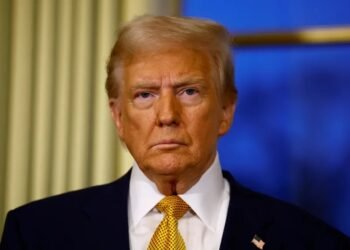 BBC Apologises to Trump but Rejects $1bn Compensation Claim
 Major Rent Reform Ends No-Fault Evictions in England
 Peers Flood Assisted Dying Bill with 942 Amendments
 Your Party Turmoil Deepens Over Withheld Donations
 UK Unveils Fast-Track Deportation and Asylum Overhaul
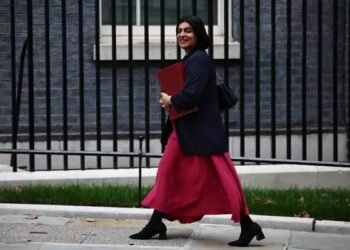 UK Asylum Overhaul Sparks Debate Over Human Rights and Deportations
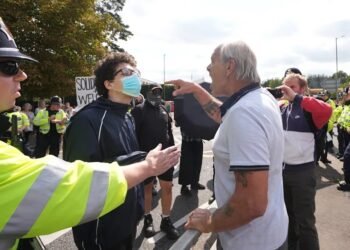 UK Asylum Reforms: Temporary Refugee Status and Faster Deportations
 Mahmood Defends Tough Overhaul of UK Asylum System
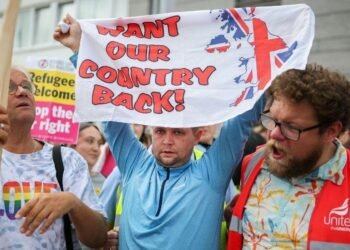 Scottish Ministers Express Alarm Over UK Asylum Reforms
 Westminster Advances Legacy Bill Amid Criticism
 Minister Defends Tough New Asylum Reform Plan
 UK Net Migration Falls Sharply After ONS Revisions
 Peers Get Extra Time to Debate Assisted Dying Bill
 UK Must Act with Courage and Clarity on Israel-Palestine Conflict, Says Foreign Affairs Committee Report
 Targeted Attack in Bury Sparks Murder Investigation as Community Awaits Justice
 Radioactive Leak at UK’s Nuclear Warhead Base Sparks Outcry Over Safety and Secrecy
 Merseyside Police Helicopter Crew Cleared After Low-Altitude Pursuit of Suspect
 Is the UK Ready to Put Boots on the Ground in Ukraine? Assessing Military Capacity and Challenges
 Police Scotland Spends £500,000 Compensating Officers Over Trump Visit
 Urgent Action Needed on Windrush Compensation as Survivors Speak of “Waiting to Die”
 TfL Invites RMT to Resume Talks as London Tube Strikes End
 Nigel Farage Unveils Controversial Immigration and Welfare Plans at Reform UK Press Conference
 Ed Miliband Warns UK Government on X, Citing Elon Musk as a “Dangerous Influence”
 No Evidence Found to Substantiate Alleged Rape in Oxfordshire Churchyard, Police Confirm
 UK border officers deployed to Balkans to tackle migrant smuggling
 UK MPs warn of repeat riots over online misinformation
 Trump’s UK Ambassador Urges North Sea Drilling to Strengthen US Ties
 Millionaires group urge Reeves to introduce wealth tax to ‘lift kids out of poverty’
 Reeves rejects £1bn plea for NHS redundancy payouts
 PM Condemns Leaks, Vows Loyalty to Ministers and Stability
 Trump Urges Herzog to Grant Netanyahu Full Pardon
 Trump Deploys DHS to Charlotte in Major Arrest Operation
 Serial Rapist and Former Cop Found Guilty Again
 Most Tories Expect to Support a Farage-Led Government
 Virgin Media Fined £23.8m Over Telecare Safety Failures