Published: 21 November 2025 Friday
The English Chronicle Desk
The English Chronicle Online
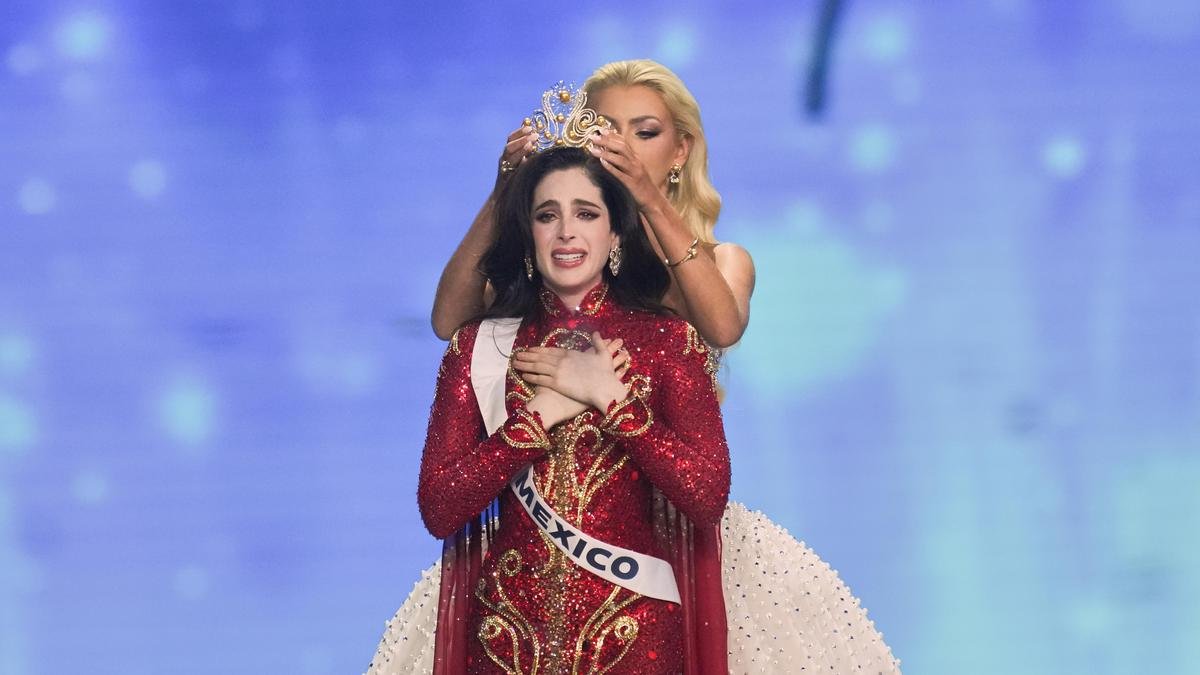
Miss Mexico Fatima Bosch has been crowned Miss Universe in a glimmering ceremony in Bangkok, bringing a dramatic and controversy-ridden pageant season to an unforgettable close. The 25-year-old model and social advocate stunned audiences with her poise and confidence, but her victory arrives under an unusually heavy cloud of scandals, disputes with organisers, and a global conversation about the future of traditional beauty competitions.
Bosch’s win has been far from a straightforward triumph. Earlier in November, she made international headlines after abruptly walking out of a Miss Universe event when a senior Thai official publicly berated her in front of dozens of contestants. The incident reportedly unfolded in a closed-door rehearsal where the official scolded Bosch over a minor schedule misunderstanding. When several contestants attempted to defend her, the official threatened disqualification for anyone who continued to speak up. Bosch, deeply shaken and unwilling to tolerate the treatment, left the venue, sparking widespread debates about bullying, abuse of authority, and the mental pressures placed on pageant participants. Her walkout quickly went viral, becoming one of the season’s most defining moments.

The pageant was already under intense scrutiny, and the controversy only intensified a week later. Two judges resigned unexpectedly, one of whom accused organisers of exerting undue influence and manipulating outcomes behind the scenes. Social media erupted with speculation about rigging, internal power struggles, and tension between pageant leadership and national directors. It was the kind of scandal that many had suspected for years but rarely saw acknowledged so openly.
The Miss Universe Organisation attempted to project calm, issuing carefully worded statements promising transparency and insisting that the judging process remained fair and independent. But the dual controversies magnified growing concerns about the relevance of beauty pageants in a rapidly changing world. Once celebrated cultural spectacles with massive global audiences, pageants have witnessed steadily declining viewership and diminishing influence. Critics say modern expectations around diversity, empowerment, and gender equality have outpaced older pageant formats, which still focus heavily on physical appearance despite rebranding efforts. Supporters, however, argue that the platforms remain crucial for philanthropy, cultural representation, and female leadership, and that contestants like Bosch exemplify a new generation of outspoken, socially conscious participants.
Against this tense backdrop, Bosch’s coronation instantly divided public opinion. When her name was announced, the Bangkok arena erupted in cheers, but online reactions were far more mixed. Across Mexico, widespread celebrations broke out, with many praising her courage, resilience, and refusal to accept mistreatment from officials. Fans and former titleholders applauded her walkout as a moment of principled defiance that set a new standard for how contestants should be treated. They called her victory a symbolic triumph not only for Mexico but for all women who choose dignity over compliance.

At the same time, skeptics questioned whether the organisation had awarded her the crown to ease public backlash and soften the earlier scandal. Some viewers argued that Bosch benefited from the heightened media attention surrounding the controversies, while others accused the organisers of seeking to rehabilitate their global image by crowning the season’s most talked-about contestant. The debate gained traction on social media, with discussions ranging from the fairness of the judging to whether beauty pageants should evolve more radically, or even be phased out altogether.
Miss Thailand Praveenar Singh finished as first runner-up, receiving a warm response from the home audience. Despite the controversies surrounding the organisation, she maintained a poised, gracious presence throughout the competition. Miss Venezuela Stephany Abasali secured the third-place position, followed by Miss Philippines Ma Ahtisa Manalo and Miss Cote d’Ivoire Olivia Yace, both of whom delivered strong performances and remained fan favourites. Their placement rounded out a top five widely regarded as among the season’s most competitive in recent years.
In her first remarks as Miss Universe, Fatima Bosch acknowledged the turbulence of the past month, saying that the experience had strengthened her resolve and deepened her sense of purpose. She spoke about her commitment to advocating for mental health awareness, women’s rights, and the protection of indigenous communities in Mexico. Without directly referencing the controversies, she emphasised that leadership sometimes means “standing alone in uncomfortable moments” and encouraged young women worldwide to speak up even when afraid.

Her comments resonated with thousands of supporters who viewed her journey as a powerful message about respect, self-worth, and courage in the face of institutional pressure. Over the coming year, Bosch is expected to travel extensively for charitable campaigns, media appearances, and international collaborations. Whether her reign will help repair the struggling reputation of the Miss Universe Organisation remains to be seen, but her presence has already injected new relevance and conversation into a brand attempting to reinvent itself.
For the organisers, however, the work is only beginning. Analysts note that the controversies surrounding this year’s pageant reflect deeper systemic challenges. The combination of public criticism, internal disputes, and declining viewer engagement has forced the organisation to confront uncomfortable questions about governance, transparency, and its place in contemporary culture. Calls for structural reforms have grown louder, with some demanding independence in judging, others urging the adoption of more inclusive standards, and many insisting that contestants’ well-being must become a top priority.
Yet amidst all the chaos, Fatima Bosch’s victory stands as one of the most memorable in the pageant’s long history. Whether celebrated as a deserved win or scrutinised as a strategic decision, her coronation has undeniably reshaped public conversation around Miss Universe. Her journey – marked by conflict, resilience, and ultimately triumph – may influence how the next generation of contestants navigates the often unseen pressures of the global pageant industry.
As global audiences continue to discuss the dramatic events surrounding her rise, one thing is certain: Fatima Bosch has become more than just a beauty queen. She is now a symbol at the intersection of activism, integrity, and cultural change, stepping into her new role with the world watching more closely than ever.
Related News:
 Director Michael Caton-Jones Reflects on Career and Beginnings
 Putin Intensifies Territorial Demands Before US Talks
 Pavarotti statue frozen in Italian ice rink sparks backlash
 A New Wrestling Revolution: Fox Nation Teams with Hulk Hogan and Eric Bischoff for Groundbreaking League
 Alan Davies Criticises England Flag Displays and Patriotism
 Fabio Wardley stuns Joseph Parker to earn Usyk title shot
 US Super-Rich Are Draining Planet’s Safe Climate Space
 Charlie Kaufman: They told me Being John Malkovich would never get made
 Posthumous books are messy and fraught – but Virginia Giuffre’s gives her a voice
 UK Charters Emergency Flights to Evacuate Britons from Jamaica
 Top Christmas Books Reads: Classics to Cozy Romcoms
 Mikie Sherrill Elected New Jersey’s Governor in Key Win
 Who is Rama Duwaji? What Zohran Mamdani’s wife has said about Gaza and ICE as he’s elected NYC mayor
 Britain deploys RAF specialists to assist Belgium with drone threats
 US Senate Passes Funding Bill to End Historic Shutdown
 BBC’s Tim Davie to Address Staff Amid Trump $1bn Threat
 Thailand Suspends Cambodia Border Peace Deal Amid Tensions
 Six Dead as Super Typhoon Fung-wong Hits the Philippines
 VAR Must Rein Its Neck In to Save Football’s Spirit
 From Lego to Pokémon: How Adults Are Driving UK Toy Market Growth
 Mary Earps’s Manchester United Return Faces Mixed Reception
 David Szalay’s ‘Flesh’ Wins 2025 Booker Prize
 Trump Claims Victory as Longest Shutdown Ends
 A Local Chef’s Guide to Iconic Boston Clam Chowder
 Fog Aids Russian Forces in Deep Push into Pokrovsk
 Hitler’s DNA Confirms He Truly Had Only One Testicle
 US Justice Department Files Lawsuit Against California Over Partisan Voting Maps
 Switzerland Rolls Out Charm Offensive to Cut Trump’s 39% Tariffs
 Bataclan Anniversary: France Remembers but Jihadist Danger Lingers
 Israel Confirms Returned Hostage as Meny Godard
 December Run-Off in Chile as Election Produces No Winner
 Zelenskyy Signs Fighter Jet Deal Amid Russian Drone Attacks
 Orban Says Ukraine Has ‘No Chance’ as EU Support Continues
 UN Security Council Approves Trump’s Gaza Peace Plan
 Why Russian Liberals Push Strongly Pro-Israel Narratives
 Israeli Strike Kills 13 Near Palestinian Camp in Lebanon
 Zelensky Meets US Envoy in Turkey to Push Ukraine Peace Talks
 Congress Approves Release of Epstein Files, Trump Expected to Sign
 Cristiano Ronaldo Joins Trump, Bin Salman at State Dinner
 Shadow Fleet at Sea: Europe’s Battle Against Illicit Oil Shipping
 Haiti Qualifies for World Cup Despite Coach Never Visiting Country
 Deadly Russian Strikes Hit Western Ukraine, 20 Killed in Ternopil
 Rama Rebukes Mahmood for Targeting Albanian Families
 Russian Vessel Used Lasers on RAF Pilots, UK Claims
 MP Offers Seat to Help Burnham Challenge Starmer
 Scotland Fans Celebrate Historic World Cup Qualification
 Pentagon Officials in Ukraine to Discuss War End
 Ukraine Peace Plan: Zelensky Ready for Dialogue
 Vietnam Battles Deadly Floods as Rains Continue
 Australia to Ban Social Media for Kids Under-16 Starting December
 UPS Plane Engine Detaches Before Deadly Crash
 TikTok Star Jessie Yendle Mocked by KFC
 WhatsApp Messages Expose Nathan Gill’s Bribery
 South African Women Call Purple Protest Over Gender Violence
 Venezuela Threatens Nobel Winner Machado with Fugitive Status
 At Least Three Dead in Bangladesh Earthquake
 Texas Governor Faces Lawsuit From CAIR
 Sony, Warner, Universal Sign AI Music Deals With Klay
 Mamdani’s Vision: Affordable, Democratic Socialism
 Chef Skye Gyngell, Slow Food Pioneer, Dies Aged 62
 Israel Confirms Hamas Returned Dror Or’s Body
 Trump Envoy to Discuss Ukraine Peace at Kremlin
 Twenty-Four Nigerian Schoolgirls Freed After Abduction
 India, Pakistan to Clash in T20 World Cup 2026 Group Match
 Two National Guard Soldiers Critically Injured Near White House
 Rosalía Inspires Young Listeners to Discover Classical Music
 Pope Leo XIV Begins Historic Trip to Turkey and Lebanon
 Mbappe Scores 4 as Real Madrid Edge Olympiakos
 Man City Lose, Champions League Risk
 Israel Expands Gaza Strikes Beyond Ceasefire Line
 Sri Lanka Floods Leave 56 Dead, Dozens Missing
 India’s Labour Law Overhaul Sparks Fierce Debate
 Video shows Israeli troops kill Palestinians after surrender
 Trump to Recheck Green Cards from 19 Nations After DC Attack
 Chinese & Japanese Boats Clash Near Disputed Islands
 Putin Meets US Envoy Amid Key Ukraine Peace Talks
 UK Criticises Gaza Aid Delays as Tents Arrive After Year
 Kremlin Talks With US Yield No Ukraine Peace Breakthrough
 Indonesia to Repatriate Two Dutch Drug Convicts
 Franklin Turtle, Sabrina Carpenter Slam US Social Media Use