Published: 27 November 2025 Thursday. The English Chronicle Desk. The English Chronicle Online.
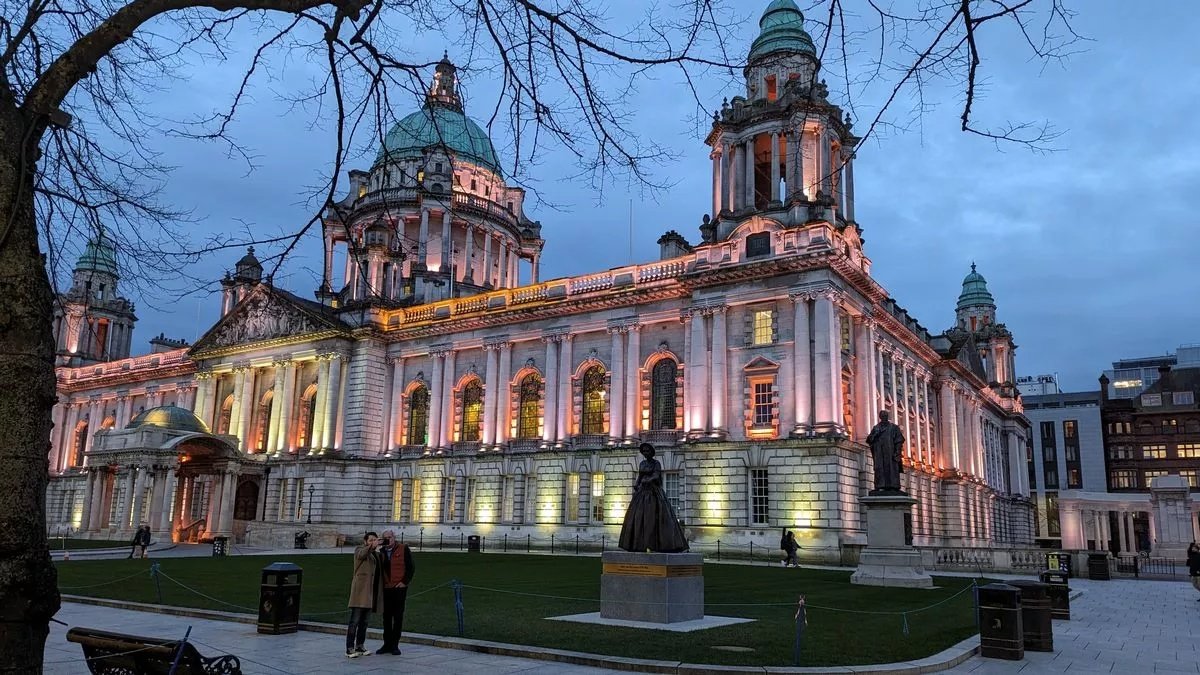
Plans to fly the Palestinian flag outside Belfast City Hall this weekend now appear unlikely to go ahead, following legal advice highlighting potential procedural issues with the council’s earlier decision. While the motion to raise the flag was approved earlier this month, opposition from unionist representatives and concerns over the decision-making process have cast doubt on whether the event will proceed as scheduled.
The proposal, originally put forward by Sinn Féin councillor Ryan Murphy, was intended to mark the United Nations’ International Day of Solidarity with the People of Palestine. Murphy described the motion as an act of solidarity in light of what he described as the ongoing humanitarian crisis in Gaza. “In light of the continued genocide against the people of Gaza, it is right that we show solidarity and support to them,” he said at the time.
The council voted to approve the flag-flying proposal by 41 votes to 15, despite strong opposition from unionist parties. Unionist councillors have consistently argued that raising the Palestinian flag at City Hall would embroil the city in a highly contentious international dispute, potentially deepening divisions within Northern Ireland itself. Sarah Bunting, leader of the Democratic Unionist Party (DUP) at City Hall, said: “Belfast City Hall represents everyone in our city. Flying the Palestinian flag would draw us into a deeply contested international conflict and risk creating further division here at home.”

Following the vote, unionist representatives attempted to challenge the decision through the council’s ‘call-in’ mechanism, which allows motions to be reviewed if concerns are raised about the decision-making process. Legal advice obtained by the council this week reportedly identified issues with the process, suggesting that not enough consideration had been given before the vote was taken. Although the advice highlighted procedural faults, it did not conclude that the council had failed to meet its obligations regarding community impact.
In practice, this means that while the council technically approved the motion, there remain questions over whether the necessary deliberation and review occurred before the vote. One option available to the council would be for the Lord Mayor, Tracy Kelly of the DUP, to call another meeting before Saturday to reconsider the motion. However, as of now, there are no indications that such a meeting will be convened, leaving the flag-raising event in limbo.
A spokesperson for Belfast City Council said: “As this process is ongoing, it would not be appropriate to comment further at this time.” The council is set to meet next on Monday, December 1, when the issue is expected to be discussed again. The timing of this session means that the planned flag-raising over the weekend may be postponed indefinitely.
Tensions around the flag issue are part of a broader history of debates over symbols in Northern Ireland, where national identity and international politics often intersect with local governance. The proposed display of the Palestinian flag has sparked discussion not only about international solidarity but also about how Belfast City Hall should represent its diverse population. For many unionists, the city hall is a civic space that must remain neutral and inclusive, whereas supporters of the motion view symbolic gestures as an important form of moral and political expression.

The vote itself reflected the current political balance within the council. Sinn Féin, with 22 representatives, is the largest party at City Hall and has consistently used its influence to promote international solidarity initiatives. At the previous full council meeting, Sinn Féin and several allied parties staged a walkout in protest over a separate dispute with the Lord Mayor, although they later returned to their seats. This incident underlined the often complex dynamics between parties within the council chamber, where procedural disagreements can delay decisions and affect the implementation of motions.
Opposition from unionist councillors has been unwavering. They argue that the decision to raise the Palestinian flag could have wider implications for local community relations. Sarah Bunting emphasised that City Hall should represent everyone in Belfast, including both unionist and nationalist communities, without aligning itself with a highly divisive international issue. “Our concern is that flying this flag would introduce conflict where we should be fostering unity and civic representation,” she said.
Legal advisors to the council reportedly identified specific areas where the decision-making process fell short, though details remain limited. Sources suggest the concerns were procedural, focusing on the depth of deliberation and whether sufficient consideration was given to all viewpoints before the vote. The advice did not, however, recommend reversing the decision outright, indicating that the council may have the option to reconvene, debate further, and ultimately confirm the motion if it chooses.
While no final decision has been made, the issue has generated significant public and media attention. Supporters of the flag-raising argue that symbolic gestures such as this are vital to draw attention to international crises and provide solidarity to oppressed populations. Ryan Murphy, the councillor behind the motion, has highlighted the humanitarian aspect, stressing the need for the city to take a stand in support of the Palestinian people. He contended that City Hall has a responsibility to act in alignment with international human rights standards and to show compassion in times of crisis.

The situation underscores the delicate balance that local authorities in Northern Ireland must maintain when addressing international political issues. Decisions made within civic spaces like City Hall are often scrutinised for both their domestic and international implications. Raising the Palestinian flag is not merely a local gesture; it is interpreted by some as a political statement on global issues, and by others as a potential source of domestic division.
Looking ahead, the council’s December 1 meeting is expected to revisit the issue. Observers note that any decision made at that session could either confirm the flag-raising, propose additional safeguards, or delay the event further. As matters stand, it appears increasingly unlikely that the Palestinian flag will fly over Belfast City Hall this weekend.
In summary, while the initial vote in favour of raising the Palestinian flag reflected support for international solidarity among certain councillors, procedural concerns and strong unionist opposition have placed the plan in doubt. The council’s legal advice and the potential need for further deliberation have created uncertainty, and the upcoming December 1 session may be pivotal in determining whether the flag-raising proceeds. For now, the planned display appears to be on hold, illustrating the complex interplay of local governance, international politics, and community sensitivities in Northern Ireland.
Related News:
 PM Condemns Leaks, Vows Loyalty to Ministers and Stability
 UK Asylum Reforms: Temporary Refugee Status and Faster Deportations
 “Social Housing Crisis in England: Tenant Complaints Soar Amid Dangerous Living Conditions”
 Army Barracks to House Migrants as Hotels Phase Out
 Derby Bounce Centre to Close Amid Car Park Dispute
 Hospice Cuts Raise Alarm Across England Amid Funding Crisis
 Rachel Reeves Admits Renting Home Without Required Licence
 Out of reach: stalled newbuilds leave Labour’s social housing targets in tatters
 Experts Question HMRC Over Possible Child Benefit Privacy Breach
 Who is Rama Duwaji? What Zohran Mamdani’s wife has said about Gaza and ICE as he’s elected NYC mayor
 Nicola Sturgeon Urges SNP to Oppose New Oil Fields
 Boris Johnson accused of undermining BBC leadership
 Tim Davie resigns as BBC director general amid bias claims
 Second world war veterans honoured as King leads Remembrance Sunday
 ‘Reckless’ cuts to victims’ services will cost more than they save
 Shouting Works Best to Deter Gulls, UK Study Finds
 Tim Davie Defends BBC Amid Bias Scandal Storm
 Reeves rejects £1bn plea for NHS redundancy payouts
 Politics latest: Starmer ‘will fight any leadership coup’ as Streeting denies attempt to oust Labour PM
 Son Reveals UK Couple in Iran Resort to Hunger Strike for Help
 Two in Three Women in UK Armed Forces Report Harassment
 Crowborough Protest Over Plan to House 600 Asylum Seekers
 UK Asylum Overhaul Sparks Debate Over Human Rights and Deportations
 Five Young People Killed in Tragic Dundalk Road Crash
 Mother Watches in Horror as Teen Daughter Dies on Tracks
 Minister Defends Tough New Asylum Reform Plan
 UK Net Migration Falls Sharply After ONS Revisions
 Van Dwellers Face Eviction After Park Misuse Sparks Outcry
 Commuters warned as yellow snow and ice alert hits Northern Ireland
 UK Vulnerable to Attack, Defence Committee Finds
 Paramilitary Murals and Memorials Persist on Public Housing Land
 Rama Rebukes Mahmood for Targeting Albanian Families
 Russian Vessel Used Lasers on RAF Pilots, UK Claims
 PM Shares Emotional Letter to Son on Men’s Struggles
 MP Offers Seat to Help Burnham Challenge Starmer
 Court to Hear Challenge to Wimbledon Expansion Plan
 Senedd Suspends Politician Over Offensive Racial Slur
 Kate Forbes: Motherhood Harder Than Politics
 TikTok Star Jessie Yendle Mocked by KFC
 UK Energy Bills to Rise Slightly in January
Reeves to Crack Down on Benefit Fraud While Lifting Two-Child Limit
UK Energy Bills to Rise Slightly in January
Reeves to Crack Down on Benefit Fraud While Lifting Two-Child Limit
 Labour MP claims devolution bill is ‘blatant discrimination’ against Cornwall
 English Mayors Set to Introduce Tourist Taxes
 Ex-Classmate Accuses Farage of Dishonesty on Racism Claims
 Rookie Driver Hollie McRae Flips Car but Walks Away Safe
 Millions Face Higher Taxes Under Reeves New Budget
 Peers Get Extra Time to Debate Assisted Dying Bill
 Sudanese Family Vows to Stay After Racist Graffiti
 UK Military Chiefs Warn Funding Gap Threatens Defence
 Ex-Brexit MEP Rejects Claim of Pro-Russia Payments
 Labour U-turn: Unfair Dismissal Rights Delayed Six Months
 Five-Year-Old Dies After Rare Tonsil Surgery Complication
 Machynlleth High Street Left Without Christmas Lights
 Government righting decades-old injustice for miners
 Second homes curbs quashed in Gwynedd legal ruling
 Search underway for British man overboard off Tenerife
 More Patients Now Contacting GPs Online, Data Shows
 Ed Miliband Warns UK Government on X, Citing Elon Musk as a “Dangerous Influence”
 Peterborough Mosques Tighten Security After Attack
 Green Party Surges Past Labour in Latest UK Poll
 Army Officers Orders to Cut Ties with Men-Only Clubs
 Trump’s UK Ambassador Urges North Sea Drilling to Strengthen US Ties
 Children to Learn Local History in Major Curriculum Overhaul
 French Taxi Driver Cleared in David Lammy Theft Case After Fare Dispute
 Kent village told to remove flags before Christmas lights go up
 Britain deploys RAF specialists to assist Belgium with drone threats
 Millionaires group urge Reeves to introduce wealth tax to ‘lift kids out of poverty’
 From Lego to Pokémon: How Adults Are Driving UK Toy Market Growth
 Major Rent Reform Ends No-Fault Evictions in England
 Senator John Fetterman Hospitalized After Fall from Heart Flare-Up, Keeps Sense of Humor
 December Run-Off in Chile as Election Produces No Winner
 Stroke Patient Mistaken for Drunk, Care Delayed
 Shadow Fleet at Sea: Europe’s Battle Against Illicit Oil Shipping
 Snow and Ice Cause Travel Chaos in North Yorkshire
 Director Michael Caton-Jones Reflects on Career and Beginnings
 Inside the Helpline Protecting Missing Children in the UK
 Fibromyalgia Patients Struggle as NHS Fails to Provide Care
 Jordan Bardella: France’s Young Presidential Contender
 Virgin Media Fined £23.8m Over Telecare Safety Failures
 Pavarotti statue frozen in Italian ice rink sparks backlash