Published: 30 December 2025. The English Chronicle Desk. The English Chronicle Online.
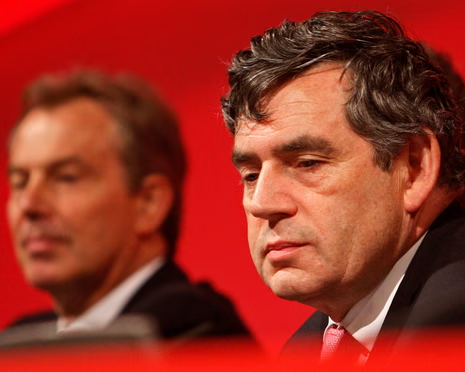
Newly released government files reveal Peter Mandelson warned Tony Blair about internal threats from Gordon Brown’s allies ahead of Labour’s 2005 general election campaign. The correspondence illustrates the delicate political balancing Blair faced as he sought a third consecutive victory for Labour. According to documents obtained from the National Archives in Kew, west London, Mandelson cautioned that tensions between the prime minister and his chancellor could disrupt the party’s prospects if not carefully managed.
The files show that Mandelson was concerned Brown’s supporters might exercise influence in ways that undermined Blair’s authority. In a memo drafted before Mandelson left for Brussels to assume his role as Britain’s EU commissioner, he emphasized the need to integrate Brown’s allies into the campaign without granting them veto power or the ability to sabotage election efforts. “Agreeing where GB’s people can be included without giving them a veto or scope for insider demolition” was identified as a central challenge, he wrote.

At the time, Blair and Brown were navigating a complicated relationship, with Brown’s camp frustrated over what they viewed as broken assurances regarding the timing of Blair’s departure from office. While Brown sought to secure a strong Commons majority for when he eventually assumed leadership, he was wary of Blair receiving excessive credit for electoral successes. Mandelson noted the media would intensify scrutiny on Blair, increasing the pressure on him while simultaneously highlighting the chancellor’s ambitions.
The documents further reveal Mandelson’s strategic advice for managing Labour’s media relations, especially in light of lingering resentment over Britain’s involvement in the 2003 Iraq invasion. The former cabinet minister suggested Blair needed to win back support from outlets considered part of the “left” media. He highlighted the importance of keeping Alastair Campbell, Blair’s communications chief, in the background, citing the need to avoid antagonizing journalists who had been critical during the WMD dossier controversy. Mandelson described Campbell as “indispensable but must be equally invisible” to facilitate the party’s media rehabilitation.
Despite the warnings, Blair and Brown eventually collaborated during the election campaign. However, the files suggest that the underlying friction between the two remained unresolved, only temporarily set aside to achieve electoral success. Labour went on to secure victory in 2005, but the tensions between the prime minister and his chancellor resurfaced soon after, underscoring the persistent challenges within the party.
Mandelson’s memos shed light on the internal calculations and careful political maneuvering that defined Blair’s final election campaign. They reflect the broader dynamics of party unity and leadership rivalry that shaped Labour’s strategies during a pivotal period in British politics. Analysts argue that understanding these internal interactions is crucial to grasping the pressures and compromises inherent in maintaining political cohesion at the highest levels.
The newly declassified files also provide insight into the psychological dimensions of political leadership, illustrating how ambition, trust, and rivalry intersect within governing parties. Mandelson’s advice suggests that effective leadership requires anticipating both overt and subtle challenges posed by allies whose loyalty is contingent upon personal advancement. His cautionary notes illustrate the fine line between inclusive decision-making and vulnerability to internal dissent, a balancing act central to Blair’s political calculus.

Observers note that such internal dynamics were emblematic of Blair’s tenure, where managing personalities within his party was as critical as formulating public policy. By emphasizing strategic communication, controlled media engagement, and careful allocation of influence among key figures, Mandelson’s guidance reflects the complexity of orchestrating a successful election campaign amid latent rivalries.
As Labour navigated the 2005 election, these documents reveal the unseen pressures shaping tactical decisions. Blair’s ability to temporarily reconcile with Brown’s faction illustrates both the pragmatism and tension inherent in political leadership. Scholars and political commentators suggest that the memos underscore how intra-party rivalries can affect broader governance, influencing not only electoral outcomes but also long-term party stability.
Mandelson’s reflections, captured in these files, offer a window into the nuanced considerations that define high-stakes political campaigns. The documents highlight the careful orchestration required to maintain party unity while simultaneously managing competing ambitions. They also serve as a reminder of the strategic foresight necessary to navigate leadership transitions and the subtle power dynamics that operate behind the public façade of electoral politics.
In conclusion, the newly released archives illuminate the intricate strategies Blair relied upon to mitigate the risks posed by Brown’s allies. Mandelson’s warnings emphasize the delicate balance between inclusion and control, media management, and careful handling of interpersonal rivalries. These insights provide a deeper understanding of Labour’s internal dynamics during a critical electoral period, shedding light on the broader complexities of political leadership and party cohesion in the United Kingdom.
Related News:
 Exclusive: Leaked Documents Reveal Khan’s Controversial Road Policy Overhaul – Drivers Warn of ‘Final Nail in Coffin’
 England Grapples with Unprecedented Bluetongue Virus Outbreak: Entire Nation Declared Infected Zone
 Whether You Win or Lose, Some Fights Are Worth Fighting’: The Unlikely Origins of the Largest-Ever Climate Case
 Tragedy Strikes Sylhet Airport: Technician Killed in Boarding Bridge Wheel Explosion
 Singapore Corruption Scandal: Details Emerge on Iswaran’s Luxury Flight and Ties to Tycoon Ong Beng Seng
 Peter Andre Breaks 16-Year Silence with Scathing Statement Against Katie Price
 Hundreds of Swimming Pool Closures Leave Children ‘At Risk of Drowning’, Union Warns
 Xi, Putin and Kim Display Unified Front at Massive Beijing Military Parade
 EE Announces Major Free 5G Network Upgrades for Millions of Customers
 Peterborough Mosques Tighten Security After Attack
 Reeves Faces Setback as Labour May Miss Homes Target
 Hospice Cuts Raise Alarm Across England Amid Funding Crisis
 Virgin Trains Moves Closer to Challenging Eurostar Monopoly
 Kate Winslet to Narrate Film Highlighting King’s Environmental Mission
 Green Party Surges Past Labour in Latest UK Poll
 Army Officers Orders to Cut Ties with Men-Only Clubs
 Trump’s UK Ambassador Urges North Sea Drilling to Strengthen US Ties
 Children to Learn Local History in Major Curriculum Overhaul
 Ryanair Chief UK Economy ‘Doomed’ Under Labour
 French Taxi Driver Cleared in David Lammy Theft Case After Fare Dispute
 UK Bans Fake Numbers: Scammers Lose Their Trick
 M&S Profits More Than Halve After Cyber-Attack
 Kent village told to remove flags before Christmas lights go up
 Vibe coding’ named Collins dictionary’s word of the year
 Patients to Test Health at Home to Ease NHS Winter Pressure
BBC to Apologise Over Edited Trump Speech Amid Backlash
Patients to Test Health at Home to Ease NHS Winter Pressure
BBC to Apologise Over Edited Trump Speech Amid Backlash
 Britain deploys RAF specialists to assist Belgium with drone threats
 Palace May Restore Hyphen to Andrew Mountbatten-Windsor’s Name
 Millionaires group urge Reeves to introduce wealth tax to ‘lift kids out of poverty’
 From Lego to Pokémon: How Adults Are Driving UK Toy Market Growth
 Shouting Works Best to Deter Gulls, UK Study Finds
 Reeves rejects £1bn plea for NHS redundancy payouts
 Northern Lights may illuminate UK skies this week
 UK and Ireland Announce Venues for Euro 2028 Tournament
 PM Condemns Leaks, Vows Loyalty to Ministers and Stability
 TalkTV Fires Mike Graham Over Racist Facebook Post
 Phillipson Accused of Appeasing Unions by Diluting EBacc
 Major Rent Reform Ends No-Fault Evictions in England
 Senator John Fetterman Hospitalized After Fall from Heart Flare-Up, Keeps Sense of Humor
 Saka Solidifies Role as Tuchel’s Key England Lieutenant
 New AI tool could cut wasted efforts in organ transplants
 Greene Pushes Epstein Files Amid Trump Fallout
 December Run-Off in Chile as Election Produces No Winner
 Criminal Gangs Pose as Truckers to Hijack UK Supply Chains
 Zelenskyy Signs Fighter Jet Deal Amid Russian Drone Attacks
 Stroke Patient Mistaken for Drunk, Care Delayed
 Canada Passes Carney’s First Budget in Tight Parliamentary Vote
 Sundar Pichai Cautions on AI Hype and Market Risks
 What Now for the Queen’s Childhood Playhouse After Andrew’s Eviction?
 Van Dwellers Face Eviction After Park Misuse Sparks Outcry
 Shadow Fleet at Sea: Europe’s Battle Against Illicit Oil Shipping
 Tiny Curacao Makes History as Smallest Nation to Reach World Cup
 Deadly Russian Strikes Hit Western Ukraine, 20 Killed in Ternopil
 Snow and Ice Cause Travel Chaos in North Yorkshire
 Man Denies Stealing Bronze Age Gold from Museum
 Ukraine Peace Plan: Zelensky Ready for Dialogue
 Director Michael Caton-Jones Reflects on Career and Beginnings
 Royal Navy Shadows Russian Warships Entering the Channel
 Inside the Helpline Protecting Missing Children in the UK
 Boots Showstopper Beauty Bundle Outshines Many Advent Calendars This Holiday Season
 Labour’s ‘blinkered’ drive to build risks pushing wildlife to point of no return, nature experts warn
 PlayStation PS5 Deals Hit Lowest Prices Ahead of Black Friday
 Runaway Driver Caught by DNA Evidence
 US Suspends Afghan Immigration After White House Shooting
 Georgians Defy Government Crackdown After Year of Protests
 US National Guard Member Killed in DC Shooting
 Five-Year-Old Dies After Rare Tonsil Surgery Complication
 ICC to Rule on Duterte’s Provisional Release
 Tokyo court rules Japan’s same-sex marriage ban constitutional
 Starmer Says Labour’s Economic Plan Needs Years to Deliver
 Rusty Bond-Era Aston Martin Restored to £1m Glory
 More Patients Now Contacting GPs Online, Data Shows
 ‘Extinct’ Antelope Returns to Sahara, Bringing Hope
 IndiGo Cancels Hundreds of Flights Amid Pilot Shortages
 UK unemployment rises to four-year high of 5.1% before budget
 Young Britons Face Heaviest Burden from Ageing Population, Lords Warn
 Wiltshire Police Use Lasso to Catch Rampaging Village Goat
 Australia Face Big Changes as Cummins and Lyon Ruled Out of Ashes
 American Mother Extradited From UK to U.S. on Murder Charges
 U‑Turn on Farmers’ Inheritance Tax Sparks Political Firestorm