Published: 02 January 2026. The English Chronicle Desk. The English Chronicle Online.
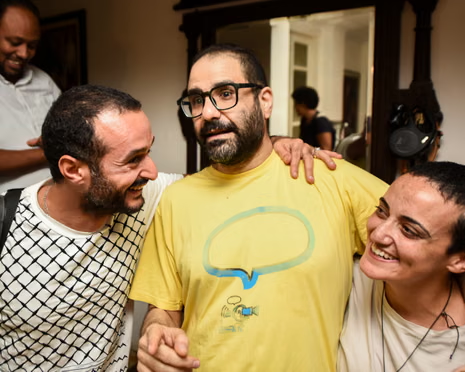
The Alaa Abd el-Fattah controversy has gripped UK political debate and overshadowed core government priorities in recent weeks, alarmingly illustrating deep divisions within Westminster over policy focus and public trust. Since British‑Egyptian activist Alaa Abd el-Fattah returned to the United Kingdom after years in Egyptian detention, senior figures across the political spectrum have sparred over the implications of both his treatment abroad and the government’s role in securing his release. Critics now argue that the Alaa Abd el-Fattah issue has come to symbolise wider strategic failings in the administration of Prime Minister Sir Keir Starmer, exposing underlying tensions between diplomatic engagement, civil service culture and electoral accountability.
In a sharply worded public intervention, Paul Ovenden, Sir Keir’s former director of strategy, lamented in national media that the UK government’s preoccupation with Alaa Abd el-Fattah had become a “running joke” in Whitehall, distracting policymakers from pressing domestic and economic challenges. Ovenden’s critique, delivered in an op‑ed for The Times, argued that efforts to advance Alaa Abd el-Fattah’s release from prison and secure his safe return diverted time and energy from the electorate’s core concerns in health, housing and business reform.

Mr Ovenden’s comments, his first major public statement since leaving government in September amidst controversy over his past conduct, have resonated uneasily among both governing and opposition circles. Many Labour insiders now voice frustration that the Alaa Abd el-Fattah case, alongside debates over colonial reparations and regulatory reform, has consumed disproportionate attention as ordinary Britons face rising costs and stagnant wages. The former aide likened the repeated focus on what he termed “fringe issues” to a centrifugal force pulling ministers away from their manifesto commitments, weakening the government’s ability to deliver on its domestic agenda.
The Alaa Abd el-Fattah saga began long before his dramatic Boxing Day return to London, when a travel ban imposed by Egyptian authorities was lifted following sustained diplomatic pressure from London. Prime Minister Sir Keir repeatedly raised Alaa Abd el-Fattah’s plight with President Abdel Fattah al‑Sisi of Egypt as part of ongoing bilateral talks on trade, regional peace and human rights, demonstrating the UK’s commitment to advocating for dual nationals detained abroad.
Yet the relief at his arrival was swiftly eclipsed by controversy when old social media posts resurfaced in which Alaa Abd el-Fattah appeared to endorse violent sentiments, including references to killing Zionists and police. These posts, dating back over a decade, triggered a fierce backlash from opposition parties and commentators who condemned the welcome extended by the UK government. Conservative and Reform UK leaders called for his British citizenship to be revoked, accusing the administration of mishandling due diligence and jeopardising national values.
In response, Foreign Secretary Yvette Cooper ordered an urgent internal review to investigate what she described as “serious information failures” that allowed the historic tweets to go unnoticed by senior officials. She stressed the need to strengthen procedures to prevent similar oversights in future, while civil servants acknowledged shortcomings in briefing ministers. Mr Abd el-Fattah himself issued an apology, describing his past remarks as “shocking and hurtful” and suggesting they were taken out of context, but the political fallout has endured.
The Alaa Abd el-Fattah controversy has also sparked debate within human rights circles and among campaigners abroad. Advocates argue that public focus on historic posts obscures the broader context of his imprisonment, which was widely condemned by international organisations as a violation of basic legal rights. They maintain that detention and hunger strikes endured by Alaa Abd el-Fattah in Egypt highlighted systemic abuses that should command global attention without condoning ill‑judged rhetoric from a younger era.
Despite the political turbulence, many analysts suggest this episode reflects deeper structural questions confronting the British state. Ovenden’s critique pointed to what he termed a “Stakeholder State”, where entrenched interests and activist networks purportedly influence decision‑making to the detriment of elected mandates. This allegation has stirred debate about the balance between civil service influence, public engagement, and ministerial leadership in setting the national agenda.

Opposition leaders have seized on the Alaa Abd el-Fattah row to challenge the government on its priorities, arguing that voters want action on cost of living, public services and national security rather than headline‑grabbing diplomatic controversies. These voices assert that energy should be redirected from high‑profile cases to tackling everyday issues that directly impact families across the UK.
At the same time, supporters of the government’s diplomatic efforts maintain that advocating for wrongfully detained nationals like Alaa Abd el-Fattah is not only a humanitarian duty, but also reinforces Britain’s global reputation as a defender of human rights. They emphasise that delivering justice for citizens abroad and managing domestic priorities are not mutually exclusive, and effective governance requires careful integration of both.
Behind the headlines, the Alaa Abd el-Fattah incident underscores the difficult choices modern governments face when foreign policy intersects with domestic politics. The challenge for the Starmer administration now lies in bridging internal criticism and public expectations while reaffirming a coherent agenda that prioritises tangible improvements at home. As Westminster reflects on its handling of this episode, many voices call for renewed focus on issues that resonate with everyday voters, insisting that political leadership must align with public priorities in the year ahead.
Related News:
 Starmer’s communications chief to outline media strategy overhaul
 Farm Inheritance Tax U‑Turn Eases Burden After Months of Protests
 U‑Turn on Farmers’ Inheritance Tax Sparks Political Firestorm
 UK to Launch Military ‘Gap Year’ Scheme to Boost Recruitment
 Starmer Allies Honoured in New Year Awards List
 Blair Pressured Officials Over Iraqi Detainee Case, Files Reveal
 Royal Documents Withheld Sparks Accusations of Cabinet Cover-Up
 European Court Questions UK Over Shamima Begum Case
 Polanski Burnham Reform Strategy Signals Green–Labour Divide
 Starmer Unveils Cost of Living Plan for 2026 Renewal
 UK Small Boat Crossings Surge Past 41,000 in 2025
 UK rails face crisis as calls to end “rail outsourcing racket” grow louder
 Exclusive: Leaked Documents Reveal Khan’s Controversial Road Policy Overhaul – Drivers Warn of ‘Final Nail in Coffin’
 England Grapples with Unprecedented Bluetongue Virus Outbreak: Entire Nation Declared Infected Zone
 Whether You Win or Lose, Some Fights Are Worth Fighting’: The Unlikely Origins of the Largest-Ever Climate Case
 Tragedy Strikes Sylhet Airport: Technician Killed in Boarding Bridge Wheel Explosion
 Singapore Corruption Scandal: Details Emerge on Iswaran’s Luxury Flight and Ties to Tycoon Ong Beng Seng
 Peter Andre Breaks 16-Year Silence with Scathing Statement Against Katie Price
 Hundreds of Swimming Pool Closures Leave Children ‘At Risk of Drowning’, Union Warns
 Xi, Putin and Kim Display Unified Front at Massive Beijing Military Parade
 Peterborough Mosques Tighten Security After Attack
 Reeves Faces Setback as Labour May Miss Homes Target
 Virgin Trains Moves Closer to Challenging Eurostar Monopoly
 Kate Winslet to Narrate Film Highlighting King’s Environmental Mission
 Army Officers Orders to Cut Ties with Men-Only Clubs
 Trump’s UK Ambassador Urges North Sea Drilling to Strengthen US Ties
 Ryanair Chief UK Economy ‘Doomed’ Under Labour
 French Taxi Driver Cleared in David Lammy Theft Case After Fare Dispute
 UK Bans Fake Numbers: Scammers Lose Their Trick
 M&S Profits More Than Halve After Cyber-Attack
 Kent village told to remove flags before Christmas lights go up
 Vibe coding’ named Collins dictionary’s word of the year
 Patients to Test Health at Home to Ease NHS Winter Pressure
BBC to Apologise Over Edited Trump Speech Amid Backlash
Patients to Test Health at Home to Ease NHS Winter Pressure
BBC to Apologise Over Edited Trump Speech Amid Backlash
 Britain deploys RAF specialists to assist Belgium with drone threats
 Palace May Restore Hyphen to Andrew Mountbatten-Windsor’s Name
 Millionaires group urge Reeves to introduce wealth tax to ‘lift kids out of poverty’
 From Lego to Pokémon: How Adults Are Driving UK Toy Market Growth
 Shouting Works Best to Deter Gulls, UK Study Finds
 Reeves rejects £1bn plea for NHS redundancy payouts
 Northern Lights may illuminate UK skies this week
 UK and Ireland Announce Venues for Euro 2028 Tournament
 PM Condemns Leaks, Vows Loyalty to Ministers and Stability
 TalkTV Fires Mike Graham Over Racist Facebook Post
 Phillipson Accused of Appeasing Unions by Diluting EBacc
 Major Rent Reform Ends No-Fault Evictions in England
 Saka Solidifies Role as Tuchel’s Key England Lieutenant
 Greene Pushes Epstein Files Amid Trump Fallout
 December Run-Off in Chile as Election Produces No Winner
 Zelenskyy Signs Fighter Jet Deal Amid Russian Drone Attacks
 Stroke Patient Mistaken for Drunk, Care Delayed
 Sundar Pichai Cautions on AI Hype and Market Risks
 What Now for the Queen’s Childhood Playhouse After Andrew’s Eviction?
 Shadow Fleet at Sea: Europe’s Battle Against Illicit Oil Shipping
 Tiny Curacao Makes History as Smallest Nation to Reach World Cup
 Snow and Ice Cause Travel Chaos in North Yorkshire
 Man Denies Stealing Bronze Age Gold from Museum
 Director Michael Caton-Jones Reflects on Career and Beginnings
 Inside the Helpline Protecting Missing Children in the UK
 Boots Showstopper Beauty Bundle Outshines Many Advent Calendars This Holiday Season
 PlayStation PS5 Deals Hit Lowest Prices Ahead of Black Friday
 Runaway Driver Caught by DNA Evidence
 US Suspends Afghan Immigration After White House Shooting
 Georgians Defy Government Crackdown After Year of Protests
 Five-Year-Old Dies After Rare Tonsil Surgery Complication
 ICC to Rule on Duterte’s Provisional Release
 Starmer Says Labour’s Economic Plan Needs Years to Deliver
 Rusty Bond-Era Aston Martin Restored to £1m Glory
 ‘Extinct’ Antelope Returns to Sahara, Bringing Hope
 IndiGo Cancels Hundreds of Flights Amid Pilot Shortages
 Conservatives Pledge to Scrap 2030 Petrol and Diesel Car Ban
 UK unemployment rises to four-year high of 5.1% before budget
 Young Britons Face Heaviest Burden from Ageing Population, Lords Warn
 Wiltshire Police Use Lasso to Catch Rampaging Village Goat
 Australia Face Big Changes as Cummins and Lyon Ruled Out of Ashes
 Tories and Labour face scrutiny over Abd el-Fattah support
 Khaleda Zia Death in Bangladesh: First Female PM Dies at 80
 Facebook Slow to Remove Bondi Attack Praise, Anti-Hate Group Claims
 Children to Receive Home Vaccines as England Acts
 Childhood Hypertension Sparks Urgent UK Testing Calls