Published: 07 January 2026. The English Chronicle Desk. The English Chronicle Online.
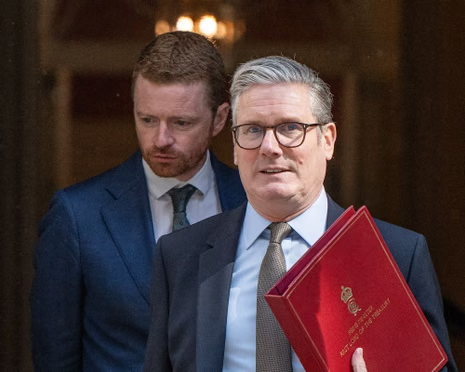
The Labour government has been privately warned that voter trust is slipping, with senior figures urging ministers to rebuild an emotional connection with the public before the next general election. During a tense cabinet meeting this week, officials stressed that voter trust now represents the defining challenge facing the administration, as polling shows Labour struggling to hold its post-election coalition together. The message delivered to ministers was stark yet strategic, calling for a renewed emphasis on emotion, empathy, and evidence to restore voter trust across communities feeling detached from Westminster politics.
The meeting, chaired by Prime Minister Sir Keir Starmer, came amid mounting concern inside government that policy delivery alone is no longer enough to persuade an increasingly sceptical electorate. Morgan McSweeney, the prime minister’s chief of staff, is understood to have presented a detailed assessment of public mood, highlighting a growing emotional distance between voters and those in power. While Downing Street sources later rejected claims that the government faced an outright “emotion deficit”, there was broad agreement that rebuilding voter trust would require a shift in tone as well as substance.

Starmer reportedly told colleagues that they were engaged in what he described as the political fight of their lives, urging ministers to block out poor polling and focus instead on long-term credibility. He emphasised that governments do not fail because surveys dip, but because belief falters under pressure. The prime minister’s remarks were framed as both reassurance and warning, reflecting a leadership keenly aware of the stakes involved as Reform UK continues to gain traction.
Recent polling has intensified these anxieties. A YouGov survey published this week placed Reform UK ahead of both Labour and the Conservatives, with Labour languishing on just 17 percent. For a government only months into office, the figures represent an unprecedented challenge. Analysts inside Labour argue that the rise of a disruptive third party has distorted traditional political cycles, yet few deny the damage such numbers can inflict on voter trust if left unaddressed.
During the presentation to cabinet, ministers were encouraged not to overreact to polling volatility, with comparisons drawn to previous governments that suffered early popularity collapses before recovering. However, sources noted that Starmer’s ratings remain historically low for a new administration, reflecting a broader disillusionment among voters who feel politics has failed to speak to their everyday struggles. Restoring voter trust, the briefing suggested, would require more than reassurance; it would demand visible empathy and consistent communication.
The prime minister argued that a relentless focus on the cost of living could still turn the tide. He pointed to examples from Norway, Canada, and Australia, where centre-left governments recovered electoral support by prioritising household pressures and economic security. Yet even this strategy has faced disruption. Starmer’s New Year agenda was overtaken by international crises, including Donald Trump’s controversial military action in Venezuela and renewed tensions over Greenland, events that have dominated headlines and diverted attention from domestic reforms.
On Monday, a visit to Reading intended to showcase frozen bus and rail fares was overshadowed by questions about global security and the abduction of Venezuelan president Nicolás Maduro. For Labour strategists, the episode illustrated how fragile voter trust can be when domestic achievements struggle to break through a crowded news cycle. Starmer later travelled to Paris to attend talks on Ukraine, reinforcing his message that Britain must balance global responsibility with a disciplined focus at home.
Addressing cabinet colleagues, the prime minister drew a sharp contrast between Labour’s vision and that of Reform UK. He accused Reform of feeding on grievance and division, arguing that such politics ultimately weakens the state and corrodes community cohesion. Starmer insisted that rebuilding voter trust meant articulating a clear moral case for government action, one rooted in fairness and solidarity rather than fear.
Efforts to sharpen Labour’s message will increasingly fall to the party’s new deputy leader, Lucy Powell, who attended the cabinet meeting and has begun reshaping internal strategy. Powell has signalled a shift towards an “incumbency first” approach, designed to protect sitting MPs and embed them as visible leaders within their constituencies. The aim, party insiders say, is to translate government action into tangible local credit, strengthening voter trust at street level.
Speaking to Labour MPs earlier this week, Powell urged colleagues to stop infighting and present a united front. She argued that voters respond not only to policies but to coherence and confidence, qualities she believes have been undermined by persistent speculation about Starmer’s leadership. Her intervention was welcomed by MPs frustrated that improvements such as frozen rail fares and expanded energy support have yielded little political reward.
Under the new strategy, MPs will be offered workshops led by Labour headquarters organisers, focusing on how to communicate local successes and link them directly to government decisions. The training is intended to help representatives claim ownership of changes affecting their communities, from high street investment to extensions of the warm home discount. Party officials believe this grassroots approach is essential to restoring voter trust that has eroded after years of political turbulence.
Powell has also warned MPs that hostile narratives are gaining ground online, driven by what she described as dark forces intent on undermining a Labour administration. She argued that silence allows misinformation to flourish, weakening voter trust further. Instead, she called for a more assertive defence of Labour’s record and values, framed around whose side the government is truly on.

Central to that argument is upcoming legislation to end the two-child benefit cap, a long-standing demand from Labour backbenchers. The policy is expected to lift nearly half a million children out of poverty, providing the government with a clear moral and economic case to present to voters. Starmer plans another regional visit later this week to highlight the measure, hoping it will refocus attention on Labour’s domestic priorities.
Despite the challenges, senior figures remain cautiously optimistic. They argue that voter trust can still be rebuilt if ministers consistently demonstrate empathy alongside competence. For Starmer, the task is to ensure that policy ambition is matched by emotional resonance, a balance he believes is essential in an era of fragmented politics and rising populism.
As the government enters a volatile political year, the warning delivered in cabinet serves as both diagnosis and prescription. Rebuilding voter trust will require patience, clarity, and humility, qualities that may determine whether Labour can withstand the pressures of a transformed electoral landscape. The coming months will test whether the party can reconnect with voters not just through evidence, but through understanding the lived experiences shaping public mood.
Related News:
 Starmer’s communications chief to outline media strategy overhaul
 Farm Inheritance Tax U‑Turn Eases Burden After Months of Protests
 U‑Turn on Farmers’ Inheritance Tax Sparks Political Firestorm
 UK to Launch Military ‘Gap Year’ Scheme to Boost Recruitment
 Starmer Allies Honoured in New Year Awards List
 Blair Pressured Officials Over Iraqi Detainee Case, Files Reveal
 Royal Documents Withheld Sparks Accusations of Cabinet Cover-Up
 European Court Questions UK Over Shamima Begum Case
 Polanski Burnham Reform Strategy Signals Green–Labour Divide
 Starmer Unveils Cost of Living Plan for 2026 Renewal
 UK Small Boat Crossings Surge Past 41,000 in 2025
 UK rails face crisis as calls to end “rail outsourcing racket” grow louder
 UK Govt Faces Backlash Over Focus on Freeing Activist Alaa Abd el-Fattah
 GMB Union Faces Turmoil Amid Female Leaders’ Claims
 UK MPs Challenge Ministers Over Venezuela Attack Response
 Exclusive: Leaked Documents Reveal Khan’s Controversial Road Policy Overhaul – Drivers Warn of ‘Final Nail in Coffin’
 England Grapples with Unprecedented Bluetongue Virus Outbreak: Entire Nation Declared Infected Zone
 Whether You Win or Lose, Some Fights Are Worth Fighting’: The Unlikely Origins of the Largest-Ever Climate Case
 Tragedy Strikes Sylhet Airport: Technician Killed in Boarding Bridge Wheel Explosion
 Singapore Corruption Scandal: Details Emerge on Iswaran’s Luxury Flight and Ties to Tycoon Ong Beng Seng
 Peter Andre Breaks 16-Year Silence with Scathing Statement Against Katie Price
 Hundreds of Swimming Pool Closures Leave Children ‘At Risk of Drowning’, Union Warns
 Reeves Faces Setback as Labour May Miss Homes Target
 Kate Winslet to Narrate Film Highlighting King’s Environmental Mission
 Army Officers Orders to Cut Ties with Men-Only Clubs
 Trump’s UK Ambassador Urges North Sea Drilling to Strengthen US Ties
 Ryanair Chief UK Economy ‘Doomed’ Under Labour
 UK Bans Fake Numbers: Scammers Lose Their Trick
 M&S Profits More Than Halve After Cyber-Attack
 Vibe coding’ named Collins dictionary’s word of the year
 Patients to Test Health at Home to Ease NHS Winter Pressure
BBC to Apologise Over Edited Trump Speech Amid Backlash
Patients to Test Health at Home to Ease NHS Winter Pressure
BBC to Apologise Over Edited Trump Speech Amid Backlash
 Britain deploys RAF specialists to assist Belgium with drone threats
 Millionaires group urge Reeves to introduce wealth tax to ‘lift kids out of poverty’
 From Lego to Pokémon: How Adults Are Driving UK Toy Market Growth
 Reeves rejects £1bn plea for NHS redundancy payouts
 Northern Lights may illuminate UK skies this week
 PM Condemns Leaks, Vows Loyalty to Ministers and Stability
 Phillipson Accused of Appeasing Unions by Diluting EBacc
 Major Rent Reform Ends No-Fault Evictions in England
 Saka Solidifies Role as Tuchel’s Key England Lieutenant
 Greene Pushes Epstein Files Amid Trump Fallout
 December Run-Off in Chile as Election Produces No Winner
 Zelenskyy Signs Fighter Jet Deal Amid Russian Drone Attacks
 Stroke Patient Mistaken for Drunk, Care Delayed
 Sundar Pichai Cautions on AI Hype and Market Risks
 What Now for the Queen’s Childhood Playhouse After Andrew’s Eviction?
 Shadow Fleet at Sea: Europe’s Battle Against Illicit Oil Shipping
 Tiny Curacao Makes History as Smallest Nation to Reach World Cup
 Snow and Ice Cause Travel Chaos in North Yorkshire
 Man Denies Stealing Bronze Age Gold from Museum
 Director Michael Caton-Jones Reflects on Career and Beginnings
 Inside the Helpline Protecting Missing Children in the UK
 Boots Showstopper Beauty Bundle Outshines Many Advent Calendars This Holiday Season
 PlayStation PS5 Deals Hit Lowest Prices Ahead of Black Friday
 Runaway Driver Caught by DNA Evidence
 US Suspends Afghan Immigration After White House Shooting
 Georgians Defy Government Crackdown After Year of Protests
 Five-Year-Old Dies After Rare Tonsil Surgery Complication
 ICC to Rule on Duterte’s Provisional Release
 Starmer Says Labour’s Economic Plan Needs Years to Deliver
 Rusty Bond-Era Aston Martin Restored to £1m Glory
 ‘Extinct’ Antelope Returns to Sahara, Bringing Hope
 IndiGo Cancels Hundreds of Flights Amid Pilot Shortages
 Conservatives Pledge to Scrap 2030 Petrol and Diesel Car Ban
 UK unemployment rises to four-year high of 5.1% before budget
 Young Britons Face Heaviest Burden from Ageing Population, Lords Warn
 Wiltshire Police Use Lasso to Catch Rampaging Village Goat
 Australia Face Big Changes as Cummins and Lyon Ruled Out of Ashes
 American Mother Extradited From UK to U.S. on Murder Charges
 Tories and Labour face scrutiny over Abd el-Fattah support
 Alaa Abd el-Fattah Issues Apology Over Controversial Tweets
 Khaleda Zia Death in Bangladesh: First Female PM Dies at 80
 Facebook Slow to Remove Bondi Attack Praise, Anti-Hate Group Claims
 Damien Martyn in Induced Coma After Meningitis Diagnosis
 Children to Receive Home Vaccines as England Acts
 Childhood Hypertension Sparks Urgent UK Testing Calls
 FTSE 100 Hits 10,000: UK Market Celebrates Record Year
 Raducanu Battles Injury as Britain Exit United Cup
 Albanese Opens Door to Bondi Royal Commission Amid Rising Pressure