Published: 18 January 2026. The English Chronicle Desk. The English Chronicle Online
As a new year begins, it is traditionally a moment for fresh starts, long-term plans and hopeful resolutions. Yet for many people, 2026 has arrived not with optimism, but with a heavy sense of paralysis. Increasingly, individuals report struggling to think beyond the next few days or weeks, unable to picture a future that feels stable, positive or even imaginable. This sense of being trapped in the present is not an isolated feeling, nor a personal failing. It is a shared psychological response to what experts describe as a global polycrisis.
Across social circles and online spaces, people speak of merely “existing”, sealed inside an endless present tense where the road ahead feels foggy and threatening. Unlike the mindful practice of living in the moment, this experience is disempowering rather than calming. It stifles creativity, undermines motivation and makes long-term planning feel futile. Therapists are seeing this pattern repeatedly, and psychologists say it reflects a deeper loss: many people have, quite literally, lost their sense of the future.

Clinical psychologist Dr Steve Himmelstein, who has practised in New York City for nearly half a century, says this phenomenon is now widespread among his clients. He describes a growing inability to imagine or articulate future plans, even modest ones. When asked what they are looking forward to, many people have no answer at all. According to Himmelstein, the prevailing mood today feels darker than even the period immediately following the 9/11 attacks, a time often associated with deep uncertainty and fear.
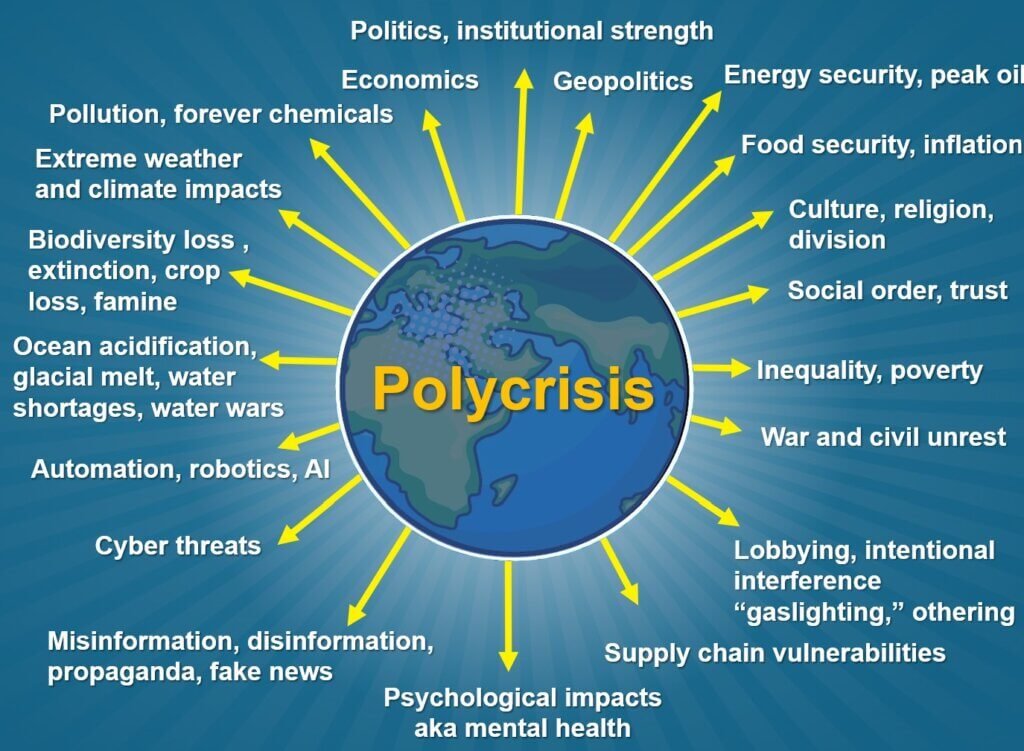
This collective unease is driven by relentless exposure to destabilising forces. Global political tensions, economic volatility, rising living costs, job insecurity accelerated by artificial intelligence, extreme weather events and the lingering psychological impact of the pandemic have converged. Each crisis alone would be challenging; together, they interact and amplify one another. Social scientists refer to this phenomenon as a polycrisis – a situation in which multiple crises unfold simultaneously, compounding uncertainty and eroding people’s ability to make sense of what lies ahead.
Psychologists note that humans rely more on a sense of future possibility than we often realise. The belief in a better tomorrow makes present hardship more bearable and gives meaning to long-term effort. When that belief weakens, productivity suffers and despair takes root. Dr Hal Hershfield, a psychologist at UCLA who studies how people think about time, explains that humans do not truly “predict” the future so much as remember it. We create imagined memories of our future selves and use them to guide decisions, regulate emotions and plan our lives.
Radical uncertainty disrupts this process. When the future feels unknowable, the mind struggles to construct those mental snapshots. Research shows that simply reminding people how uncertain the future is can significantly reduce their ability to imagine future events and lowers their confidence in their own thoughts. In effect, uncertainty blocks access to hope.
While history offers examples of societies facing existential threats, many experts say what feels different today is the sheer number of simultaneous pressures. Political instability, environmental breakdown, health insecurity and economic disruption are no longer isolated episodes but overlapping realities. This constant strain overwhelms the brain’s capacity to imagine continuity between the present self and the future self.
Anthropologist Dr Daniel Knight, who studied communities in Greece during the debt crisis of the late 2000s, observed similar psychological responses. When long-held expectations of progress collapsed, people stopped planning far ahead and turned inward, focusing on family, friends and local community. In place of grand visions, they created what Knight calls “micro-utopias” – small, meaningful pockets of connection and purpose that made life feel manageable again.
History also shows that polycrises do not inevitably lead to collapse. Knight points to 17th-century Europe, a period marked by plague, economic turmoil, climate anxiety and political upheaval. Out of that chaos emerged profound transformation, including the foundations of the Enlightenment, stronger public institutions and advances in science and governance. These shifts were not inevitable, but the result of collective choices made under pressure.
Psychologists emphasise that resilience remains a defining human trait. Harvard professor Dr Daniel Gilbert notes that people consistently underestimate their capacity to recover from trauma. Even after severe disruption, most individuals eventually return to a stable level of wellbeing. The challenge is remembering this truth when uncertainty dominates daily life.

Experts suggest that reclaiming a sense of the future does not require grand visions. Instead, it can begin with values rather than outcomes. Planning around what matters most – family, learning, contribution, care – allows people to act meaningfully even when circumstances remain unstable. Flexibility is crucial, as is self-compassion when plans unravel.
Focusing on likely, near-term events rather than distant unknowns can also help restore continuity between the present and future self. Community engagement, mutual support and shared purpose have repeatedly proven powerful antidotes to despair during periods of crisis.
If the current moment feels overwhelming, it is not a personal weakness. It is a rational response to living through a time of intersecting global emergencies. History suggests that while polycrises narrow our vision in the short term, they can also open pathways to renewal. The future may be harder to see, but it has not disappeared. It is still being shaped, quietly and collectively, by the choices made today.
Related News:
 Traces of Glyphosate Found in UK Playground Tests
 Mother dies after black market weight loss injection
 Young Woman Missed 13 Times by GPs Before Bowel Cancer Diagnosis
 Hospice Cuts Raise Alarm Across England Amid Funding Crisis
 How Bringing Forests Into Preschools Boosts Children’s Health
 The diet that can significantly ease symptoms of IBS
 Celebrities and Charities Demand UK Government Act on Child Poverty
 Long A&E waits causing heartbreaking suffering, charity says
 Experts Warn on Home Birth Risks, Call for Skilled Midwives
 Lancashire council plans to close care homes and day centres
 Experts Urge Legal Right to Timely Cancer Care
 Patients to Test Health at Home to Ease NHS Winter Pressure
 London’s Childlessness Crisis: Schools Closing as Families Shrink
 NHS Takes Over Nuffield Hospital in ‘Windfall’ for London Care
 North Sea oil workers must lose weight or face job loss
 Crisis charity to become landlord amid UK housing emergency
 No link found between paracetamol in pregnancy and autism
 NHS frontline staff forced to cover gaps as managers remain scarce
 Seven Conditions That Automatically Qualify You for a Free Bus Pass
 Understanding Missing Children: Facts vs. Myths
 UK Disability Pay Gap Means Millions Work for Free From Today
 Shouting Works Best to Deter Gulls, UK Study Finds
 Reeves rejects £1bn plea for NHS redundancy payouts
 Leading doctors issue warning amid ‘bad’ flu season
 UK Centres Used Risky Heart Pump Despite Safety Fears
 Reeves Rejects £1bn NHS Payout Plea from Streeting
 Working-Class Men with Prostate Cancer Left Behind by NHS
 Senator John Fetterman Hospitalized After Fall from Heart Flare-Up, Keeps Sense of Humor
 New AI tool could cut wasted efforts in organ transplants
 From Baby Teeth to Bioengineering: The Future of Self-Healing Teeth
 Stroke Patient Mistaken for Drunk, Care Delayed
 107-Year-Old Veteran Credits Whiskey for Longevity
 ‘Traumatic Wait’: Northern Ireland Women Face Breast Cancer Delays
 Healthy Habits in Your 30s That Boost Life in Your 70s
 Woman Meets Boy Whose Life She Saved with Kidney
 Boris Johnson Oversaw Toxic No 10 Culture, Covid Inquiry Finds
 Scottish Families Take Legal Action Over School CO Leak
 Welsh Government Christmas 2020 Lockdown Criticised
 Coffins Now Too Large to Cremate Amid Rising Obesity Crisis
 Thinktank Urges Smaller Hospitals to End NHS ‘Permacrisis’
 NHS paediatric leave parents waiting months for answers
 Catherine urges end to stigma around addiction
 Vicki Fears Losing Motability Car
 Delhi’s Toxic Air Crisis Leaves Children Sick and Vulnerable
 Five-Year-Old Dies After Rare Tonsil Surgery Complication
 Fibromyalgia Patients Struggle as NHS Fails to Provide Care
 Europe, North America face early wave of bird flu
 “Enough is Enough”: Local MP Vows to Fight Rainham Quarry Plans
 More Patients Now Contacting GPs Online, Data Shows
 ‘Extinct’ Antelope Returns to Sahara, Bringing Hope
 Streeting launches review into mental health and ADHD diagnoses
 Flu cases in Scotland more than double in a week
 Kenya Signs $2.5bn Health Deal with US Amid Data Concerns
 People in England’s Poorest Areas Face Higher Lung Health Emergencies
 MND Patients Die Waiting for Home Adaptations in England
 Norfolk Coastal Graves at Risk as Erosion Deepens Family Anguish
 Damien Martyn in Induced Coma After Meningitis Diagnosis
 Minor A&E Visits Surge Across England as Hospitals Face Pressure
 Children to Receive Home Vaccines as England Acts
 Eden Project Founder Celebrates 25 Years of Nature’s Hope
 Ethnic Minorities Face Gaps in Diabetes Tech Access
 Childhood Hypertension Sparks Urgent UK Testing Calls
 UK children to get chickenpox jab with MMRV vaccine
 Winter plant bloom signals climate breakdown in UK
 UK Homes May Skip Batteries in New Green Rules
 Salt Intake England: Crisps Comparison Sparks Health Alarm
 Avocado Crisis: The Hidden Violence Behind Exports
 Smaller farms funding prioritised in England nature plans
 Weight Loss Jabs Linked to Rapid Weight Regain, New Study Shows
 Patients Collapsing in NHS Corridors, Watchdog Warns
 Local Fish Could Boost UK Health and Economy Significantly
 Offenders to Receive Health Support During Probation Appointments
 NHS Violence Crisis: Staff Face Daily Assaults
 Celebrity Campaign Highlights SMA Screening Failures
 Google Removes Some AI Health Summaries Over Safety Concerns
 Storm Goretti leaves Cornwall homes without power
 Wildlife Targets at Risk in England and Northern Ireland
 NHS corridor care crisis sparks fears over patient safety
 BP’s Influence Sparks Controversy in UK STEM Education
 Robo-Vaccination Could Transform Fight Against Bovine TB