Published: 29 January 2026. The English Chronicle Desk. The English Chronicle Online.
The Gorton Denton byelection has become a defining moment for Labour’s electoral strategy, as the party intensifies its attack on the Greens over drugs policy while Reform UK gathers momentum locally. With polling day approaching in late February, senior Labour figures believe the contest will test whether progressive voters rally behind Labour or fragment across rival parties, risking an unexpected outcome. The seat, long considered safe, is now attracting national attention as campaign rhetoric sharpens and ideological lines harden.
Labour’s intervention has focused on the Green party’s stance on drugs reform, which it claims amounts to legalisation across the board. Targeted online advertising has been rolled out across the constituency, portraying the policy as reckless and unsafe. Party officials argue that public concern around drugs, antisocial behaviour, and community safety remains high, making the issue politically potent. By placing the debate at the centre of the Gorton Denton byelection, Labour hopes to frame itself as the only credible alternative to Reform.
The backdrop to this strategy is anxiety within Labour ranks after recent electoral setbacks. In Caerphilly, the party was criticised for failing to present itself clearly as the main barrier to Reform, allowing Plaid Cymru to capture the seat. That experience has shaped a more combative approach in Greater Manchester. Labour strategists are keen to avoid a repeat, especially in a constituency where a split progressive vote could prove decisive.

Despite holding a majority of around 13,000, Labour faces turbulence following the decision to block Greater Manchester mayor Andy Burnham from standing. Burnham remains one of the party’s most popular figures nationally, and his exclusion has angered local members and trade union allies. Critics argue the move has weakened Labour’s local appeal and opened space for challengers to claim momentum during the Gorton Denton byelection campaign.
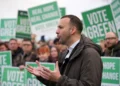
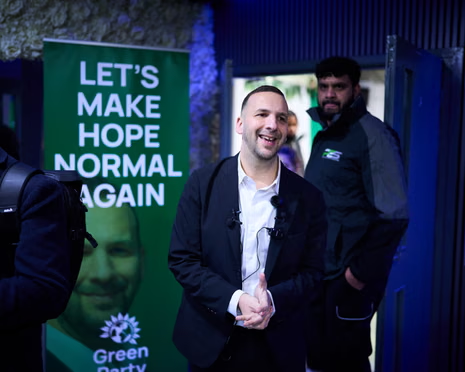
The Greens, led nationally by Zack Polanski, have rejected Labour’s characterisation of their drugs policy. Party representatives insist their proposals are rooted in public health, harm reduction, and evidence-based reform. They accuse Labour of exploiting a sensitive issue for electoral gain, arguing that such tactics trivialise the scale of drug-related deaths across the country. On the doorstep, Greens claim voters are responding positively to messages about social justice and community investment.
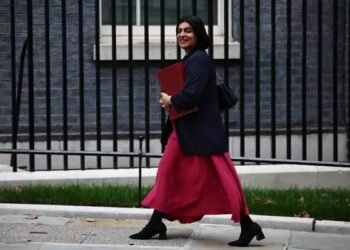
Lucy Powell, Labour’s deputy leader, has been highly visible in the constituency, dismissing suggestions that the Greens pose a serious threat to Reform. Speaking at the launch of Labour’s advertising van, she warned that votes drifting leftwards could allow Reform to win. Powell cited previous contests where small numbers of Green votes proved decisive, arguing that tactical voting remains essential in closely fought races like the Gorton Denton byelection.
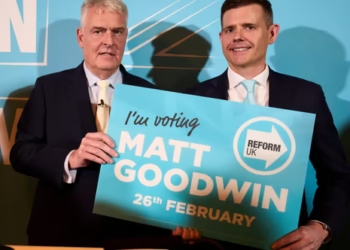
Reform UK has selected Matthew Goodwin, a controversial activist with a history of provocative statements, as its candidate. Labour has sought to link Goodwin directly to Nigel Farage’s broader political agenda, accusing Reform of exploiting cultural anxieties and stoking division. Party spokespeople argue that Goodwin’s record makes him unsuitable to represent a diverse Manchester constituency, framing the election as a stark choice between Labour stability and Reform disruption.
The Greens, however, insist the race has evolved beyond Labour’s binary narrative. Local activists say canvassing returns suggest Labour support is eroding, particularly among younger voters and those disillusioned with national leadership. They point to rising living costs, housing pressures, and environmental concerns as issues where Labour’s messaging feels muted. In their view, the Gorton Denton byelection offers voters a chance to demand a more transformative agenda.
Complicating matters further is the legacy of the former MP, Andrew Gwynne, who stepped down after health issues and a damaging scandal involving offensive messages. His departure destabilised local party structures and dented trust among some constituents. Both Labour and the Greens have sought to distance themselves from that episode, but its shadow continues to influence voter perceptions during the campaign.
Trade unions have also entered the debate, with senior figures criticising Labour’s handling of candidate selection. Andrea Egan, general secretary of Unison, described Burnham’s exclusion as cynical and unnecessary, arguing it deprived voters of a respected public servant. Such interventions highlight internal tensions at a moment when Labour leadership is eager to project unity and discipline ahead of the byelection.

At Westminster, Keir Starmer has sharpened his rhetoric against Reform, accusing its candidates of pursuing politics rooted in division. Responding to comments made by Goodwin regarding national identity, the prime minister emphasised Labour’s commitment to inclusion and community cohesion. He urged voters seeking to block Farage’s influence to consolidate behind Labour, reinforcing the party’s central argument throughout the Gorton Denton byelection.
As campaigning enters its final weeks, the contest remains finely balanced. Labour is betting that warnings about vote splitting will resonate, while the Greens believe their grassroots energy can overcome entrenched loyalties. Reform, meanwhile, continues to attract protest votes from those disenchanted with mainstream politics. The outcome will not only determine representation in Gorton and Denton but also signal how Britain’s fractured left responds under pressure.
Related News:
 British Woman in Iran ‘Losing Hope’ Amid Ongoing Detention
 BBC Journalist Held and Interrogated in Vietnam
 Green Party Surges Past Labour in Latest UK Poll
 Celebrities and Charities Demand UK Government Act on Child Poverty
 Trump’s UK Ambassador Urges North Sea Drilling to Strengthen US Ties
 FBI Director Kash Patel Defends Girlfriend Amid Government Jet Claims
 French Taxi Driver Cleared in David Lammy Theft Case After Fare Dispute
 Rachel Reeves Set to Break Labour Pledge and Raise Income Tax
 MPs Press Rachel Reeves to Hike Gambling Taxes
 Met Police Culture Makes Racial Harm ‘Inevitable’
 Boris Johnson accused of undermining BBC leadership
 Remaining rebel Labour MPs have whip restored
 ‘Reckless’ cuts to victims’ services will cost more than they save
 Millionaires group urge Reeves to introduce wealth tax to ‘lift kids out of poverty’
 Starmer Faces Growing Dissent as Labour MPs Weigh Leadership Challenge
 BBC Faces Backlash as Reform UK Withdraws from Film
 Reeves rejects £1bn plea for NHS redundancy payouts
 Farage appointee to lead Reform youth accused of anti-British views
 Palace to reinstate hyphen in Andrew’s surname
 Politics latest: Starmer ‘will fight any leadership coup’ as Streeting denies attempt to oust Labour PM
 PM Condemns Leaks, Vows Loyalty to Ministers and Stability
 Major Rent Reform Ends No-Fault Evictions in England
 Peers Flood Assisted Dying Bill with 942 Amendments
 England’s Special Needs Support Faces Breaking Point
 MoD warned over Excel risks before Afghan data breach
 UK Unveils Fast-Track Deportation and Asylum Overhaul
 UK Asylum Overhaul Sparks Debate Over Human Rights and Deportations
 UK Asylum Reforms: Temporary Refugee Status and Faster Deportations
 UK Candidate Moved to Safe House After Election Threats
 Mahmood Defends Tough Overhaul of UK Asylum System
 UK Warns China After MI5 Issues Espionage Alert
 Westminster Advances Legacy Bill Amid Criticism
 UK Vulnerable to Attack, Defence Committee Finds
 Labour Faces Historic Decline in Wales
 Rama Rebukes Mahmood for Targeting Albanian Families
 Russian Vessel Used Lasers on RAF Pilots, UK Claims
 PM Shares Emotional Letter to Son on Men’s Struggles
 PM Highlights UK Business at G20 in South Africa
 Kate Forbes: Motherhood Harder Than Politics
 Welsh Government Christmas 2020 Lockdown Criticised
Reeves to Crack Down on Benefit Fraud While Lifting Two-Child Limit
Welsh Government Christmas 2020 Lockdown Criticised
Reeves to Crack Down on Benefit Fraud While Lifting Two-Child Limit
 Most Tories Expect to Support a Farage-Led Government
 Labour MP claims devolution bill is ‘blatant discrimination’ against Cornwall
 English Mayors Set to Introduce Tourist Taxes
 Millions Face Higher Taxes Under Reeves New Budget
 Peers Get Extra Time to Debate Assisted Dying Bill
 Planned Palestinian Flag Raising at Belfast City Hall Faces Delay Amid Legal Concerns
 Government righting decades-old injustice for miners
 Starmer Says Labour’s Economic Plan Needs Years to Deliver
 UK delays ruling on China embassy plan until January
 Culture secretary to review Telegraph takeover by Daily Mail owner
 Andy Burnham Apologises for Past LGBTQ+ Police Discrimination
 UK to Launch Military ‘Gap Year’ Scheme to Boost Recruitment
 Reeves Slams Farage Over Two-Child Benefit Cap Opposition
 Mandelson Refuses Apology Over Epstein Ties
 Plans to Limit Jury Trials Face Retreat After Mounting Opposition
 Jenrick Reform defection deepens Tory civil war
 China Dependence Threatens UK Energy Supply Chains and Jobs
 Right Must Unite After Jenrick Defection, Urges Rees-Mogg
 Romford MP Andrew Rosindell defects to Reform UK
 UK Ministers Drop Foreign Student Targets for Global Education Push
 MPs warn AI financial risks threaten UK stability
 MPs warn AI financial risks threaten UK stability
 No Gas Boiler Ban as UK Warm Homes Plan Backs Heat Pumps
 Hugh Grant Joins Call for Under-16 Social Media Ban in UK
 Shinzo Abe’s killer receives life sentence in Japan
 US Africa aid remarks spark anger after leaked State email
 Lords Vote Piles Pressure on Starmer Over Social Media Ban
 Judge-only trials plan fails to ease court backlog
 Planned Troubles Board Game Sparks Outrage in Northern Ireland
 Reform UK Health Plan ‘Would Cost £1.7bn’, Streeting Says
 Labour Blocks Burnham as Party Rift Deepens Ahead of Polls
 Police response times face strict new national limits
 Labour policing overhaul sparks fears over growing central control
 Tories criticised after Braverman defection sparks mental health row
 Burnham Westminster return hopes fade amid Labour rift
 Starmer warns of toxic division politics in Reform challenge
 Starmer China visit raises human rights pressure on Beijing
 Labour Must Revive High Streets to Avoid Election Collapse
 Conservative Party Rejects Centrism Under Badenoch’s Leadership