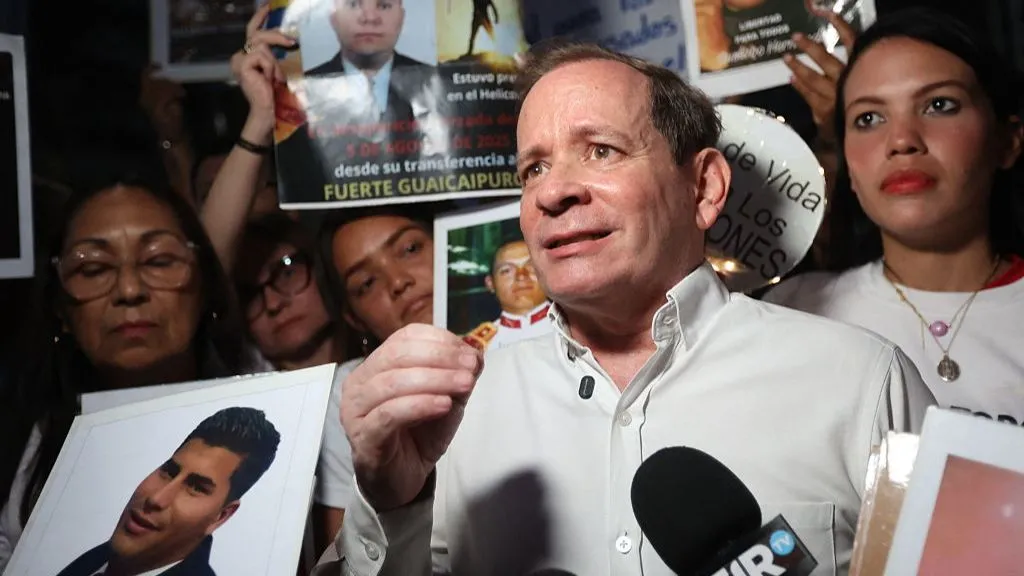
Venezuela’s opposition has sounded the alarm after party leader Juan Pablo Guanipa was reportedly kidnapped just hours after being freed from prison, raising deep concerns about political repression and the safety of dissidents in the oil-rich nation. The dramatic incident — denounced by opposition figures and families — comes amid an ongoing, contentious transition in Venezuelan politics that has seen the release of political prisoners followed by sharp criticism of government actions.
Opposition leader María Corina Machado, a prominent critic of the former Maduro regime and close ally of Guanipa, said on social media that he was forcibly taken by unidentified armed men in Caracas late Sunday night — only hours after his release from nearly nine months of detention on terrorism-related charges. The abduction has been widely described by allies and family members as a serious violation of his rights and a blatant effort to intimidate the opposition.

Allegations of Abduction and Political Motives
According to Machado and party supporters, around ten heavily armed individuals in civilian clothing arrived in several vehicles and seized Guanipa near his home in the Los Chorros neighbourhood of Caracas, holding him against his will. His son, Ramón, and members of the Primero Justicia party — of which Guanipa is a senior figure — have demanded proof of life and called for his immediate release.
Guanipa, a former governor and key opposition official, was among a group of prominent critics arrested in 2025 on charges including terrorism, treason and conspiracy — accusations he and his allies have consistently denied, calling them politically motivated attempts to suppress dissent. His detention was widely condemned by human rights groups.
Context of Prisoner Releases
On 8 February 2026, Venezuelan authorities released dozens of political detainees after sustained domestic and international pressure, including advocacy from rights groups and visits by U.N. human rights officials. Foro Penal, a local prisoners’ rights organisation, confirmed that dozens of individuals, including other prominent opposition figures like Freddy Superlano and Perkins Rocha, were freed. Guanipa was among those released, raising hopes among supporters for a broader relief in Venezuela’s deeply contentious political landscape.
Yet the kidnapping of Guanipa only hours later has cast doubt on the sincerity and independence of the government’s actions, with critics arguing that the episode reflects continuing threats to political freedoms even amid pledges to release prisoners.
Reactions and Human Rights Concerns
Rights advocates and Venezuelan opposition leaders have decried the reported abduction as part of a pattern of harassment and intimidation against political rivals. Foro Penal’s president, Alfredo Romero, expressed deep concern about Guanipa’s disappearance, emphasising that no credible information has been provided about his whereabouts or well-being.
International observers are watching closely, noting that Venezuela’s political crisis — long marked by economic turmoil, disputed elections and allegations of authoritarian crackdowns — remains volatile despite recent prisoner releases. Some governments and rights groups have urged greater transparency and protections for political actors in Caracas, with calls for independent investigations into the circumstances of the kidnapping.

Political Implications
The incident underscores the fragile balance of power in Venezuela as the country navigates a contentious transition following prolonged conflict between socialist authorities and opposition coalitions seeking democratic reforms. Machado has been one of the movement’s most visible leaders, and her denuncia of the kidnapping has sparked fresh debate about the integrity of prisoner release processes, security guarantees and the rule of law under the interim government led by acting President Delcy Rodríguez.
For many Venezuelans and international supporters of democracy, the fate of Juan Pablo Guanipa symbolizes both the promise and peril of political engagement in a nation divided between entrenched power structures and an emboldened opposition — a dynamic that will continue to shape Venezuela’s path forward.
Related News:
 Trump Says US Will Act on Greenland ‘Whether They Like It or Not’
 Trump Receives Machado’s Nobel Medal in White House Meeting
 Thousands Protest ICE Operations in Nationwide US Day of Action
 Epstein Files Reveal Trump Officials’ Emails with Financier
 Thousands Protest ICE in New York Against Trump Deportation Campaign
 US Must Be Prudent When Supplying Arms to Taiwan, Xi Tells Trump
 Fears of New Arms Race as US-Russia Nuclear Weapons Treaty Expires
 US Military Says Two Killed in Strike on Alleged Drug Boat in Eastern Pacific
 Trump Endorses Japan’s Takaichi Ahead of Snap Election
 Two National Guard Soldiers Critically Injured Near White House
 Putin Intensifies Territorial Demands Before US Talks
 Trump to Recheck Green Cards from 19 Nations After DC Attack
 US Defence Chief on Drug Boat Strike: “Did Not See Survivors”
 American Mother Extradited From UK to U.S. on Murder Charges
 Russia losses Ukraine war peace talks intensify amid rising deaths
 Trump Taiwan China drills: US President Downplays Tensions
 US Venezuela protests sweep cities after intervention
 US Cities Erupt in Protests Against Trump’s Venezuela Military Action
 Shock US Raid: Maduro Pleads Not Guilty in Manhattan Court
 UK and France Agree Troop Deployment Plan for Ukraine
 Trump Escalates Minnesota Immigration Surge Amid Rising Tensions
 Capitol Attack Anniversary Sparks Deep Political Divide
 EU Weakens as Trump Targets Venezuela and Greenland
 Israel Dossier Sparks Australian Political Interference Concern
 Venezuela Oil Deal Opens Tensions with US Control
 Trump Labels Renee Good a ‘Paid Agitator’ After Minneapolis ICE Killing
 Trump: US Stands Ready to Help Iran Find Freedom Amid Widespread Unrest
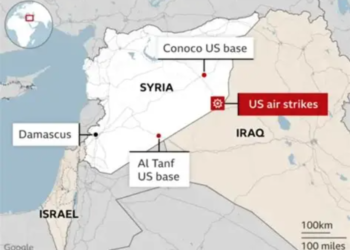 US Conducts Large-Scale Strikes Against ISIS Targets Across Syria
 Trump Says US Must ‘Own’ Greenland to Block Russia, China
 US Citizens Warned to Venezuela Flee Amid Paramilitary Threats
 Trump Weighs Response to Iran Crackdown as Tehran Says Communication Open With US
 Australia’s US Ambassador Rudd to Step Down Early
 Trump Administration Probe of Fed’s Powell Draws Pushback
 Trading Day: Trump Crosses Fed Rubicon, Market Shrugs
 Trump targets Iran trade with 25% tariff warning
 Greenland Faces Pivotal Summit Over Arctic Power Struggle
 US Clears Nvidia AI Chip Sales to China in Policy Shift
 Trump Threatens Strong Action If Iran Executes Protesters
 Gulf states warn Trump Iran strikes risk wider Middle East war
 Machado Trump medal gesture reshapes Venezuela power struggle
 Greenland defence seen as shared Nato duty amid troop arrivals
 Gulf states warn Trump Iran strikes risk wider Middle East war
 Iran unrest slows under brutal crackdown and global tensions
 Greenland Crisis Forces Europe to Draw a Line With Trump
 Iran Cannot Be Bombed Into Democracy, Only Helped There
 Syria President Declares Victory as Ceasefire Reached with SDF
 US Considers Asylum for British Jews Amid Rising Antisemitism
 Trump Aide Sparks Fury as Greenland Dispute Intensifies
 Historic Abu Dhabi Talks Bring US, Ukraine and Russia Together
 Trump Pulls Canada from His Controversial ‘Board of Peace’ Plan
 EU Says US Ties Have Suffered ‘Big Blow’ After Greenland Crisis
 Russia Strikes Kyiv and Kharkiv as Peace Talks Enter Day Two
 Arizona border shooting leaves suspect hospitalised after agent pursuit
 Videos reveal earlier clash before Alex Pretti shooting
 Emails Show Epstein Funded Mandelson’s Husband After Jail
 US-Cuba Negotiations Shift as Oil Blockade Looms
 ‘Painful Times’ as Melinda Gates Responds to Epstein Files
 Trump Praises ‘Terrific’ Petro After White House Talks
 US and Iran Talks to Begin as Fears of Direct Conflict Continue
US and Iran Hold Nuclear Talks as Trump Ramps Up Military Threats
US and Iran Talks to Begin as Fears of Direct Conflict Continue
US and Iran Hold Nuclear Talks as Trump Ramps Up Military Threats
 Is Bangladesh’s Youth Turning Against India? — A Deepening Debate
 Hong Kong Court Jails Pro-Democracy Media Tycoon Jimmy Lai for 20 Years
 UK Must Act with Courage and Clarity on Israel-Palestine Conflict, Says Foreign Affairs Committee Report
 Channel Crossings Surge: Over 1,000 People Arrive in the UK in Small Boats in a Single Day
 Macron Phones Trump Over Traffic Jam in New York
 Comey Indictment Deepens Fears of Political Retribution Under Trump
 Yvette Cooper Signals Global Momentum Towards Gaza Peace Deal Amid Humanitarian Crisis
 “It Was Very Tough, But I Love Life”: Former Israeli Hostage Rebuilds Life After Family Killed by Hamas
 Chaos at Ibrox as Martin’s Rangers Era Comes to an End
 Trump Claims Modi Has Agreed to Halt Russian Oil Imports Amid Heightened US Pressure
 Russia’s Latest Push to Win US Favors Shows Deep Desperation
 BBC to Apologise Over Edited Trump Speech Amid Backlash
 Greene Pushes Epstein Files Amid Trump Fallout
 Zelenskyy Signs Fighter Jet Deal Amid Russian Drone Attacks
 Shadow Fleet at Sea: Europe’s Battle Against Illicit Oil Shipping
 US Suspends Afghan Immigration After White House Shooting
 ‘Extinct’ Antelope Returns to Sahara, Bringing Hope
 Minnesota Sues Trump Administration Over ICE Surge
 US Senate rejects resolution limiting Trump military powers
 Sydney Shark Attack Surge Shocks Australia Beaches