Published: 27 February 2026. The English Chronicle Desk. The English Chronicle Online.
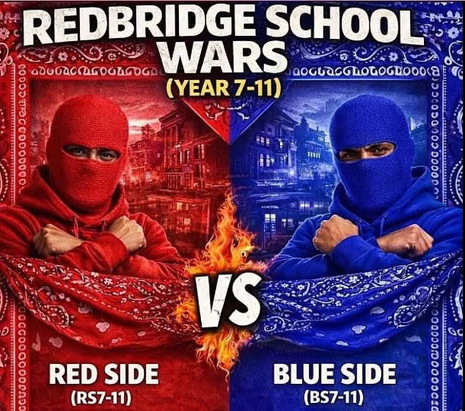
Authorities in London have issued stern warnings after pupils aged 11 to 16 were urged to participate in so-called ‘school wars’ fights online. Social media posts circulating on platforms such as TikTok and Snapchat have promoted organised fights between schools, prompting concern from headteachers, parents, and police. The Metropolitan police have urged children not to get involved and have requested social media platforms remove accounts linked to these posts, emphasising the serious consequences of violent behaviour. Experts warn that even appearing to participate in these online challenges could have long-lasting legal repercussions.
One post that has gone viral promoted a “north London war,” inviting pupils from years seven to eleven to join a confrontation between four schools on a “red side” and four on a “blue side.” Another message focused on Hackney, displaying images of knives, compasses, and fireworks alongside instructions for pupils to attend the clash. Several posts have further suggested a points system rewarding participants for harming their opponents, while encouraging violent behaviour as a form of competitive gameplay. Such content has alarmed both educators and law enforcement agencies due to the risk of serious injury.

Commander Neerav Patel of the Metropolitan police stated that officers are aware of the posts and are working with multiple London boroughs to offer reassurance to communities. He confirmed that a dozen social media accounts promoting planned violence have been disabled following requests from the police. “We continue to monitor online spaces closely and urge young people to consider the legal consequences of involvement in violent activity,” he said. Commander Patel added that arrests, charges, and convictions related to carrying weapons or participating in violent acts can have a lasting impact on educational and career prospects.
Several schools across London have sent letters to parents warning about the viral posts and emphasising vigilance. Fortismere School in Muswell Hill, north London, alerted families to recent social media activity that encourages young people to engage in so-called “tagging” or “school wars” games. The letter thanked parents who had raised concerns while checking their children’s phones and urged them to remain vigilant. Similarly, Graveney School in Tooting, south-east London, assured parents that security measures would be strengthened, including the ability to search students if necessary to ensure safety on school premises.
Despite these warnings, some pupils remain sceptical about the legitimacy of the posts. Reports suggest that certain students believe the posts to be spoofs or attempts to provoke fear among parents. One Year 10 pupil told the Metro that many teenagers would not attend a gathering where police were aware and weapons were involved, dismissing the messages as exaggerated. Nevertheless, police and school authorities maintain that even false or joking posts can inspire real-world incidents if shared widely among impressionable pupils.
Social media companies have responded by enforcing community guidelines prohibiting threats, glorification of violence, and the promotion of crimes. Snapchat’s internal safety team has reportedly removed content inciting fights, while TikTok has taken down videos that violate rules designed to protect users from harm. These actions reflect growing concerns over the safety of minors online and the responsibility of platforms to monitor harmful content effectively.
The issue has also drawn attention from national political figures. Health Secretary Wes Streeting flagged the online posts to colleagues and emphasised the importance of parental guidance. In a social media comment highlighted by MailOnline, he stated, “I’ve raised this at the highest levels in government. Hope parents are clear with their children that we’ll come down on this sort of behaviour like a ton of bricks.” His remarks underline the seriousness with which authorities are treating these posts and the potential consequences for those involved.
Previous attempts to organise similar confrontations in Hackney resulted in police issuing dispersal orders, showing that authorities are prepared to intervene quickly to prevent escalation. Schools have increasingly recognised the need to work closely with law enforcement to protect pupils from peer pressure, online influence, and the lure of violent challenges. Educational leaders stress that awareness and communication between parents, teachers, and students remain essential to mitigate risks.
The emergence of these “school wars” posts highlights wider concerns regarding online safety, digital literacy, and the psychological impact of viral challenges. Experts note that young people may be especially vulnerable to online dares, peer pressure, and the influence of social media trends that glorify risky behaviour. Educators are encouraging families to maintain open conversations about online activity, the risks of carrying weapons, and the potential legal and personal consequences of engaging in violent conduct.

In response to the rising trend, some schools have implemented additional security protocols, including monitored entry points, increased supervision during break times, and workshops addressing online safety. The emphasis on preventive measures aims to reduce the likelihood of incidents inspired by viral posts and to reassure parents that schools remain safe environments. Authorities also urge pupils to report any threatening content or plans for physical confrontations to responsible adults, reinforcing the importance of vigilance.
This latest online challenge has prompted reflection on the responsibility of both social media companies and parents in protecting children from harm. Experts highlight that monitoring social media interactions, educating students about responsible online behaviour, and cultivating trust between pupils and adults are critical to preventing dangerous situations. While scepticism exists among some students regarding the authenticity of “school wars” posts, officials insist that even perceived hoaxes can escalate, and preventive action remains essential.
London’s police, schools, and policymakers continue to emphasise that the safest course for young people is to avoid engagement entirely. The combination of legal risk, potential physical harm, and social consequences makes participation in these online challenges highly inadvisable. Encouragingly, some pupils have reported threats and concerns to teachers, demonstrating that many students are aware of the dangers and willing to cooperate with authorities to ensure safety.
The “school wars” phenomenon serves as a reminder of the complex challenges posed by social media in contemporary youth culture. Balancing freedom of expression with safety concerns, maintaining open communication between parents and children, and fostering digital responsibility remain central to combating the risks associated with online viral trends. Authorities emphasise that proactive measures, including monitoring online activity and engaging students in meaningful discussions about risk and consequence, can reduce the likelihood of incidents and safeguard the well-being of young Londoners.
Related News:
 Six-Figure Tutors Teach Toddlers to ‘Be British’
 How Bringing Forests Into Preschools Boosts Children’s Health
 Is a two-week half-term a good deal? Some parents in England aren’t so sure
 Posthumous books are messy and fraught – but Virginia Giuffre’s gives her a voice
 Children to Learn Local History in Major Curriculum Overhaul
 UK University Suspends Human Rights Research Following Pressure from China
 UK University Faces Counter-Terror Probe Over China Pressure
 Top Christmas Books Reads: Classics to Cozy Romcoms
 England Curriculum Review Recommends Major Changes
 Greta Thunberg Backs Student Facing UK Visa Revocation
 Audio Books deals and promo codes to explore in November 2025
China-critical UK academics face ‘extremely heavy’ pressure from Beijing
Audio Books deals and promo codes to explore in November 2025
China-critical UK academics face ‘extremely heavy’ pressure from Beijing
 Labour immigration crackdown could cost UK £4.4bn
 London’s Childlessness Crisis: Schools Closing as Families Shrink
 No link found between paracetamol in pregnancy and autism
 Government urges schools to ban phones to curb classroom disruption
 Nigeria’s $25m Museum Faces Political Storm Amid Benin Bronzes Debate
 Algeria Pardons French-Algerian Novelist Sansal After Year in Jail
 South Korea’s College Exam Tests Perseverance of Blind Students
 Phillipson Accused of Appeasing Unions by Diluting EBacc
 ‘I’ve Read 38 Books, but This Is My Standout Favourite’
 England’s Special Needs Support Faces Breaking Point
 Nigerian Education Reversal: Mother-Tongue Teaching Scrapped
 Higgs Donates Nobel Medal to His Beloved University
 UK Schools Face Staff Exodus Amid Wellbeing Crash
 Ex-Harvard President Pauses Teaching Over Epstein Emails
 Scottish Families Take Legal Action Over School CO Leak
 Men Aren’t Vanishing From Fiction, But Misconceptions Persist
 Schools urged to trial four-day week to ease pressure on teachers in England and Wales
 Oxford Names ‘Rage Bait’ Word of the Year
 Cambridge College Faces Backlash Over Private School Recruitment
 Glasgow rector cleared by watchdog in antisemitism case
 Pressure mounts on No 10 over under-16s social media ban
 Jewish MP school visit cancelled after Bristol campaign pressure
 UK Launches First Town of Culture Competition
 Guildford resignation sparks public trust debate in West Midlands
 UK Ministers Drop Foreign Student Targets for Global Education Push
 City & Guilds pay surge sparks backlash amid £22m cuts
 School Suspensions Now Reserved for Only Severe Misbehaviour
 Cambridge Faces Scrutiny Over Arms Investment Transparency
 Harvey Willgoose School Stabbing Red Flags Missed
 Kingsbury stabbing probe led by counter-terror police
 Send spending gap leaves deprived areas behind
 Councils Urge Means Testing for Send School Transport
 NSW to Introduce Minimum Age for Ebike Riders
 Student Loan Crisis Sparks Outrage Among Graduates in England
 Larry Summers Resigns From Harvard Amid Epstein Files
 New Era for UK Special Needs Support
 New Survey Reveals Troubling Rise in Campus Antisemitism
 UK Parents Voice Concerns Over Special Education Support
 Sydney Teacher Arrested in Teenage Grooming Investigation
 Keir Starmer Vows Strong Action Against Online Tech Giants
 Exhibition Revisits Life of 18th-Century Black Court Figure
 Student Loan Interest May Rise Despite 6% Cap
 School Plate Revolution: England Bans Fried Menu Classics
 City & Guilds Sale Sparks Fees and Pay Uproar
 Canadian astronaut French words ease language row
 UK Universities Face Fines for Speech Failures
 NHS Safety Fears as Nurses Cover Doctor Gaps
 Elite School Teacher Claims Misogynistic Culture Fuels Abuse
 Ability Grouping Boosts High-Flyers Without Harming Others
 Older Than Dinosaurs: Secrets of Mayfly Dance Revealed
 Teacher Alleges Misogyny at Elite School
 Germany to Return Rare Irritator Dinosaur Skull to Brazil
 London Schools Harness VR to Tackle Pupil Stress
 Schools Urged to Remove Pupil Photos as AI Threats Rise
 Tractor Breakdown Tests Lincolnshire Farmers
 Cambridge University in Talks With Saudi Ministry
 Victoria Labor Launches Apprenticeship Expansion Plan
 Gen Z Graduates Face Economic Uncertainty
 Public Confidence in University Degrees Plummets in the UK
 Is a University Degree Still Worth the Cost?
 Ban the Smack: New Study Links Hitting to Poor Grades
 The Hybrid School Revolution Defying the Social Media Ban
 Systemic Failure: White Working-Class Pupils Left Behind
 School Bosses Face Strict Pay Cap
 UK Schools Struggle as Classrooms Top 40C
 Brisbane School Stabbing Leaves Teenager Critical
 Pradhan Resigns Amid Protests
 Cambridge Professor Jason Arday Found Dead at Home