Published: 05 March 2026. The English Chronicle Desk. The English Chronicle Online.
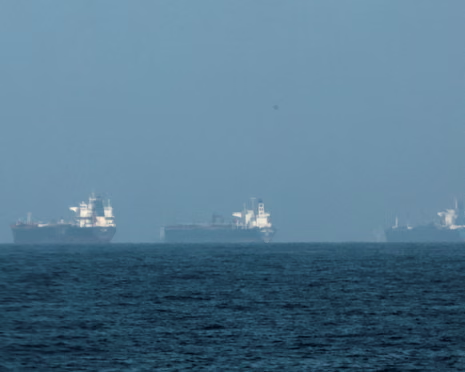
The Gulf shipping crisis is sending shockwaves through global food markets. Analysts warn that prolonged disruption near the Strait of Hormuz could trigger sharp rises in fertiliser costs and household food bills. The effective closure of the narrow waterway off southern Iran followed weekend strikes by the United States and Israel. Since then, maritime traffic through the strait has slowed dramatically, unsettling commodity traders and farmers alike.
The strait sits between Iran and Oman and connects the Persian Gulf to open seas. About a fifth of global seaborne oil and gas passes through this corridor annually. Crucially, between a quarter and a third of fertiliser raw materials also transit these waters. That includes ammonia and nitrogen, which underpin most modern synthetic fertiliser products.
Roughly half of global food production depends on synthetic nitrogen inputs each year. Without adequate fertiliser, crop yields would decline sharply across major producing regions. Shortfalls would likely raise prices for bread, pasta, potatoes, and animal feed. For families already facing rising living costs, the consequences could feel immediate and severe.
The Gulf hosts several of the world’s largest fertiliser production hubs. Countries including Saudi Arabia and Qatar play central roles in nitrogen exports. Iran itself ranks as the fourth largest exporter of urea globally. Urea remains the most widely used nitrogen fertiliser across world agriculture.

Industry experts say the Gulf shipping crisis is disrupting both supply routes and production schedules. Fertiliser manufacturing depends heavily on fossil gas as an energy source. Gas accounts for between 60 and 80 percent of nitrogen fertiliser production costs. When gas supplies tighten or energy prices spike, fertiliser output quickly becomes more expensive.
Recent events have already underlined that vulnerability. Qatar temporarily closed its largest fertiliser facility after a reported drone strike. Traders fear that further shutdowns could ripple through global nitrogen markets. At the same time, insurers have raised premiums for vessels transiting high risk waters.
Price movements reflect these mounting pressures. Egyptian urea, often treated as a global benchmark, has surged more than 25 percent in days. Consultancy CRU Group reported prices climbing to 625 dollars per metric tonne. Only a week earlier, the benchmark stood closer to 485 dollars.
Such volatility revives uneasy memories of early 2022. Following Russia’s full scale invasion of Ukraine, gas and fertiliser prices soared worldwide. Food inflation accelerated sharply, hitting households across Europe and beyond. Many policymakers had hoped that episode would remain an exceptional shock.
Now, analysts warn the Gulf shipping crisis could prove equally disruptive. Chris Lawson of CRU noted parallels with 2022 but cautioned that impacts may be broader. If the Strait of Hormuz remains restricted beyond two weeks, supply and demand pressures could intensify. Fertiliser shortages might then coincide with peak planting seasons in several regions.
Shipping security concerns add to the strain. UK Maritime Trade Operations confirmed a container vessel was struck by a projectile this week. The incident reportedly caused a fire in the ship’s engine room. It followed earlier attacks in which at least two crew members lost their lives.
For British farmers, the timing is particularly sensitive. Spring planting is already under way across much of England and Scotland. While most producers secured fertiliser supplies for this season, attention typically turns to next year’s purchases now. Uncertainty over future availability complicates budgeting and forward planning.
The United Kingdom produces roughly 40 percent of its nitrogen fertiliser domestically. The remainder arrives through imports, many of which rely on stable maritime routes. Any sustained reduction in supply would likely force farmers to apply lower fertiliser volumes. Lower application rates usually translate directly into reduced yields.
Reduced yields would eventually filter through to supermarket shelves. After the Ukraine invasion, food and non alcoholic drink prices rose 16.5 percent in a single year. Data from the Office for National Statistics captured that steep climb through late 2022. Shoppers noticed higher costs for staples, from flour to dairy products.
More recently, grocery price inflation has edged up again. Market researchers at Worldpanel by Numerator recorded a 4.3 percent rise over four weeks to 22 February. Though modest compared with past peaks, the uptick unsettled economists monitoring consumer confidence. Further fertiliser shocks could accelerate that trend.
Tom Bradshaw, president of the National Farmers’ Union, urged caution but acknowledged growing volatility. He said it remains too early to judge medium term impacts on British agriculture. However, he stressed that price swings are already evident in input markets. Farmers are watching developments closely.
Many agricultural businesses were already operating on narrow margins before this escalation. Energy, labour, and compliance costs have squeezed profitability across recent seasons. The Gulf shipping crisis now adds another unpredictable variable to farm finances. Producers must weigh whether to lock in higher fertiliser prices or risk later shortages.
Svein Tore Holsether, chief executive of fertiliser giant Yara, warned of mounting pressure. He described the situation as placing a heavy burden on farmers’ shoulders. Input prices are rising, yet crop prices have not increased proportionately. That imbalance threatens to erode farm incomes further.
Holsether called on governments to consider stronger support measures for food producers. Without intervention, he argued, higher fertiliser costs could reduce planting decisions. Some farmers might cut back on nutrient applications to control spending. Over time, that strategy risks undermining soil productivity and harvest volumes.
Beyond nitrogen, the Middle East supplies around 45 percent of globally traded sulphur. Sulphur is another essential ingredient in fertiliser manufacturing processes. Disruptions to sulphur exports would compound existing nitrogen shortages. Metals and industrial chemicals from the region also face transport uncertainties.
The broader geopolitical picture remains fluid. Tensions between Iran, the United States, and Israel have intensified regional instability. Diplomatic efforts are ongoing, yet traders remain cautious about swift resolution. Shipping companies continue to reassess routes and security protocols daily.

Economists emphasise that not all effects will be immediate. Food production cycles mean today’s fertiliser shortages may influence harvests months ahead. Yet commodity markets often price in risk well before physical shortages materialise. That dynamic partly explains the swift reaction in urea benchmarks.
Consumers in the United Kingdom may therefore experience a delayed but tangible impact. If fertiliser costs remain elevated into the summer, contracts for autumn harvests could reflect higher input expenses. Retailers would then negotiate new supply agreements at increased prices. Household budgets, already stretched, could feel renewed strain.
Still, some analysts urge perspective. Global fertiliser inventories are not yet exhausted, and alternative suppliers exist. Countries outside the Gulf may expand output to capture higher margins. Governments could also coordinate strategic reserves if shortages deepen.
However, the Gulf shipping crisis underscores how interconnected modern food systems have become. A narrow stretch of water thousands of miles away can influence prices in British supermarkets. Farmers, traders, and policymakers now face a delicate balancing act. Stability in the Strait of Hormuz would ease immediate concerns.
Until then, vigilance dominates agricultural planning. Producers must navigate volatile energy markets, uncertain shipping routes, and fluctuating fertiliser prices. The coming weeks will determine whether this episode becomes a brief disruption or a lasting shock. For now, the Gulf shipping crisis stands as a stark reminder of global fragility.
Related News:
 UPS Cargo Plane Crash in Kentucky Kills Seven
 UK New Car Discounts Near £6,000 as Prices Are Slashed
 UK Wage Growth Slows as Jobs Market Holds Firm
 Middle East Conflict to Hit UK Economy Hardest
 UK Pushes for New EU Goods Trade Deal
 Reeves Fights to Keep Treasury Role Amid Labour Turmoil
 Shein UK Faces Allegations of Shifting Majority of Profits to Singapore to Reduce UK Tax
 British AI Startup Outshines Human Forecasters in Global Prediction Contest
 Reeves Faces Setback as Labour May Miss Homes Target
 Trump’s UK Ambassador Urges North Sea Drilling to Strengthen US Ties
 M&S Profits More Than Halve After Cyber-Attack
 Just Stop Oil Protesters Convicted Amid Climate Defence Row
 Tony Blair think tank warns Rachel Reeves must cut taxes if manifesto broken
 Palace May Restore Hyphen to Andrew Mountbatten-Windsor’s Name
 Millionaires group urge Reeves to introduce wealth tax to ‘lift kids out of poverty’
 Global markets drop amid tech sell-off and China slowdown
 Canada Passes Carney’s First Budget in Tight Parliamentary Vote
 Royal Navy Shadows Russian Warships Entering the Channel
 Starmer Says Labour’s Economic Plan Needs Years to Deliver
 Virgin Media Fined £23.8m Over Telecare Safety Failures
 Rising Water Bills Lift Troubled Thames Back to Profit
 Starmer Faces Parliamentary Battles Over UK-EU ‘Reset’ Plan
 Phoenixism Costs UK Taxpayers Millions in Recruitment Sector
 ScottishPower Tops List of Worst UK Energy Suppliers
 City & Guilds pay surge sparks backlash amid £22m cuts
 UK Government Borrowing Drops to £11.6bn in December
 ‘Black Tax’: Burden, Pride and Survival for African Workers
 AI job losses UK: Britain faces sharper employment shock
 Starmer Condemns ‘Depraved’ Russian Strikes on Ukraine
 UK Unemployment Rate Climbs to 5.2% Peak
 UK shelves £110m border project amid trade strain
 Trump Tariffs Threat Spark UK and EU Alarm
 Reeves Must Back Defence Plan or Face Dismissal, Says Unite Chief
 Switching Energy Deal Can Save £200 as Price Cap Falls
 Iranian Australian community divided after vigils
 Rachel Reeves Faces Middle East Conflict Test
 Grocery Inflation Rises Amid War Fears
 Peak Greggs fears as profits tumble sharply
 UK Rescue Flight Delayed Amid Middle East War
 BrewDog sold Highland estate for knockdown price after abandoning reforestation plans
 Yorkshire Water Funding Sparks Debate Amid Fines and Pay Row
 The Truth Behind Rising Energy Costs and Fossil Fuel Myths
 New £10bn rescue plan offered for Thames Water
 UK Energy Reform Could Cut Bills by £200
 Oil Slides, Stocks Jump on Trump Peace Signals
 Trump to Deploy “God Squad” Over Gulf Wildlife Protections
 Army Probes Apache Flyover at Kid Rock’s Nashville Estate
 Iran Drone Strike Hits Kuwaiti Oil Tanker in Dubai Port
 Hospitality Sector Teeters on Brink as Costs Surge
 US Senators Slam Ticketmaster Over Sneaky New Fee Hikes
 IMF Warns Iran War Could Spark Deep Global Recession
 Major Housebuilder Cuts Land Buying Amid Global Unrest
 Capitalism ‘Suicidal’, Warns Petro at Climate Summit
 $13bn World Cup Set to Break All Revenue Records
 Trump approval plunges amid Iran war fears
 Heathrow Chair Seeks Peace to Save Third Runway
 US Awaits Iran Reply on New Ceasefire Proposal
 High Street Crisis: Fears Grow Over Post Office Closures
 UK Firms Freeze Spending as Iran Conflict Bites
 Summer Shock: British Energy Bills Set for Grim July Hike
 Reeves to Fast-Track Clean Energy Amid Iran Crisis
 Oil Markets Face ‘Red Zone’ Threat Amid Iran Crisis
 Starmer Leadership Under Pressure After Setbacks
 Tube Strike Brings Capital to a Standstill Over Shift Disputes
 BP Stands Firm on Amanda Blanc Amid Boardroom Storm
 UK House Prices Drop For Third Month Due To War Fears
 Top Chefs Back Andy Burnham to Save UK Hospitality Sector
 UK Steel Crisis: Jingye Demands Payout After Takeover
 UK Economy Suffers a Sharp Downturn as Iran Conflict Bites
 Flutter to Cancel London Stock Exchange Share Listing
 AI Scams Push UK Investment Fraud Past £220m
 Thames Water Nationalisation Pushes Closer After Rescue Objected
 Rethinking the Blueprint for Youth Employment in Britain
 Sainsbury’s Boss Optimistic As Grocery Inflation Eases
 UK Households Suffer Squeeze As Disposable Incomes Drop
 New South Wales Premier Chris Minns Signals Tough Road Ahead for Labor
 Violent London Clash After World Cup Semi-Final Match
 Ukraine Creates Long-Range Strike Command
 BBC Faces Real Jeopardy as Licence Fee Income Declines
 UK’s Largest Muslim Convention Scales Up Security Amid Rising Bigotry